
News
LSSP played a key role in shaping evolution of politics in SL in a progressive direction

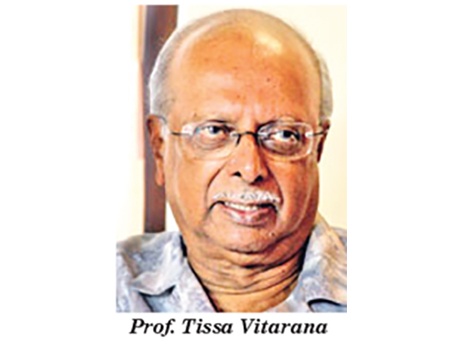
The Lanka Sama Samaja Party (LSSP) celebrates its 85th anniversary. Established on December 18, 1935, the LSSP has played a key role in shaping the evolution of politics in Sri Lanka in a progressive direction.
The LSSP developed into a strong socialist movement, providing it with a Marxist leadership, and organized the workers into powerful trade unions. The result is the establishment of the Democratic Socialist Republic of Sri Lanka with full democratic rights for all the people, particularly the workers.
At the time of the formation of the LSSP, the local capitalist class was represented by the Ceylon National Congress (CNC, the forerunner of the UNP) and the workers by the Labour Party, which soon died out. Among the founder members of the LSSP were N. M. Perera, Colvin R. De Silva, Leslie Goonewardene, Robert and Philip Goonewardene, and later S. A. Wickramasinghe. Success was achieved in establishing trade unions by overcoming resistance from A. E. Gunasinghe.
Efforts in the general political field began with the launching of the Suriyamal Movement in 1933 which led to an anti-imperialist and anti-war movement. The demand was “Peace” and “Freedom”. Led by the future LSSP leaders, the Suriyamal Movement helped to fight the Malaria epidemic of 1934/35 in which 125,000 died throughout the country when the British rulers were inactive.
The LSSP developed youth leagues to convey anti-imperialist propaganda to demand complete Independence and to oppose the demand for Dominion Status under the British, made by the CNC Government. The Government was forced to give up its demand. The success of the Youth League and Suriyamal Movement led to the formation of the LSSP. The main demands were complete independence, nationalization of the means of production, distribution and exchange, and the abolition of inequalities arising from differences of race, cast, religion or sex.
The election of N. M. Perera and Philip Goonewardene to the State Council in the 1936 General Election as the opposition to the government made them the voice of the oppressed people. The weekly “Samasamajaya” (from 1936) and the “Samadharmam” (from 1938) took the party message to the people. Unlike the hall meetings in English by the CNC, the LSSP started open air meetings in Sinhala and Tamil. They had to develop new words to teach people to understand politics. In fact, the term “Samasamajaya” (equal society) was necessary for people to understand what “Socialist” or “Communist” meant.
In the period 1935-1939, LSSP agitation both within and outside the State Council resulted in free meals for school children in 1936, reform of the headmen system in 1937 and the abolition of the irrigation rates in 1938. Motions in the State Council to allow the use of Sinhala and Tamil in the Courts and in Police Stations were passed, but not implemented. The LSSP motion to stop more Indian labour being brought to Sri Lanka was defeated.
When a tea planter Bracegirdle joined the LSSP, he was to be deported by the Government, but the LSSP successfully hid him. He was later arrested but the matter was taken up in Court and he was freed. With the beginning of World War II in 1939, the LSSP continued its struggle for independence and people’s rights, and it was banned by the British and its leaders were jailed. Then they escaped from jail and joined the Congress Socialist Party in the fight for Indian independence. They were jailed once again and only released in 1945 at the end of the war.
In the 1945-1950 period, despite Government harassment, the LSSP led successful strikes and was able to contest the General Election of 1947. In addition to terror tactics by the British rulers and Government sponsored attacks on LSSP meetings and leaders, falsehoods were spread. For example, the LSSP would destroy religion. But the LSSP and its allies won 15 seats, coming second to the UNP which won 42 seats and formed a Government.
With the split in the UNP in 1951, S. W. R. D. Bandaranaike formed the SLFP. From 1956 onwards, the SLFP formed Governments with the LSSP and CP, defeating the UNP. Thereafter, several progressive Governments of the Centre (SLFP) and the Left (LSSP and CP) were able to make substantial progressive changes for the benefit of the people. Following the split in the SLFP and the formation of the SLPP led by Mahinda Rajapaksa, the LSSP and the CP have continued the progressive alliance forming the present Government, with other political parties from the Centre and the Left.
This has enabled the living and working conditions of the ordinary people – workers, farmers and middle class – to be improved. Attempts by the UNP to serve the USA and the local capitalist class have been defeated. For example, signing of the MCC & Sofa agreements. Within the SLPP-led coalition Government, the LSSP is making every effort to serve the people by, for example, reduce prices by strengthening the Cooperative Movement and eliminating exploitation by middlemen. The LSSP is also fighting against racial, religious, cast and sex based prejudice.
Every effort is being made to strengthen national unity and build a Sri Lankan nation where every citizen has equal rights and privileges. In international affairs, the LSSP stands for a true non-aligned policy, maintaining good relations with all countries, but opposing attempts of imperialism to exploit people.
I wish to thank all the political leaders, political parties and the people who have supported the LSSP during these 85 years of political activity. The Socialist Alliance (LSSP,CP,DLF,SLMP & DVJP) have been actively cooperating in all spheres of political activities. The bonds with MEP have been strengthened. The links with the JNP & the PHU are increasing. Despite their splits, there is good cooperation with the SLFP and the SLPP, which have been further strengthened by working together in the present Government.
It is our hope that the major problems facing Sri Lanka and its people will be properly identified and settled favorably in the near future. I extend warmest greetings to all the people of Sri Lanka, and the working class of the world.
– Prof. Tissa Vitarana, M.P.,
General Secretary,
Lanka Sama Samaja Party.



More than 1,600 students sat this year’s Russian Classical Ballet Examination, the largest number ever to take part in the examination in Sri Lanka. Exams were held in Colombo from 5, to 18, October and in Galle on 10 October.
Students aged four and above came from across the island, including Colombo, Galle, Gampaha, Negombo, Matara, Kelaniya, Panadura, Wattala, Kiribathgoda, Ratnapura, Kandy, Kurunegala, Bandarawela and Badulla. They are taught by 15 dedicated teachers trained in the Vaganova method, the renowned Russian system of classical ballet training.
They were examined by Dr. Oxana Karnovich of the Moscow State Academy of Choreography, a distinguished academic and curator.
The Russian School of Ballet and Dancing was established in 2001 by Michael Ustinov, Buddhapriya Ramanayake and Mrs Chandi Aluvihare, with Mrs Galina Pleshakova as its founding instructor. Today the School is led by Director Madam Maria Popova, Counsellor of the Embassy of the Russian Federation in Sri Lanka.


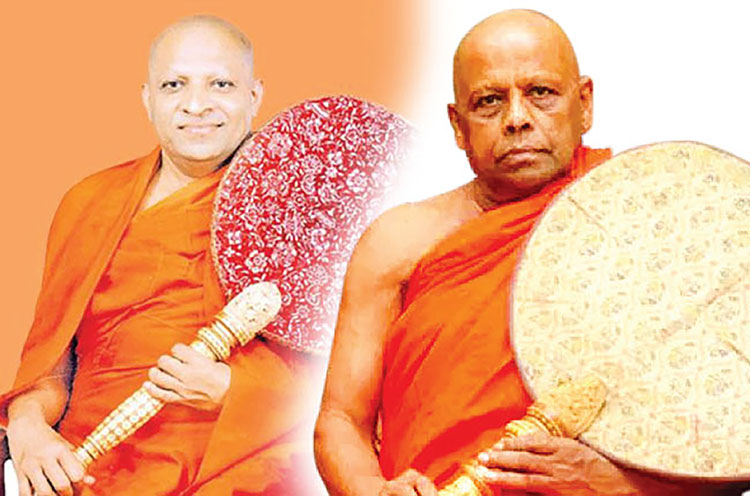
MONETABRIEF– Sri Lanka’s two most senior Buddhist chapters, Malwatte and Asgiriya, demanded special concessions for monks serving prison sentences, following the disrobing of convicted monk Ven. Galagodaatte Gnanasara in line with established procedures.
The chief prelate of the Asgiriya chapter, Most Venerable Warakagoda Sri Gnanarathana, told Prisons Commissioner Senaka Palletenna that Ven. Gnanasara, who is serving a six-year sentence for contempt of court, must be released immediately.
Prison authorities have no power to release or pardon convicts, but Palletenna told the monk in Kandy on Friday that he would convey his request to the relevant government authorities.
“There is no point in talking about this and that… The entire country has been shaken (??????? ) . He must be released,” the Asgiriya chief prelate said.
The Malwatte chief prelate, Most Venerable Thibbatuwawe Sri Siddhartha Sumangala, appeared to accept the court verdict against Ven. Gnanasara, but asked the prisons chief whether a separate section could be established for convicted monks.
Palletenna noted that a special ward for the clergy already existed at Welikada Prison.
At least 63 convicted Buddhist monks are currently incarcerated within Sri Lanka’s criminal justice system.
Meanwhile, a group of 34 Buddhist monks named in a Colombo Fort Magistrate’s Court order to vacate the vicinity of the Presidential Secretariat ended their protest and dispersed after lunch on Friday.The monks are demanding an unconditional pardon for Ven. Gnanasara, who has previously been imprisoned, making him a reconvicted prisoner.
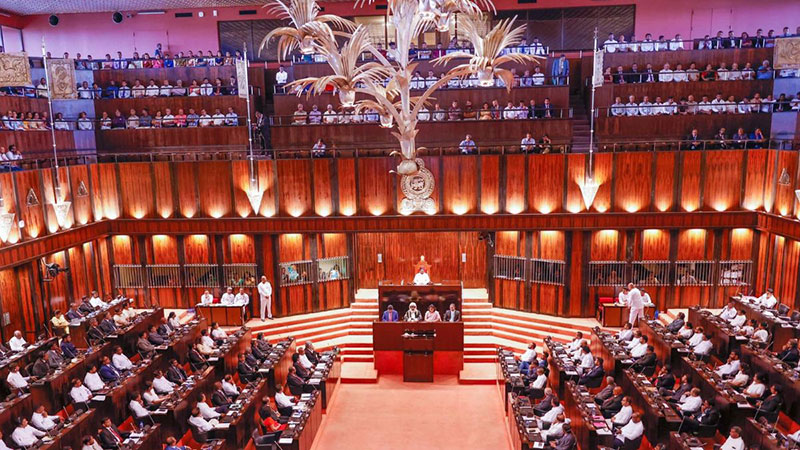
The debate on the no-confidence motion against Speaker Dr. Jagath Wickramaratne, submitted by the Samagi Jana Balawegaya (SJB), has been postponed indefinitely pending the Attorney General’s opinion on certain technical issues in the motion.
Government representatives raised the matter at a meeting of the Committee on Parliamentary Business, pointing out that several provisions of the motion required clarification and that the Attorney General’s advice should be obtained.
As obtaining the opinion would take time, the debate could not be scheduled for the next parliamentary week, parliamentary sources said.
Chief Opposition Whip Gayantha Karunatilaka said a date for the debate would be decided after the Attorney General’s advice was received.
Meanwhile, Parliament is scheduled to meet from October 20 to 23, Secretary General of Parliament Kushani Rohanadeera announced.
The parliamentary business for the week was finalised at a meeting of the Committee on Parliamentary Business held on Friday (16) under the chairmanship of Deputy Speaker Dr. Rizvie Salih.
On each sitting day, the period from 9.30 a.m. to 10 a.m. will be allocated for parliamentary business under Items 1 to 6 of Standing Order 22. Questions for Oral Answers will be taken up from 10 a.m. to 11 a.m., followed by questions under Standing Order 27(2) from 11 a.m. to 11.30 a.m.
On Tuesday, October 20, an Opposition-sponsored Adjournment Motion will be debated from 11.30 a.m. to 5.30 p.m.
On Wednesday, October 21, a resolution under the Public Debt Management Act and a Supplementary Estimate will be taken up for debate and approval from 11.30 a.m. to 5 p.m. The annual reports of five statutory institutions will subsequently be presented for approval without debate, while questions at the Adjournment Time will be taken up from 5 p.m. to 5.30 p.m.
On Thursday, October 22, the Second Reading debates on two Bills to amend the Poisons, Opium and Dangerous Drugs Ordinance (Bills Nos. 79 and 80) will be held from 11.30 a.m. to 5 p.m.
The annual reports of five statutory institutions will then be taken up for approval without debate, followed by an Opposition-sponsored Adjournment Motion from 5 p.m. to 5.30 p.m.
On Friday, October 23, the Second Reading debate on the Elimination of Rabies and Registration of Dogs Bill will be held from 11.30 a.m. to 5 p.m. A Government-sponsored Adjournment Motion will be debated during the final half-hour of the sitting.

Record 1,600 students take Russian Classical Ballet examination in Sri Lanka

Half a million people join protests in France, but some turn violent

Deadly fire breaks out at Canada military base

Showers or thundershowers will occur in most parts of the island after 1.00 p.m.

Buddhist hierarchy demands prison perks for monk convicts

Debate on NCM against Speaker postponed indefinitely

‘Dates have the highest sugar content to fight Coronavirus’

Sunday Island 27 December – Headlines

#SundayIsland 17th December – Headlines

Sunday Island – 28th March

Sunday Island Headlines – 21 March

Sunday Island – 21st February – Headlines
-

 Latest News5 days ago
Nissanka’s return headlines Sri Lanka’s Test squad against Pakistan
-

 Latest News7 days ago
Farhan and Sadaqat help Pakistan seal series in style
-

 Features7 days ago
Intake 16: 45 years of duty and honour
-
 News7 days ago
Malwathu Chapter issues statement on talks with President over Gnanasara Thera’s robes
-
 News7 days ago
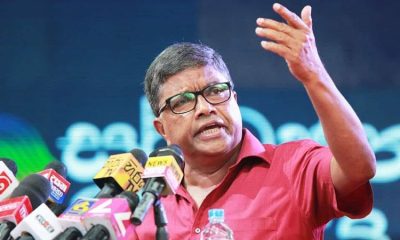
CP alleges NPP has taken the blame for illegal US sanctions on Iranian vessels
-

 News5 days ago
Sri Lanka, India caught in US-Iran ship crisis
-

 Opinion7 days ago
How long can Sri Lanka remain silent on its demographic crisis?
-

 Latest News5 days ago
Kusal Mendis’ unbeaten 87 hands Sri Lanka consolation win