
Features
Beneath the peace and normalcy in the North


By Jehan Perera
Fifteen years after the end of the war in the North and the East, a tourist might have a difficult time figuring out whether a war was fought there at all, at first glance. There is not much difference between the towns in the North and the South. There is an appearance of peacefulness and normalcy that tourists have taken to. Sri Lanka has claimed the coveted title of the number one destination for solo female travellers in 2024, according to Timeout.com, a leading global media and hospitality business. Sri Lanka’s reputation for hospitality and safety further enhances its appeal to solo female travellers. According to the report, the warmth and friendliness of the locals, combined with the country’s relatively low crime rates, create an environment conducive to memorable and worry-free experiences for women exploring the country on their own. Sri Lanka also offers practical advantages for solo female travellers, such as affordable accommodations, reliable public transportation, and a well-developed tourist infrastructure.
But there is more than meets the eye. During the past week when I travelled north and saw the peacefulness and normalcy that Timeout.com also has, I asked a government officer what he thought was the difference between the North and the South. Without a moment’s hesitation he said that the laws were made in the South though they covered the North also, and that letters from the South came in the Sinhala language although Tamil was made an official language, alongside Sinhala, 37 years ago, in 1987. The fact is that the Tamil language is not quite equal to Sinhala in the Constitution. Article 18 spells out that “(1) The Official Language of Sri Lanka shall be Sinhala. (2) Tamil shall also be an official language.” This could also have been expressed in a single sentence as “The Official Languages of Sri Lanka shall be Sinhala and Tamil.” But instead of one sentence there are two.
The question of which language should be the one to replace the English language, as the official language of the country in 1956, led to “Sinhala only”. It arose from the reality that the Sinhala speaking parliamentarians outnumbered the Tamil speakers and decided that there was need for only one official language which would be Sinhala. A decision was taken by those in the South which impacted upon those in the North. An issue that is currently being discussed by the government but which will have an impact on the North is on fishing rights. The government is under pressure from its Indian counterpart to give access to Indian fishermen to fish in Sri Lankan waters. The escalation of the dispute over the islet of Kachchativu, which India agreed was in Sri Lankan waters, in 1974, is now being used to pressurize Sri Lanka.
FISHING RIGHTS
There have been many initiatives taken to resolve this problem and secure the rights of the Sri Lankan fishermen in the North. One proposal that I heard about was when religious groups offered to buy small boats for the Indian fishermen with aid they received from charities in western countries so that they could fish in Indian waters and not come over to the Sri Lankan side. The hope was that this would keep out the armada of Indian trawlers, owned by big business interests, with political links in India, from crossing over into Sri Lankan waters. It was also reported that the fishermen on the boats would not receive their wages if they did not return with a substantial catch. As the fishermen would have their own small boats they would not need to cross over to the Sri Lankan side and engage in illegal and destructive bottom trawling which denudes the sea of fishes and their spawn. It was also reported that poor fishermen were not prepared to accept the offer as they feared that these small boats could be destroyed by powerful elements controlling the fishing industry.
Due to the failure to find a viable negotiated solution, the Sri Lankan government has deployed its Navy to arrest those Indian fishermen who cross over into Sri Lankan waters and detain their fishing boats. The Indian government has pointed out that more than 6000 Indian fishermen and 1000 boats have been detained over the years by the Sri Lankan Navy. Especially during an election period, the Indian government leaders would like to show the Indian fishing community that they stand by their people, and obtain their vote. It appears that the Sri Lankan government is under pressure to give legal rights to the Indian fishermen to cross over into Sri Lankan waters and fish there. This would be pleasing to the Indian fishing businesses and also be advantageous to the Indian government during this election period. But the price will be paid by the Sri Lankan fishermen who will have to share the fishing catch with much bigger Indian trawlers that engage in bottom trawling which is illegal in Sri Lanka. Sri Lanka needs to make use of the opportunities that its large extent of sea by investing in its fishermen. Those in the South ought not to make decisions injurious to the interests of the people in the North but rather should seek to strengthen them.
Apart from making laws for the North that are harmful to their economic interests, those in the South also make laws that affect the sense of ethnic pride and sorrow of the people in the North. May 18 will be the day that the people in the North will commemorate the 15th anniversary of the end of the war, with its large scale loss of life that took away their loved ones. There is much concern that the government authorities are preparing to amend laws and regulations to clamp down on such commemorations and to describe them as efforts to revive the LTTE who were destroyed on the battlefield in May 2009. The irony is that the Office of Reparation Act No 34 of 1998 section 27 describes what collective and individual reparation entails and mandates the office to support those initiatives.
LTTE PHOBIA
The government officials I spoke to in the North were of the opinion that if the government does not interfere with the commemorations that the families of the victims are planning, the day will pass without incident. They say that most of the people want to move on, though they also want to do their duty by those who died or went missing. The problem is that there are elements on both sides, on the government side and in the North who want to escalate the conflict which gives them a role to play. Even if the government is unwilling to permit the public commemoration of the LTTE, which remains a banned organization in Sri Lanka and internationally, the government must not stand in the way of people commemorating their loved ones whether they were LTTE or not.
The continuing surveillance for those who wish to resurrect the LTTE can reach levels that unnecessarily upset and antagonise the people of the North. When I was there, a story that was doing the rounds was that of a school in Tellipalai, Union College, a respected one, set up by the missionaries of yore. For the school sportsmeet, and inter-house competition, the children had decorated one of the house tents with the images of battle tanks. Another house tent had been decorated with images of a flower that the LTTE declared as its national flower, the Karthikaipoo (Gloiosa Superba). After they heard of this, the police had visited the school premises where they took photographs and videos of the displays. The school teachers and principal were instructed to go to the police station where a statement was recorded from the principal.
The Karthiaipoo plant is valuable in the world of medicine. People have been using this plant in traditional medicine for a very long time, and now scientists are discovering more ways it can help, and has the potential to become a profitable export crop. Ironically, a few weeks earlier, the Sri Lanka Airforce had carried out a hearts and minds campaign among the youth in Jaffna. I was told that the Airmen even provided the youth with flights round the city in an airplane for a modest cost of Rs 1000 each. The Airforce had shown its battle equipment and urged the youth to join it to serve their country and about 50 had submitted their applications. There is peace and normalcy in the North as in the South. The suppression of any move to revive the LTTE must not become a frame of mind to revive the discredited politics of nationalism. But there are problems that need to be addressed by those with their feet on the ground who can also think of the people of Sri Lanka as equal citizens regardless of whether they live in the North or in the South.

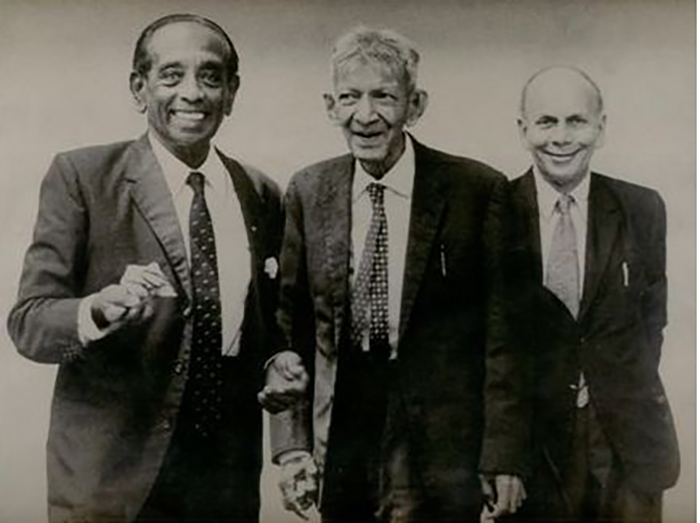
SJV Chelvanayakam, the founder leader of the Ilankai Thamil Arasu Kadchi, aka Ceylon Tamil Federal Party, passed away 49 years ago on 26 April 1977. There were events in Sri Lanka and other parts of the world where Tamils live, to commemorate his memory and his contributions to Tamil society and politics. His legacy is most remembered for his espousal of the cause of federalism and his commitment to pursuing it solely through non-violent politics. Chelvanayakam’s political life spanned a full 30 years from his first election as MP for Kankesanthurai in 1947 until his death in 1977.
Under the rubric of federalism, Chelvanayakam formulated what he called the four basic demands of the Tamil speaking people, a political appellation he coined to encompass – the Sri Lankan Tamils, Sri Lankan Muslims and the hill country Tamils (Malaiyaka Tamils). The four demands included the restoration of the citizenship rights of the hill country Tamils; cessation of state sponsored land colonisation in the North and East; parity of status for the Sinhala and Tamil languages; and a system of regional autonomy to devolve power to the northern and eastern provinces.
High-minded Politics
Although the four basic demands that Chelvanayakam articulated were not directly delivered upon during his lifetime, they became part of the country’s political discourse and dynamic to such an extent that they had to be dealt with, one way or another, even after his death. So, we can call these posthumous developments as Chelvanayakam’s vicarious legacies. There is more to his legacy. He belonged to a category of Sri Lankans, Sinhalese, Tamils and Muslims, who took to politics, public life, public service, and even private business with a measure of high-mindedness that was almost temperamental and not at all contrived. Chelvanayakam personified high-minded politics. But he was not the only one. There were quite a few others in the 20th century. There have not been many since.
Born on 31 March 1898, Chelvanayakam was 49 years old when he entered parliament. He was not an upstart school dropout dashing into politics or coming straight out of the university, or even a hereditary claimant, but a self-made man, an accomplished lawyer, a King’s Counsel, later Queen’s Counsel, and was widely regarded as one of the finest civil lawyers of his generation. He was a serious man who took to politics seriously. Howard Wriggins, in his classic 1960 book, “Ceylon: Dilemmas of a New Nation”, called Chelvanayakam “the earnest Christian lawyer.”
Chelvanayakam’s professional standing, calm demeanour, his personal qualities of sincerity and honesty, and his friendships with men of the calibre of Sir Edward Jayatilleke KC (Chief Justice, 1950-52), H.V. Perera QC, P. Navaratnarajah, QC, and K.C. Thangarajah, were integral to his politics. The four of them were also mutual friends of Prime Minister SWRD Bandaranaike and they played a part in the celebrated consociational achievement in 1957, called the B-C Pact.
Chelvanayakam effortlessly combined elite consociationalism with grass roots politics and mass movements. He led the Federal Party both as a democratic organization and an open movement. Chelvanayakam and the Federal Party used parliament as their forum to present their case, the courts to fight for their rights, and took to organizing non-violent protests, political pilgrimages and satyagraha campaigns. He was imprisoned in Batticaloa, detained in Panagoda, and was placed under house arrest several times. His Alfred House Gardens neighbours in Colombo used to wonder why the government and the police were after him, of all people, and why wouldn’t they do something about his four boisterous, but studious, sons!
He was a rare politician who filed his own election petition when he was defeated in the 1952 election, his first as the leader of the Federal Party, and was rewarded with punitive damages by an exacting judge. He had to borrow money from Sir Edward Jayatilleke to pay damages. The common practice for losing candidates was to file vexatious petitions in the name of one of their supporters with no asset to pay legal costs. Chelvanayakam was too much of a principled man for that. As a matter of a different principle, the two old Left parties never challenged election losses in court, but Dr. Colvin R de Silva singled out Chelvanayakam’s uniqueness for praise in parliament, in the course of a debate on amendments to the country’s election laws in 1968.
Disenfranchisement & Disintegration
Although he became an MP in 1947, Chelvanayakam had been associated with GG Ponnambalam and the Tamil Congress Party for a number of years. GG was the flamboyant frontliner, SJV the quiet mainstay behind. Tamil politics at that time was all about representation. In fact, all politics in Sri Lanka has been all about representation all the time. It started when British colonial rulers began nominating local (Sinhala, Tamil, Muslim) representatives to quasi legislative bodies, and it became a contentious political matter after the introduction of universal franchise in 1931.
Communal representation was conveniently made to look ugly by those who themselves were politically communal. Indeed, under colonial rule, if not later too, Sri Lankans were a schizophrenic society where most Sinhalese, Tamils and Muslims were socially friendly, but politically communal. The underlying premise to the fight over representation was that British colonialists were not leaving in a hurry and they were there to stay and rule for a long time. Hence the jostling for positions under a foreign master. It was in this context that Ponnambalam made his celebrated 50-50 pitch for balanced representation between the Sinhalese, on the one hand, and all the others – Tamils, Muslims, Indian Tamils – combined on the other. It was a perfectly rational proposition, but it was also perfectly poor politics.
But independence came far sooner than expected. The Soulbury Constitution was set up not for a continuing colonial state, but as the constitution for an independent new Ceylon. So, the argument for balanced representation became irrelevant in the new circumstances. The new Soulbury Constitution was enacted in 1945, general elections were held in 1947, a new parliament was elected, and Ceylon became independent in 1948. SJV Chelvanayakam was among the seven Tamil Congress MPs elected to the first parliament led by GG Ponnambalam.
The Tamil Congress campaigned in the 1947 election against accepting the Soulbury Constitution and for a vaguely formulated mandate “to cooperate with any progressive Sinhalese party which would grant the Tamil their due rights.” But what these rights are was not specified. In a Feb. 5, 1946 speech in Jaffna, Ponnambalam specifically proposed “responsive cooperation between the communities” – not parties – and advocated “a social welfare policy” to benefit not only the poor masses of Tamils but also the large masses of the Sinhalese.
So, when Ponnambalam and four of the seven Tamil Congress MPs decided to join the government of DS Senanayake with Ponnambalam accepting the portfolio of the Minister of Industries, Industrial Research and Fisheries, they were opposed by Chelvanayakam and two other Tamil Congress MPs. The immediate context for this split was the Citizenship question that arose soon after independence when DS Senanayake’s UNP government introduced the Ceylon Citizenship Bill in parliament. The purpose and effect of the bill was to deprive the estate Tamils of Indian origin (then numbering about 780,000) of their citizenship. Previously the government had got parliament to enact the Elections Act to stipulate that only citizens can vote in national elections. In one stroke, the whole working population of the plantations was disenfranchised.
GG Ponnambalam and all seven Tamil Congress MPs voted against the two bills. Joining them in opposition were the six MPs from the Ceylon Indian Congress representing the Malaiyaka Tamils and 18 Sinhalese MPs from the Left Parties. The Citizenship Bill was passed in Parliament on 20 August 1948. Ponnambalam called it a dark day for Ceylon and accused Senanayake of racism. But less than a month later, on September 3, 1948, he joined the Senanayake cabinet as a prominent minister and the government’s principal defender in parliamentary debates. Dr. NM Perera once called Ponnambalam “the devil’s advocate from Jaffna.”
Chelvanayakam remained in the opposition with two of his Congress colleagues. A little over an year later, on December 18, 1949, Chelvanayakam founded the Ilankai Tamil Arasu Kadchi, Federal Party in English. Not long after, joining Chelvanayakam in the opposition was SWRD Bandaranaike, who broke away from the UNP government over succession differences and went on to form another new political party, the Sri Lanka Freedom Party. As was his wont as a Marxist to see trends and patterns in politics, Hector Abhayavardhana saw the breakaways of Chelvanayakam and Bandaranaike, as well as the emergence of Thondaman as the leader of the disenfranchised hill country Tamils, as symptoms of a disintegrating society as it was transitioning from colonial rule to independence.
Abhayavardhana saw the Citizenship Act as the political trigger of this disintegration in the course of which “what was set up for the purpose of a future nation ended in caricature as a Sinhalese state.” Chelvanayakam may have agreed with this assessment even though he was located at the right end of the ideological continuum. “Ideologically, SJV is to the right of JR,” was part of political gossip in the old days. He saw “seeds of communism” in Philip Gunawardena’s Paddy Lands Act. For all their differences, Chelvanayakam and Ponnambalam were united in one respect – as unrepentant opponents of Marxism.
The Four Demands
Chelvanayakam had his work cut out as the leader of a new political party and pitting himself against a formidable political foe like Ponnambalam with all the ministerial resources at his disposal. Chelvanayakam may not have quite seen it that way. Rather, he saw his role as a matter of moral duty to fill the vacuum created by what he believed to be Ponnambalam’s betrayal, and to provide new leadership to a people who were at the crossroads of uncertainty after the unexpectedly early arrival of independence.
He set about his work by expanding his political constituency to include not only the island’s indigenous Tamils, but also the Muslims and the Tamil plantation workers from South India – as the island’s Tamil speaking people. It was he who vigorously introduced the disenfranchised Indian Tamils as hill country Tamils. In the aftermath of the Citizenship Act and disenfranchisement, restoring their citizenship rights became an obvious first demand for the new Party.
Having learnt the lesson from Ponnambalam’s failed 50-50 demand, Chelvanayakam territorialized the representation question by identifying the northern and eastern provinces as “traditional Tamil homelands,” and adding a measure regional autonomy to make up for the shortfall in representation at the national level in Colombo. To territorialization and autonomy, he added the cessation of state sponsored land colonization especially in the eastern province. Chelvanayakam and the Federal Party painstakingly explained that they were by no means opposed to Sinhalese voluntarily living in Tamil areas, either as a matter of choice, pursuing business or as government and private sector employees, but the nuancing was quite easily lost in the political shouting match.
The fourth demand, after citizenship, regional autonomy, and land, was about language. Language was not an issue when Chelvanayakam started the Federal Party. But he pessimistically predicted that sooner or later the then prevailing consensus, based on a State Council resolution, over equality between the two languages would be broken. He was proved right, sooner than later, and language became the explosive question in the 1956 election. As it turned out, the UNP government was thrown out, SWRD Bandaranaike led a coalition of parties to victory and government in the south, while SJV Chelvanayakam won a majority of the seats in the North and East, including two Muslims from Kalmunai and Pottuvil.
After the passage of the Sinhala Only Act on June 5, 1956, the Federal Party launched a political pilgrimage and mobilized a convention that was held in Trincomalee in the month of August. The four basic demands were concretized at the convention, viz., citizenship restoration for the hill country Tamils, parity of status for the Sinhala and Tamil languages, the cessation of state sponsored land colonization, and a system of regional autonomy in the Northern and Eastern Provinces.
The four demands became the basis for the Bandaranaike-Chelvanayakam agreement – the B-C Pact of 1957, and again the agreement between SJV Chelvanayakam and Dudley Senanayake in 1965. The former was abrogated by Prime Minister Bandaranaike under political duress but was not abandoned by him. The latter has been implemented in fits and starts.
The two agreements which should have been constitutionally enshrined, were severely ignored in the making of the 1972 Constitution and the 1978 Constitution – with the latter learning nothing and forgetting everything that its predecessor had inadvertently precipitated. The political precipitation was the rise of Tamil separatism and its companion, Tamil political violence. Ironically, Tamil separatism and violence created the incentive to resolve what Chelvanayakam had formulated and non-violently pursued as the four basic demands of the Tamils.
After his death in 1977, the citizenship question has finally been resolved. The 13th Amendment to the 1978 Constitution that was enacted in 1987 resolved the language question both in law and to an appreciable measure in practice. The same amendment also brought about the system of provincial councils, substantially fulfilling the regional autonomy demand of SJV Chelvanayakam. The land question, however, has taken a different turn with state sponsored land colonisation in the east giving way to government security forces sequestering private residential properties of Tamil families in the north, especially in the Jaffna Peninsula.
Further, the future of the Provincial Council system has become uncertain with the extended postponement of provincial elections by four Presidents and their governments, including the current incumbents. The provinces are now being administered by the President through handpicked governors without the elected provincial councils as mandated by the constitution. Imagine a Sri Lanka where there is only an Executive President and no parliament – not even a nameboard one. “What horror!”, you would say. But that is the microcosmic reality today in the country’s nine provinces.
by Rajan Philips
Features
Application of AI in Logistics in Sri Lanka can improve efficiency, reduce cost and enhance decision making

“AI increases profits while reducing un ethical intervention which is proven by Successful Global Business Models”
Artificial Intelligence(AI) is still only a buzz word in the Sri Lankan society, though many wanted to have an awareness of the concept the resources are scares, even still the IT industry has not formulated any awareness programs or a Degree yet to cope with the development. But world education warns that there want be any IT based jobs in future without learning the AI. AI has multiple use in any discipline and it has the ability to increase the efficiency of the work intern cut down the product or the service cost. Below description is how the application of AI can smoother the function of Logistic or the Supply Chain Management.
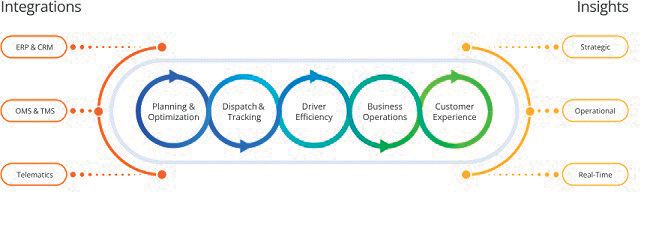
AI Integrating Procedure for Distribution Systems
Using Artificial Intelligence (AI) in logistics can greatly improve efficiency, reduce costs, and enhance decision-making in simple enhance the profit margins. Below is a structured overview of how AI can be used in logistics, including key applications, tools, and real-world examples. Machine Learning(ML) is the foundation to AI but subsequently develops the capability of absorbing the information from the cloud (IT environment) and produce future behavior or trends by analyzing the fed data to the computers on a certain period of time. In some occasions vendors offer unbelievable discounts by using ML or AI, because it clearly understands the market behavior, human behavior, expiration and many other variables that gives the profits or losses to the product or the service.
Key Areas Where AI is Used in Logistics;
· Demand Forecasting
· Route Optimization
· Warehouse Automation
· Predictive Maintenance
· Inventory Management
· Supply chain Management
· Customer Service with Chat bots
· Fraud Detection and Risk Management
1. Demand Forecasting
AI can analyze historical data, market trends, and external factors (like weather or news) to:
· Predict product demand more accurately
· Optimize inventory levels
· Reduce stockouts or overstocking
Tools: Machine learning models (e.g., time series forecasting) and IT platforms/software like Amazon Forecast, Prophet by Meta. These are the software applications that helps to understand the future trends.
Amazon Forecasting software
Traditional forecasting methods typically rely on statistical modeling, but software like “Chronos” that treats time series data (data collected during a certain period of time) as a language to be modeled and uses a pre-trained FM (forecast Models) to generate forecasts, which similar to how “Large Language Models” (LLMs) generate texts helps you achieve accurate predictions faster, significantly reducing development time compared to traditional methods.
Prophet by Meta
Prophet is a very efficient and accurate procedure for forecasting time series data based on an additive model where non-linear trends are fit with yearly, weekly, and daily seasonality, plus holiday effects. It works best with time series that have strong seasonal effects and several seasons of historical data. This software adds many social, cultural and geographical variables other than internal information to decision making.
2. Route Optimization
AI-powered systems can calculate the most efficient delivery routes in real-time using:
· Traffic data
· Weather conditions
· Delivery time windows
· Vehicle capacity and fuel usage
Example: UPS (one of the largest Logistic companies in the world) uses its ORION system (AI-based) to save millions of gallons of fuel per year.
IT Tools: Google OR-Tools, Route4Me, Mapbox with ML integration.
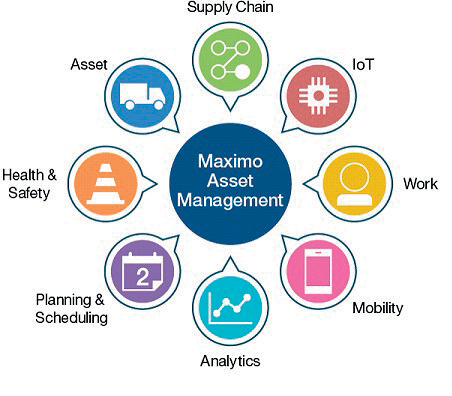
IBM Maximo is a multi-facet coordinator
The “Route4Me” IT platform automates and integrates mission-critical last mile workflows, empowering route planners, dispatchers, drivers, and managers to take the business to the next level. Distribution networks, passenger transportation networks can achieve much cost reduction by using above platforms. This is a good platform for the Sri Lanka passenger industry to reduce the overheads for the population. In Sri Lanka “Pick me” and “Uber” uses similar platforms in their transportation industry. Whole three wheeler industry can be regulating with this kind of software and transfer benefits to the passengers.
3. Warehouse Automation
AI enables:
· Robotics for picking, packing, and sorting
· Vision systems for scanning and inventory management
· Autonomous forklifts and drones for internal transport
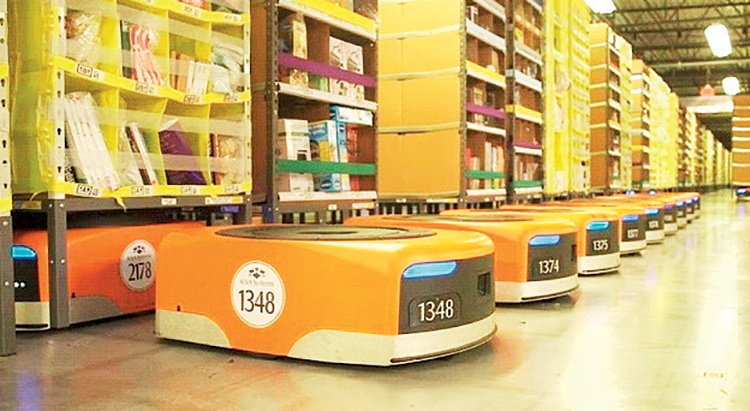
Example: Amazon’s use of “Kiva robots” in fulfillment(distribution) centers.
Kiva Robots in Warehouses
Traditionally, goods are moved around a distribution center using a conveyor system or by human-operated machines (such as forklifts). In Kiva’s approach, items are stored in portable storage units. When an order is entered into the Kiva database system, the software locates the closest automated guided vehicle to the item and directs it to retrieve it. The mobile robots navigate around the warehouse by following a series of computerized bar-code stickers on the floor. Each drive unit has a sensor that prevents it from colliding with others. When the drive unit reaches the target location, it slides underneath the pod(Pallet) and lifts it off the ground through a corkscrew action. The robot then carries the pod to the specified human operator to pick up the items or subsequently hand over to the “drone” to deliver to the customer. Human intervention is minimal and accordingly overheads are reduced, Sri Lanka needs to achieve this kind of operational level in order to par with the international markets.
4. Predictive Maintenance
Traditionally Sri Lankans are week in maintenance, they basically wait until the machine stops in the other way bureaucratic too are much restrict on the maintenance and the procurement procedure. Applying this kind of maintenance software will eradicate all of these lethargies and the bureaucratic blocks. Subsequently continuing the smooth operations and productions.
AI monitors equipment (vehicles, conveyor belts, etc.) to:
· Predict when they will fail
· Schedule maintenance proactively
· Reduce downtime and repair costs
Tools: IoT(internet of things as cameras, sensors, GPS etc.) sensors + ML models (e.g., anomaly detection), IT platforms like IBM Maximo.
IBM Maximo is a multi-facet coordinator
“From equipment to factories, from fleets to infrastructure, Maximo Application Suite empowers users across verticals to coordinate maintenance and management for a broad range of asset classes”.
5. Supply Chain Visibility
AI can analyze data across the supply chain to:
· Track shipments in real-time
· Identify delays or bottlenecks
· Provide predictive ETAs
📦 Example: DHL (Logistic Company) uses AI to forecast transit delays and offer dynamic ETA updates.
This is an ideal tool for cargo management, ideal for sea ports and the air ports in Sri Lanka. This is one of the grave gray areas in the port system, though the port system is lacking the required information due to that the client has to pay the demurrages and warehouse cost for the ports. Also, cut down unnecessary delays and reduce bribes and corruption at all levels.
6. Inventory Management
AI helps optimize:
· Stock levels across multiple warehouses
· Replenishment timing
· Safety stock calculation
Tools: ERP (Entrepreneur Resource Planning) systems with embedded AI (e.g., SAP, Oracle), custom ML models.
These systems drastically reduce the human intervention and speedup the Supply management process.
7. Customer Service & Chatbots
AI-powered chatbots and virtual assistants can:
· Handle customer queries 24/7
· Track orders
· Provide personalized delivery updates
Tools: Dialogflow, Microsoft Bot Framework, ChatGPT API
Dialogflow
“Dialogflow” is a natural language understanding IT platform that makes it easy to design and integrate a conversational user interface into the mobile app, web application, device, bot, interactive voice response system, and so on. Using Dialogflow, establishments can provide new and engaging ways for users to interact with the product. Dialogflow can analyze multiple types of input from the customers, including text or audio inputs (like from a phone or voice recording). It can also respond to the customers in a couple of ways, either through text or with synthetic speech.
AI Conversational Chatbots Platform
Above IT platforms control the human intervention and reduce the cost of employees. Chatbots are basically efficient than the humans due to the high memory power for the standard customer inquiries. Application to Government sector will reduce the burden for the general public.
8. Fraud Detection & Risk Management
AI detects unusual patterns in:
· Orders
· Transactions
· Supplier behavior
Helps prevent:
· Cargo theft
· Counterfeit goods
· Financial fraud
*”KPMG Clara” for Supply Chain Risk Management
“KPMG Clara” is an AI-powered IT platform offering supply chain analytics, risk detection, and compliance management.
Key Features:
· AI-driven risk modeling
· ESG (Environmental, Social and Governance) and compliance monitoring
· Predictive analytics for disruptions
· Supplier risk scoring
“Geo Analysis” (AI based) IT platform in Supply Chain Access Control
Above IT platform Monitor access patterns across cross-border freight hubs, regional warehouses, and remote carrier logins. “Geo analysis” for supply chain authentication identifies impossible travel, geo-inconsistencies, and spoofed IPs to reduce credential abuse and unauthorized entry into logistics systems. This important IT platform can reduce corruption and many unethical practices, ideal tool for the Sri Lankan Government sector that can curb the mal practices.
Artificial Intelligence (AI) is a remarkable IT tool which can apply in almost all the sectors that can reap the Efficiency and Accuracy. In above paragraphs I have described the application in different stages of the Logistic or the Supply Chain Management. Application of AI tools can be done on stages as initially find the specific pain points pertaining to the supply chain and then, prepare data from the GPS, inventory systems, sales forecasts and supplier records. Subsequently can understand the specific AI platforms and ML models to suit the SCM operation. Further, can apply in a small scale as a pilot project and analyze impact as cost savings or efficiency gains. Once understand the model can roll out to other areas of operations in the establishment.
Final outcome will be “15% reduction in fuel cost, 20% faster deliveries, Increased customer satisfaction”
There may be many negative lobbies since this is new to the many sectors in the country and further ability to proof the corruption but proper education and understanding the world AI based business models, establishments can reach the required goal.
(Writer can be reached at, chandana_w@yahoo.com)
by Lt Col. Chandana Weerakoon.
Chartered Logistician
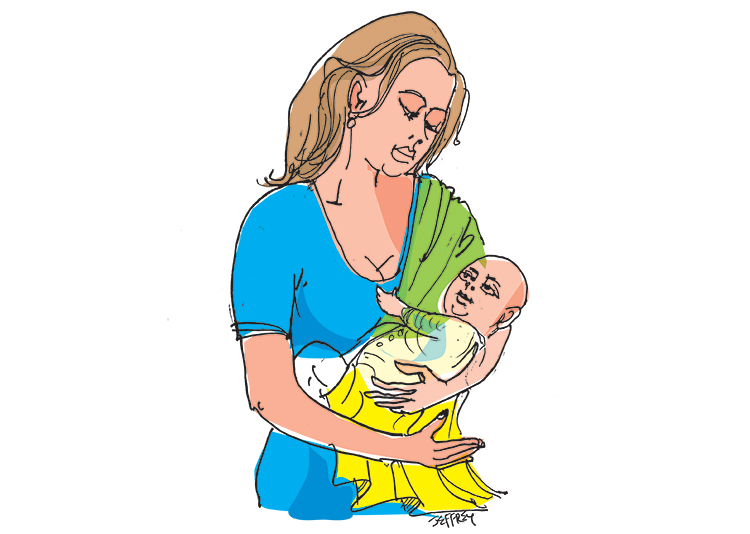
Since having my baby, I have been regularly met with the question, “Are you back at work?”
“No,”
I reply. “I am doing my PhD from home.”
Several emotions arise. I feel guilty that I am not back at work, that somehow I should be. I also feel relieved that I can justify my time at home by offering up the PhD as a worthy endeavour. Sometimes, the person responds in surprise, “Oh, so no work?” Other times, they are approving, “How lucky for you and your baby.” Occasionally, there is the advice, “Don’t give up work.”
At the back of my mind are certain thoughts. “Am I not ‘working’? Isn’t the work of motherhood also considered ‘work’? If it isn’t, shouldn’t it be?”
Although the questions, comments, and advice about returning to work are made innocently enough, mostly benevolently, they have prompted me to reflect on the idea of work and motherhood, and how mothers and society view both.
Motherhood, I believe, is a full-time, highly skilled, unpaid job that never ends. All mothers work at least two jobs. They do the work of mothering, and also work in either a paid or unpaid additional role. Many women will do even more. They mother, care for their elderly parents, work a paid job, voluntarily contribute to community building, and try to fit in creative pursuits, hobbies, or ‘self-care’ when they can.
Motherhood requires many skills. You are, effectively, the CEO of your family and home (with hopefully a supportive co-CEO by your side). There is the work of child-rearing, which requires patience, energy, creativity, presence, flexibility, courage, fortitude, knowledge, and the ability to research, learn, and unlearn. You are raising the future. Then there is the work of home and family life, which requires skills in leadership, organisation, prioritisation, delegation, negotiation, financial management, crisis management, and conflict resolution. There is also the internal work of being self-aware, forgiving yourself and others, practicing compassion, and accepting the inherent imperfections of ‘doing it all’.
This work of motherhood is now recognised as ‘unpaid caregiving and domestic work’ and ‘invisible labour’ by international organisations such as the United Nations. It includes physical labour, direct care labour, mental or cognitive labour, and emotional labour, and is mostly the work of women.
I am not complaining. Men have their own unpaid labour. I love being a mother and wife. I view it as a privilege and a blessing. Ideally, the job can also be supported by paid or unpaid help. My point is that the work of women, and specifically mothers, should be recognised and respected, not only by society, but also by women and mothers themselves.
I know it is not just me who has experienced conflicting emotions about ‘giving up’ traditional work to focus on family life. Within my social circle and more widely, mothers describe a loss of self-worth and identity unless they are ‘working mothers’, and feeling embarrassment and guilt when asked the dreaded question, “What do you do?” There is the loss of financial dignity that comes with taking on an unpaid job, no matter how important you may think it is. Dynamics with husbands also need to shift, where both members are viewed as equally valuable to making the business of ‘home’ successful.
Neha Ruch, the author of The Power Pause, is an American brand strategist-turned-full-time stay-at-home mother and home maker, who addresses this very issue. Many of my thoughts for this article are based on her book. She argues that the time a woman wishes to invest in this phase of life, motherhood and family life, is valuable, not just for the children or family unit, but for the mother herself. It is a time for growth, skill-building, and expanding networks and connections.
Often, it leads women in new, creative, and more fulfilling directions, and provides an opportunity for them to re-enter the workforce on their own terms. She also points out that ‘the pause’ is not a luxury for a lucky minority, as many women become the default caregiver for their children if childcare is too costly, or not the preferred option. Through the movement she has created, Ruch provides legitimacy, validation, and structure to this phase of life (because, after all, it is only a phase, not forever) that is often spoken of as mindless, monotonous, and unglamorous, and I am grateful for it.
I suppose what I am saying is, next time you meet a mother, consider asking her, “How are you?”, and next time I am asked what I do, I should proudly declare (using Ruch’s script), “Right now, I am on a career pause and get to be home with my baby, and I am exploring possibilities for the future.”
(Lihini Wijeyaratne Cooray
Lihini is rediscovering her love for writing while embracing first-time motherhood and her ‘Power Pause’. She is also navigating her roles as a doctor and PhD researcher. She hopes that her writing can inspire a fresh perspective on motherhood as being valuable, powerful, and exciting.)
by Lihini Wijeyaratne Cooray

One dead in US after being struck by taking off Frontier Airlines plane

Gill, Sai Sudharsan, Rashid power Gujarat Titans to second spot with fourth straight win

Showers above 100 mm are likely at some places in the Western, Sabaragamuwa, Central, Southern, Uva, North-western and Northern provinces and in Anuradhapura district.

Lanka Port City officials to meet investors in Dubai

Research Vessel Dr. Fridtjof Nansen Completes Marine Scientific Survey in Sri Lankan Waters and Departs Colombo

Lanka sends over one fourth of donated corneas abroad

‘Dates have the highest sugar content to fight Coronavirus’

Sunday Island 27 December – Headlines

#SundayIsland 17th December – Headlines

Sunday Island – 28th March

Sunday Island Headlines – 21 March

Sunday Island – 21st February – Headlines
-

 News3 days ago
MIT expert warns of catastrophic consequences of USD 2.5 mn Treasury heist
-
 News5 days ago
CJ urged to inquire into AKD’s remarks on May 25 court verdict
-
 News6 days ago
USD 3.7 bn H’tota refinery: China won’t launch project without bigger local market share
-

 Editorial3 days ago
Clean Sri Lanka and dirty politics
-

 Editorial6 days ago
Deliver or perish
-
 Opinion5 days ago
Security, perception, and trust: Sri Lanka’s delicate balancing act
-

 Editorial2 days ago
The Vijay factor
-
 News6 days ago
Administrators oppose govt. move to deploy Clean Sri Lanka agents in District and Divisional Secretariats