
News
U.S. Embassy champions youth leadership and development at Youth Forum Leadership Summit 2024

The U.S. Embassy Colombo concluded its Youth Forum Leadership Summit 2024, an event that united 120 young leaders, change-makers and visionaries from across the region to facilitate dialogue on global challenges, foster a spirit of entrepreneurship and social responsibility, and promote inclusivity in society. The summit, a dynamic event designed to empower the next generation of South Asian leaders, welcomed youth from Bangladesh, India, Maldives, Nepal and Pakistan alongside participants from Sri Lanka’s five American Spaces in Colombo, Kandy, Jaffna, Matara, and Batticaloa.
Speaking to participants at the conclusion of the summit on March 7, U.S. Ambassador Julie Chung highlighted the importance of using their energy for positive change in their communities, noting: “This week has been a journey! From diving into diverse cultures to shaking up the status quo, you’ve shown that ‘doing something is better than doing nothing.’ The United States is proud to nurture such talent and invest in the leaders of tomorrow across the region. I’m eagerly anticipating the incredible impacts you’ll bring to your communities and beyond. A huge shoutout to all the speakers, mentors, and facilitators for making the Youth Forum Leadership Summit a success!”
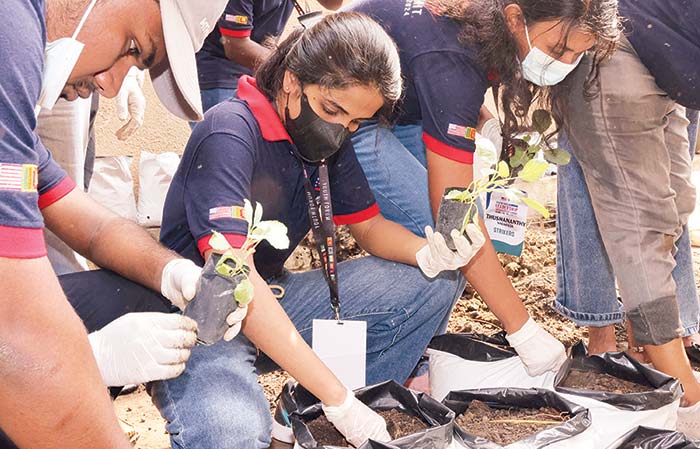
On March 4, the keynote address was delivered by Kasturi Chellaraja Wilson, Group CEO of Hemas, who discussed her personal journey and embracing every challenge or failure as an opportunity. On March 5, “Embassy Day,” participants visited the U.S. Embassy and engaged with staff during mock visa interviews, self-defense sessions, and project management exercises. Throughout the week, the summit provided a platform for young leaders to present their innovative ideas and showcased a series of interactive sessions designed to hone critical leadership skills. From engaging discussions on public speaking, entrepreneurship, AI technology, and team management to workshops on embracing diversity, problem-solving and ethical leadership, the participants were equipped with the tools necessary for driving positive change within their communities and be successful in the modern world. The summit culminated in a service-learning project at Vijayaba Maha Vidyalaya in Colombo 14, where participants led an initiative to uplift the school’s library, science and music rooms, and planted an edible garden.
Highlighting the importance of inclusivity, this year’s summit also welcomed hearing-impaired Youth Forum members from Batticaloa and featured comprehensive sign language interpretation to ensure everyone’s full participation. Speaking through sign language interpretation, Jafry Hathim took the stage to express his thanks for the sessions on AI, self-defense, and cross-cultural communication: “This experience will bring me a great opportunity to go forward in in my life as a great youth leader.”
Finally, from Nepal, summit participant Sairus Sharma said, “As we reflect on our time together, we’ve realized something unique, something profound – despite our differences in cultures and backgrounds, we share a common thread that unites us beyond the man-made borders…Let’s continue to work together towards a brighter future for all, keeping in mind that South Asia’s collective efforts have the power to make a real different in the world.”





Advisory for strong winds and rough seas for Multi-day boats in the Bay of Bengal deep sea areas
Issued by the Natural Hazards Early Warning Centre
Issued at 05.00 p.m. 18 September 2026, valid for the next 24 hours.
PLEASE BE AWARE!
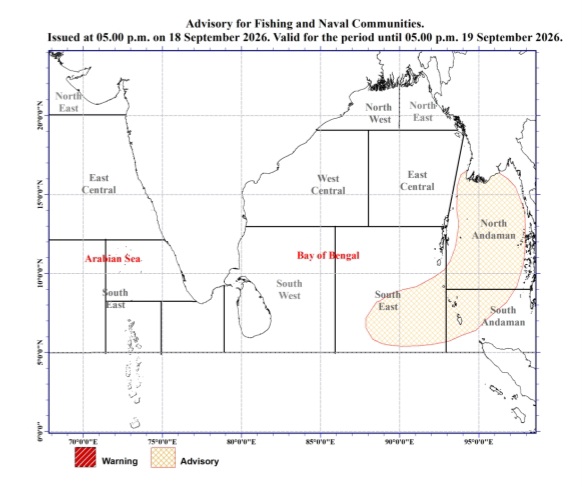
The atmospheric disturbance to the North of the Andaman Islands in the Bay of Bengal, is likely to develop into a low pressure area within the next 24 hours.
Due to its influence, wind speed over the Bay of Bengal sea areas will increase during the next few days starting from
tomorrow (19th).
The wind speed in the sea areas marked under the “Advisory” category on the map below will increase to 55-65 kmph at times and those sea areas will be rough or very rough at times.
Navel and fishing communities engaging the activities over this sea area are advised to be vigilant and be attentive to the future forecasts and bulletins issued by the department of Meteorology in this regards.

Text and Pic by Priyan de Silva
Director General of the Commission to Investigate Allegations of Bribery and Corruption (CIABOC) Ranga Dissanayake has questioned whether some promises contained in the National People’s Power (NPP) manifesto, A Thriving Nation – A Beautiful Life, could be fulfilled even if the government wanted to implement them.
Dissanayake raised the issue during a discussion following the release of the third biannual report on manifesto monitoring by the March 12 Movement, at the BMICH, on Wednesday.
He questioned whether the report had taken into account legal and institutional constraints affecting the implementation of certain pledges.
Citing the proposal to establish Anti-Corruption Investigation Offices in each district, Dissanayake said such offices could be established only with the agreement of CIABOC and that amendments to the Anti-Corruption Act would be necessary.
He also referred to the pledge to abolish the Executive Presidency, noting that successive governments had made similar commitments since 1994. He questioned whether there had been adequate consideration of where the powers vested in the Executive President would be transferred if the system were abolished.
On the proposal to establish a Public Prosecutor, Dissanayake questioned whether the Government intended to maintain the office alongside the Attorney General, who currently performs prosecution-related functions.
Executive Director of the Institute for Democratic Reforms and Electoral Studies (IRES) Manjula Gajanayake said Dissanayake’s remarks should be regarded as his personal views and not as Government policy.
Monitoring and Evaluation Consultants M. Thilakarajah and D.D. Mataharaarachchi presented the third-phase findings, covering January to June 2026.
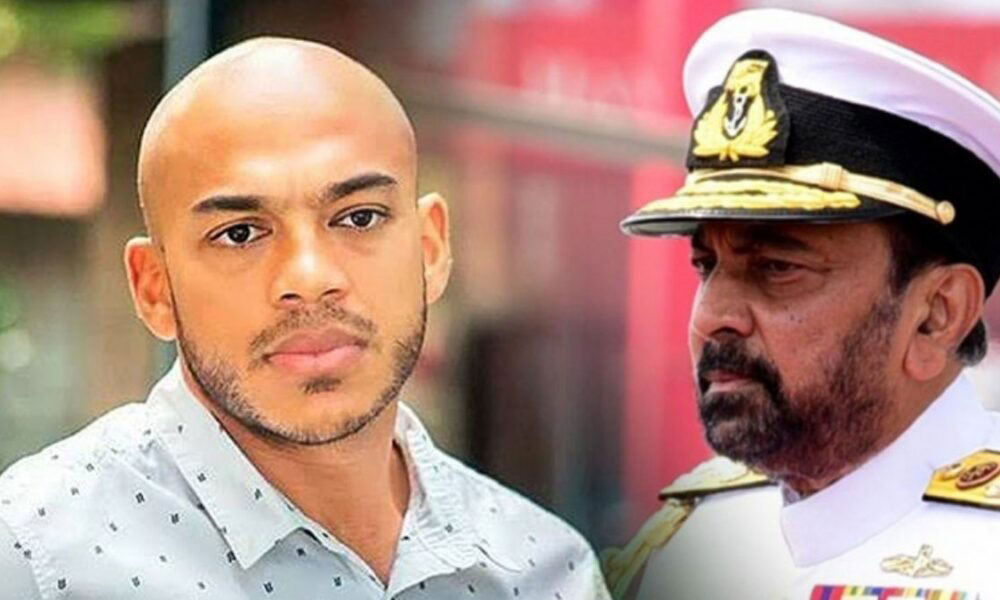
The corruption case filed by the Commission to Investigate Allegations of Bribery or Corruption (CIABOC) against former Navy Commander, Admiral of the Fleet Wasantha Karannagoda, and Yoshitha Rajapaksa was set for a pre-trial conference by the Colombo High Court.
The case was taken up before the Colombo High Court on Thursday (17), when the accused, who are currently out on bail, appeared before the court. After considering the submissions made, the court ordered that the case be called for a pre-trial conference.
The CIABOC had filed the case against the accused, alleging that a corruption offence was committed by sending Yoshitha Rajapaksa, son of former President Mahinda Rajapaksa, for training at the Royal Naval College in the United Kingdom despite him not having the required qualifications.

Advisory for strong winds and rough seas for Multi-day boats in the Bay of Bengal

Showers in the Western, Sabaragamuwa and North-western provinces and in Galle, Matara, Kandy and Nuwara-Eliya Districts

Some NPP manifesto promises may be difficult to fulfil – CIABOC DG

Yoshitha and ex-Navy chief Karannagoda’s case fixed for PTC

Court orders probe into Wimal’s rally speech

Court to rule on Dilith’s writ petition on September 30

‘Dates have the highest sugar content to fight Coronavirus’

Sunday Island 27 December – Headlines

#SundayIsland 17th December – Headlines

Sunday Island – 28th March

Sunday Island Headlines – 21 March

Sunday Island – 21st February – Headlines
-

 News6 days ago
Gnanasara Thero absconding after SC ruling
-

 Opinion5 days ago
From Galkissa (Mount Lavinia) to Tambuttegama
-

 Business6 days ago
HNB Finance strengthens Board with four independent directors
-

 News2 days ago
US embassy won’t comment on IGP’s probe into joint drug raid
-
 Sports6 days ago
Culture within cricket team worrying authorities
-

 Features4 days ago
The emptying university: why are academics leaving?
-

 Features5 days ago
Sri Lanka’s university crisis: Brain drain and union action demand urgent reform
-

 News6 days ago
House to debate 22A, Judicature Bill next week