
News
Prez discusses global situation with focus on Ukraine war, etc.

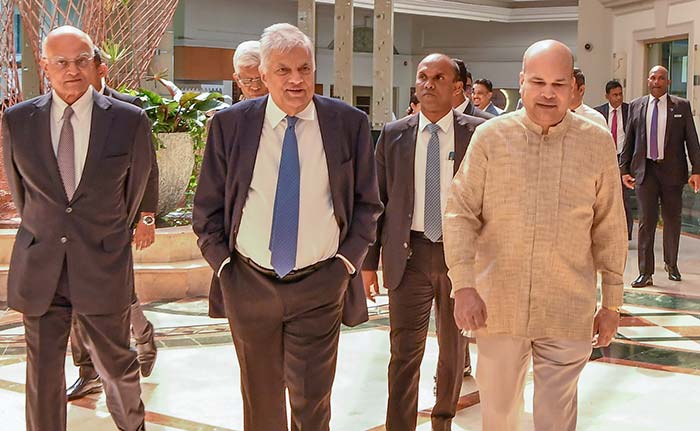
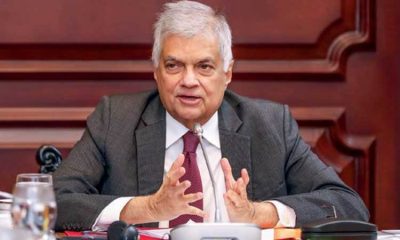
President Ranil Wickremesinghe told the Indian Ocean Security Conference in Colombo that the sanctions imposed on Russia over the war in Ukraine had not caused the collapse of the Russian economy, which had just shifted eastwards.
The following is the text of the statement issued at the conference (Phase II) organised by the Pathfinder Foundation:
It gives me great pleasure to be here with you and the Pathfinder Foundation in addressing one of the key issues for us in Sri Lanka, for us in the region and for all of us in the world.
I must also commend Milinda Morogoda for having organised this session and for the continuing interest that has been shown in security in this region.
The Indian Ocean, let’s take it on its own, not as a part of BRI or part of the Indo-Pacific. The Indian Ocean has now ceased to be in the backwaters and we have become one of the strategic geopolitical regions in the world.
It has happened in the last five, six years. Events have helped us more than any other issue.So how does Asia fit into this context? Asia after all has its own identity, an identity older than that of Europe.
The first set of geopolitics was played either in the Mediterranean or in the Indian Ocean.The Indian Ocean geopolitics have gone on and it has also changed the politics of the world.Britain’s second empire and its rise to pre-eminence was due to India. Without India, Britain was nothing. That’s what Churchill realized.
So he opposed the independence being granted to the Indian Empire, but that was too late. By that time the world opinion had turned in favour of India and more than that, two and a half million Indians had fought in World War II and they were returned. That’s something they could not deal with. So that’s one. That certainly had an impact. India has always influenced the outcome of the Indian Ocean geopolitics to a large extent.
In the Muslim kingdoms, the Arab kingdoms were another, and for some time Indonesia and that area from the time of Srivijaya onwards. So this is basically Asia. Of course, colonial rule meant that we were shoved into the backwaters, but nevertheless, we were one of the most important regions in World War II.
And after independence, we started reasserting identity. Firstly, even before independence, Prime Minister Nehru summoned the Asian Relations Conference. This was followed by Prime Minister John Kotelawala, who summoned the Colombo Powers Conference, which in turn summoned the Bandung Conference. Bandung is the key watermark.
That is where the Asian identity was established. And we carried that forward. Thereafter, Prime Minister Nehru, with President Tito and President Nasser, started the Non-Aligned Movement. You had to include Indonesia, who was responsible for summoning the second Bandung Conference, the Asia-African Conference and also Sri Lanka, which got involved. So, India, Indonesia, Sri Lanka, has been involved throughout. Pakistan and Myanmar at different stages dropped out.
Now, what has happened in the last five years? We have come to the forefront for different reasons. One is the continuing, the build-up of tensions over Taiwan and in East Asia, which has resulted in China shifting its emphasis to the Indian Ocean. And the Silk Route, the BRI, has played a prominent role. The only question that has come is with the debt crisis of how the debt is to be handled by China. So that’s one issue that’s come up.
But during the process, one thing has happened. The Ukraine war, the sanctions imposed by the West did not result in the collapse of the Russian economy. It just shifted eastward. If you look at the amount of oil that is being refined in the Gulf refineries, it is far more than what is found in the Middle East, with the Russian and the Iranian oil. No one knows, we don’t know what we are buying. There’s a certificate.
But the whole of the Russian economy shifted here, into this region, towards Singapore and Hong Kong. But this became the main region, Dubai. So Russia has not collapsed, but the Russian economy, instead of looking westward, has come eastwards. And the money is here. So that became one presence.
Secondly Iran, Iran and Saudi Arabia have made up due to the Chinese intervention. So that’s the second power block that’s coming up. The Arab nations and the Sunnis and the Shias, both are coming together. They have their differences. But nevertheless, they are talking to each other. And some relationships have come about. But it also means, in the medium term, the rise of Iran. After all, the road to Central Asia lies through Iran. And India is helping Iran also in developing the second pole. So you’ve got a second group there.
Third one is India. India itself has become one of the largest economies and the Indian market will keep expanding till the late 21st century. So look at the potential for India, which everyone has recognized. And next is Indonesia and finally, South Africa. So you can see how the new power balances have come.
First was the issue of The US-Chinese rivalry, it brought China in here. Secondly, is the presence of Russia, rise of Iran, even Turkey showing interest, and a large presence of China as it happened there and then the rise of the Asian powers.
But it goes beyond that. For instance, you have the Shanghai cooperation countries bordering the Indian Ocean. Another aspect is the BRICS. The majority of the BRICS are in this region. These are the ones who are challenging the supremacy of the dollar. You take India you take South Africa and Saudi Arabia. Take Iran, even Egypt. All those countries are around the Indian Ocean.
In a sense, it’s building up on one of the resolutions of the Bandung Conference on economics. So the centre has come back here, because somehow other Indian Ocean nations want to take the lead again. And that’s happening.
Then, within it, what are we committed to? Sri Lanka is committed to the strategic position to ensure there is no big power rivalry and the freedom of navigation.
The freedom of navigation has led us now to take part in the operations, for a prosperity guardian in the Red Sea. Because as you see now as the rates go up, the Suez Canal is important for us. During the Six-Day War, when the canal was closed, for ten years, the Colombo port suffered. So we have to ensure that there is, as far as we are concerned, freedom of navigation. The main issues have been the Somali pirates, and now the Houthis. Houthis themselves are a terrorist organization, because we have recognized the Yemen government. So this is one part.
The other issue which is now coming up is the undersea domain, as far as security is concerned. How do you deal with that? So we feel now that the Indian Ocean is the future.
Then what is our relationship? How do we fit into the Indo-Pacific? That’s something that has to be worked out. Because basically, as Bernard Gunatelaka said, it’s of recent origin after World War II. You had the San Francisco system to maintain American dominance in the area and the Shanghai communiqué which brought China and the US together.
So with these two, we saw the emergence of Asia-Pacific when relations were good. Now the relations have turned sour.
So are we to be the battleground in the Indian Ocean?
Secondly, to me, it was a lackadaisical approach of bringing the Indian Ocean in. All of a sudden, decided that the Indo-Pacific will stop at the western boundary of India. Now that is not our ocean. That’s not something that we could accept. For us, the ocean went all the way up to the African coast.
Now the Chinese went one step further. They didn’t stop at the African coast. They thought of putting a rail line, which would take them to the Atlantic coast. On one hand, you are drawing the line at the Indian coast. The other one is taking it all the way up to the Atlantic coast. So those are the differences that have come up. So this meant that we had to see how it’s being developed. It’s only now. And that raises one of the issues. Whether this is really an extension of the manifest destiny?
It brought them into Hawaii, to the Philippines, into Asia Pacific. Is it manifest destiny here? Because then everyone else here has a manifest destiny. India has a manifest destiny. Indonesia thinks of a manifest destiny. So we’ll have a mix of manifest destinies in the Indian Ocean.
So I think we have to sit down and discuss it. And finally, of course, came the fact that Prime Minister Modi and others extended the Indian Ocean all the way up to the African coast.
And secondly, has come the ASEAN view of the Indo-Pacific, where you see as two different entities that are connected. I think that’s the best way that we could go.
But there are also the developments that are taking place in the Indian Ocean. Now while we are talking of this, there are new concepts that are coming in. We have to understand. Firstly, China has already got access to the Indian Ocean through Pakistan, the Friendship Highway. They will come into the Bay of Bengal through Myanmar, another port.
They get access from the interior of China. So that alone, then on the other hand, the agreements between India and Sri Lanka on connectivity, on developing the Trincomalee Harbour, also makes a change there.
Then on the other hand other new roles as I said, one that will go into, one that will take us into Central Asia. Secondly, the one is again what India, the Mumbai, UAE, Israel, Europe connection. That won’t take place immediately. But it is going to, it will take place maybe about another 10 years, 15 years. But it will most probably come through.
Once the Indian economy, if it hits half of what the Chinese economy has got to, you won’t be able to send the goods across. The Suez Canal will not be sufficient. We have to find other ways of approaching destinations.
So in this background, there’s one more issue that has come up now, which is really Gaza. What’s happening there? The Hamas attack on Israel, we have all condemned. But the war in Gaza has created issues. And that’s again, we’ll have the sentiment is not with the U.S. and may not be for some time, maybe five years, six years, longer.
That’s also going to affect diplomacy, whatever the governments want to do. Gaza has become another issue, and its important issue here, because remember, from the Middle East all the way to Indonesia is the arc of Islam. So how are you going to manage here?
This will most probably, will guide the developments in the Indian Ocean in the next few years, the coming decade.
But first is to accept the Indian Ocean and its own identity and its own history, and negotiate from there onwards. That is to me the best way, because most of us in the Indian Ocean, or all of us will insist that identity be retained. There should be no big power rivalry, and how we go ahead. We feel much of the development in the 21st century is going to shift, not merely to India, but beyond that to Africa. So that’s, that’s where it is.
And while we’ve driven it, also you’ve seen a change, where the, excuse me for saying it, but the European influence has got limited. There was a talk on NATO coming into the Indian Ocean, now the question is not coming into the Indian Ocean or Pacific, it’s real that NATO is an organization that can only handle west, and that’s the important issue that has.
So there will be a change here. It has to take place, because the Asian viewpoint of ours, which was first stated in the Bandung Declaration and subsequently in the IORA leaders’ declaration in Jakarta, I think in 2017, will have to guide us in the developments of the Indian Ocean.I don’t want to take any more of your time, but I just express my thoughts as to what the developments would be.”







Latest News
UPDATE: Flash flood on Nepal-Tibet border kills more than 100, with hundreds of tourists missing

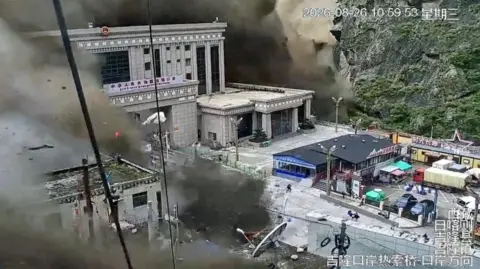
More than 100 people have been killed in Nepal and Tibet, and hundreds of tourists are missing, after a massive flash flood and mudslide
The missing tourists include more than 100 from India, 54 from the US, and 33 from the UK, as well as more than 100 from Nepal itself, according to Nepal’s tourist board. The area is popular with pilgrims and trekker.
Dozens of police officers and army prtxonnel are also missing, as well as power workers. My family was swept away in front of me, one woman tells us – she and her son survived by climbing to a rooftop
In Tibet, Chinese state media report three dead and 265 missing, CCTV from Tibet shows a wall of water and mud hitting buildings at a border crossing.
Authorities initially thought an earthquake may have triggered a landslide – the US Geological Survey now says the sesimic energy was instead generated by a landslide.
(BBC)
Latest News
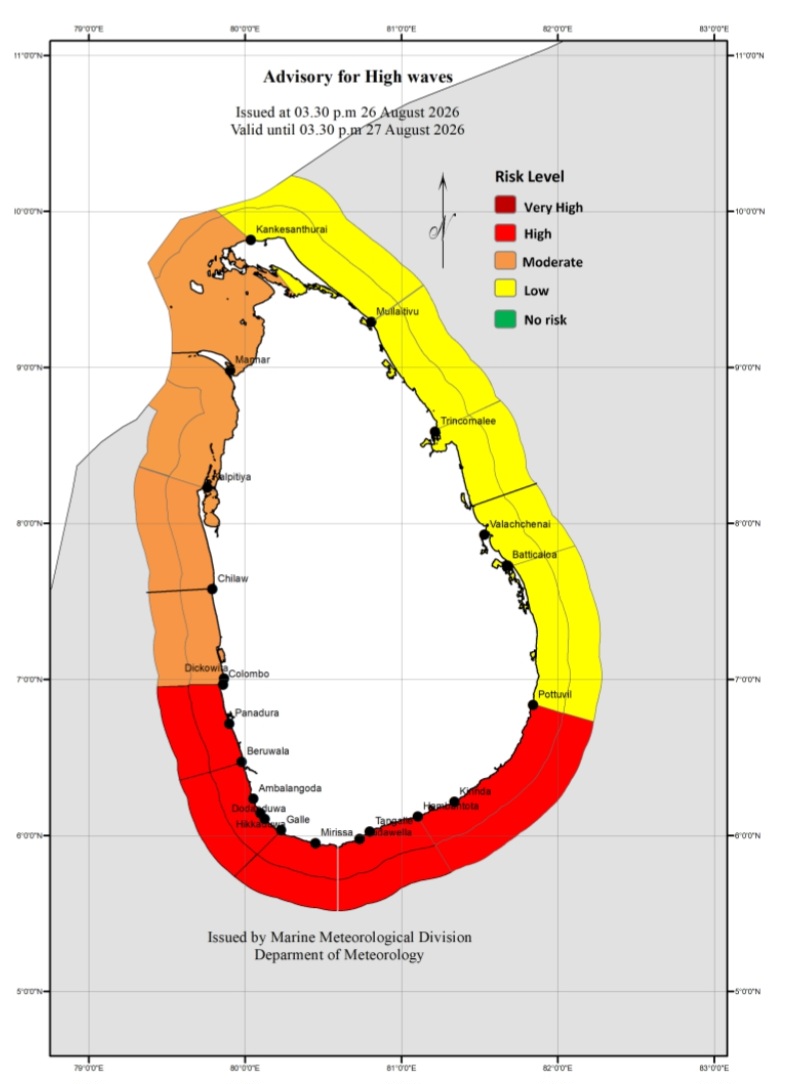
Advisory for High Waves for the sea areas extending from Colombo to Pottuvil via Galle, Matara and Hambantota
Advisory for High Waves
Issued by the Natural Hazards Early Warning Centre Issued at 03.30 p.m. on 26 August 2026 Valid for the period until 03.30 p.m. 27 August 2026
An advisory for high waves has been issued for the sea areas extending from Colombo to Pottuvil via Galle, Matara and Hambantota and naval and fishing communities engaged in activities in the aforementioned sea areas, as well as coastal communities living in the aforementioned nearshore areas, are advised to remain vigilant in this regard
The swell waves (about 2.0 m – 3.0 m) height (This is not for land area) may increase in the sea areas off the coast extending from Colombo to Pottuvil via Galle, Matara and Hambantota. There is a possibility that near shore sea areas off the coast extending from Beruwala to Matara via Galle, may experience surges due to swell waves.
News
We must create social awareness to ensure the physical and mental well-being of children with disabilities – PM
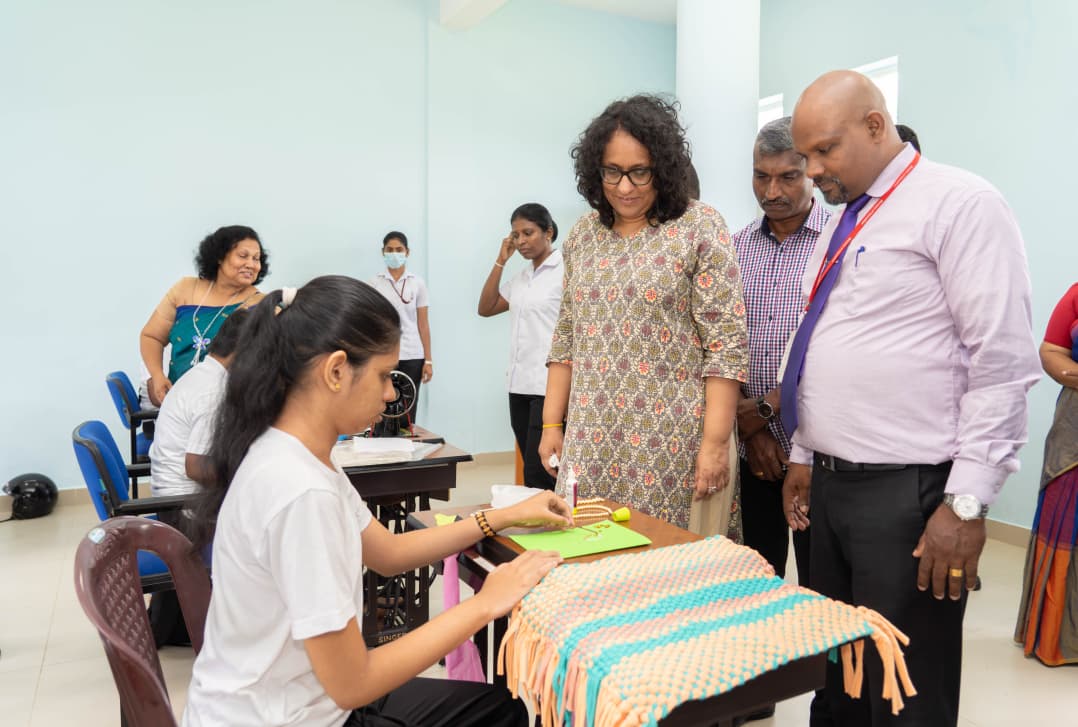
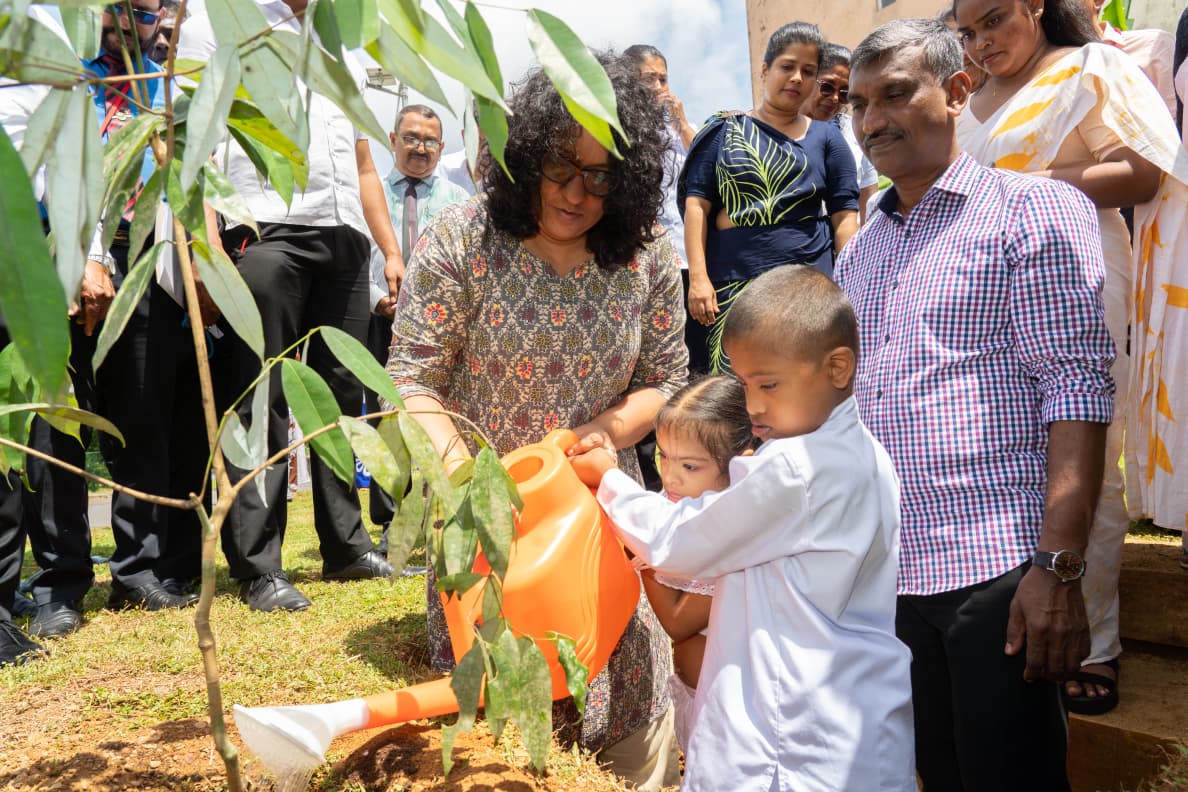
Prime Minister Dr. Harini Amarasuriya stated that, given their particular vulnerability children with disabilities require protection, and stressed the need to foster social awareness to protect them from negative social influences while promoting their physical and mental well-being. She emphasized the need to implement awareness programmes for parents, teachers and other members of society towards this end.
The Prime Minister made these remarks on Tuesday [August 25] while visiting and observing the National Institute of Special and Inclusive Education – Shishyodaya, located in Veniwelkola.
The purpose of the Prime Minister’s visit was to observe the institutional structure and gain an understanding of the areas that require further development.
The Prime Minister emphasized that a systematic mechanism should be established to transform the institution, which was established in 2019 outside the basic standards and plans for Inclusive Education, into an institution that provides quality education to children and fulfills the targeted objectives of inclusive education. She also proposed appointing a special committee to make the necessary recommendations in this regard.
The Prime Minister further stated that steps would be taken in coordination with the Ministry of Health to address the shortage of therapists and medical professionals required to provide clinical services to students at the institution. She also stressed that the maintenance of equipment and buildings should be carried out properly using the financial allocations provided for such purposes.
The Prime Minister further noted that finding sustainable solutions to the issues faced by the institution is essential, while immediate interventions should be made to address issues that can be resolved without delay. The welfare of the teachers serving at the institution was also discussed during the visit.
Member of Parliament Anura Panagoda, Chairman of the Homagama Pradeshiya Sabha Kasun Rathnayake, Secretary to the Ministry of Education, Higher Education and Vocational Education Nalaka Kaluwewa, ministry officials, parents and students were present.
[Prime Minister’s Media Division]

UPDATE: Flash flood on Nepal-Tibet border kills more than 100, with hundreds of tourists missing

At least eight killed, hundreds missing after Nepal flash flood

India close in despite Sooriyabandara, Kamindu fifties

Advisory for High Waves for the sea areas extending from Colombo to Pottuvil via Galle, Matara and Hambantota

We must create social awareness to ensure the physical and mental well-being of children with disabilities – PM

BCCI AGM set for September 18 in Mumbai

‘Dates have the highest sugar content to fight Coronavirus’

Sunday Island 27 December – Headlines

#SundayIsland 17th December – Headlines

Sunday Island – 28th March

Sunday Island Headlines – 21 March

Sunday Island – 21st February – Headlines
-
 News6 days ago
Country’s first woman Surveyor General appointed
-
 Business5 days ago
SriLankan Airlines makes ShakthiSAT Mission possible for talented Sri Lankan student
-
 Sports7 days ago
Tharanga, Weber headline stellar Lausanne javelin field
-
 Features6 days ago
Medical education in Sri Lanka: Then and now
-
 Business7 days ago
Mannar’s offshore opportunity: the dollar question behind Sri Lanka’s oil and gas search
-
 Latest News6 days ago
Imran Khan moved to private hospital amid deteriorating health
-
 Latest News6 days ago
Government has declared 21, 22 and 23 August 2026 as national days of mourning
-
 Features4 days ago
My secondary schooling after Royal Primary