
Sports
Adair rips through Afghanistan to give Ireland opening-day honours

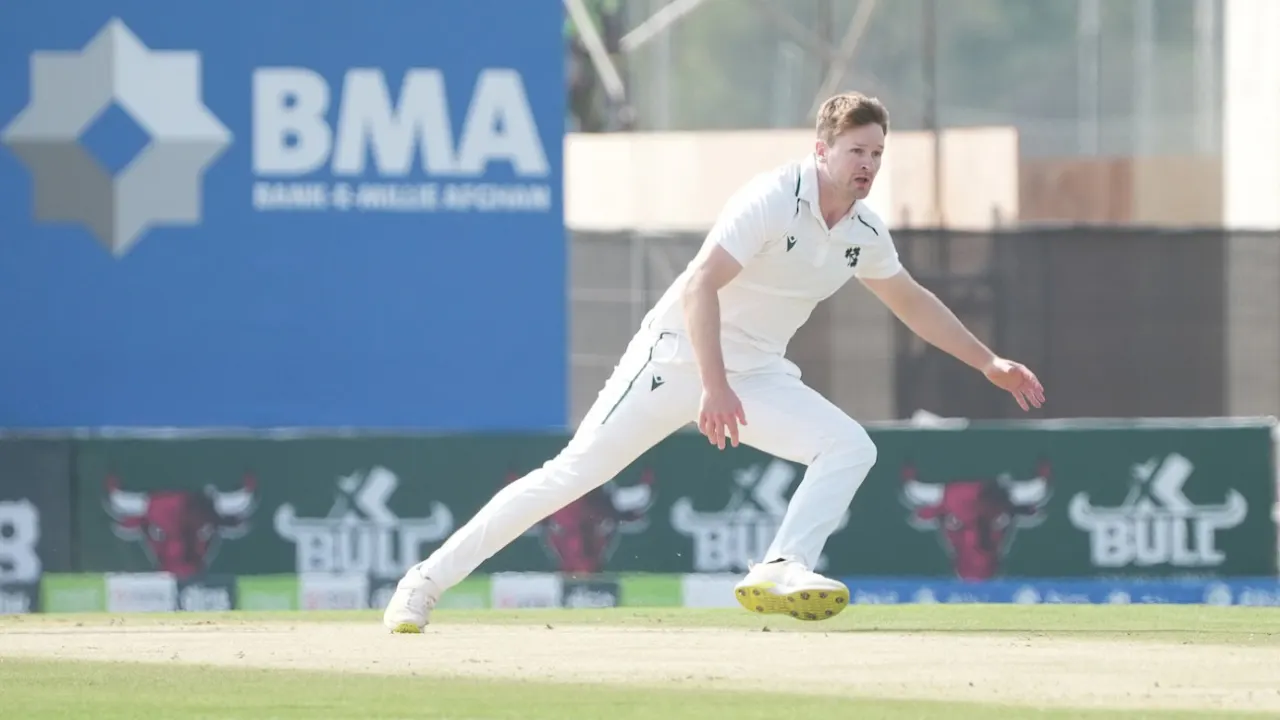
A Test match had never been played at Tolerance Oval in Abu Dhabi before, so the conditions were a bit of an unknown for both Afghanistan and Ireland. Even then, neither side could have expected so much sharp, conventional swing, until a stage when reverse swing became a bigger factor. There was movement on offer off the pitch, too. Add to that the accuracy of Ireland’s quick bowlers, led by Mark Adair saw all ten Afghanistan wickets fell inside 55 overs.
Hashmatullah Shahidi had opted to bat under a bright and sunny sky, hoping for spin to play a part when they would bowl in the fourth innings of the Test. But, by the end of day one, Afghanistan were only 55 ahead, with six Ireland wickets remaining.
Ireland’s third-wicket pair of Curtis Campher and Harry Tector added 60 after they were 32 for 2 in the tenth over.
Afghanistan themselves were 11 for 2 after seven overs. Ibrahim Zadran and Shahidi had repaired their innings with a 55-run stand, which was broken when Shahidi tickled one down leg off one of Ireland’s three debutants, Brian McCarthy. Ibrahim and Afghanistan’s only debutant, Rahmanullah Gurbaz, then added 22 more. But at 86 for 3 just after lunch, the wheels started to come off for Afghanistan. And the trigger was pressed by Adair, who had already picked up two out of the three wickets until then. The first of those had come in the third ball of the seventh over when Adair had Noor Ali Zadran nicking to second slip.
Two deliveries later, Ireland reviewed when an lbw shout by Adair against Rahmat Shah went against them, only for replays to show the ball missing leg. But next ball, Adair cleaned Rahmat up for a duck, when a length ball angled in and straightened to find the gap between bat and pad. Adair also struck in the second over after lunch, having Gurbaz bottom edge one to the wicketkeeper.
Two of Adair’s other victims were Zia-ur-Rehman, who flashed one to second slip to end a stay of more misses than hits, and Zahir Khan, for whom Adair perhaps reserved his best of the lot. Coming from around the wicket to the left-hander, Adair landed one on a length around off, and got the ball to straighten to hit the top of off.
Adair’s five-for aside, debutant Craig Young and Campher picked up two wickets each. The most important of those was that of Ibrahim, who, like his captain Shahidi, ended up clipping down the leg side for a catch to the wicketkeeper. Until then, he had scored 53 of the 90 runs on the board. His departure gave Young his second wicket after he had bowled Nasir Jamal for a duck.
Campher, meanwhile, helped clean the tail up, striking twice in the 50th over after Naveed Zadran had frustrated Ireland for 42 balls.
Andy Balbirnie got a life in the second over when Rahmat dropped a simple catch off Naveed at gully. But Naveed ended his stay in his next over, pinning him in front. Balbirnie’s review proved to be futile as ball-tracking confirmed that the ball would have hit the middle of leg. Campher came in at No. 3 after that early blow and had a big role to play in how the day panned out.
More luck was due for Ireland except that they couldn’t capitalise. Peter Moor, Ireland’s other opening batter, was playing only his second Test for his adopted country. He had managed only 10 and 11 in his first, and when on 10 in the sixth over, he was cleaned up by Naveed by one that came back in sharply from outside off. But halfway to the pavilion, he was called back because Naveed’s front foot had crossed the line.
And off the final legal delivery of the sixth over, Moor – still on 10 – was ruled out lbw but he used the DRS to reverse the decision. But he couldn’t make it count as he chopped Naveen on to his stumps for 12 in the tenth over.
That is when Campher and Tector joined hands. Runs came at a steady pace for Ireland, with Campher leading the way. He hit 25 off his first 17 balls, including five boundaries. Tector was calmer at the other end, ticking off singles.
But in a late twist to the day, left-arm spinner Zia got Campher to nick behind to Gurbaz for 49. Two overs later, nightwatcher and the third of Ireland’s first-timers, Theo van Woerkom, was bowled for 1 with what was a classical delivery that drifted in and turned away.
However, Tector and Paul Stirling took Ireland to the end of the day without further damage.
Brief scores:
Afghanistan 155 in 54.5 overs (Ibrahim Zadran 53, Hashmatullah Shahidi 20, Karim Janat 41*; Mark Adair 5-39, Craig Young 2-31, Curtis Campher 2-13) lead Ireland 100/4 in 31 overs (Curtis Campher 49, Harry Tector 32*, Naveen Zadran 2-32, Zia-ur-Rehman 2-13) by 55 runs
(Cricinfo)







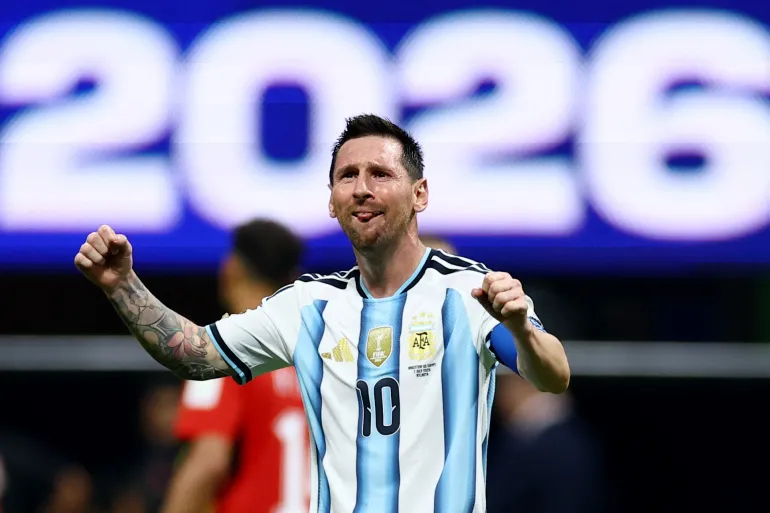
Argentina staged a stunning comeback from 2-0 down to avoid a shocking exit at the hands of Egypt and prolong Lionel Messi’s World Cup career with a 3-2 win to reach the quarterfinals.
The holders looked down and out on Tuesday when goals from Yasser Ibrahim and Mostafa Ziko, either side of Messi having a penalty saved, put the Pharaohs in sight of a historic victory in Atlanta.
However, Cristian Romero’s header sparked the comeback as Argentina struck three times in the final 11 minutes plus stoppage time.
Messi smashed home the equaliser to score for a ninth consecutive World Cup game and retake the lead for the Golden Boot with eight this tournament.
Enzo Fernandez completed the turnaround with a superb header two minutes into stoppage time.
At the end, Messi shed tears of joy as he embraced his teammates.
Egypt were left furious after a number of controversial calls went against them, including a disallowed goal early in the second half, and a member of their coaching staff was red-carded in the aftermath of the winning goal.
But despite a second almighty scare against African opposition, Argentina will face either Colombia or Switzerland in the last eight on Saturday.
Lionel Scaloni attempted to refresh a side that looked dead on their feet in the closing stages of a 3-2 win over Cape Verde in the last 32 on Friday.
Nicolas Tagliafico, Leandro Paredes and Julian Alvarez came in from the team that started in Miami, but Argentina got off to another slow start.
Marwan Attia’s deep cross to the back post was powered home by Yasser.
Argentina had the chance to level five minutes later when Tagliafico was wiped out by Haissem Hassan inside the box.
However, there was another chapter to Messi’s misery from the penalty spot at World Cups.
The eight-time Ballon d’Or’s strike was tentative, and Mostafa Shobeir flew to his left to save, meaning Messi has now missed four of his eight non-shootout penalties at World Cups. He also became the first player to miss two in a single tournament, having also failed to hit the target against Austria in the group stages.

The penalty save was just the start of Shobeir’s inspired afternoon.
Alexis Mac Allister’s powerful header from point-blank range was next to be parried by the Al Ahly stopper.
Shobeir then produced one of the saves of the tournament to prevent Alvarez’s shot finding the bottom corner.
Egypt thought they had doubled their lead on the hour mark after a brilliant counterattack.
Mohamed Salah played in Mostafa Ziko, who dinked the ball perfectly over the onrushing Emi Martinez.
However, Egyptian celebrations were cut short by a hugely controversial VAR intervention for a foul on Lisandro Martinez, just outside the Egypt box, at the start of the buildup to the goal.
The decision finally fired up the majority Argentinian crowd, but they were silenced once more moments later by another blistering Egyptian break.

Salah again led the charge before feeding Hassan, and his cross was swept in by Zico.
Argentina looked like a beaten side with Messi among those whose head was bowed during the second-half drinks break.
Yet Romero’s header – that Shobeir just failed to keep out – sparked a remarkable revival as the defending champions hauled themselves off the canvas.
Moments later a dazzling run by Messi teed up Lautaro Martinez, who headed just wide and Messi was to have his moment of redemption seven minutes from time.
Gonzalo Montiel fed the ball back for his captain to strike sweetly on the half volley.
Shobeir again got a touch but could not keep it out as the ball cannoned in off the bar for Messi’s 21st World Cup goal.
Then Fernandez’s bullet header from Lautaro Martinez’s cross completed the fightback, and Argentina’s relief was on full display after the final whistle.
Scaloni gave a very brief interview to reporters after the match.
“I can’t look up, I’m sorry. I’m really emotional right now,” Argentina’s coach said.
“What a group of players, man. That’s it, I’ve got to go.”
(Aljazeera)
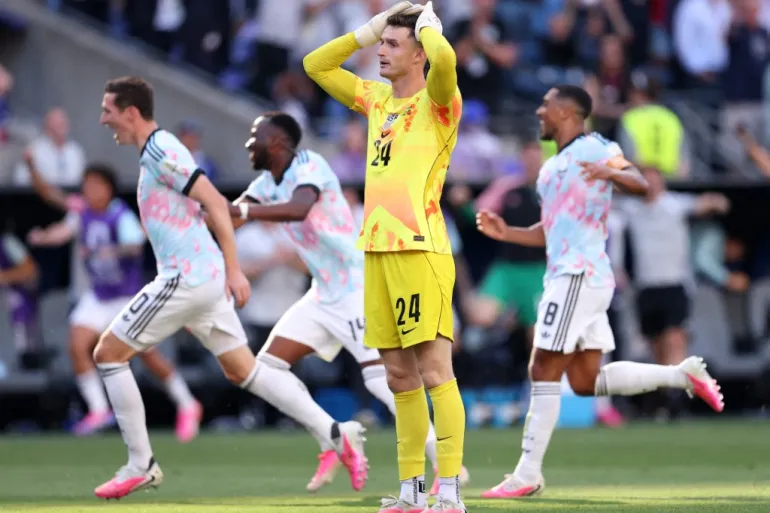
Belgium dumped USA out of their own World Cup on Monday, as Charles De Ketelaere’s brace secured a 4-1 win that was eclipsed by the bitter row over Folarin Balogun’s ban.
Victory means the Belgians face Spain in the quarterfinals, while the USA follow the other World Cup cohosts, Canada and Mexico, out of the tournament with elimination in the round of 16 after a thoroughly flat performance.
All attention pre-game had been on Balogun’s place in the USA starting lineup, after US President Donald Trump had asked FIFA to review the striker’s one-game suspension for a red card, and the governing body controversially obliged.
Belgium’s starting lineup had a few surprises of its own, with Kevin De Bruyne and Jeremy Doku among the heavyweights benched. But coach Rudi Garcia’s gambit proved inspired, with De Ketelaere grabbing an early goal to puncture the feel-good vibes in Seattle.
Malik Tillman grabbed one back from a free kick, but De Ketelaere swiftly restored Belgium’s lead. A catastrophic piece of goalkeeping by Matt Freese and a late Romelu Lukaku goal left the Americans dead and buried.
FIFA’s move to suspend Balogun’s ban after he was sent off in the previous round against Bosnia and Herzegovina has been slammed by football fans, pundits and players around the world, but there were no such misgivings among the Seattle crowd.
A colossal roar greeted the stadium announcement of Balogun’s name in the starting lineup, vastly dwarfing the cheers even for USA talisman Christian Pulisic.
The “USA” thunderclap then echoed around the stadium, utterly drowning out a small corner of chanting Belgium fans in the opening minutes.
But the American party was swiftly silenced. The majority of 67,000 fans fell silent in the ninth minute as De Ketelaere scored, easily tapping home from close range after Nicolas Raskin’s cross evaded some lax defending.
It was the first time the Americans had conceded the opener all tournament. With the atmosphere deflated, no immediate fightback was visible on the pitch either. The midfield was outgunned, and the defence looked nervous.
On the half-hour mark, Balogun drew a foul on the edge of the area and whipped the crowd back to life. He waved his arms frantically as Tillman – fresh from scoring a free kick against Bosnia – lined up the ball.
Tillman’s shot deflected off the Belgian wall and spun into the net, and the stadium shook.
But the joy was again short-lived. In the 33rd minute, De Ketelaere leapt up to meet Leandro Trossard’s cross, and comfortably out-jumped an off-balance Tim Ream to score his second.
The US inched back into the game as the first half closed out, with Balogun blasting over from a long Tillman throw, then narrowly failing to catch a long ball, again from the Bayer Leverkusen midfielder.
US coach Mauricio Pochettino switched formation at half-time, sending Gio Reyna into the number 10 role and pushing Weston McKennie out to the right. The Americans resumed play with more intensity, pushing higher up the pitch.
But self-inflicted disaster struck in the 57th minute. Freese came out to collect a Belgium long ball, turned to evade the charging De Ketelaere, but then hesitated with his pass.
De Ketelaere jabbed the ball to Hans Vanaken, who made no mistake with an open goal from long range.
Pulisic limped off with an injury minutes later, and with him went the US dreams of reaching a first World Cup quarterfinal since 2002.
His replacement, Sebastian Berhalter, flashed an ambitious shot narrowly wide in the 79th minute, and Balogun had a close-range effort saved soon after.
But Chris Richards handed the ball to Lukaku in stoppage time, and the veteran striker did not hesitate to seal the rout.
[Aljazeera]
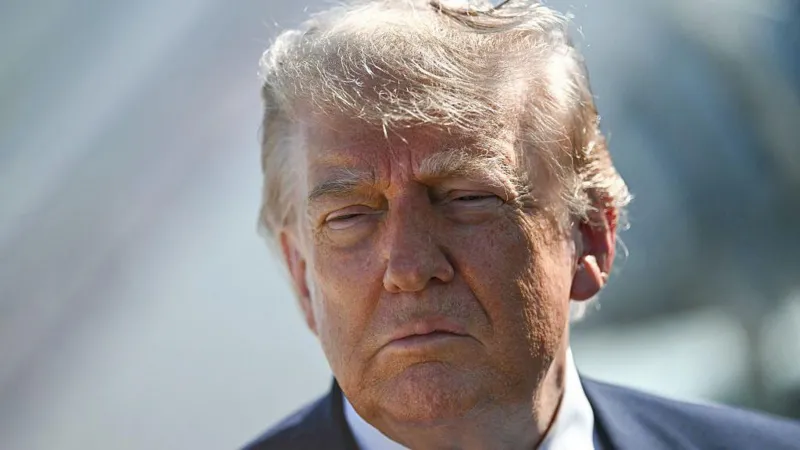
President Donald Trump has confirmed he asked Fifa to review United States striker Folarin Balogun’s one-match suspension at the World Cup.
Balogun, 25, was set to miss his side’s last-16 tie against Belgium after being shown a straight red card for a foul on Bosnia-Herzegovina defender Tarik Muharemovic in the previous round.
But Fifa made the shock decision to suspend the automatic one match ban for 12 months, leading to widespread criticism, including from Uefa, Belgium and England boss Thomas Tuchel.
Fifa’s decision frees US forward Balogun, who has scored three goals at this summer’s tournament, to be selected for the match in Seattle, which kicks off at 17:00 local time (01:00 BST on Tuesday).
The Royal Belgian Football Association (RBFA) says it is “astonished” by the move and has told the United States Soccer Federation it “contests the eligibility” of Balogun playing in the tie after its appeal against the decision was dismissed.
Trump said football’s world governing body “made the right decision”, adding it would have left a “big stain” on the tournament had the ban been implemented.
Speaking at the White House on Monday, Trump said he had asked Fifa to review the decision because he “didn’t think it was a foul”.
He confirmed he had spoken to Fifa president Gianni Infantino but said “all” he did was ask for a review and added he did not tell the Swiss he had to suspend Balogun’s ban.
Trump added: “I think it [the suspension] would have left a big stain. I can’t tell them what to do. I don’t believe they made the decision; I believe it was the commission that made the decision. And it was the right decision.”
However, European football governing body Uefa said it left the integrity of football at stake.
Trump also said referee Raphael Claus’ decision to send off Balogun was “horrible” and called the Brazilian “a little bit suspect”.
In response, the Brazilian football conferdation (CBF) defended Claus’ integrity, stating: “There is nothing in his record that discredits him or gives grounds for any suspicion. He is an exemplary professional.”
In a statement on X, Infantino said that on receiving a call from Trump, he told the US President there was “an ongoing legal process involving Fifa’s independent judicial bodies and that the case would be decided in due course by the competent bodies”.
The Fifa appeal committee deemed Belgium are not an interested party as they were not involved in the original decision and are merely the United States’ next opponents.
“The request was rendered inadmissible on the grounds that the Belgian FA is not a party to the proceedings and, as such, has no standing to appeal the decision,” said Fifa in a statement.
This means Balogun will be free to play against Belgium because there is no party who would appeal against the decision.
The RBFA said it has “still not received any grounds” for the Fifa appeal committee rejecting its appeal and is still awaiting information requested, including the “motivation [for] declearing the player eligible as well as the referee’s report”.
The RBFA added this is a “breach” of Fifa regulations.
When asked by BBC Sport about Trump’s comments and his view on Claus, Fifa said it had “nothing more” to add.
Infantino later stated Fifa’s judicial bodies were “independent” and rulings “must always be respected”.
He added: “I read the decisions of the Fifa Disciplinary Committee when they are issued. Sometimes I am surprised by them. Sometimes I agree with them, and sometimes I disagree.
“What I always do, however, is respect those decisions and the autonomy of the bodies that make them. Whether we personally like a decision or not is irrelevant.
“Respect for independent institutions and the rule of law is what protects the integrity of our competitions and the credibility of Fifa at all times.”
In raising its concerns, the RBFA said: “Regardless of the sporting outcome of this match, the RBFA is deeply concerned by the course of events and will continue to fight in the coming hours, days and months in defence of the fundamental principles of ethics, fair competition, and the interests of football as a whole.”
England head coach Thomas Tuchel said the ruling set a dangerous precedent.
Tuchel had defender Jarell Quansah sent off in a dramatic 3-2 win over Mexico.
“Where to draw the line is the question that I ask,” he said. “I have no answer to that.
“Do we appeal if a yellow card is not a yellow card? Do we think it is not a red card or who thinks it? Where does this start and where does this end? It’s my question. I don’t have an answer.”
Uefa said intervening to effectively cancel a suspension at a tournament “crossed a red line”.
Of the 189 other red cards at the World Cup, only once has a player escaped a suspension.
That was Brazil’s Garrincha in 1962 – before automatic bans were in place, and the failure to impose a sanction was shrouded in allegations of political interference.
Fifa cited article 27 of its disciplinary code, which gives authority to partially suspended disciplinary measures, in announcing Balogun’s one-match ban would be suspended for a probationary period of one year.
In an 871-word statement released later on Monday, Fifa again outlined the process in which article 27 can be used, but gave no further reasoning behind the specific decision to suspend Balogun’s one-match ban.
The Swiss Football Association, whose side face Colombia in the last 16 on Tuesday, called the decision “incomprehensible”, adding it “raises questions and creates uncertainty, particularly regarding the authority of referees’ decisions, especially when the video assistant referee (VAR) is involved”.
[BBC]

Ms. U. L. Mathisha Jinanjalie Jayathilake, appointedto the post of Commissioner, Department of Probation and Child Protection Services

Argentina stage stunning late comeback to beat Egypt in World Cup last 16

Commander of the Navy pays courtesy call on Speaker of the Parliament

Woman suspected of Monaco bomb attack found dead in Ukraine

Balogun reprieve in vain as Belgium beat USA to set up Spain quarterfinal

Trump confirms he asked Fifa to review Balogun ban

‘Dates have the highest sugar content to fight Coronavirus’

Sunday Island 27 December – Headlines

#SundayIsland 17th December – Headlines

Sunday Island – 28th March

Sunday Island Headlines – 21 March

Sunday Island – 21st February – Headlines
-

 News3 days ago
Singapore-based Buddhist monk marks nearly four decades of humanitarian service
-

 News4 days ago
Freedom 250: US Embassy celebrates America’s 250th Independence Day through magic of American cinema
-

 News5 days ago
CIABOC to question Harak Kata on Rs. 200 mn bribery allegation
-
 News5 days ago
SLAF conducts successful rescue mission under UN command in Central African Republic
-

 Midweek Review7 days ago
H’tota port’s strategic status remains focal point of geopolitical scrutiny
-

 News2 days ago
AI concerned over proposed SL military deployment in Haiti
-

 News5 days ago
UNEP support pledged to strengthen Sri Lanka’s Environmental Priorities
-

 Business5 days ago
‘Dialog Air Fibre powers a new era of Ultra Fast Home WiFi’