
News
Sectoral Oversight Committee exposes CEB costing trick to make huge profits


By Rathindra Kuruwita
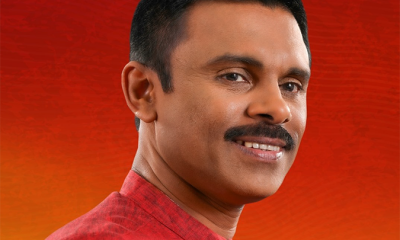
The Ceylon Electricity Board (CEB) has significantly overestimated the cost of electricity production and transmission for 2024 and this is reflected in their estimated cost of production, says MP Gamini Waleboda, head of the Sectoral Oversight Committee on Alleviating the Impact of the Economic Crisis.
The overestimation is around Rs 140 billion, Waleboda has said, adding that the CEB has recently presented the estimated costs for 2024 to the Public Utilities Commission of Sri Lanka (PUCSL).
“When we look at the cost of production, we see that it has been overestimated by about Rs 80 billion,” he said.
MP Waleboda said that the CEB had also increased the estimated cost of transmission. Over 98 percent of households were connected to the national grid, he said.
“If you look at the cost of transmission in the recent past, it has hovered between 55 and 67 billion rupees. The cost of Rs 67 billion was when we were dramatically expanding the coverage. Now, the network is mature. This year the CEB says the cost of transmission is Rs 132 billion rupees,” he said.
MP Waleboda said that CEB had also significantly overestimated the cost of financing. The CEB’s calculation ran counter to the principles of accounting, he said.
“They have calculated the interest rate using the rates that were prevalent at the height of the economic crisis. This has to decrease. The CEB has also calculated depreciation of assets that have been fully depreciated. This is imaginary expenditure. There are many instances of double counting. The CEB has no proper cost accounting mechanism and therefore officials and policy makers parrot out numbers that someone comes up with,” MP Waleboda said.
Waleboda said the minister of power and energy, Kanchana Wijesekera and senior CEB officials had taken the recommendations of the Sectoral Oversight Committee on Alleviating the Impact of the Economic Crisis as a personal affront.
“We are actually trying to help him because the minister needs correct data to make the right decisions. The overestimation is around Rs 140 billion. In 2023, the CEB made a profit of over Rs 50 billion. It made a monthly profit of about Rs 15 billion rupees in January and February 2024.”
Waleboda said the CEB and the Ceylon Petroleum Corporation (CPC) were now profit-making enterprises. However, they were making profits at the expense of macroeconomic sustainability. The two institutions have gone beyond the breakeven point and are now making tens of billions of rupees in profit, the MP said.
“However, the social and macro-economic impact have been adverse. The education of millions of children is adversely affected when a million households are taken off the grid. The manufacturing and agricultural sectors are suffering because of high power and energy costs. To make the CEB profitable, we have undermined our macroeconomic stability, economic expansion, and social wellbeing,” he said, noting that the government must take a holistic view of the economy. The CEB is a part of a wider system and if everything else collapses, the CEB can only last for a short period, he said.
The Sectoral Oversight Committee on Alleviating the Impact of the Economic Crisis had met representatives of organisations that earned foreign currency and all manufacturers that produced for the domestic market, he said.
“We are not asking the CEB to continue supplying electricity below cost. We are asking the government to help our manufacturers and the poorest segments. If we ignore the tragedy that unfolds among the lowest strata of society, we will only be asking for a massive social crisis in the coming years,” Waleboda said.
The MP said the Central Bank (CBSL) could do a lot more to help the economy. The CBSL was implementing IMF policies, and losing its grip on the financial sector, Waleboda said.
“Financial institutions are paying a single digit interest for savings, but the interest rates for borrowing are in double digits, over 16 percent in many cases. The banks are making tremendous profits. The CBSL has reduced policy rates several times, but the banks have not passed the benefit on to borrowers. Not even state banks are reducing their loan interests,” he said.
However, the CBSL had played a pivotal role in controlling and reducing inflation which was around 70% in late 2022, Waleboda said.
“There is a lot of talk on making the CBSL independent. This should not mean it should carry out the IMF or ADB programme or act according to the whims of the few people on the monetary board. The CBSL must come up with a monetary policy that is sustainable in the long term and leads to economic development,” MP Weleboda said, noting that according to their calculations millions of US dollars that should be brought back to Sri Lanka are parked in foreign countries by exporters. “The country loses at least 1.2 billion dollars a year because of this, and this is around the income generated by the IT industry”, he said, “There should be an institution to keep a tab on these things.”




News
National SME Strategy Framework 2026 is critical because it brings policy consistency and stability to the sector – PM

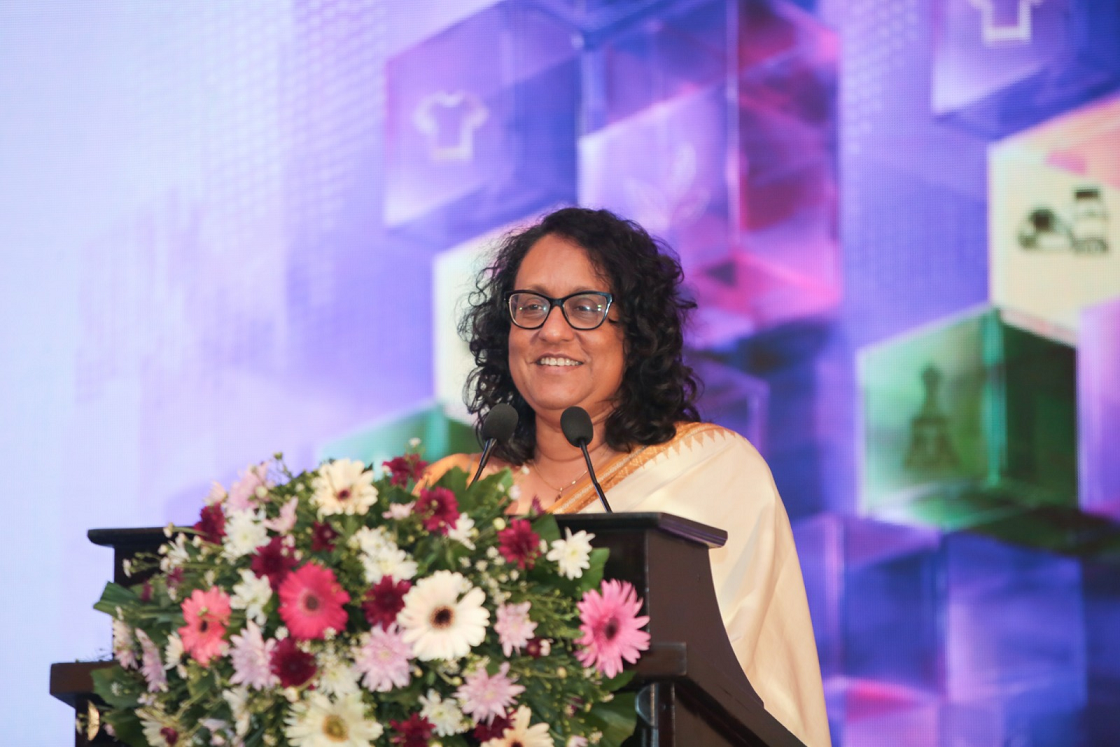
The Prime Minister Dr. Harini Amarasuriya participated in the 2nd day of the dialog on “National SME Strategy Framework 2026” organized by the Ministry of Industry and Entrepreneurship Development held on Thursday [14th of May].
The official launch of the “National SME Strategy Framework 2026” to empower Small and Medium Enterprises (SMEs), was held on Wednesday (13) under the patronage of the Minister of Industry and Entrepreneurship Development, Sunil Handunnetti, and Deputy Minister Chathuranga Abeysinghe.
The Framework has been developed by the Industry and Entrepreneurship Development Ministry, with input from the SME Advisory Committee and key system stakeholders in line with the national manifesto of “A Thriving Nation – A Beautiful Life.”
This framework creates the opportunity for the entrepreneurs to easily register their businesses, access modern technology, and obtain specialized financial facilities along with the advisory services that directly support the growth of entrepreneurs, departing from the traditional method free of charge.
The second day marks the dialog on the “National SME Strategy Framework 2026” focusing on the discussion into implementation and strategy to action featuring series of panel discussions.
During the event National SME Strategy Framework 2026 was presented to the Prime Minister by the Deputy Minister of Industry and Entrepreneurship Development Chathuranga Abeysinghe.
The Prime Minister stated that the country is implementing its transformative agenda during a period of global instability and disruptive global context stressing the importance of adaptation, sustainability and building resilience, particularly within the Small and Medium Enterprise (SME) sector in such context.
Underscoring the importance of the SME policy framework, the Prime Minister further stated that the government’s role is to ensure consistency, stability and collaboration within the sector.
The event was attended by the Minister of Industry and Entrepreneurship Development, Sunil Handunnetti, Deputy Minister Chathuranga Abeysinghe, Australian Deputy High commissioner to Sri Lanka, Ms. Ruth Baird and Secretary to the Minister of Industry and Entrepreneurship Development Mrs. J.M. Thilaka Jayasundara and develop and develop partners and representatives from business community.
[Prime Minister’s Media Division]

… calls for modernising Inland Revenue Dept.
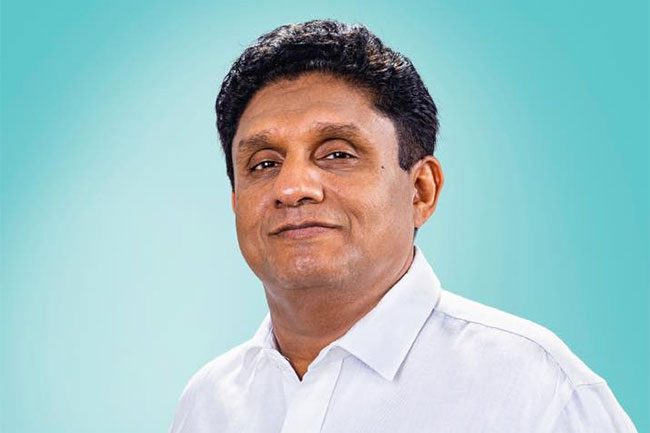
Opposition and SJB Leader Sajith Premadasa yesterday criticised the government’s proposed amendments to the Inland Revenue Act, claiming that a new provision in the draft legislation could unfairly lead to criminal action against ordinary citizens and small business owners over administrative tax-related matters.
In a statement, Premadasa said the public was “not angry about paying taxes” but was frustrated by what he described as unfair treatment under the proposed law.
He alleged that Section 185A of the proposed bill could make delays in filing tax returns or registration-related issues criminal offences, warning that struggling small-scale entrepreneurs could be treated in the same manner as individuals deliberately evading millions of rupees in taxes.
“That is wrong,” the Opposition Leader said.
Premadasa further accused the government of resorting to criminal action against people instead of reforming and modernising the Inland Revenue Department and simplifying tax compliance procedures.
He also questioned the government’s commitment to tackling corruption and financial crimes, asking why stronger measures had not been taken against money laundering, financial fraud and those accused of misappropriating public funds.
“Go after the corrupt. Punish real fraudsters. But do not weaponise the law against the common man,” he said.
Premadasa added that the Opposition would continue to resist legislation that undermined “fairness, proportionality, and the constitutional rights of the people.”
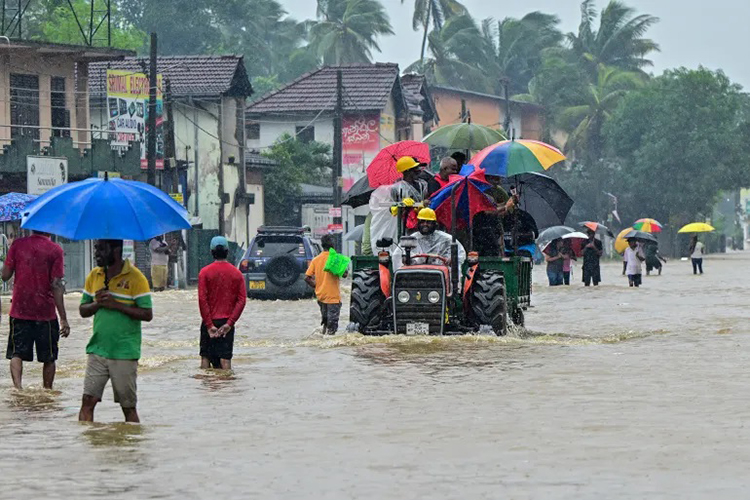
Adverse weather conditions prevailing across the country have severely affected 3,475 persons belonging to 1,113 families in seven districts, according to the Disaster Management Centre (DMC).The DMC said 1,310 individuals from 489 families had been relocated to eight temporary safety shelters due to the deteriorating weather situation.
The DMC also confirmed one death from the Koralepatthu South area in the Batticaloa District.
As of 10 am yesterday (14), a total of 88 houses and one business establishment had sustained partial damage as a result of the adverse weather conditions.
Authorities have urged the public in vulnerable areas to remain vigilant and follow safety instructions issued by disaster management and local officials as heavy rains continue to affect several parts of the country.
Meanwhile, the National Building Research Organisation (NBRO) yesterday extended landslide warnings for several districts across the country due to the prevailing adverse weather conditions.
According to the NBRO, Level 2 landslide warnings have been issued for Neluwa in the Galle District; Agalawatte, Baduraliya, Matugama, Horana and Walallawita in the Kalutara District; and Ratnapura and Pelmadulla in the Ratnapura District.
Level 1 landslide warnings remain in effect for several areas in the Badulla, Galle, Kalutara, Kandy, Kegalle, Kurunegala, Matale, Monaragala, Nuwara Eliya and Ratnapura districts.
The warned areas include Bandarawela, Passara and Hali Ela in Badulla; Thawalama, Elpitiya and
Niyagama in Galle; Ingiriya and Bulathsinhala in Kalutara; and multiple Divisional Secretariat areas in the Kandy District, including Poojapitiya, Deltota, Udunuwara and Pathahewaheta.
Warnings have also been issued for Bulathkohupitiya, Mawanella, Kegalle, Aranayake, Yatiyanthota, Warakapola and Rambukkana in the Kegalle District; Ridigama in Kurunegala; Rattota, Naula and Ambanganga Korale in Matale; and Wellawaya, Badalkumbura and Bibile in Monaragala.
In the Nuwara Eliya District, the warning covers Norwood, Ambagamuwa Korale and Kotmale, while Eheliyagoda, Kalawana, Kuruwita, Godakawela, Kiriella and Ayagama in the Ratnapura District have also been placed under alert.
The NBRO said the warnings were extended in view of further rainfall forecast by the Department of Meteorology and urged residents in vulnerable areas to remain vigilant and follow instructions issued by authorities for their safety.
Meanwhile, the water levels in several major river basins that had risen due to recent heavy rainfall are now receding following a decline in rainfall over the past 24 hours, the Department of Irrigation said.
Director of Irrigation (Hydrology and Disaster Management) L.S. Sooriyabandara said water levels in the Nilwala River, Gin Ganga, Kalu Ganga and Attanagalu Oya basins were showing a downward trend as rainfall eased.
He noted that water levels were declining in most areas, with the exception of the Millakanda area in the Kalu Ganga basin.
However, Sooriyabandara warned that the current improvement could be temporary, as the Department of Meteorology has forecast further rain in the coming days.
According to the Department, 18 of the country’s 73 major reservoirs are currently spilling over, while another 18 medium-sized reservoirs are also discharging water.
He stressed that the release of water does not indicate a major flood situation at present, but urged the public to remain vigilant and follow future advisories issued by authorities.
By Norman Paliahwadane and Chaminda Silva

LPL 2026 Opening Game between Jaffna and Galle

New Zealand’s Māori Queen meets King Charles at Buckingham Palace

Trump and Xi conclude ‘very successful’ talks but no deals announced

India hikes fuel prices as Iran crisis bites

Kuldip Yadav in for Khaleel; Gleeson for Thushara

Eyman Fatima powers Pakistan to series victory

‘Dates have the highest sugar content to fight Coronavirus’

Sunday Island 27 December – Headlines

#SundayIsland 17th December – Headlines

Sunday Island – 28th March

Sunday Island Headlines – 21 March

Sunday Island – 21st February – Headlines
-

 News6 days ago
Lanka Port City officials to meet investors in Dubai
-
 News3 days ago
Ex-SriLankan CEO’s death: Controversy surrounds execution of bail bond
-

 News7 days ago
SLPP expresses concern over death of former SriLankan CEO
-

 News7 days ago
Police inform Fort Magistrate’s Court of finding ex-CEO of SriLankan dead under suspicious circumstances
-
 Features4 days ago
When University systems fail:Supreme Court’s landmark intervention in sexual harassment case
-
Features4 days ago
High Stakes in Pursuing corruption cases
-

 Midweek Review3 days ago
A victory that can never be forgotten
-

 News7 days ago
President of Vietnam and delegation departs Sri Lanka