
Opinion
Dispelling Misconceptions: Visionary Future of an NPP-led Sri Lanka

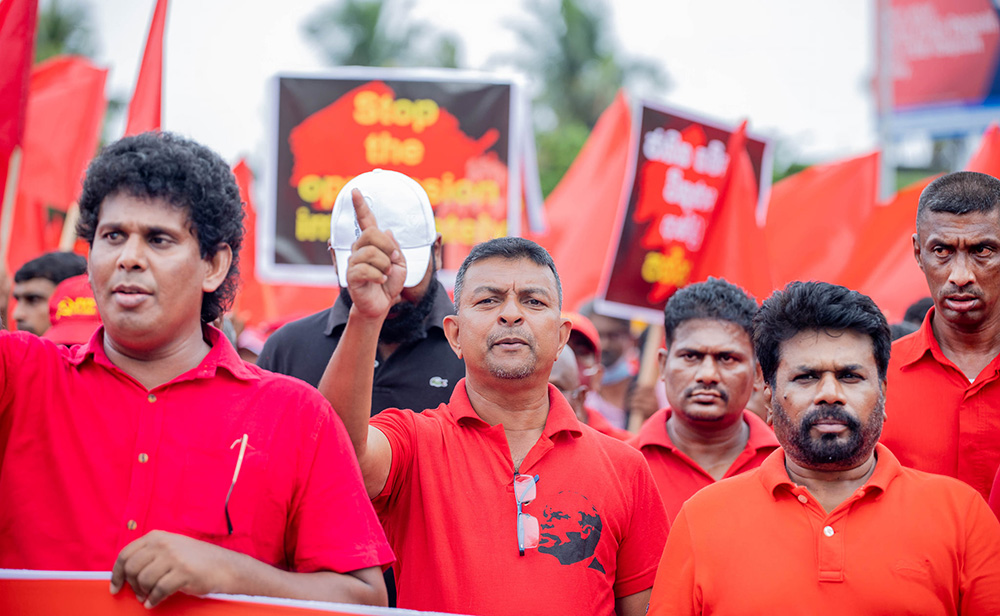
by Shantha Jayarathne, PhD
In recent discussions, concerns have emerged about the National People’s Power (NPP) in Sri Lanka, with some fearing a return to outdated communist traditions if the party ascends to power. These apprehensions, often fueled by political agendas, particularly target those with limited political literacy. This article aims to dispel these misconceptions and shed light on the NPP’s forward-looking vision for a progressive and prosperous Sri Lanka.
Coalition of Visionaries
Contrary to the narrative peddled by certain factions, it’s essential to recognise that the NPP represents a diverse coalition of 22 parties and civil society organisations, with the Janatha Vimukthi Peramuna (JVP) as its main partner. Importantly, both the NPP and JVP members boast of a commendable track record, free from accusations of corruption, nepotism, or cronyism. Nominations are filed for any election from the NPP under the “Compass” symbol, and contestants with high repute and integrity will be drawn from all 22 constituent parties in the broad coalition.
A Clear Development Roadmap
The NPP has consistently articulated a comprehensive roadmap for the development of Sri Lanka. Emphasising the importance of a thriving Agriculture, Industry, and Service sectors, the party is committed to eliminating barriers hindering investments. Corruption, favouritism, and covert dealings of officials and people with vested interests will be totally eliminated under an NPP government. Furthermore, the NPP pledges to introduce efficient systems, ensuring minimal delays and promoting a business-friendly environment that attracts both local and foreign investors.
Government’s Primary Obligations
Addressing fears of property takeover, the NPP asserts that its government will not engage in business activities but will focus on essential public utility services, education, health, social security, and defence to ensure the well-being and security of the nation. NPP will not only encourage local investments but also it will take all possible measures to attract foreign direct investments. State-Owned Enterprises (SOEs) facing financial challenges will undergo restructuring with utmost transparency, fostering efficiency and accountability.
Business Friendly Environment
The NPP is dedicated to creating a level playing field for businesses by implementing regulations inspired by the most developed economies. Consistent antitrust laws, investment protection laws, and laws that are inconsistent and complex will be amended or new laws will be enacted to ensure fair competition and safeguard business interests. By fostering an environment that encourages innovation and competition, the NPP aims to boost economic growth and prosperity. NPP plans to streamline the systems and process to facilitate investments within the shortest possible timeframe whereby it aims to take Sri Lanka in the Ease of Doing Business Index from 99th position today to a position within the first 50. The Cooperative system will be strengthened in an NPP government and they will be regulated to deliver an effective and efficient service to the periphery.
Transparent Tax Policy
Simplifying Sri Lanka’s tax policy is a priority for the NPP, aiming to create a transparent and tax-friendly environment. NPP will ensure a stable and consistent progressive tax policy in the country, and all regressive taxes will be eliminated. Citizens will be provided with clear information at the end of the Tax Year on how their tax contributions are utilised for public services, promoting accountability and citizen engagement. This transparency is crucial for building trust between the government and its citizens.
Learning from Developed Countries
Taking lessons from successful models of governance in developed countries, an NPP government will strive to implement best practices in public administration. Emphasising the importance of accountable institutions, streamlined bureaucracy, and effective public service delivery, the party is committed to ensuring transparency and efficiency in governance. There will be a minimum number of cabinet ministries for key areas, and their roles and functions will be clearly defined while making the officials accountable to their respective assigned functions. Zero tolerance for corruption and the law of the land will be applied to everyone alike.
Economic Adjustments and IMF Negotiations
Acknowledging the need for economic stability, the NPP plans to initiate negotiations with the International Monetary Fund (IMF). This strategic move aims to strike a balance between economic adjustments and safeguarding the livelihoods of the people in the country. The NPP is dedicated to ensuring that any economic reforms are implemented with a people-centric approach, minimising adverse effects on the general population and the industry.
Nonaligned Foreign Policy
The NPP upholds a nonaligned foreign policy, reflecting a commitment to Sri Lanka’s sovereignty and independence. While fostering international relations, the party is resolute in not allowing foreign nations to utilise Sri Lanka’s soil for military purposes. This stance ensures that the country remains neutral and independent in its dealings with other nations, safeguarding national interests and security.
Repositioning Sri Lanka in the World Order
A central tenet of the NPP’s vision is the repositioning of Sri Lanka in the global context. The party is dedicated to identifying and leveraging the country’s potentials, addressing weaknesses, seizing opportunities, and managing threats, both internal and external. This strategic approach aims to elevate Sri Lanka’s standing on the world stage, fostering positive engagement with the international community.
Quality of Life Improvement
A key focus of the NPP government is enhancing the quality of life for all citizens. The party recognises the importance of social welfare, healthcare, education, and infrastructure development in elevating living standards. By prioritising these aspects, the NPP aims to create a society where every citizen can enjoy a higher quality of life, emphasising the well-being and prosperity of the people.
Addressing False Propaganda
Amidst the misconceptions surrounding the NPP, it is crucial to address the motivations behind certain groups disseminating false propaganda. The fearmongering tactics employed by those with vested interests seek to perpetuate a status quo that has allowed for ill-gotten wealth and alleged illegal transactions. These groups, resistant to change, attempt to sway public opinion by sowing seeds of doubt about the NPP’s commitment to a fair and just governance model.
However, when one closely examines the NPP’s dedication to transparency, efficient governance, and inclusive development, it becomes evident that these accusations are nothing more than a desperate attempt to cling to the shadows of a fading era. The party’s emphasis on tackling corruption, restructuring inefficient State-Owned Enterprises, and simplifying the tax policy directly challenges the interests of those who have thrived in an environment of opacity and undue influence.
As citizens, it is paramount to discern the true intentions behind such narratives and recognize the NPP as a force poised to break free from the shackles of corruption and vested interests. By supporting the NPP’s vision, Sri Lankans have the opportunity to usher in a new era – one marked by ethical governance, economic prosperity, and a society that prioritises the well-being of its people over the interests of a privileged few.
In conclusion, the NPP stands not only as a political entity but as a beacon of hope, calling on the people to embrace change, reject false narratives, and collectively forge a path towards a brighter and more equitable future.
(The Writer, a UK resident, is a former Senior Consultant at the Sri Lanka Institute of Development Administration (SLIDA). He is a member of the NPP-Policy Development Team, and he can be reached through email: shantha323@gmail.com)


By A Concerned Aficionado
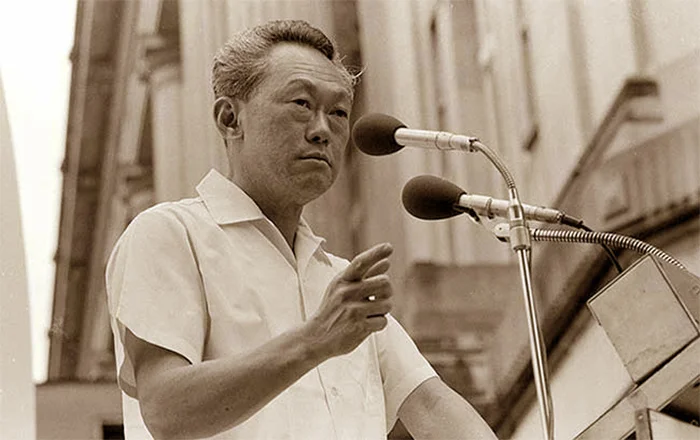
In 1959, just over a decade after Ceylon, as Sri Lanka was then known, gained Independence, a tiny, resource-barren island in many ways, named Singapore, elected a man called Lee Kuan Yew as their Prime Minister. Before that, having been ejected from the Malaysian Federation into forced independence, the founding fathers of independent Singapore looked across the Indian Ocean with envious eyes. The subject of their admiration was Ceylon: “The Pearl of the Indian Ocean.” Here was a nation in a pearl blessed with fertile land, a highly literate population, a functioning model of the civil service, robust infrastructure, and standard English education. Lee Kuan Yew openly declared that his ambition was for Singapore to emulate Ceylon.
Decades later, the tragedy that developed out of this historical juxtaposition is staggering. Singapore now sits comfortably in the first world, boasting a GDP per capita exceeding US Dollars 80,000, world-class institutions, and zero tolerance for corruption. Sri Lanka, meanwhile, lies in the ashes of sovereign default, a begging bowl in hand, passing from one economic crisis to the next, crippled by debt as well as rampant corruption and governed by political short-sightedness.
What went wrong? The answer can be found in a simple three-letter acronym popularised by Singaporean diplomat and academic, Professor Kishore Mahbubani, MPH: the acronym for Meritocracy, Pragmatism, and Honesty: the proven mantra of that country.
Mahbubani famously argued that any nation, regardless of size or origin, can achieve extraordinary success if it rigorously applies these three foundational doctrines. If Singapore stands as the global poster child for the triumph of the MPH model, Sri Lanka stands as its renowned antithesis; a tragic case study of what happens when a country systematically dismantles every single one of those three sacred creeds of good governance.
Meritocracy Dismantled: The Triumph of Nepotism and Tribalism in the Pearl
Meritocracy, in Mahbubani’s framework, demands that a nation relentlessly selects its best and brightest to lead its institutions, regardless of ethnicity, family lineage, or political affiliation. In Singapore, early leaders like S. Rajaratnam, a Sri Lankan Tamil, were elevated to the highest positions strictly on ability.
In Sri Lanka, we did the exact opposite. Almost immediately after independence, our political class realised that exploiting communal divisions was far more lucrative than building a meritocratic state. The Official Language Act of 1956 was the first lethal blow, substituting raw linguistic nationalism for competence. This was followed by media-wise standardisation policies in higher education, which effectively told our youth that their brainpower mattered less than their geographic or ethnic identity. In short, this was the political misdemeanour that destroyed the Sri Lankan nation.
The institutional decay spread rapidly into our civil service, which was once the envy of Asia. The Independent State Services Commission was systematically gutted and replaced by political patronage. State corporations, statutory boards, and diplomatic missions became dumping grounds for politicians’ children, loyalist party hacks, henchmen and henchwomen and despicable sycophants.
Instead of putting domain experts at the helm of economic, medical, and technical bodies, our rulers appointed cronies whose primary qualification was their willingness to bow and kneel before their political masters. The resulting brain drain has been catastrophic. For generations, Sri Lanka’s greatest export has not been tea or garments, but its finest minds, driven out by a system that rewards loyalty to a party over loyalty to intellectual competence.
Pragmatism abolished: Ideological Dogma and Economic Madness in the Pearl
Pragmatism means deserting ideological blinders and adopting policies simply because they work. As Singapore’s Dr Goh Keng Swee put it to Mahbubani: “No matter what problem Singapore encounters, somebody, somewhere has solved it. Let us copy the solution and adapt it.”
Sri Lanka, by contrast, has been a graveyard of economic dogmatism and harebrained experiments. Rather than copying proven global best practices, our policy decisions have consistently been driven by shortsighted populism, ideological posturing, and economic illiteracy.
Consider our economic history: alternating decades of closed-economy import substitution that strangled private enterprise, followed by unbridled, corrupt market deregulation without supervisory safeguards.
Perhaps the ultimate symbol of our anti-pragmatic hubris was the infamous overnight ban on chemical fertilisers in 2021. Ignoring every agricultural scientist and expert in the country, the government imposed a purely ideological and immediate “100% organic” policy by a Presidential Decree. The result was immediate and devastating: agricultural yields collapsed, food security evaporated, and tea production; our main foreign exchange earner, suffered disastrous damage. It was economic suicide masquerading as some kind of a vision of splendour.
Pragmatism requires looking at numbers, listening to experts, and adjusting and changing course when a policy fails. In Sri Lanka, political leaders routinely ignore basic arithmetic and even common sense to preserve their political narratives. They cut taxes when the treasury is empty, print trillions of rupees while inflation soars, and hold off on seeking IMF restructuring until the country literally runs out of foreign currency for fuel, medicines, and food.
Honesty is dead: The Culture of Systemic Corruption, the Misery of the Pearl
The third component, Honesty, is perhaps where Sri Lanka has fallen down the furthest. Professor Mahbubani notes that corruption is the single biggest reason why third-world countries fail. Singapore combated this by establishing near-zero tolerance for corruption, enforcing the strict rule of law, and ensuring that no public official, no matter how powerful, was above accountability.
In Sri Lanka, dishonesty is not merely an occasional scandal; it has become the fundamental operating system of the state. Corruption in Sri Lanka is institutionalised from the bottom to the absolute top. White-elephant infrastructure projects were financed through high-interest commercial loans: not because they offered viable economic returns, but because they offered massive kickbacks and inflated procurement contracts. Commissions were pocketed on everything from highways and airports to coal shipments, vaccines, and even basic food commodities.
Worse still, a culture of complete impunity took root. Commissions of inquiry were appointed not to uncover the truth, but to whitewash theft and buy political time. Files mysteriously vanished, prosecutors were pressured, and political deals were struck to protect corrupt figures across all political divides. The public watched in desperation as billions were drained from the national coffers, leaving the country bankrupt while the perpetrators enjoyed immunity, private jaunts, and even clandestine offshore accounts.
The Current Dispensation: Have They Got Their Wires Completely Crossed
If the public expected a sharp break from this pattern with political shifts in recent years, the disillusionment is totally complete. However, amidst a rhetoric towards a milk and honey nation, the aftermath has been everlasting desolation, as the stark reality has proven bitterly disappointing. The current political leadership appears to have got its wires completely crossed.
Instead of a sharp return to the MPH principles, what we witness is a baffling mix of improvised policies, misplaced priorities, and political double-speak. On the one hand, the government attempts to eloquently speak the language of reform and fiscal discipline to satisfy the gullible citizens and even the international lenders. On the other hand, it continues to rely on the same tired playbooks of executive heavy-handedness, administrative opacity, and political backroom deals.
Where is the true Meritocracy in the current administration? Key appointments in crucial public sectors are still dominated by political trade-offs and ideological echo chamber minions rather than competent people with independent, proven track records. Technical expertise is treated as a secondary consideration, way behind political compliance. The intense tragedy is the folly of ignoring and suppressing capable and efficient people and bringing in the henchmen and henchwomen.
Where is the Pragmatism? Rather than instituting big structural changes, modernising our public sector, and stripping away red tape to attract genuine foreign direct investment, the government remains addicted to piecemeal band-aid and bureaucratic control. Instead of fixing fundamental market distortions, it attempts to micro-manage the economy through top-down mandates, price controls, and extremely heavy taxation that burdens the middle class while leaving structural inefficiency untouched.
Where is the Honesty? Transparency remains a distant unattainable dream. Crucial state contracts, energy deals, and restructuring terms are still negotiated behind opaque doors. There is a glaring absence of genuine accountability for those whose past financial crimes pushed the nation into default. The rhetoric of “anti-corruption” is deployed aggressively against political adversaries, yet remains conveniently muted when it touches allies or organisational dishonesty within state institutions.
Instead of showing the public a clean, transparent roadmap for national recovery, the current regime seems intent on managing optics, suppressing dissent, and maintaining political survival at all costs.
The Path Forward: Can the Pearl be Restored?
Sri Lanka’s journey from being the envy of Asia in 1948 to a terribly bankrupt state in the 2020s is not a result of bad luck or external conspiracies. It is the direct consequence of our miserable choices. We chose tribalism over Meritocracy. We chose ideological populism over Pragmatism. We chose systemic corruption over sanctified honesty.
The Singapore story proves that natural resources, land size, and historical advantages do not determine a nation’s destiny. It has very clearly demonstrated that it is only the realism of proper governance that leads to prosperity. Singapore had no oil, no timber, no agriculture, and not even its own fresh water. What it had was a leadership obsessed with execution, integrity, and competence.
If Sri Lanka is ever to rise from the ashes of its self-inflicted ruin, it must abandon the political illusions that brought it to its knees. No amount of foreign loans, IMF bailouts, or geopolitical manoeuvring will save us if we do not transform the way we govern ourselves.
The formula is already written. It does not need to be reinvented. It has only to be implemented with untold dedication.
· Enforce absolute Meritocracy: Strip politicians of their power to appoint cronies to state bodies. Establish an independent, politically insulated mechanism for public sector leadership based entirely on competitive, verifiable competence.
· Embrace Pragmatism:
Kill economic dogma. Listen to experts, even when their opinions are unpleasant, copy proven global models, digitise state processes, and evaluate every public policy solely on one metric: would it or does it deliver measurable results for the people of our nation?
· Institutionalise Honesty:
Enforce an absolute, unyielding rule of law with zero tolerance for deceit and fraud. Empower independent anti-corruption agencies with real teeth, strip away immunity for financial crimes, and make asset declarations mandatory and publicly accessible for every elected official.
The time for empty political slogans, hereditary politics, and ideological arrogance should be over and, in fact, should be wiped out forever. Sri Lanka has run out of the flight runway. Until we, as a nation and the citizenry of a united nation, demand a radical pivot toward Meritocracy, Pragmatism, and Honesty, the “Pearl of the Indian Ocean” will remain nothing more than a tragic reminder of what it could have been.
It is never too late. All it needs is a supremely committed political and national obligation to the glorious vision of a prosperous future for the entire nation. However, we are forced to lament whether any of our current lot of so-called statesmen, or, for that matter, stateswomen, of any hue and rhetorically imbibed, are up to that committed task of getting the pearl back into its long-lost pristine glory.


by Viran Maddumage
Assistant Lecturer & PhD (Reading) Department of Human Geography and Migration,
Macquarie University Australia
&
Sanduni Rathnayake
Lecturer (Probationary) Faculty of Law,
General Sir John Kotelawala Defence University
When a boat carrying desperate people reaches the shores of an island, the first question should be a humanitarian one: how can these people be kept safe? But sooner or later, another question becomes unavoidable: what does the law say?
For Sri Lanka, that question is becoming increasingly important.
In December 2024, the Sri Lankan Navy rescued more than 100 people believed to be Rohingya refugees from a fishing vessel found adrift off the country’s northern coast. Among them were women and children. They were brought ashore and provided with food, water and medical assistance. The incident was not entirely unprecedented; Sri Lanka had encountered a similar arrival of Rohingya people by sea in 2022.
These incidents expose an uncomfortable gap in Sri Lanka’s legal architecture. Sri Lanka is capable of rescuing people in distress. It can provide immediate humanitarian assistance. But once those people reach our shores and seek protection, where exactly does the law take them?
Sri Lanka has not ratified the 1951 Convention relating to the Status of Refugees or its 1967 Protocol. The Convention and Protocol constitute the central international instruments defining refugee status and establishing international standards for refugee protection. More importantly, Sri Lanka does not currently have a comprehensive domestic legal framework establishing a national procedure for determining refugee status. UNHCR has consequently played an important role in registering and assessing asylum claims in Sri Lanka.
This arrangement may function when refugee movements are limited. But it is not a substitute for law.
Problem of a legal vacuum
An asylum-seeker is not simply an undocumented migrant. An asylum-seeker is a person asking another state for protection because returning home may expose them to persecution or serious harm. A refugee is a person whose circumstances meet the applicable criteria for international protection.
The distinction matters because ordinary immigration law is principally concerned with controlling entry, residence and departure. Sri Lanka’s Immigration and Emigration framework, for example, is designed to regulate the entry and departure of persons and to provide for the removal of certain non-citizens. Refugee law asks a different question: what happens when the ordinary assumption that a person can simply be returned to their country of nationality is no longer safe?
That question cannot be answered adequately through immigration enforcement alone.
At present, Sri Lanka lacks a dedicated statutory process that clearly answers basic questions. Who may apply for asylum? Who determines whether an individual qualifies for protection? What procedural rights does the applicant have? What evidence must be considered? Is there a right to appeal? What happens while an application is pending? When may detention be used? What happens when the applicant is a child? And, most importantly, what safeguards exist against returning a person to a place where they face persecution or other serious harm?
Leaving such questions to ad hoc administrative arrangements creates uncertainty not only for refugees and asylum-seekers, but also for the State itself.
Why international law alone not enough
One might respond that Sri Lanka already participates in the international human-rights system and therefore has obligations relevant to the treatment of vulnerable non-citizens. That is true. But international commitments and domestic enforceability are not necessarily the same thing.
Sri Lanka’s constitutional and legal framework has traditionally reflected a dualist approach to international treaties. The Supreme Court’s decision in Singarasa v Attorney-General is particularly significant in this regard. The judgment recognised that treaty obligations undertaken by the State do not, merely by virtue of international acceptance, automatically become enforceable domestic law; legislative implementation is required for treaties to have internal legal effect.
This principle makes the case for domestic refugee legislation even stronger.
The answer is not to pretend that international law does not matter. Nor is it to suggest that Sri Lanka has no responsibilities towards people seeking protection. Rather, the lesson is that where protection is important enough to be recognised internationally, it should also be translated into clear domestic rules that courts, public officials and affected individuals can actually understand and apply.
A refugee should not have to depend upon uncertainty about the precise relationship between an international obligation, administrative practice and domestic immigration law to know whether they can safely remain in the country while their claim is considered.
Principle of non-refoulement
At the heart of refugee protection is the principle of non-refoulement: the prohibition against sending a person back to a place where they face persecution or other serious threats to their life or freedom.
The principle is one of the foundational concepts of international refugee protection. Its significance extends beyond the formal status of a person as a recognised refugee. International human-rights law also provides important protection against removal in circumstances where return would expose an individual to serious harm.
For Sri Lanka, the question therefore cannot simply be whether the country has ratified the Refugee Convention. The more fundamental question is whether Sri Lankan law provides an effective mechanism for ensuring that a person who may require international protection is identified and assessed before removal.
Without such a mechanism, even a principle as important as non-refoulement risks becoming difficult to operationalise.
The Rohingya arrivals demonstrate why this matters. These were not abstract legal hypotheticals. They were human beings arriving by sea after fleeing circumstances in which their safety could not simply be assumed. The State had to decide what to do with them.
And whenever the State must make such decisions, law matters.
A Sri Lankan solution
The answer should not necessarily be the wholesale transplantation of another country’s refugee legislation. Sri Lanka has legitimate interests in border management, national security, immigration control and public order. A domestic refugee law can recognise those interests while also establishing safeguards for people genuinely in need of protection.
A Sri Lankan Refugee and Asylum Act could establish a clear national asylum procedure. It could define who qualifies as a refugee and who may seek asylum, establish an independent or appropriately insulated refugee-status determination mechanism, and provide applicants with basic procedural guarantees.
There should be an opportunity to present evidence, an obligation to give reasons for decisions and a meaningful avenue of review or appeal.
The legislation should also address detention. Irregular entry should not automatically transform a person seeking protection into a criminal. Where detention is considered necessary, the law should establish clear grounds, safeguards and review mechanisms, with particular protection for children and other vulnerable persons.
The framework should provide temporary documentation to asylum-seekers while their claims are being considered. It should address access to essential healthcare and education, and determine whether and under what conditions recognised refugees may work.
Most importantly, the legislation should expressly incorporate appropriate safeguards against refoulement.
Such legislation would not mean that every person arriving without a visa must be permitted to remain indefinitely. Refugee law has never required that. A functioning asylum system distinguishes between those who require international protection and those who do not. It gives the State a lawful process through which to make that distinction.
That is precisely why having a legal framework can actually strengthen immigration control rather than undermine it.
From humanitarian reaction to legal certainty
Sri Lanka has a long history of displacement. Hundreds of thousands of Sri Lankans themselves experienced displacement during the country’s civil conflict, while many Sri Lankans sought protection abroad. The experience of displacement should make the country particularly conscious of what it means to cross a border because remaining at home is no longer safe.
At the same time, Sri Lanka is not required to choose between compassion and sovereignty.
A properly designed refugee law can protect both.
It can establish who has a right to seek protection, who decides that claim, what evidence is required and what happens when the claim succeeds or fails. It can provide national authorities with procedures rather than uncertainty. It can provide courts with legal standards rather than administrative ambiguity. And it can provide refugees and asylum-seekers with something that is often more valuable than a promise of goodwill: legal certainty.
There is also a broader institutional argument. Reliance upon external humanitarian actors to fill a domestic legal gap may be understandable as an interim measure, but refugee protection should ultimately rest upon a framework for which the State itself is legally accountable.
Sri Lanka therefore faces a choice.
It can continue responding to refugee arrivals when they occur; rescuing boats, providing temporary assistance and finding administrative solutions to individual situations.
Or it can anticipate the next arrival before it happens.
The second approach is the more responsible one.
The sea surrounding Sri Lanka has never been merely a geographical boundary. It has been a route of migration, trade, conflict, escape and refuge. People will continue to cross it for many different reasons. Some will arrive as migrants. Some will arrive irregularly. Some may arrive because they have nowhere safe to return to.
When the next boat reaches our shores, Sri Lanka should not have to improvise its legal response.
A safe harbour needs more than compassion. It needs a legal map.
For Sri Lanka, the time has come to draw one.

The special exhibition displaying original manuscripts relating to the Panadura Debate at Rankoth Vihara is welcome and, as Nishantha Peiris mentions (News, 30 Aug), the debate gained international interest following the publication of a book containing the speeches made in the debate. The credit for this must be given to John Capper, the then editor of the Ceylon Times. He published an account of each day’s proceedings in his paper and the full text of the speeches in a book entitled ‘Full Account of the Buddhist Controversy Held at Pantura in August 1873.
The preface of the book stated: ‘In the belief that an authentic account of the Controversy which took place at Pantura in August last, between a Buddhist Priest and two Ministers of the Protestant religion, will be read with interest by a large number of persons here and in Europe. I have produced the proceedings in the present form. The report has been revised by the respective disputants, so that it may be taken as a correct account of what passed’.
Capper’s book was picked up by J M Peebles who was in India, who then published an extended version in the United States. If an original copy of Capper’s book is available in Sri Lanka, it should be exhibited in the Rankoth exhibition.
Yours faithfully,
Dr R P Fernando,
19 Danetree Close,
Epsom UK

Sandhu’s 6 for 7 seals Pakistan’s semi-final spot

INS Udaygiri makes port call in Colombo

Showers in the Uva, Central and Eastern provinces and in Polonnaruwa district

22A: Exclusion of 8 petitions questioned, action filed against SC Registrar, others

Thailand shuts door on undesirables from Sri Lanka

Expertise France and the EU launch media project to strengthen environmental journalism in Sri Lanka

‘Dates have the highest sugar content to fight Coronavirus’

Sunday Island 27 December – Headlines

#SundayIsland 17th December – Headlines

Sunday Island – 28th March

Sunday Island Headlines – 21 March

Sunday Island – 21st February – Headlines
-

 News5 days ago
Denied of promotion to SC despite vacancies, justice Gurusinghe retires
-
 Latest News6 days ago
Grade 5 scholarship exam results released
-

 News5 days ago
22A: SC urged to suspend hearing, appoint full bench
-

 Midweek Review6 days ago
The local and global dynamics of Sri Lanka’s 22nd Amendment
-

 News3 days ago
Namal remanded until Sept. 18 over Airbus deal investigation
-

 Latest News2 days ago
Tharanga creates history with Diamond League crown in Brussels
-
 News5 days ago
Govt. seeks NATO assistance
-

 News6 days ago
40 professional organisations and TU oppose proposed 22A