
News
Wide-ranging proposals on judicial & legal reforms from SJB Lawyers Federation to Sajith

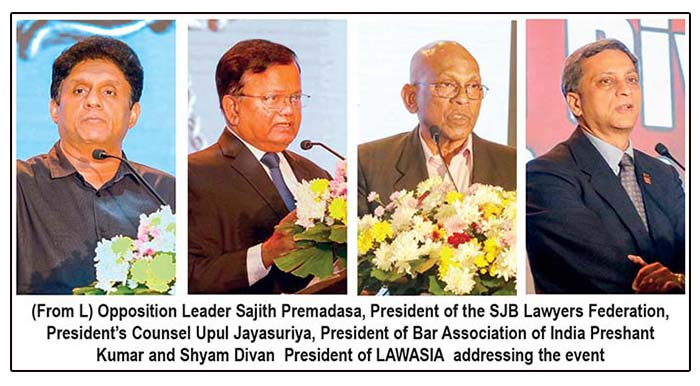
President of the SJB Lawyers Federation, President’s Counsel Upul Jayasuriya, last week handed over a set of 116 proposals itemized as “Legal Reforms for System Change” to Opposition and SJB Leader Sajith Premadasa during a lawyers’ convention held at Jayewardenepura with the participation of over 1,000 lawyers and senior counsel.
Jayasuriya who is the head of the Samagi Lawyers Federation said that they propose these new resolutions as a legal basis for system change in the future.
The following are some of the key proposals: 1) President to be required to engage in a consultative process with stakeholders prior to making judicial appointments. Views emerging through such consultation to be conveyed to the Constitutional Council along with the name/s nominated for their approval.
2) There shall be a Constitutional Court. Retirement age of the judges in that court shall be higher than the Judges of the Supreme Court. All appointments to the Constitutional Court, Supreme Court and Court of Appeal, the Members of the Judicial Service Commission other than the Chairman, shall be made by the President on the recommendation of the Constitutional Council.
3) In the discharge of its function relating to the appointment of the President and Judges of the Constitutional Court, Judges of the Supreme Court and the President and Judges of the Court of Appeal, the Constitutional Council shall obtain the views of the Chief Justice and the two senior-most Judges of the Supreme Court.
4) A more transparent criterion will be proposed for judicial appointments. Including a collegiate system to recommend, based on transparent criteria.
Selection of High Court Judges should be by a mixed and eminent panel consisting of most senior President’s Counsel, Attorney General, President BASL, President Court of Appeal presided over by the Chief Justice. Under normal circumstances the age limits will be as stipulated.
5) Allegations of misbehaviour or incapacity contained in a resolution in the House of Representatives for the presentation of an address for the removal of a Judge of the Constitutional Court, Supreme Court or Court of Appeal shall be inquired into by a panel consisting of three retired Judges of the Constitutional Court or the Supreme Court. Such a panel shall be appointed by the Speaker on the recommendation of the Constitutional Council.
Parliament shall by law provide for all matters relating to the presentation of such an address, including the procedure for the passing of such resolution, the investigation and proof of the alleged misbehavior or incapacity and the right of such Judge to appear and to be heard in person or by a representative. Where the panel determines that the allegations of misbehaviour or incapacity contained in the resolution are not proved, the resolution shall lapse.
6) There shall be a Code of Conduct applicable to Judges of the Constitutional Court, Supreme Court and Court of Appeal. Allegations of serious infractions of the Code of Conduct with negative implications for the Judiciary’s independence, integrity and public trust shall be inquired into by a panel consisting of three retired Judges of the Constitutional Court or the Supreme Court appointed by the President on the recommendation of the Constitutional Council. The panel shall submit its report to the President and the Constitutional Council for appropriate action.
7) All judges of the Court of Appeal and the Supreme Court shall be entitled to enjoy the same salary, same facilities and benefits until death, maintaining total independence of the Judiciary, economically and otherwise. However they shall not hold other offices except that are prescribed by Law.
8) The Court of Appeal to be decentralized (to sit like the Courts of Assize) to take the Appeal Court closer to the people. Senior President’s counsel and President BASL to be consulted in appointing temporary judges
9) The Court of Appeal shall conduct its sittings in each Province. It shall have an original fundamental rights and language rights jurisdiction. An appeal shall lie to the Supreme Court with leave from the Court of Appeal or special leave from the Supreme Court. The civil appellate jurisdiction of the Provincial High Courts shall be transferred to the Court of Appeal sitting in the provinces.
10) In the case of special courts such selected persons should be over the age of 62 years and below the age of 75 years. They should be selected from among retired High Court Judges with a proven track record. Only thereafter the President shall recommend such names to the Constitutional Council.
11) All judicial promotions shall be considered on the basis of completion of the ongoing cases and the delivery of orders and judgements and number of such cases sustained in the appellate court.
12) All judgments of court shall be complied immediately. In instances wherein frivolous appeals have been lodged by the state and damages along with legal interest has accumulated unconscionably, such officers shall be held personally liable for such enhanced damages.
13) A law relating to contempt of courts on the lines of Indian statute shall be passed.
14) The Office of the Attorney-General shall be an independent entity. The Attorney-General shall be the Chief Legal Officer of the Republic and shall uphold and safeguard the sovereignty of the People. It should be ensured that the Attorney General will hold the scales of justice evenly maintaining the highest traditions of the office of Attorney General without being a mouthpiece of the regime in power, in particular issuing certificates on draft legislation.
15) An independent Office of Public Prosecutor shall be set up by law.
16) An independent Office of the Public Defender shall be set up by law.
17) The Attorney-General, Chief Public Prosecutor and Public Defender shall be appointed by the President on the recommendation of the Constitutional Council.
18) Consider the feasibility and scope to recruit external lawyers to the AG’s Department at all levels based on objective criteria calculated to promote better competence and integrity. However, those internal candidates would be given due consideration.
19) Any appointee to the post of Attorney General or the Solicitor General shall not hold office in excess of three years.
20) Delays in serving indictments should be curtailed. All indictments should be filed within three months or the most six months of the alleged crime. In order to complete the backlog, private Lawyers should be hired under the supervision of the AG. Allocation and coordination of such cases will be conducted by a decentralised public prosecutor.
21) In order to curtail delays in trials no postponement shall be granted on the basis that the Lawyer is in another court as is the practice in Indian Courts. This will also give more opportunities to younger Lawyers.
22) Consider timeframes for expeditious conclusion, such as if a criminal trial isn’t completed within a given time span, day to day trials should be held. The right to bail to be enhanced where prosecution isn’t commenced within a determinate time frame.







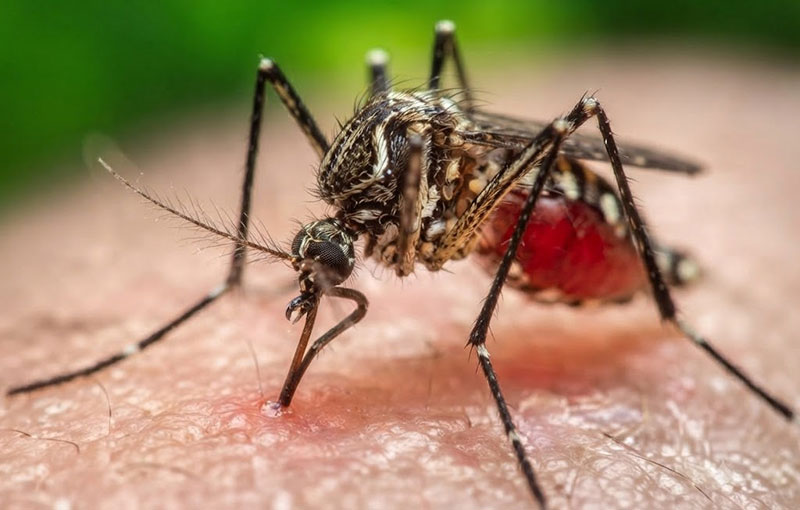
The countrywide dengue outbreak has intensified, with the death toll rising to 50, by July 16, as the number of reported infections surpassed 73,000, according to the National Dengue Control Unit (NDCU).
The country has recorded 73,455 dengue cases so far this year, with the case fatality rate standing at 0.07 percent, highlighting the severity of the ongoing outbreak.
The Western Province continues to remain the worst affected region, accounting for more than half of the total cases, with 38,700 infections. The Gampaha District has recorded the highest number of cases in the province with 15,341, followed closely by Colombo with 14,625.
The Southern Province has reported 11,382 cases, while the Sabaragamuwa and Central provinces have each recorded more than 6,000 infections.
Dengue cases have shown a sharp increase in recent months, with June recording the highest monthly total of 21,538 cases, while July has already reported 18,076 infections. In comparison, 8,590 cases were reported in May, and 5,651 in April.
Health authorities have identified 175 Medical Officer of Health (MOH) areas as high-risk locations during the 27th epidemiological week. An average of 2,677 new dengue cases are being reported daily, prompting authorities to intensify prevention and mosquito control measures.
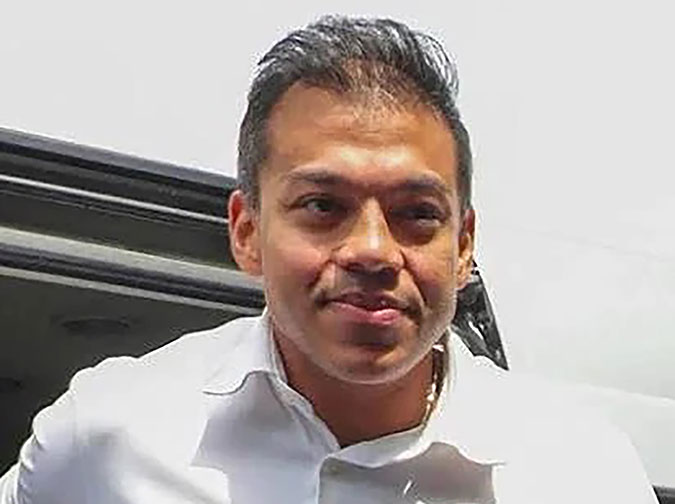
The Colombo High Court yesterday (17) resumed hearing the money laundering case filed against Yoshitha Rajapaksa, son of former President Mahinda Rajapaksa, under the Prevention of Money Laundering Act.
The proceedings were held before High Court Judge Udesh Ranatunga, where evidence was recorded from prosecution witnesses, under the direction of Deputy Solicitor General Janaka Bandara.
President’s Counsel Sampath Mendis, appearing for Yoshitha Rajapaksa, cross-examined the witnesses during the hearing.
After recording evidence, the court ordered that further examination of evidence be postponed until July 24.
The Attorney General has filed indictments, alleging that Yoshitha Rajapaksa committed an offence, under the Prevention of Money Laundering Act, by purchasing five plots of land in Dehiwala and Ratmalana, valued at more than Rs. 73 million.
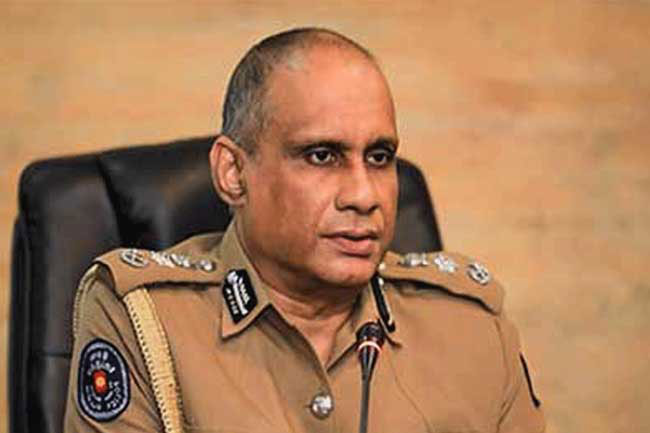
Former IGP Chandana Deepal Wickramaratne died after sustaining a gunshot injury at his residence, in Thalangama, yesterday (17), with police saying preliminary investigations indicate that the incident was a suspected suicide.
Kaduwela Magistrate Aruna Indrajith Buddhadasa, on Friday, ordered the Officer-in-Charge of the Malabe Police Station, Police Inspector Pradeep Ranasinghe, to conduct a formal investigation into the death and submit a report to court on its progress.
The order was issued after the Malabe Police Station presented facts before court regarding the incident.
According to police, the Malabe Police Station received information from the Police Unit of the Colombo East Base Hospital, in Mulleriyawa, that Wickramaratne, who resided in the Thalahena area, within the Malabe Police division, had died after being admitted to hospital, with gunshot injuries.
Police Spokesman ASP F.U. Wootler said Wickramaratne had allegedly used the firearm of his personal security officer and shot himself at his residence.
Police said the shooting had taken place at his residence on Parakum Road, Thalangama, on Thursday morning, before he was due to leave for his regular exercise routine. He was rushed to the Colombo East Base Hospital, in Mulleriyawa, with serious injuries but was pronounced dead upon admission, police said.
The deceased’s remains were placed at the Colombo East Base Hospital, where a post-mortem examination was scheduled to be conducted.
ASP Wootler said three police teams have been appointed to investigate the incident. Further investigations are being conducted by the Crime Division of the Western Province South Range and the Malabe Police Station.
Wickramaratne, 63, served as the 35th Inspector General of Police of Sri Lanka from November 27, 2020, to November 23, 2023.
He joined the Sri Lanka Police in 1986 as a Probationary Assistant Superintendent of Police and later served in several senior positions.
A graduate of the University of Colombo and the General Sir John Kotelawala Defence University, he also served as Acting IGP for more than a year, from April 28, 2019, before being appointed IGP, in November 2020.
He retired from the post of Inspector General of Police, in November 2023.
by Norman Palihawadane ✍️

Showers may occur in the Western, Sabaragamuwa and North-western provinces and in Kandy, Nuwara-Eliya, Galle and Matara districts

Dengue outbreak gallops ahead: Infections surpasses 73,455, leaving 50 dead

Evidence recorded in money laundering case against Yoshitha Rajapaksa

Former IGP C.D. Wickramaratne dies in suspected suicide

CAA sets aflatoxin limit for processed liquid milk from January 2027

Son of ex-Justice Minister further remanded till July 28

‘Dates have the highest sugar content to fight Coronavirus’

Sunday Island 27 December – Headlines

#SundayIsland 17th December – Headlines

Sunday Island – 28th March

Sunday Island Headlines – 21 March

Sunday Island – 21st February – Headlines
-
 Features6 days ago
Prison riots and politics: NPP’s biggest challenge and Sri Lanka’s biggest opportunity
-
 Features3 days ago
Dirty Money
-

 Editorial6 days ago
Much ado about crime: Fish or cut bait
-
 Features6 days ago
More on Saudi Arabia: ARAMCO and beyond
-

 News1 day ago
Money laundering case against Yoshitha, fixed for pre-trial conference
-
 Sports6 days ago
The banker who rescued Sri Lankan cricket
-
 Midweek Review3 days ago
The sordid tale of theft and tragedy at Finance Ministry
-
 Latest News4 days ago
Oil prices hit 1-month high as US-Iran attacks dim Strait of Hormuz outlook