Connect with us

Foreign News

House votes to impeach homeland security secretary Alejandro Mayorkas

Published

on

Republicans have accused homeland security secretary Alejandro Mayorkas of failing to fulfil his duties to secure the US border (BBC)
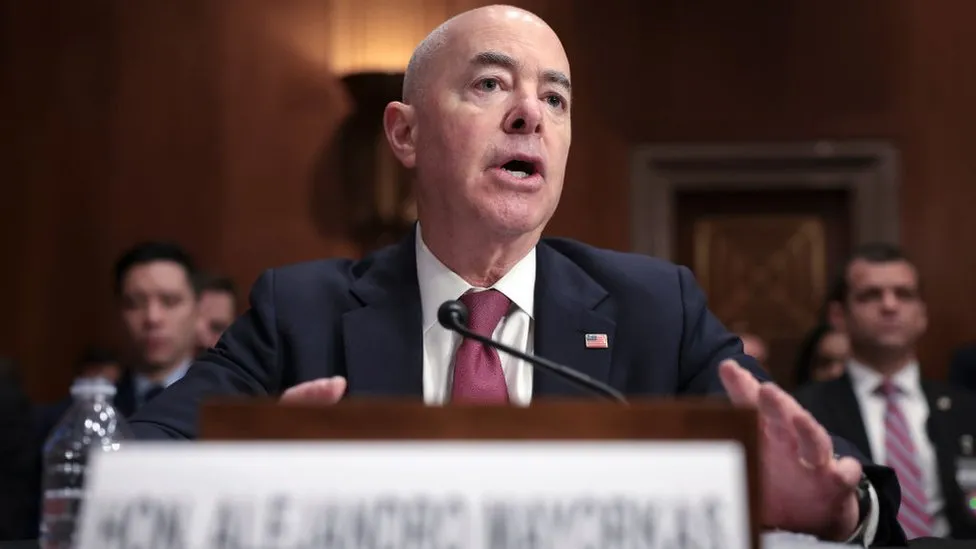
The House of Representatives has narrowly voted to impeach Homeland Security Secretary Alejandro Mayorkas, making him the first cabinet member to face impeachment in nearly 150 years.

Many Republicans blame Mayorkas for an unprecedented influx of migrants at the US-Mexico border.

The Republican-led chamber voted 214 to 213 for the measure, after the first attempt failed last week. The issue now heads to the Democratic-led Senate, where it is likely to fail.

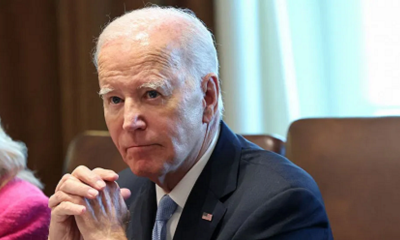
President Joe Biden on Tuesday called the vote a “blatant act of unconstitutional partisanship” and a “political stunt”.

Opponents of Mr Mayorkas accused him of not living up to his oath to “well and faithfully discharge the duties” of his office by failing to do more to secure the border.

The vote was largely divided along party lines, with 210 Democrats voting against the impeachment, along with three Republican representatives: Tom McClintock of California, Ken Buck of Colorado and Mike Gallagher of Wisconsin.

The three defectors also voted against the first attempt to impeach Mr Mayorkas, saying that impeaching someone who had not committed a serious crime would weaken the constitutional penalty and do little to address the crisis at the border.

More than 6.3 million migrants have entered the US illegally since 2021, making immigration a divisive and politically contentious issue ahead of the November election. The issue is a major focus of Donald Trump’s campaign to oust Mr Biden from office.

In a statement released shortly after the vote, Mr Biden defended Mr Mayorkas, calling him “an honourable public servant”. “He has upheld the rule of law faithfully and has demonstrated a deep commitment to the values that make our nation great,” the president said.

A spokesperson for the Department of Homeland Security, Mia Ehrenberg, accused Republicans of spending their time “trampling on the constitution” instead of “working to solve the serious challenges at our border”.

Republican Speaker of the House Mike Johnson said Mr Mayorkas “deserves to be impeached”. Over the course of two hearings in January, Republicans charged Mr Mayorkas with failing to enforce immigration policies and lying about the border’s security.

Democrat Al Green, of Texas, appeared unexpectedly after being wheeled into the chamber wearing hospital scrubs to vote against the impeachment. He had been in an emergency room having surgery.

House Majority Leader Steve Scalise also cast his vote after missing the last vote because of cancer treatment. His return gave Republicans the margin needed to secure the vote.

Impeachment – a process outlined in the US Constitution – marks the first step in removing a federal official for high crimes or misdemeanours. It requires a simple majority in the House, then a trial in the Senate. A two-thirds majority is needed for that to succeed.

The impeachment effort is unlikely to pass as the Senate is narrowly controlled by the Democrats.

The House is due to present the impeachment articles to the Senate on 26 February.

The last cabinet secretary to be impeached was Secretary of War William Belknap in 1876, although he resigned shortly ahead of the vote.

A January poll conducted by CBS – the BBC’s US partner – suggests that nearly half of Americans view the situation at the border as a crisis, with 63% wanting “tougher” policies at the border.

The US Customs and Border Protection agency on Tuesday said border crossings were down 50% in January, attributing the dramatic drop to “seasonal trends, as well as enhanced enforcement efforts”.
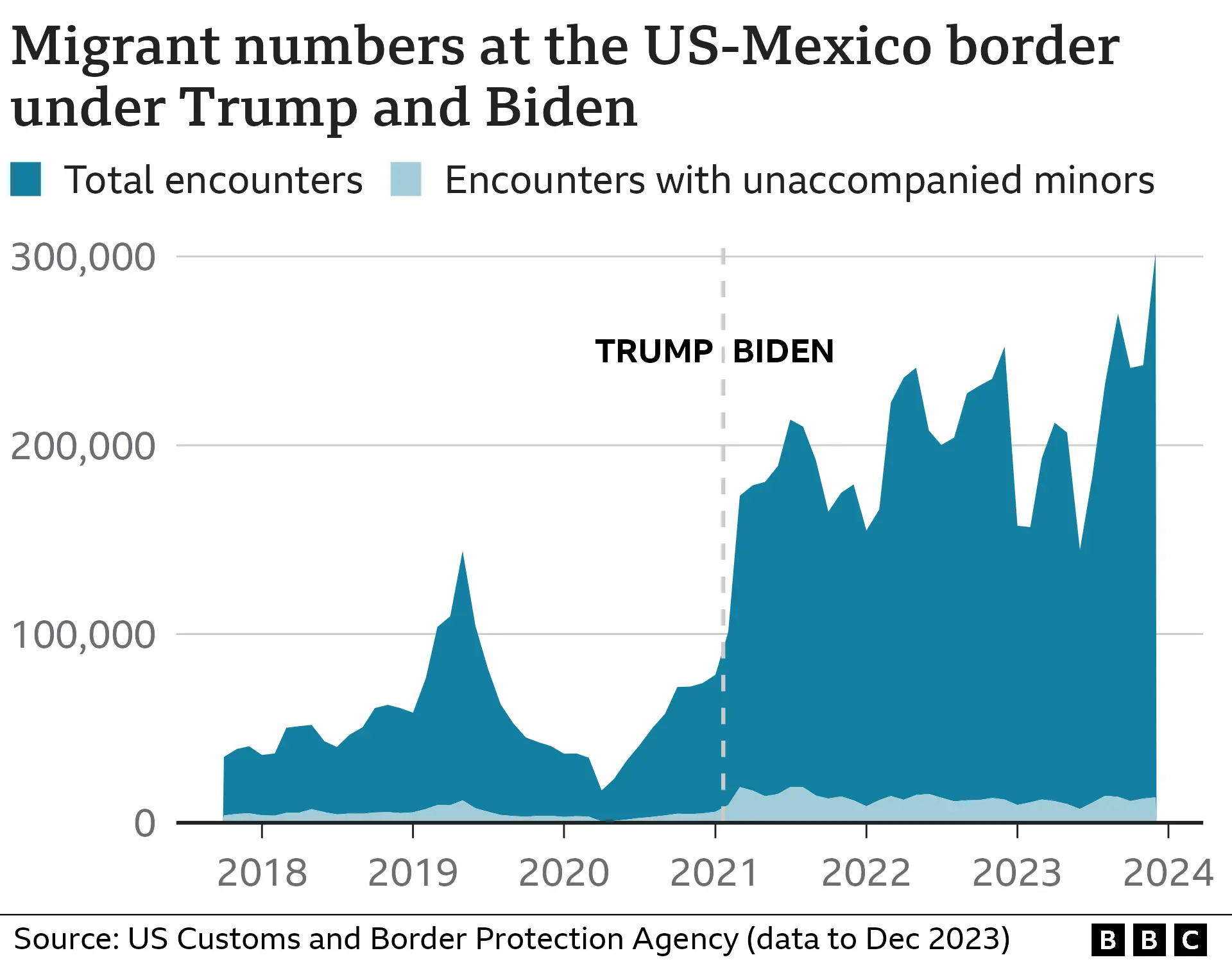

Migrant numbers graphic


Foreign News

French court finds Airbus, Air France guilty of manslaughter in 2009 crash

Published

on

By

Teddy Robert, [left], brother of flight co-pilot, and Daniele Lamy, president of victims' families association Entraide et Solidarite AF447, await the trial verdict, May 21, 2026 [Aljazeera]

A French appeals court has found Airbus and Air France guilty of manslaughter in 2009 Rio de Janeiro – Paris crash that killed 228 people – the worst aviation disaster in the country’s history.

The Paris Court of Appeal ruled on Thursday that both companies were “solely and entirely responsible for the crash of flight AF447”, and ordered a payment of 225,000 euros ($261,720) for each passenger, the maximum fine possible for corporate manslaughter.

Although the penalties are largely symbolic, they capped an eight-week trial that victims’ families saw as a last chance to find justice two years after a lower court acquited Airbus and Air France.

Both companies have repeatedly denied all charges.

Following the ruling, Airbus said it would appeal to France’s highest court, saying the latest finding contradicted submissions from prosecutors and the 2023 acquittal.

Prosecutors previously warned that an appeal was likely and denounced the companies’ behaviour throughout the decade-plus legal process.

“Nothing has come of it – not a single word of sincere comfort,” said prosecutor Rodolphe Juy-Birmann as the trial was under way last November. “One word sums up this whole circus: indecency.”

Airbus Paris-RIo flight accident
Divers recover the tail section from the Air France A330 that crashed into the south Atlantic while flying from Rio de Janeiro to Paris on June 1, 2009 [File: Aljazeera]

The crash unfolded on June 1, 2009, when flight AF447 disappeared from radar screens as it headed from Rio de Janeiro in Brazil to the French capital Paris with 216 passengers and 12 crew.

Two years passed before a deep-sea search uncovered the plane’s black boxes, which record flight data.

Investigators found the pilots had pushed the jet into a climb as it struggled with sensors blocked with ice during a mid-Atlantic storm. The plane stalled and crashed into the ocean.

While Airbus and Air France have blamed pilot error, the lawyers for passengers’ families argued that both companies knew that there was a problem with the plane’s pitot tubes, which measure flight speed.

Pilots were not trained to deal with such an emergency as the tubes malfunctioned, prosecutors said, triggering alarms in the cockpit and turning off the plane’s autopilot function.

Air France lawyer Pascal Weil said in October that the company “had the means to conduct high-altitude training, but we did not do so because we sincerely believed it was unnecessary”.

[Aljazeera]


Continue Reading

Foreign News

US charges Cuba’s Raúl Castro with murder over 1996 downing of two planes

Published

on

By

(Pic BBC)

The US has charged former Cuban leader Raúl Castro with conspiracy to kill US nationals and other crimes over the 1996 downing of two planes between Cuba and Florida.

The case unveiled on Wednesday accuses Castro and five others in the shooting down of the aircraft belonging to Cuban-American group Brothers to the Rescue and killing four people, including three Americans.

Castro, now 94, was then head of the country’s armed forces and faced international condemnation over the crash.

As the US seeks to exert increasing pressure on Cuba’s communist rule, President Miguel Díaz-Canel called the charges “a political manoeuvre, devoid of any legal foundation”.

Speaking at Freedom Tower in Miami, Acting Attorney General Todd Blanche announced that the US would also charge Castro with destruction of aircraft, and four individual counts of murder over the deaths of Armando Alejandre Jr, Carlos Alberto Costa, Mario Manuel de la Peña, and Pablo Morales.

“The United States, and President Trump, does not, and will not, forget its citizens,” Blanche said.

The charges must be argued in a US court, with some carrying the possibility life terms. The murder charges each carry a maximum penalty of death or life imprisonment.

The justice department’s new charges take aim at a key figurehead of Cuba’s communist leadership when it is facing intense US pressure to make significant political and economic reforms to its one-party rule there.

“I think the strategy is to increase the pressure gradually to the point where the Cuban government will give in and surrender at the bargaining table,” said Wiliam LeoGrand, a expert on Latin American politics at American University.

The US has issued sanctions on the country and imposed a blockade on oil to Cuba that has resulted in blackouts and food shortages.

Earlier on Wednesday, US Secretary of State Marco Rubio issued a message to the Cuban people timed to the country’s independence day.

“President Trump is offering a new path between the US and a new Cuba,” Rubio said.

Rubio told citizens of the island that a Cuban military run conglomerate known as GAESA is primarily responsible for the blackouts and food shortages that the country continues to endure.

GAESA owns or operates most of the lucrative parts of the Cuban economy from the ports to the petrol pumps to five-star hotels.

In response to Rubio’s message, Díaz-Canel accused the US of lying and imposing a collective punishment on the Cuban people.

Getty Images James Uthmeier, Madeline Pumariega, Todd Blanche, Jason Reding Quiñones, Senator Ashley Moody, and Christopher Raia, all in suits, stand shoulder to shoulder before a podium on a stage. A crowd is gathered before them. Acting US Attorney General Todd Blanche announced the charges in Miami. (BBC)

Díaz-Canel also said that the indictment of Castro was being used to “justify the folly of a military aggression against Cuba” and accused the US of distorting the facts around the downing of the plane.

He claimed that Cuba acted in “legitimate self-defence within its jurisdictional waters”.

Asked by reporters about the prospects of bringing Castro to the US to face charges, Blanche responded that there was a warrant for his arrest.

He did not confirm whether the US would try to capture Castro, but said, “we expect he will show up here, by his own will or another way”.

American University’s LeoGrande said he believes the US is ready to capture the former Cuban leader “if the Cubans don’t surrender at the bargaining table”.

In January, the US staged a military operation to seize former Venezuelan President Nicolás Maduro and bring him to the US, after the justice department indicted him.

It transformed Venezuela’s relationship with Washington, something LeoGrande cautioned would be unlikely to have the same effect in Cuba, noting Castro retired almost a decade ago.

Nearly 95 years old, Castro, the brother of late Cuban leader Fidel Castro, remains an influential figure, acknowledged on the island as the surviving “leader of the Cuban Revolution”.

He has relinquished his active government and party roles, but during his 2008-2018 presidency, he and former US president Barack Obama presided over a short-lived thaw in Washington-Havana relations.

Blanche said he would “not compare cases” between Castro’s and that of Maduro.

President Donald Trump was asked about the political aspect of Wednesday’s indictment.

“A lot of those people are related to me in the sense that I’ve had such a great relationship with Cuban-Americans,” Trump said. “On a humanitarian basis, we’re here to help.”

While Castro is not expected to be extradited or to appear in the case, all options appear to be on the table, says attorney Lindsey Lazopoulos Friedman, who served as a prosecutor in the US attorney’s office in Miami.

“If he did appear in the case, he would be afforded the same legal rights as any other defendant,” Friedman said, adding that would ultimately include a trial by jury.

“No one expects that the case will follow this typical path… but the indictment is compelling and is supported by significant evidence,” she told the BBC.

Cuba unlikely to bow without a fight

Getty Images Raúl Castro and Fidel Castro are seen in military uniforms and glasses in Havana, Cuba in December 1996
Raúl Castro and his brother, Cuban revolutionary leader Fidel Castro, are seen in Havana, Cuba in December 1996 (BBC)

The Miami centre where US officials announced the indictment of Raúl Castro was full of Cuban Americans, mostly representing Cuban exile organisations that have for decades led opposition of the Cuban government from within the United States.

Surrounded by pictures of the four people who died in the 1996 crashes, many at the Miami event described being thrilled by the news.

“It was time, 67 years of that murderous regime,” said Isela Fiterre. “Raúl Castro did not merely kill four individuals. Over the course of many years, he has killed countless people,” Fiterre said.

She said it is never too late for justice and that she is grateful to the Trump administration for taking this step.

Another attendee, Mercedes Puid-Soto, echoed those sentiments.

“I feel very happy. Justice has been served,” she said. “It’s very important that the families can close that chapter, and we Cubans too.”

Still looming over Blanche’s announcement was the answer to “whether the Trump administration will use this indictment in a similar way that it used the indictment against Maduro, as a justification to carry out a military operation under the cover of a law enforcement action,” said Roxanna Vigil, an international affairs fellow at the Council on Foreign Relations.

“It’s unlikely that the Cuban regime will surrender to the United States without a fight,” Vigil noted. “And any move that includes working with the Cuban regime would be very difficult for the Cuban diaspora in the United States to accept.”

US and Cuban representatives, including Raúl Castro’s grandson Raúl Guillermo Rodriguez Castro, have held “conversations” in recent months, but US charges against the former president are unlikely to smooth these contacts.

On the contrary, the Cuban side showed signs of further entrenching into its “no surrender, no concessions” position against US pressure, with Cuban state media outlets blasting what they called the “false accusations”.

(BBC)

Continue Reading

Foreign News

At least 10 dead as huge floods sweep southern and central China

Published

on

By

At least 10 people have died after heavy rains caused widespread flooding and landslides across southern and central China.

The China Meteorological Administration (CMA) maintained elevated orange alerts on Tuesday for heavy rain and severe stormy weather, warning that the huge precipitation system has entered its strongest, most destructive stage.

China’s State Flood Control and Drought Relief Headquarters officially activated a Level-IV emergency response, the initial tier to accelerate state-level disaster relief for floods, in Hunan and Guangxi, while maintaining the same emergency tier for Hubei, Chongqing, and Guizhou.

The torrential downpours have shattered multiple local historical records, particularly in the central Hubei province. State broadcaster CCTV reported that 337 townships in Hubei recorded more than 100mm of rain within a 48-hour window.

In Guangxi, six people died after a pick-up truck carrying 15 passengers fell into a swollen river amid heavy rainfall, CCTV said. In Hubei, three people were killed by flash floods in a low-lying village, while another death was recorded in southern Hunan province.

Images on the Chinese social media platform Douyin showed residents in Jingzhou, Hubei, standing knee-deep in floodwater, with some catching fish swimming in submerged streets. Several cars were almost entirely underwater.

Authorities have suspended schools, businesses, and transport services in affected areas. Emergency responses are under way, and residents in parts of Hubei and Hunan are actively being relocated.

Meteorologists attributed the unusually large area of intense rainfall to the convergence of moisture from the Bay of Bengal, the South China Sea, and the Pacific Ocean. They said the slow-moving nature of the weather system had exacerbated cumulative rainfall totals.

The National Meteorological Centre expects severe weather to move east and south over the next two days, with the heaviest rainfall forecast along the middle and lower reaches of the Yangtze River from Wednesday.

[Aljazeera]

Continue Reading

Trending