
Sports
Rugby in Sri Lanka hasn’t been short of the company of influential personalities

By a Special Sports Correspondent
Rugby has had its influential personalities over the years since the sport was introduced to the islanders in 1879. From personalities in the likes of IGP Rudra Rajasingham, Y.C Chang, Denzil Kobbekaduwa, Anton Benedict, Priyantha Ekanayake, DIG (retd) Hafeez Marso, Senior DIG (retd) Nimal Lewke, Priyantha Ekanayake, Hisham Abdeen, Ananda Kasthuriaarachchi, George Simpkin, Ana Saranapala and expatriates like Fijian Apisi Nagata and Tulagaese Tawita (Laga) Sri Lankans came under the influence of a horde of individuals who set their mark wherever they set foot. This writer, being in his early fifties, can vouch for the influence of Saranapala, Ekanayake, Simpkin, Tawita, Nagata and Kasthuriaarachchi on the players because he closely involved with rugby union; covering the sport’s events and happenings for local newspaper as a rugby correspondent.
When these personalities stepped into take challenges they reformed entire set-ups which were performing under par before they arrived on the scene. This writer remembers CH&FC struggling to be in contention for honours in the mid eighties, but failing to do so until two Fijians by the name of Nagata and Jalasi Radro arrived on the scene. It was Nagata’s influence which transformed the CH side into a formidable outfit during this time. From also making up the numbers in the inter-club tournament the ‘Gymkhana Club’ made it to the Clifford Cup finals in 1988 and lost a close battle against eventual winners Air Force Sports Club. Rugby fans and players of that era remember how Nagata conducted so many rugby sessions for youth and schools.
 Then we saw how Tawita was entrusted with duties at Kandy SC, CR&FC, Royal College and even the national side. Like Nagata, Tawita was a coach cum player. From the sporting fields to the mercantile sector and even in parliament we need personalities who can influence everyone around them. There is reminiscences of Tawita having tears in his eyes when he spoken to the players before a national assignment. Now this is a man from another country and he was put in charge of the national side for a single assignment because Sri Lanka very rarely in the past had anyone appointed as national coach for a specific period of time. The longest standing national coach Sri Lanka had was the late George Simpkin. The New Zealander was instrumental in reducing the size of the place of rice that the players were eating and fill it instead with nutritious content, which helps build lean muscle and reduce the intake of overall calories. At that time, when rugby was less physical, he drilled into the mind of players that playing rugby at Asian level was more of an aerobic sport and demanded long hours in the gym doing specific training for speed and endurance.
You also have to talk about Ekanayake; a number eight and line out jumping expert par excellence. He led Sri Lanka at three Asiads (Asian Championships) and led from the front. His presence was felt in games where the national side was up against much stronger and bigger made opposition players from other continents. There was once a game arranged between the Sri Lanka President’s XV and a banking team from Fiji. In the first backline move Sri Lanka made there were so many casualties in the host team because of ruthless tackling by the Fijians. Ekanayake stood out in that game playing his heat out and rallying the remaining players together to ensure the Sri Lankan team that was compiled for this game didn’t lose badly. We know that Ekanayake can bark out orders and make players pull out hidden energies; just to survive on the field or escape being swallowed up by bigger and faster players. Ekanayake also went on to become the president of the Sri Lanka Football Union (Now Sri Lanka Rugby) and during his tenor all clubs were united and compiling a team for national duty received all-round support.
Sri Lanka made history in 2001 when its under 19 junior team qualified for the World Cup in Chile. The head coach for that assignment was Kasthuriaarachchi; a mathematics teacher in a government school when not playing rugby. He had a hard tour to Chile with the players baggage going missing at the airport apart from having to take on some of the world’s best teams. This writer saw him training the boys in Colombo at the Asian Tournament which was precursor for the World Cup. Sri Lanka qualified on the virtue of finishing third in the tournament behind Japan and South Korea. This writer can remember Kasthuriaarachchi (Castro) giving a lecture to three players in that squad Mario Oorloff, Harin Kaluarachchi and Tikiri Dissanayake about how to fall on the rugby field adopting a technique which guarantees you’ll play rugby for a long time. There have been coaches who have taught valuable lessons outside the rugby field and Castro is one of them. For the record Castro also played A Division rugby for Kandy Sports Club.
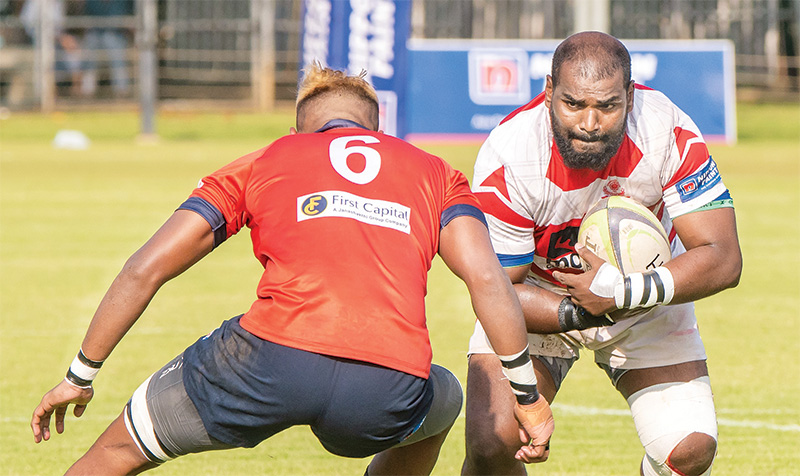
Mention must be made of the CH&FC side contesting the Cup Championship at the ongoing Division 1 rugby tournament. From being placed last in the points table last season CH&FC has risen from the dumps and is knocking on the door for a high finish. The man behind the success is coach Sanath Martis who has drilled confidence into the players and made them play a form of rugby where every second spent on the field is accounted for. This writer counts seconds with interest because if a cameraman stands on the touchlines and clicks some images of a ruck formation each frame will be so different to the other with players dropping off and new players joining in the equation. We can see the relatively new players in the side playing with vengeance. This is not a side that has players with great reputation apart from some senior players like Dushmantha Priyadarshana and Prasath Madusanka who are veterans in the game. Even skipper Awantha Lee is new to club rugby, but there is a sense of playing the game with purpose floating in the air and fans can see where it is coming from. If one picks the most influential coach this season, Martis will be right up there along with CR’s Dushanth Lewke. The purpose behind writing this column is not to picker a winner, but to drive in the message as to who has been influential and in what department of the game.



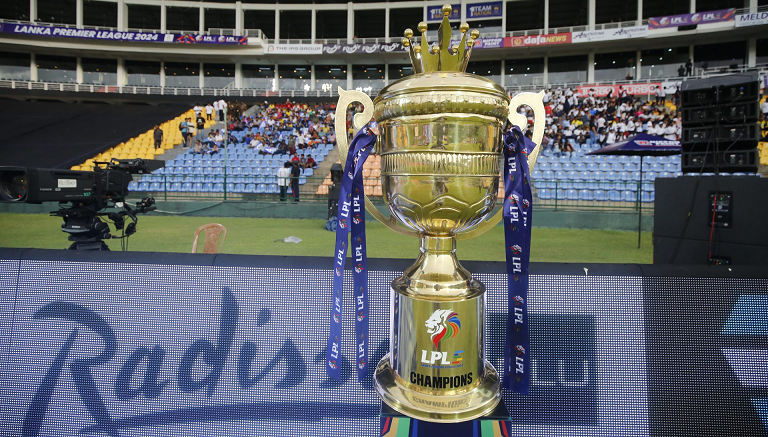
The inaugural game of the Lanka Premier League 2026 will be played between the Jaffna and Galle teams, who emerged as the Champions and Runners-up respectively in the 2024 season.
The opening game is scheduled to be played on 17th July at the SSC Grounds, commencing at 7.30 p.m.
Prior to the start of the tournament opener, a spectacular opening ceremony will be held at the SSC Grounds in Colombo.
The Lanka Premier League 2026 will be played from 17th July to 8th August across four venues: SSC, Colombo; RDICS, Dambulla; PICS, Pallekele; and RPICS, Colombo.
The tournament is conducted by Sri Lanka Cricket (SLC), the owner of the LPL, in partnership with The IPG Group, the event rights holder.


Pakistan Women 170/4 in 20 overs (Eyman Fatima 79*, Muneeba Ali 36, Natalie Pervaiz 24; Mitchell Mavunga1-38, Precious Marange 1-33, Lindokuhle Mabhero 1-20) beat Zimbabwe Women 103/8 in 20 overs (Beloved Biza 11, Natasha Mtomba 10, Adel Zimunu 12, Nomvelo Sibanda 18*, Lindokuhle Mabhero 12, Kudzai Chigora 14*; Fatima Sana 1-22, Nashra Sandhu 2-18, Sadia Iqbal 1-10, Tuba Hassan 1-17, Ayesha Zafar 1-10, Natalie Pervaiz 1-09) by 67 runs.

LPL 2026 Opening Game between Jaffna and Galle

New Zealand’s Māori Queen meets King Charles at Buckingham Palace

Trump and Xi conclude ‘very successful’ talks but no deals announced

India hikes fuel prices as Iran crisis bites

Kuldip Yadav in for Khaleel; Gleeson for Thushara

Eyman Fatima powers Pakistan to series victory

‘Dates have the highest sugar content to fight Coronavirus’

Sunday Island 27 December – Headlines

#SundayIsland 17th December – Headlines

Sunday Island – 28th March

Sunday Island Headlines – 21 March

Sunday Island – 21st February – Headlines
-

 News6 days ago
Lanka Port City officials to meet investors in Dubai
-
 News3 days ago
Ex-SriLankan CEO’s death: Controversy surrounds execution of bail bond
-
 News7 days ago
SLPP expresses concern over death of former SriLankan CEO
-
 News7 days ago
Police inform Fort Magistrate’s Court of finding ex-CEO of SriLankan dead under suspicious circumstances
-
 Features4 days ago
When University systems fail:Supreme Court’s landmark intervention in sexual harassment case
-
Features4 days ago
High Stakes in Pursuing corruption cases
-
 Midweek Review3 days ago
A victory that can never be forgotten
-

 News7 days ago
President of Vietnam and delegation departs Sri Lanka