
Editorial
Trinco tank farm: Towering stupidity

Tuesday 28th July, 2020
Power and Energy Minister Mahinda Amaraweera has recently made an unsuccessful attempt to reclaim 25 out of 99 Trincomalee oil storage tanks leased out to the Indian Oil Company (IOC), in 2003, for USD 100,000 per annum, for 35 years. There are 140 tanks on the farm, and many of them are in a state of disrepair. Having leased out the tanks, the then UNP government boasted the storage facility would be developed, but only 15 out of 99 tanks given to IOC are currently operational, we are told. Why couldn’t that administration repair those 15 tanks and increase the storage capacity of the Ceylon Petroleum Corporation (CPC)?
Minister Amaraweera has told the media that the CPC is planning to buy and store oil when the prices of crude plummet in the international market. This is something the CPC and governments should have done a long time ago.
The lame excuse that successive governments have trotted out for their failure to repair the Trinco oil tank farm is lack of funds. The cost of repairing the 25 tanks the government has requested India to return is said to be about Rs. 2,000 million. If the colossal waste of public funds under successive governments had been curtailed, the country would have been able to construct a brand new oil tank farm elsewhere besides repairing the existing one in Trincomlaee.
In April this year, oil prices turned negative for the first time in history with the producers paying buyers to remove the commodity owing to fears that they would run out of storage facilities. That situation arose because the demand for oil dropped as never before due to lockdowns and the attendant global economic slowdown. Sri Lanka did not benefit from that windfall. If it had maintained the Trinco oil tank farm instead of leasing it out, the CPC would have been able to make huge profits by purchasing and storing cheap oil, and even turn itself around while helping the country’s economy recover fast.
It is hoped that the next government to be elected will learn from the disastrous Trinco oil tank farm deal and refrain from committing the country irrevocably to such agreements in the future. It must not make the mistake of signing the US government’s Millennium Challenge Corporation (MCC) compact. If foreign powers are allowed to acquire land here, on lease or otherwise, they will never leave, and this country will become a playground for them. It is not possible that India, having gained a foothold in Trincomalee, through IOC, will go away, leaving the tank farm, when the lease expires. The same is true of China, which has got a port and thousands of acres of land around it, in Hambantota.
Having received no favourable response from the Indian government to his request, Minister Amaraweera is reportedly planning to have 25 oil storage tanks built in Hambantota. There are already several white elephants in that part of the country—an idling international airport, an empty international cricket stadium and a deserted international conference hall. The government ought to consider the economic feasibility of the proposed oil tank farm to be constructed in Hambantota. We can only hope that it will not end up being another political project in the tank.
We are not short of vociferous patriots among our political leaders. They condemn the former colonial powers at every turn and wax eloquent, on the Independence Day, boasting of their achievements and promising to develop the country. They should be ashamed of their failure to have maintained the Trincomalee oil tanks, built by the British.
On seeing what is going on, here, the British must be feeling relieved that they left this country, 72 years ago, and thinking that it is they who gained Independence in 1948.


Thursday 15th January, 2026
The government finally swallowed its pride and postponed the implementation of education reforms meant for Grade 06. It has said its reform initiative is on track, but it is very likely to avoid a headlong rush. It may not concede defeat, but it is obviously wary of performing another high-wire act without a safety net amidst protests.
The government has done itself a favour by shelving the education reforms for Grade 06. Protests tend to snowball, and the Satyagraha campaigns, rallies and marches against the education reforms have the potential to develop into another ‘go-home’ movement.
The opponents of the current education reforms are now demanding that the government deep-six its reform package wholesale and ensure that the architects thereof bear the cost of error-ridden modules, amounting to about Rs. 70 million. Their message is loud and clear; those who wasted state funds for printing those modules will face legal action when the NPP loses power.
The Opposition and the trade unions critical of the proposed education reforms are still out for Prime Minister Dr. Harini Amarasuriya’s scalp, blaming her for the reform mess in the education sector. They are also making many unsubstantiated allegations against her. Trouble is far from over for her and the government.
Now that all stakeholders have agreed that the education system needs reform, the government should begin formulating education reforms anew while adopting an inclusive approach. The best way to set about the task of introducing reforms in any sector is to consult all key stakeholders and secure their concurrence.
The NPP government led by the JVP, which is a great admirer of the Chinese Communist Party, should have adopted the gradual trial-and-error approach recommended by Deng Xiaoping, and crossed the river by feeling the stones. Instead of taking one experimental step at a time and adapting to circumstances, the NPP government made the mistake of plunging headfirst into reforming the education system.
It has been proposed that the government set up a Presidential Task Force consisting of experts, political representatives, trade unionists and other stakeholders to reform the education system. This proposal deserves serious consideration. A broadly representative task force will help ensure the smooth implementation of education reforms. Well begun is said to be half done.
Meanwhile, Tuesday’s meeting between President Anura Kumara Dissanayake and some trade unions representing teachers and principals has been viewed in some quarters as part of a divide-and-rule strategy, for it has caused a rift between the trade unionists invited by the President and others, who claim that the event was scripted. However, those who met the President on Tuesday have thrown their weight behind the campaign to recover the cost of poorly crafted learning modules that have been shelved.
President of the All Ceylon United Teachers’ Association Ven. Yalwala Pannasekera Thera, one of the trade unionists who met the President on Tuesday, has given a karmic twist to the education reform issue. Tearing into the NPP politicians and state officials responsible for printing the badly drafted modules, he said yesterday those who misused funds meant for children would be reborn as frogs in Beira Lake and tortoises in the Kandy Lake.
Politicians who misuse state funds and abuse power may find themselves in the company of frogs and tortoises even before they go the way of all flesh. One may recall that in 2022, some politicians of the previous dispensation and their supporters swam with frogs in Beira Lake, where angry mobs plunged them. The same fate is likely to befall all politicians who let power get the better of them, resort to highhanded action, flaunting mandates and supermajorities, and thereby test the public’s patience.
Wednesday 14th January, 2026
The police have warned of an escalation in online financial scams. There have been numerous complaints of such frauds, and fraudsters often offer online employment opportunities, investment schemes or other financial benefits, luring victims into transferring money to their accounts, the police have said.
The commonest online scams in Sri Lanka, according to cybersecurity warnings during the past two years, are deceptive loan schemes, phishing links, fake job offers, work-from-home frauds, love traps, pyramid schemes, investment and crypto frauds, lottery prize and shopping rackets, and duping people into sharing their banking details with unknown parties. Common precautions against these scams are said to include ignoring suspicious links, never sharing passwords or OTPs with others, and being sceptical of lottery wins and unsolicited employment or investment offers.
Scams are as old as the hills; they have proliferated during the past couple of decades due to the phenomenal expansion of social media. Humans have a penchant for trust and leaps of faith. One of the earliest known scams occurred in 300 BC, when two Greek sailors sank their cargo ship to cheat money lenders. Historians inform us that some members of the Praetorian Guard ‘sold’ the Roman Empire, of all things, after murdering their master. Sir Isaac Newton struggled to outwit forgers following his appointment as the Warden of the Royal Mint. A con-artist sold the Eiffel Tower to an unsuspecting buyer about 100 years ago. Such instances abound in world history.
Scams mushroom at all levels of society in this country, and it is not possible for the police and other state institutions to crack down on all of them. There’s said to be a sucker born every minute. The same is true of scammers. Most Sri Lankans do not heed warnings and invest money and even their nest eggs in fraudulent schemes only to regret. The scam victims, except those who invest their black money, deserve sympathy and help, and everything possible must be done to bring the scammers to justice. Various factors drive the ordinary people to take such risks and fall prey to scammers, one being low banking returns, but it is debatable whether taxpayers’ money should be used to compensate those who lose their clandestine investments.
Besides online scammers, loan sharks operating in the guise of microfinance companies have become a curse. They exploit the poor, especially those in the rural sector, with impunity. Many borrowers end up losing their belongings, including agricultural equipment put up as collateral. They have no one to turn to. On Monday (12), the Sectoral Oversight Committee on Economic Development and International Relations approved the proposed Microfinance and Credit Regulatory Authority Bill, subject to amendments. It is hoped that we are not going to witness another false dawn, and the laws this vital Bill seeks to make will help liberate the poor from the clutches of the microfinance Shylocks.
Perhaps, the biggest scams in this country are not in the financial sector but in politics, and they are taken for granted. Remember the much-advertised political promises that helped politicians hoodwink the public and savour power—‘rice from the moon’, ‘eight pounds of grain plus a righteous society’, ‘a country free from corruption and violence’, ‘a prosperous future’, ‘good governance’ and ‘a beautiful life’? The best way to deal with those who are responsible for such politico-social scams is to make election manifestos and campaign promises legally binding, and change the existing electoral system to introduce the recall mechanism so that it will be possible to unseat the crafty politicians who secure state power by making umpteen Machiavellian promises and betray people’s trust. But the question is whether the politicians who alone can make such laws will ever legislate for the politico-social scams in question to be brought to an end. We are reminded of a question Juvenal famously asked about two millennia ago: “Who guards the guards?”
Tuesday 13th January, 2026
What began as a debate on the government’s education reforms has descended into a dirty political war, with the propaganda brigades of both the JVP/NPP and the Opposition carrying out vilification campaigns against the key figures in the rival camps. Prime Minister Dr. Harini Amarasuriya, who is also the Minister of Education, has become a victim of a savage character assassination campaign, which no reasonable person will hesitate to condemn unreservedly. Shame on those who have stooped so low as to carry out personal attacks on her!
What has led to the current dispute in the education sector is basically the government’s intransigence. While claiming to be willing to consider dissenting views, it is all out to shove its reform package down the throats of other key stakeholders who unfortunately want the baby also thrown out with the bathwater, so to speak. A prerequisite for resolving the current conflict, which has the potential to cripple the education sector, is for both warring parties to soften their stands and negotiate.
President Anura Kumara Dissanayake is scheduled to meet the representatives of the trade unions representing teachers and principals shortly, we are told. One can only hope that two sides will move towards a rapprochement, which is the need of the hour.
The government ought to stop cherishing the delusion that its mandate is carte blanche for it to do as it pleases with no heed for dissent. It is only wishful thinking that the government will be able to ensure the implementation of its education reforms without the fullest cooperation of the frontline stakeholders—school teachers and principals.
Even the staunchest opponents of the education reforms at issue agree that the education system has to be reformed. What they are opposing tooth and nail is the manner in which the government has set about the task of introducing education reforms and its attempts to impose a fait accompli on other key stakeholders. The Opposition is not without a political agenda where its campaign against the education reforms is concerned; it will go to any extent to gain political mileage.
The government has erred by compressing the process of formulating education reforms into a year or so and proceeding at a pell-mell pace to implement them. Teachers’ and principals’ trade unions are of the view that some modules were prepared in just three months.
By rushing to reform the education sector, the government has provided the Opposition with a fresh rallying point and the latter is making the most of it. Various associations have sprung up overnight purportedly to ‘save free education’, and some Opposition politicians are planning to launch fasts against the education reforms.
A collective of Opposition parties held a protest in Matugama, the other day, claiming to safeguard free education. A group of NPP supporters staged a demonstration in the same township against the malicious propaganda attacks on Prime Minister Amarasuriya. They vehemently condemned the Opposition for insulting women. Their message must have struck a responsive chord with the public regardless what the Opposition politicians and their propaganda hitmen may say about them. Worryingly, the female JVP/NPP supporters have remained silent on scurrilous attacks the pro-government propagandists carry out on women in the Opposition; they have launched a vilification campaign against a young woman who spoke at a joint Opposition rally at Nugegoda recently. Politicians and propagandists in both the government and the Opposition must do unto others as they would have others do unto them.
Since all stakeholders agree that the education system needs reform, the government should put its controversial reform package on hold immediately and invite teachers, principals, the Opposition and others to a serious discussion.
The government would do well to refrain from crossing the Rubicon and be flexible enough to listen to the other stakeholders and make a course correction. It is hoped that the focus of the talks to be held between the government and the opponents of the education reforms will be on how to retain the baby while throwing away the bathwater.

BCB removes Nazmul Islam as head of finance committee

Another crane collapses in Thailand, killing two, after 32 die previous day

India shuts Kashmir medical college – after Muslims earned most admissions

Singapore’s opposition leader stripped of title after conviction for lying

BCB issues show cause notice to Nazmul Islam but Bangladesh players firm on boycott

From behind bars, Aung San Suu Kyi casts a long shadow over Myanmar

‘Dates have the highest sugar content to fight Coronavirus’

Sunday Island 27 December – Headlines

#SundayIsland 17th December – Headlines

Sunday Island – 28th March

Sunday Island Headlines – 21 March

Sunday Island – 21st February – Headlines
-

 Business5 days ago
Dialog and UnionPay International Join Forces to Elevate Sri Lanka’s Digital Payment Landscape
-
 News5 days ago
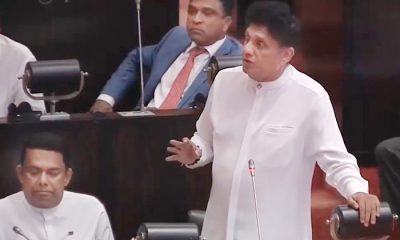
Sajith: Ashoka Chakra replaces Dharmachakra in Buddhism textbook
-

 Features5 days ago
The Paradox of Trump Power: Contested Authoritarian at Home, Uncontested Bully Abroad
-

 Business14 hours ago
Koaloo.Fi and Stredge forge strategic partnership to offer businesses sustainable supply chain solutions
-

 Features5 days ago
Subject:Whatever happened to (my) three million dollars?
-

 News4 days ago
Level I landslide early warnings issued to the Districts of Badulla, Kandy, Matale and Nuwara-Eliya extended
-

 Business2 days ago
New policy framework for stock market deposits seen as a boon for companies
-

 Opinion7 days ago
The minstrel monk and Rafiki, the old mandrill in The Lion King – II