
News
Now is the most opportune moment to invest in Sri Lanka’s renewable energy sector – President

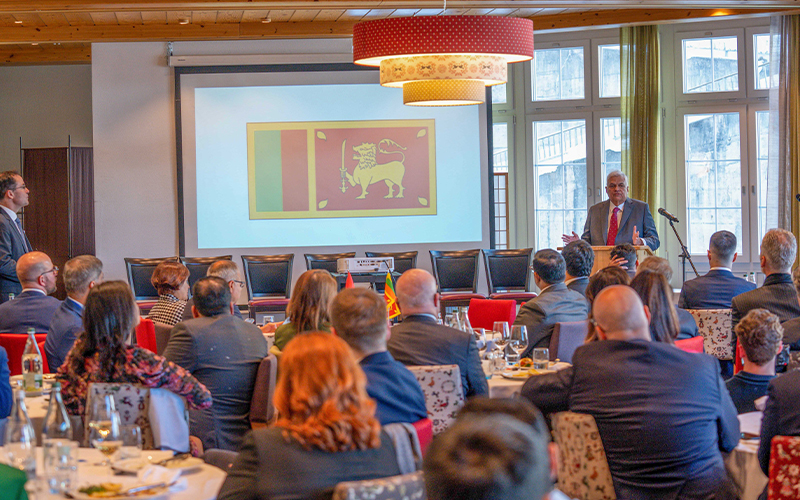
President Ranil Wickremesinghe highlighted the present as an opportune moment for investing in Sri Lanka’s renewable energy sector, expressing confidence in its potential to yield substantial benefits for both stakeholders and consumers in the coming decades.
The President also underscored that investors venturing into this sector can anticipate a comprehensive and unwavering policy framework in the realm of renewable energy.
President Ranil Wickremesinghe made these remarks during his address at the “Green Technology Forum” convened on January 15 in Davos, Switzerland. The event was coordinated by the Swiss-Asian Chamber of Commerce.
Speaking on the theme of “Paving the way to an energy secure Sri Lanka,” President Ranil Wickremesinghe highlighted the substantial potential of Sri Lanka’s renewable energy sector. He further outlined the government’s initiatives over the past two years to establish an investment-friendly environment in the renewable energy sector.
Emphasizing Sri Lanka’s dedication to addressing climate change, the President elaborated on various measures, including the “Tropical Belt Initiative,” presented at the COP28 conference in Dubai.
Highlighting Sri Lanka’s commitment to sustainable and green development, the President emphasized the nation’s ambitious plans and determination to achieve net-zero emissions by 2050.
President Wickremesinghe underscored the pivotal role of the rapid renewable energy plan, describing it as a key component of Sri Lanka’s comprehensive efforts towards sustainable development and a crucial step in ensuring energy security.
Following is the full speech delivered by President Ranil Wickremesinghe at the Green Technology Forum in Davos, Switzerland.
I thank the Swiss Asian Chamber of Commerce and their partners in organising this event for the invitation to speak today.
Background: Green Energy and Climate Concerns
There is an urgent need for acceleration of global actions towards climate change mitigation. There have been multiple global forums which have resulted in numerous commitments towards this end. However, actions have fallen drastically short of commitments.
The fallout of this failure in global leadership is borne largely by developing nations of the global south. When periods of drought extend beyond normal, undermining agricultural production, our food security is in jeopardy. When hydropower gets disrupted due to delayed monsoons, our energy security is in jeopardy. Droughts are often followed by a deluge, leading to flash floods and landslides, disrupting lives and livelihoods of under-privileged communities in particular.
It is very evident that there is a disproportionate impact of the adverse outcomes of climate change on developing countries. This brings to light the issue of climate justice and the need for a stronger contribution from the advanced economies towards adaptation and mitigation efforts in the global south.
That being said, Sri Lanka will forge ahead with its efforts towards climate mitigation. We have also recently launched the Tropical Belt Initiative at the COP28 in Dubai – this creates a framework for catalysing private investment in forests, energy, oceans, mangroves, in the countries of the tropical belt.
Today I want to focus on one key aspect of such efforts, which is our drive towards renewable energy.
Renewable Energy in Sri Lanka: Building on History
In fact, Sri Lanka is a country with a long history of renewable energy. Since independence Sri Lanka developed an extensive network of hydropower, commissioning its first major hydro-power plant in 1950. Hydropower was able to provide for most of the country’s energy needs until the 1990s. Even today, hydropower accounts for around 40% of Sri Lanka’s installed electricity generation capacity.
With hydropower largely exploited to the optimal levels, there has been an increased effort to include wind and solar power generation to the national grid. The government is now accelerating this process to ensure that by 2030, 70% of Sri Lanka’s electricity needs are fulfilled by renewable energy sources.
To reach this target requires a large investment of up to USD 11.5 billion. However, until recently the framework for private investment in the renewable energy sector has not been very conducive. Over the last 2 years several measures have been taken by the government to correct these shortcomings and ensure an optimal investment climate for renewable energy is in place.
Financial Reform
The first step was to ensure cost reflective pricing. Between 2014 and 2022 electricity tariffs had not been adjusted. This resulted in major cash flow problems for the Ceylon Electricity Board that sometimes led to payment delays to power suppliers. However, from August 2022 we have shifted to a cost-reflective pricing structure. Accordingly, electricity tariffs are revised every quarter to reflect costs on a forward looking basis.
The CEB, which has long been a loss making entity, returned a profit in 2023, enabling it to settle significant levels of past debt along with some balance sheet structuring. The company now has a strong balance sheet, a far stronger cash flow position, and a pricing structure that ensures liquidity.
Rigidities in the feeding tariff has also been a concern of past investors. However, this has also been addressed with greater flexibility being introduced to the tariff options, including choices between fixed tariff and variable tariff formulas.
In addition to internal reform, we are also putting in place the framework to attract green financing. Sri Lanka has developed the Road Map for Sustainable Finance, Green Finance Taxonomy, the SDG Investor Map and the Green Bond Framework, that is currently under formulation, creates the enabling environment for Sri Lanka to have a robust engagement in climate finance. The availability of sustainable finance will be an added boost for renewable energy investments in Sri Lanka.
Legislative Reform
There have also been legislative barriers to large scale private investment in the renewable energy sector. Those legal hurdles have also been cleared through necessary amendments to the Electricity Act introduced in 2022.
Institutional Reform
Thirdly, the government is in the final stages of implementing unbundling of the Ceylon Electricity Board. This will result in greater financial and operational autonomy for the distribution, generation, and transmission arms of the CEB, resulting in competition and transparency. Whilst private participation in generation is already available, the unbundling process will open up opportunities for private participation in distribution as well.
This major reform, implemented with the support of the Asian Development Bank, will ensure the CEB operates at the frontier of efficiency, delivering the best outcome for consumers and the most competitive and efficient producers of electricity. The draft legislation for this reform was already been published last month.
Infrastructure Improvements
The ambition of 70% electricity from renewals also requires improved system efficiency and upgrades to integrate more renewable energy, particularly from 2026. Investments will be required in storage, transmission, and distribution, along with the ongoing private investments in generation. Plans for this integration up to 2030 are in place and have begun implementation.
Future Outlook
Following the major reforms implemented in the energy sector in the last 2 years, there has been renewed interest in this sector. There are already large scale solar and wind power projects that have commenced implementation. A major Indian player has commenced implementation of a 350MW wind power plant that is expected to be commissioned in 2025. The same player is considering a further USD 750 million investment in wind power.
Wind power is a major opportunity for Sri Lanka. A recent World Bank report indicates that off-shore wind power in particular has the potential to generate power far greater than Sri Lanka’s requirements. Considering this, Sri Lanka and India are in advanced stages of talks regarding grid inter-connection to enable Sri Lanka to export surplus electricity particularly to the fast growing industrial belt in the Southern part of India. There is also tremendous potential for the development of green hydrogen in Sri Lanka.
Conclusion
Sri Lanka has ambitious plans to fulfil its sustainable, green development agenda. By 2050 the country has committed to achieving net zero. The accelerated renewable energy plan is a key component of this overall effort and is also an essential step on the path towards energy security. Renewable energy will also drive down costs of generation since at present Sri Lanka is compelled to rely on high cost heavy fuels during the dry season. Sri Lanka is in the process of establishing an international climate university, which will continue to unlock opportunities in green energy.
It is clear that Sri Lanka’s renewable energy policy direction is underpinned by multiple motivations and drivers. Therefore investors can expect a high degree of policy continuity in this sector going forward as well. This is the best time to invest in Sri Lanka’s renewable energy journey, and I have no doubt such investments will generate significant value for shareholders and Sri Lanka’s consumers over the next several decades.









Latest News
Flood warning issued to the Divisional Secretariat Divisions of Ganga Ihala Korale, Udapalatha, Doluwa, Udunuwara, Yatinuwara, Gangawata Korale, Harispattuwa, and Pathadumbara

Due to heavy rainfall received in the upper catchment areas of the Mahaweli River over the past few hours, there is a risk of minor flooding in the low-lying areas surrounding the Mahaweli River within the Divisional Secretariat Divisions of Ganga Ihala Korale, Udapalatha, Doluwa, Udunuwara, Yatinuwara, Gangawata Korale, Harispattuwa, and Pathadumbara.Residents living in the above mentioned areas and motorists using roads passing through these areas are urged to exercise extreme caution and remain highly vigilant regarding the prevailing situation.
Furthermore, residents living in close proximity to the Mahaweli River in these areas are advised to remain highly alert to the situation and take all necessary precautions to protect themselves from any potential flooding.The relevant disaster management authorities are requested to take all necessary measures in response to this situation.
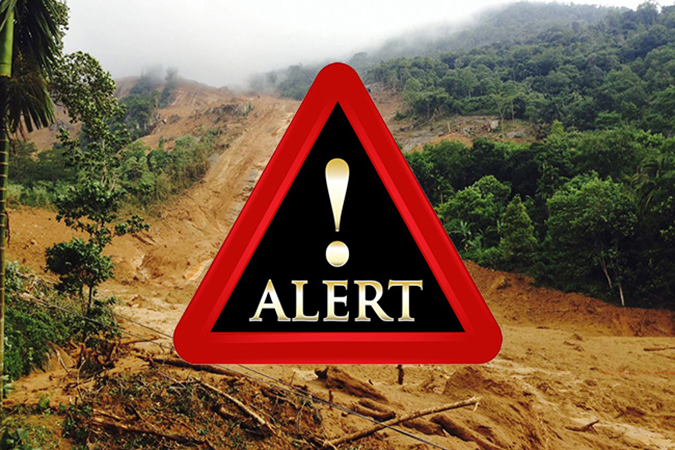
The National Building Research Organisation [NBRO] has issued landslide Red Alerts to the districts of Kandy, Kegalle and Nuwara Eliya effective from 14:00 hrs on 20.09.2026 To 14:00 hrs on 21.09.2026
Accordingly,
LEVEL III [RED] Land Slide early warnings have been issued to the Divisional Secretaries Divisions and surrounding areas of Pasbage Korale in the Kandy district, Dehiowita, Aranayake, Deraniyagala, Mawanella and Yatiyanthota in the Kegalle district and Kothmale West, Kotmale East, Ambagamuwa and Norwood in the Nuwara Eliya district
LEVEL II [AMBER] Land Slide early warnings have been issued to the Divisional Secretaries Divisions and surrounding areas of Padukka in the Colombo district, Nagoda, Thawalama and Neluwa in the Galle district, Bulathsinhala, Palindanuwara, Walallawita and Agalawatta in the Kalutara district, Ganga Ihala Korale in the Kandy district, Bulathkohupitiya and Kegalle in the Kegalle district, Akuressa and Pitabeddara in the Matara district, Thalawakele in the Nuwara Eliya district and Pelmadulla, Ratnapura, Ayagama, Kuruwita and Ratnapura in the Ratnapura district.
LEVEL I [YELLOW] Land Slide early warnings have been issued to the Divisional Secretaries Divisions and surrounding areas of Seethawaka in the Colombo district, Niyagama and Baddegama in the Galle district, Mirigama in the Gampaha district, Ingiriya in the Kalutara district, Udapalatha and Yatinuwara in the Kandy district, Galigamuwa, Warakapola and Ruwanwella in the Kegalle district, Kotapola, Pasgoda and Athuraliya in the Matara district, and Eheliyagoda, Kalawana and Elapatha in the Ratnapura district.
News
Development projects can deliver results to the people more quickly when the political authority and the public service work together towards a common goal – PM
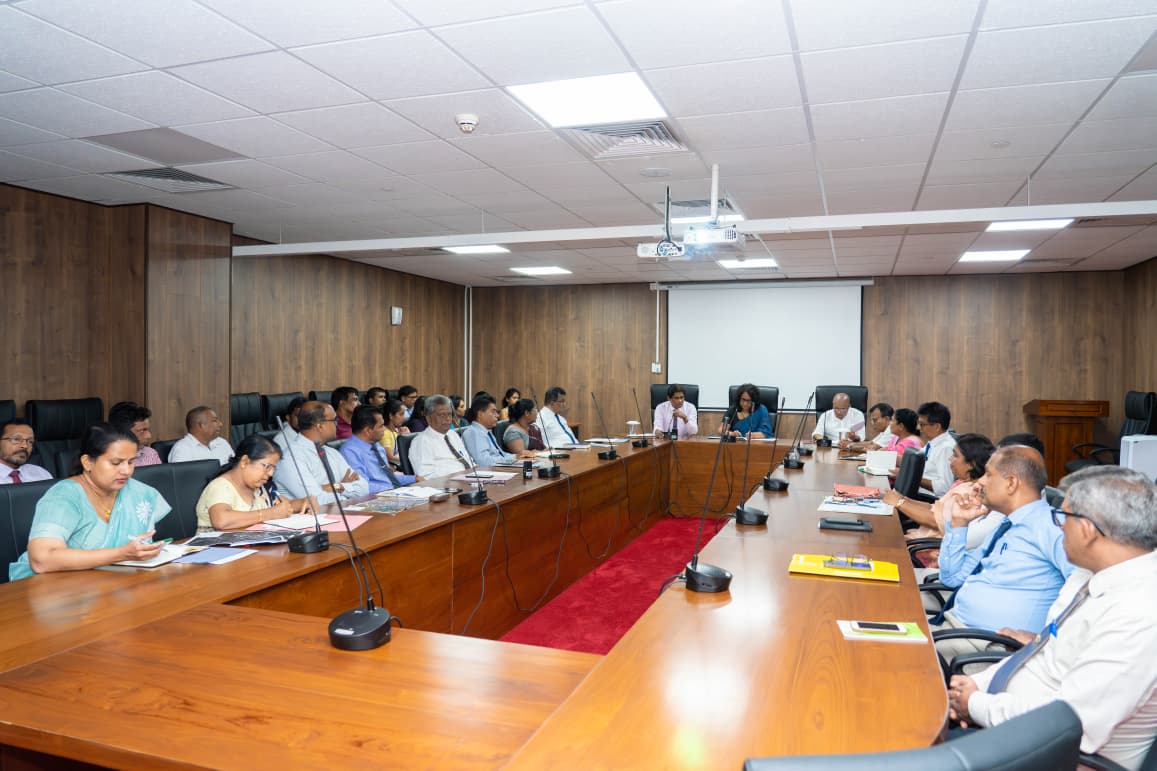
Prime Minister Dr. Harini Amarasuriya stated that development projects can deliver results to the people more quickly when the political authority and the public service work together towards a common, people-oriented objective.
The Prime Minister made these remarks while participating in a discussion held on Friday [September 18] at the Western Province Council Auditorium to review the progress of the development project to rehabilitate Rathmalana Kandawala Road and the drainage system on either side of the road, within the Dehiwala–Mount Lavinia Municipal Council limits in the Colombo District.
The project, which commenced on September 10, 2026, is scheduled to be completed before June 30, 2027. Implemented by the Provincial Road Development Authority (PRDA), the project includes the construction of a bridge at a cost of Rs. 64 million, the rehabilitation of the drainage system at a cost of Rs. 930 million, and the rehabilitation of the road at a cost of Rs. 115 million.
The Prime Minister also paid special attention to the progress of the responsibilities assigned to the Western Province Council, the Irrigation Department and the Ratmalana Divisional Secretariat in accordance with decisions taken at the previous committee meeting. Attention was also given to the current status of the plans being carried out by the Sri Lanka Land Development Corporation (SLLRDC), as well as the construction and maintenance activities being undertaken by the Provincial Road Development Authority (PRDA).
Commending the expedite and commendable progress of the project, the Prime Minister particularly appreciated the commitment demonstrated by officials of the relevant government institutions to work in close coordination with one another and in collaboration with the political authority.
The Prime Minister also emphasised the importance of taking measures well in advance to control flooding and minimise its impact on Colombo and several other districts in view of the rainy weather that may affect the Western Province during the latter part of this year.
The meeting was attended by the Chairman of the Colombo District Coordinating Committee and Member of Parliament Lakshman Nipuna Arachchi, Chairperson of the Ratmalana Divisional Coordinating Committee and Member of Parliament Samanmalee Gunasinghe, Chairman of the Roads Sub-Committee of the Colombo District Coordinating Committee Dewananda Suraweera, Mayor of the Dehiwala–Mount Lavinia Municipal Council Parakum Shantha, Chief Secretary of the Western Province K.G. Pradeep Pushpakumara, along with a number of government officials.
[Prime Minister’s Media Division]

Flood warning issued to the Divisional Secretariat Divisions of Ganga Ihala Korale, Udapalatha, Doluwa, Udunuwara, Yatinuwara, Gangawata Korale, Harispattuwa, and Pathadumbara

Landslide Red Alerts issued to the districts of Kandy, Kegalle and Nuwara Eliya

Shafali dazzles with 49-ball unbeaten 100 and India march into Asian Games final

Development projects can deliver results to the people more quickly when the political authority and the public service work together towards a common goal – PM

Landslide Early Warnings issued to the Districts of Colombo, Galle, Kalutara, Kandy, Kegalle, Matara, Nuwara Eliya and Ratnapura

Chamari Athapaththu’s unbeaten 83 leads Sri Lanka into final

‘Dates have the highest sugar content to fight Coronavirus’

Sunday Island 27 December – Headlines

#SundayIsland 17th December – Headlines

Sunday Island – 28th March

Sunday Island Headlines – 21 March

Sunday Island – 21st February – Headlines
-

 Opinion7 days ago
From Galkissa (Mount Lavinia) to Tambuttegama
-

 News4 days ago
US embassy won’t comment on IGP’s probe into joint drug raid
-

 Features6 days ago
The emptying university: why are academics leaving?
-

 Features7 days ago
Sri Lanka’s university crisis: Brain drain and union action demand urgent reform
-

 News3 days ago
Bid for Basil’s extradition nears final stage: Police
-

 Business4 days ago
All-new Bolero MaXX unveiled in Sri Lanka
-

 Opinion7 days ago
Ashraff: From the SLMC towards the National Unity Alliance
-

 Editorial7 days ago
Muscle flexing, astroturfing and dog-and-pony shows