
Sports
In Asalanka Sri Lanka believe

by Rex Clementine
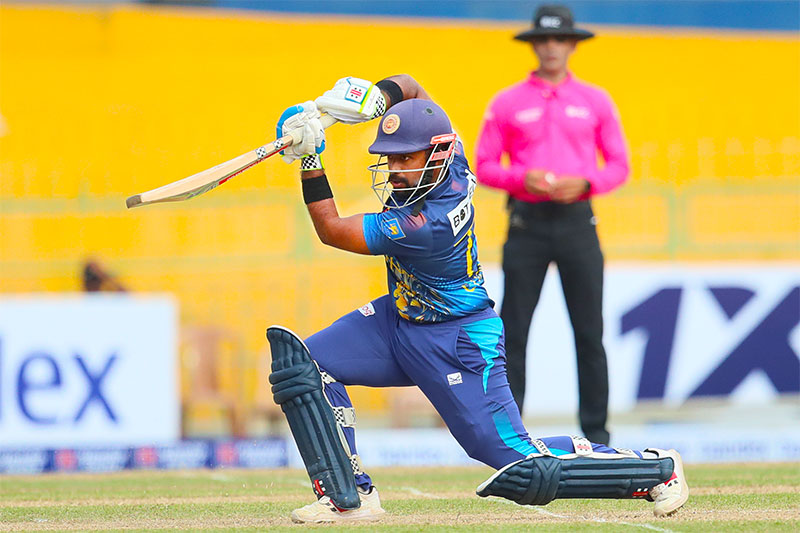
It wasn’t the ideal start for Sri Lanka in the New Year as rain ruined what could have been a comprehensive victory for the hosts in the opening fixture of the three match ODI series against Zimbabwe on Saturday. But there is some assurance that we are going to see lot more rescue acts from that diminutive left-hander Charith Asalanka.
This is Asalanak’s fourth year as an international cricketer. There have been many young players with so much promise over the last four years, but the glamorous lifestyle of a cricket player means that most of them go out of track. Asalanka has stayed focused; no tattoos, no studs, no late-night parties, no social media extravaganza and no coups to ouster captains. Like Rahul Dravid, he has remained determinedly low profile.
Batting at number five is an art. Not many succeed in that position. At times when the top order has fired you have to come and throw the kitchen sink in a bid to get quick runs and at other times when there has been a collapse you have to stage recoveries stitching crucial partnerships with the tail. It’s a role where you need to adapt. Technically you need to be sound and many calculated risks need to be taken.
Several soft dismissals had threatened to end Sri Lanka’s innings early when Asalanka played a blinder on Saturday. There was good running between the wickets, there was a period of consolidating and then when the last five overs came bit of improvisation trying to clear the boundary.
It is only Asalanka’s third ODI century and more will come this year which has lot of cricket.
Sri Lanka will engage in ten Test matches this year and there are several bilateral series home and away. Into the bargain there is a T-20 World Cup too.
By the looks of it, Wanindu Hasaranga, our T-20 captain is struggling with his fitness. He is a superstar, but not every superstar can become a captain. Lasith Malinga is a case in point. He was a disaster as captain. Let’s hope Hasaranga is not going the Malinga way. Anyway, to hand him the T-20 captaincy when he had not been cleared 100 percent fit is an interesting choice. But stranger things have happened in Sri Lankan cricket.
Being the designated vice-captain of the white ball teams, in all probability Asalanka will lead the country this year. That will be the dawn of a new era.
For so long we have waited for that leader who will fix our cricketing woes. Many have come and gone but none have had the capacity to take the team in the right direction.
Sri Lankan cricket and our fans have suffered for so long. People are losing interest in the game as evident by the low turnout on Saturday. Barely 3000 fans watched the game on a Saturday in a stadium that has a capacity for 35,000. Everyone will be desperately hoping that we find a leader who will take us to our glory days in the sport. That could be Asalanka.
This is not to say that Asalanka is the finish product. He has a lot of work to do. His fielding is horrendous and during the World Cup he must have dropped half a dozen catches. That is one area that he needs to work on. However, the overall package that he has to offer us is exciting indeed.
Finally, some hope for the national cricket team.








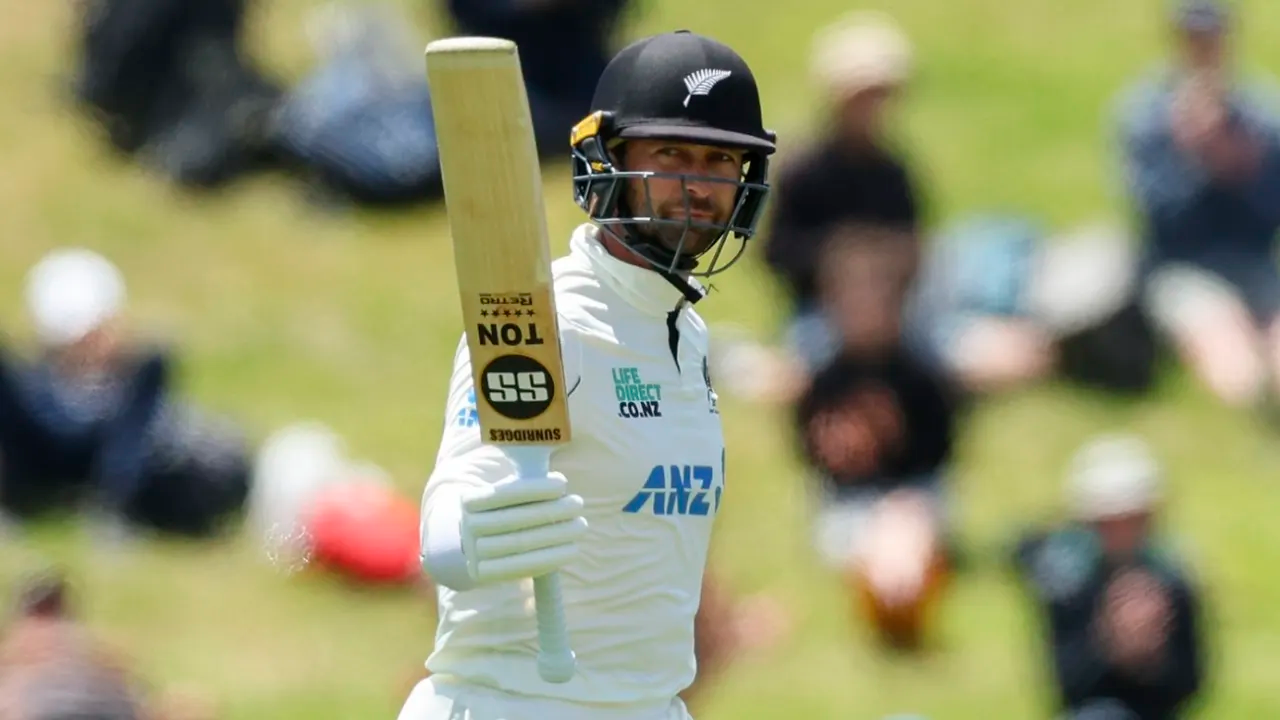
Despite a bright bowling performance from the West Indies seamers, half-centuries from New Zealand’s Devon Conway and Mitchell hay extended the hosts’ advantage after an absorbing second day of the Wellington Test. New Zealand secured a 73-run first-innings lead before a double-wicket burst from their quicks left West Indies still 41 behind with eight wickets in hand.
West Indies produced bursts of quality with the ball to keep pegging New Zealand back, and several home batters contributed to their own dismissals with loose shots. But the visitors also offered enough scoring opportunities for Conway and Hay to make valuable inroads.
Conway’s 60 – his first fifty against West Indies and 13th overall – anchored one end, while debutant Hay struck an enterprising 61 from No. 6. Their efforts allowed New Zealand to declare at 278 for 9, with the injured Blair Tickner not batting.
With the relatively new ball, Kemar Roach, Jayden Seales, Ojay Shields and Anderson Phillip consistently challenged the batters as the ball swung both ways and occasionally jagged off the surface. Conway, however, punished the loose deliveries, hitting eight fours – mostly cuts and flicks – to keep New Zealand moving.
From the non-striker’s end, he saw Tom Latham (11) lose his off stump to a nip-backer from Roach from around the wicket, before watching Kane Williamson (37) have his off stump pegged back by an Anderson Phillip delivery that squared him up. After lunch, Rachin Ravindra – who made 176 in Christchurch – was caught behind off Roach while chasing a wide one. Conway himself was then caught down the leg side off a poor Justin Greaves delivery, thanks to a superb diving take from Tevin Imlach. At that stage, New Zealand seemed to be wobbling at 117 for 4.
A fifth-wicket stand of 73 between Daryl Mitchell (25) and Hay – the latter playing in place of the injured Tom Blundell – brought New Zealand closer to West Indies’ first-innings score of 205. Mitchell was conservative, while Hay leaned on his white-ball instincts to score his runs, producing strong cuts through the off side and, when tested with short balls, pulling confidently over the leg side.
Mitchell, like Conway, was eventually strangled down the leg side off Phillip. Hay later fell to the short-ball tactic: after striking back-to-back fours behind square leg, he miscued a pull off Shields straight to Roach at deep-backward square and walked back bitterly disappointed. At 213 for 6, New Zealand then leaned on Glenn Phillips (18) and the lower order to extend their lead.
West Indies continued to pepper Phillips with short balls in a cat-and-mouse exchange that brought body blows and top-edges over the keeper. Seeking a change, captain Roston Chase turned to spin for the first time in the innings, and needed only four deliveries to tempt Phillips into a slog that failed to clear deep midwicket.
Zak Foulkes then batted 43 balls and frustrated West Indies with deflections off the seamers’ through the gully region on his way to an unbeaten 23. Jacob Duffy added further runs with boundaries to long-off and long-on, and No. 10 Michael Rae joined a rare group of batters to begin their Test careers with five runs off an overthrow boundary. Rae reached 13 before the expensive Seales finally claimed his first wicket of the match, knocking back the debutant’s leg stump.
New Zealand’s batting may have been patchy, but their bowlers restored control with a sharp ten-over burst late in the day. John Campbell fell in the seventh over, beaten by a Rae delivery that zipped in to hit off stump. Next over, nightwatcher Phillip initially survived a DRS review for caught behind off Duffy, but a second look confirmed he was lbw instead. Brandon King (15*) and Kavem Hodge (3*) saw out the final few minutes, but West Indies still face a steep challenge when play resumes on Friday.
Brief scores:
West Indies 205 and 32 for 2 (Brandon King 15*; Michael Rae 1-4, Jacob Duffy 1-8) trail New Zealand 278 for 9 dec (Mitchell Hay 61, Devon Conway 60; Andeson Phillip 3-70) by 41 runs
[Cricinfo]
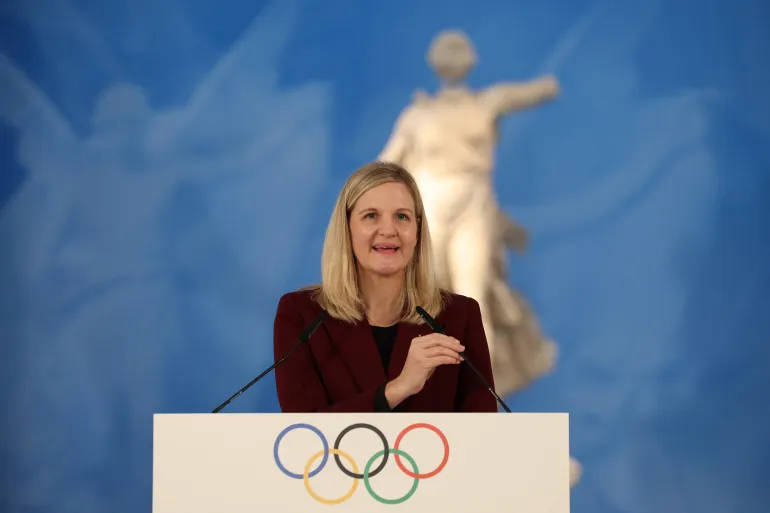
The International Olympic Committee says it will announce eligibility criteria for transgender athletes early next year, after months of deliberation as it seeks to find a consensus on how to protect the female category.
The issue has been a source of controversy, with no universal rule in place for the participation of transgender athletes at the Olympic Games.
The IOC, under its new President Kirsty Coventry, did a U-turn in June, deciding to take the lead in setting eligibility criteria for Olympic participation, having previously handed responsibility to the individual sports federations, leading to a confusing patchwork of different approaches.
In September, Coventry set up the “Protection of the Female Category” working group, made up of experts as well as representatives of international federations, to look into how best to protect the female category in sports.
“We will find ways to find a consensus that has all aspects covered,” Coventry told a press conference on Wednesday following an IOC executive board meeting. “Maybe it is not the easiest thing to do, but we will try our best, so when we talk about the female category, we are protecting the female category.”
Coventry said a decision would come in the first months of 2026.
“We want to make sure we have spoken to all stakeholders, taken adequate time to cross the Ts and dot the Is,” she said.
“The group is working extremely well. I don’t want to try to constrain the working group by saying they need to have a specific deadline, but I am hopeful in the next couple of months and definitely within the first quarter of next year we will have a clear decision and way forward, which I think we are all looking forward to,” said Coventry, a former Olympic swimming champion.
Before Coventry’s decision in June, the IOC had long refused to apply any universal rule on transgender participation for the Games, instructing international federations in 2021 to come up with their own guidelines. Under current rules, still in force, transgender athletes are eligible to take part in the Olympics.
Only a handful of openly transgender athletes have taken part in the Games. New Zealand’s Laurel Hubbard became the first openly transgender athlete to compete in a different gender category to that assigned at birth when the weightlifter took part in the Tokyo Olympics in 2021.
Currently, some international federations have rules in place, but others have not yet reached that stage.
US President Donald Trump has banned transgender athletes from competing in sports in schools in the United States, which civil society groups say infringes on the rights of trans people, as Los Angeles prepares to host the 2028 Summer Olympics.
Trump, who signed the “Keeping Men Out of Women’s Sports” order in February, has said he would not allow transgender athletes to compete at the LA Games.
[Aljazeera]
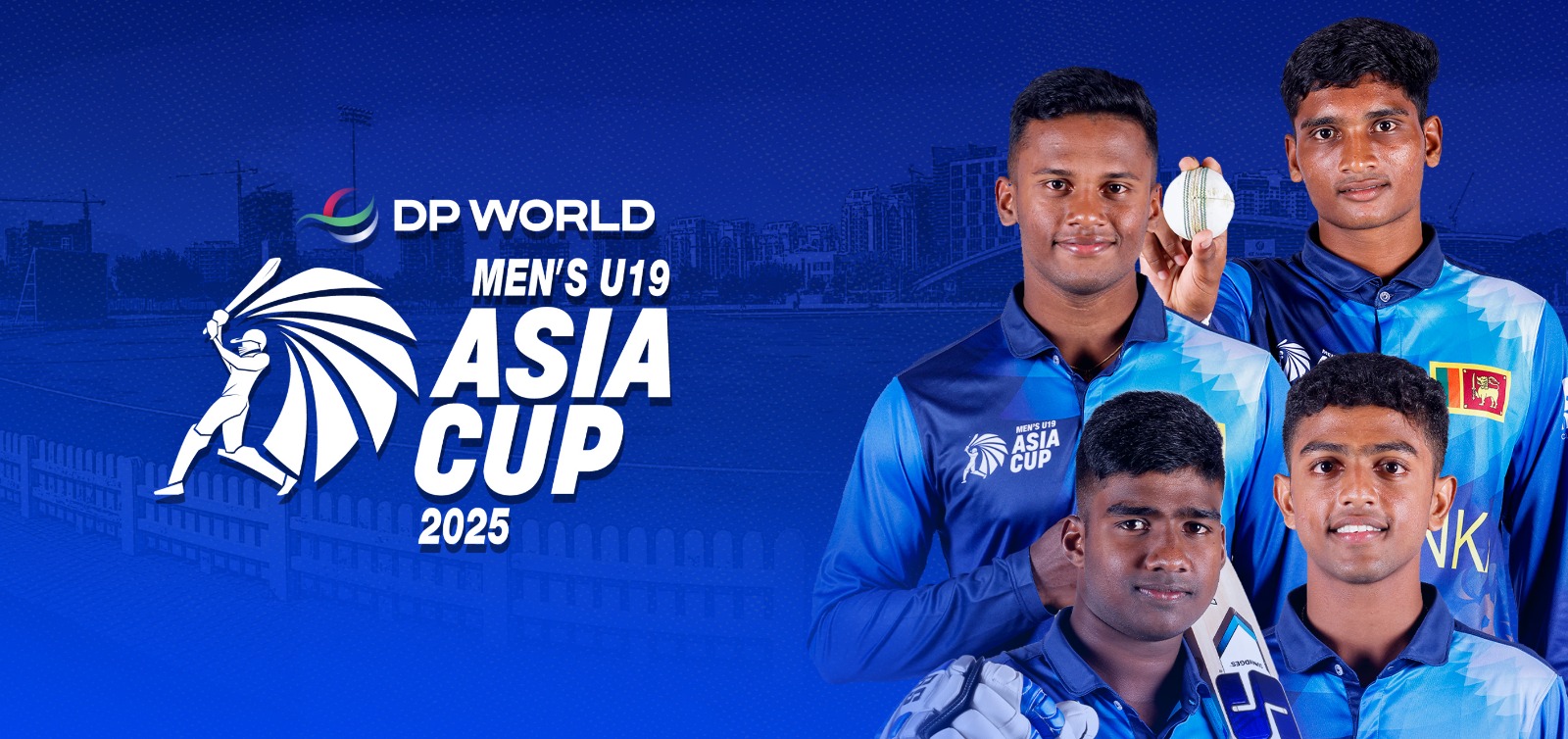
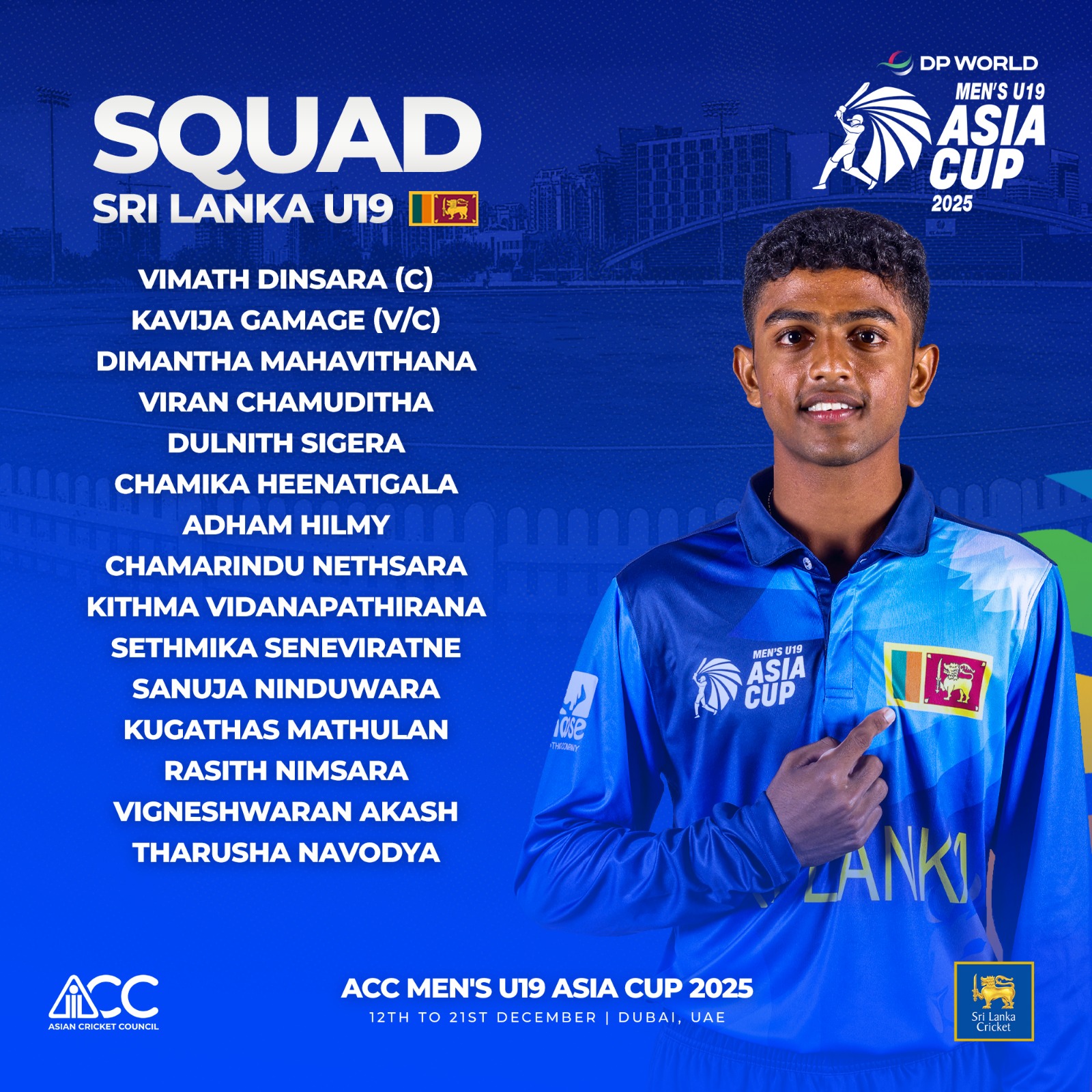
Sri Lanka Cricket Selection Committee has named a 15-member squad to participate in the upcoming ACC Men’s U19 Asia Cup (50 Over).
The team will depart for the United Arab Emirates today [0 December 2025] and has been placed in Group B, alongside Nepal, Afghanistan, and Bangladesh.

Cabinet approves recruitment of 2,284 to government service

Cabinet green light to obtain a grant from the Asia Pacific Disaster Response Fund for post – disaster relief and rehabilitation activities
Cabinet approves establishment of two 50 MW wind power stations in Mullikulum, Mannar region
Cabinet approves the purchase of vehicles to improve the primary health care system across the island
Cabinet approves the transfer of the constructions and land reserved for the Kiinniya University to the Ministry of Foreign Affairs, Foreign Employment, and Tourism

More than 30 dead after Myanmar military air strike hits hospital

‘Dates have the highest sugar content to fight Coronavirus’

Sunday Island 27 December – Headlines

#SundayIsland 17th December – Headlines

Sunday Island – 28th March

Sunday Island Headlines – 21 March

Sunday Island – 21st February – Headlines
-

 News3 days ago
Over 35,000 drug offenders nabbed in 36 days
-

 Features1 day ago
Finally, Mahinda Yapa sets the record straight
-

 Business6 days ago
LOLC Finance Factoring powers business growth
-

 News2 days ago
Cyclone Ditwah leaves Sri Lanka’s biodiversity in ruins: Top scientist warns of unseen ecological disaster
-

 News6 days ago
CPC delegation meets JVP for talks on disaster response
-

 News5 days ago
A 6th Year Accolade: The Eternal Opulence of My Fair Lady
-

 News3 days ago
Rising water level in Malwathu Oya triggers alert in Thanthirimale
-

 Features4 days ago
The Catastrophic Impact of Tropical Cyclone Ditwah on Sri Lanka: