
Editorial
Sever maritime arm of Drug Mafia


Saturday 6th January, 2024
The ongoing nationwide drug bust, called Yukthiya or Justice, continues to yield sizeable quantities of narcotics daily, and the drug distribution networks have reportedly suffered major setbacks. Many substance-dependent individuals are said to be going through the agony of withdrawal, which, in some cases, could be so intense as to drive the sufferers to suicide. The police are said to be sending them to rehabilitation centres.
Operation Yukthiya must go on until its goal is achieved. The country must be rid of the drug menace, and narcotics dealers who prey on the youth and children must be hunted down. Let that be the bottom line. The police deserve public assistance although the ongoing operation is not totally devoid of politics. They have already drawn severe criticism even from those who have welcomed action being taken to cleanse the country of narcotics and crimes.
Among its critics is former Minister Champika Ranawaka, who has said children become destitute when their parents are arrested and remanded over drug-related offences. The police also stand accused of committing excesses in the name of neutralising the drug Mafia; the recent demolition of a hotel believed to have been constructed with drug money is a case in point.
All unauthorised constructions on beaches and other environmentally-sensitive areas such as wetlands, river banks, forests and the catchment zones of irrigation tanks, have to be pulled down. But those who carry out this task have to act impartially and fairly; no room must be left for selectivity and discrimination.
The police had better tread cautiously lest their lapses and excesses should be leveraged by the opponents of the ongoing offensive against the underworld to turn public opinion against them. It is hoped that the police will care to make appropriate guardianship arrangements for the benefit of the children whose parents are arrested.
It behoves the police to be responsive to criticism and mend their ways. That is the best way to silence their critics and ensure the continuity of Operation Yukthiya. Drug barons have huge slush funds, which can be utilised to carry out social media offensives against the drug busters and influence politicians, who do not scruple to serve the interests of anti-social elements.
As we argued in a previous editorial comment, the on-gong land-based drug eradication campaign has to be coupled with naval operations against drug smugglers’ maritime arm. There is irrefutable evidence that drug dealers use local fishing craft, especially trawlers, to smuggle in narcotics. Bloody turf wars among the owners of drug-smuggling vessels are frequent, and some of them have lasted for decades, especially along the southern littoral.
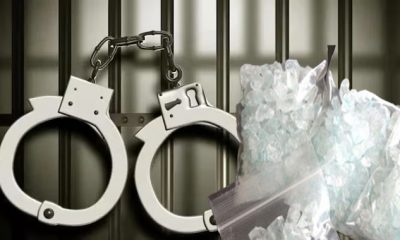
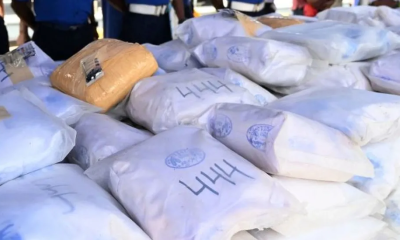
On Thursday night, the Navy and the Police Narcotics Bureau, in a joint operation, seized a huge stock of heroin and crystal methamphetamine commonly known as ICE, weighing about 300 kilos. It was concealed in a multi-day fishing craft. Six suspects were taken into custody. The vessel was brought to the Galle Port yesterday. In 2023 alone, the Sri Lanka Navy seized 715 kilos of heroin, 11 kilos of ICE, 140 kilos of hashish, 3,711 kilos of Kerala cannabis and 50 kilos of locally-grown cannabis.
This shows that the government has to intensify its focus on the sea routes used by drug smugglers while battling the narcotics dealers on the land. There is a pressing need to surveil all fishing craft and fisheries harbours. All necessary resources, including personnel, must be made available to the Navy, the Coast Guard and the police to step up anti-narcotics operations at sea and on beaches.
That will be half the battle in breaking the back of the drug problem. The general consensus is that most of the narcotics brought into the country through the Colombo Port go undetected due to corruption among politicians, port workers and the Customs personnel. If action is taken to ensure that each and every freight container is properly checked before being released, drug smuggling can be tackled effectively.








Wednesday 26th August, 2026
The Public Utilities Commission of Sri Lanka (PUCSL) has warned of possible power cuts due to the prevailing El Niño phenomenon. It has said demand for electricity could rise steeply under the prevailing weather conditions, with power generation declining, if water levels in the hydropower reservoirs recede drastically. One may recall that long before the onset of El Niño, experts predicted that power cuts would have to be imposed as substandard coal stocks, procured allegedly in a fraudulent manner, had led to a generation shortfall at the Norochcholai coal-fired power complex. They also pointed out that it would not be feasible to increase the output of hydropower and oil-fired power plants indefinitely to compensate for the shortfall. But the government ignored expert opinion for political reasons. Going by the PUCSL warning, the situation has now come to a head, and the government is apparently left with no alternative but to impose power cuts.
Curiously, Director of the Water Management Secretariat of the Mahaweli Authority Nilantha Dhanapala sounded optimistic about reservoir water levels when he addressed the media the other day. He said the Mahaweli reservoirs were at 55% of capacity, with those used for hydropower generation and irrigation at 64% and 52%, respectively. Water levels in reservoirs under the Irrigation Department had reached 49% of capacity, he said, noting that the Mahaweli, Walawe and Kelani systems were at 54%, 57% and 93%, respectively. He described the overall reservoir levels as “good”. If so, why is the PUCSL so concerned about the major hydropower reservoir water levels to the extent of warning of possible power cuts?
As for the PUCSL warning, there are two possibilities. Either the picture is not as rosy as Dhanapala has made it out to be, and the government cannot sustain hydropower generation at the current level due to the impact of El Niño, or there is enough water in the hydropower reservoirs, as claimed, but the cost of running oil-fired power plants has become unbearable.
Prime Minister Dr. Harini Amarasuriya has recently informed Parliament that fuel import expenditure significantly increased during the first half of the current year, compared to the corresponding period in 2025. She has said that about USD 3,168 million was spent on fuel imports during the first six months of 2026, but fuel cost only USD 1,995 million during the first half of 2025.
Chairman of the Sectoral Oversight Committee on Infrastructure and Strategic Development, SJB MP S. M. Marikkar, has told Parliament, quoting from a PUCSL report, that due to substandard coal imports, Norochcholai was unable to generate about 300MW of power needed to meet electricity demand between Jan. 1 and June 30, 2026, resulting in additional expenditure of Rs. 8,536 million on oil-fired power generation to make up for the shortfall.
Instead of having the coal procurement scam under his watch probed urgently in keeping with his promise to ensure transparency and accountability, President Anura Kumara Dissanayake sought to obfuscate the issue by appointing a Presidential Commission of Inquiry to investigate coal procurement from 2009 to 2026. JVP General Secretary Tilvin Silva said in his May Day speech this year that the Presidential Commission would exonerate those from the NPP government of wrongdoing and find those from the opposition guilty. Subsequently, he apologised to the Commission for his remarks at issue, but they can be considered a Freudian slip that revealed the government’s real intention.
According to the Central Bank data, the massive increase in the country’s fuel bill is due to several key factors, such as a surge in international oil prices owing to the Iran conflict, higher import volumes, and higher expenditure on refined petroleum products. These are no doubt causative factors, but the fact remains that the shortfall in Norochcholai’s coal-fired power generation also forced the country to rely more heavily on costly oil-fired power generation, adding to its fuel import expenditure. The Ceylon Petroleum Corporation (CPC) admitted in April that it had bought three shipments of diesel between the last week of March and the second week of April at prices of between USD 288 and USD 281 per barrel. It did so following a revelation by HSBC Group’s CEO, Georges Elhedery, that the highest price he had seen paid for a barrel of oil was USD 286—and that it went to Sri Lanka. Critics claimed that the government had purchased those diesel shipments at extremely high prices because it was desperate to keep diesel-fired power plants running to make up for the drop in Norochcholai’s power output. The additional fuel used for operating oil-fired power plants to compensate for Norochcholai generation shortfall and its cost need to be estimated.
Power cuts are bound to take a heavy toll on the country’s economic recovery efforts. They could lead to lower production, higher costs, weaker exports, and ultimately slower economic recovery. There is no way the government can deny the fact that the questionable coal procurement deals have led to a shortfall in power generation, higher cost of electricity, increased tariffs and the prospect of power cuts.
Tuesday 25th August, 2026
President Anura Kumara Dissanayake is scheduled to address a series of rallies across the country as part of a JVP/NPP reorganisation drive, according to media reports. A recent public opinion survey has indicated a sharp drop in the government’s approval rating, and this may have prompted the JVP/NPP to launch a grassroots campaign. The President’s nationwide speaking or barnstorming tour, on the cards, can be seen as an indication of the government limbering up for a possible referendum on the proposed 22nd Amendment to the Constitution. It can also be a show of strength.
Cabinet Spokesman and Minister Dr. Nalinda Jayatissa has dared Opposition politicians to take to the streets if they are capable of mobilising people against the government. We are reminded of the rhetoric of the big guns of the Mahinda Rajapaksa government following the 2010 general election. Prudence demands that a government take anti-incumbency sentiments into account and refrain from provoking its opponents into flexing their muscles. Street protests tend to snowball.
During successive governments, we have editorially highlighted the misuse of public funds by politicians, especially the Presidents, the Prime Ministers, Ministers and the Opposition Leaders, for their political campaigns. Some Presidents launched their re-election campaigns immediately after the commencement of their first term, dressing up their political campaigns as official events.
Presidential and prime ministerial travel costs the state coffers dear; it involves extraordinary security measures, which require the deployment of hundreds of police and armed forces personnel and scores of vehicles. All ministers rush wherever the President goes. They too travel with their security contingents at the expense of the public. The same applies to the Opposition Leader’s travel, albeit to a lesser degree.
The JVP raked President Mahinda Rajapaksa over the coals for traversing the length and breadth of the country either in his presidential limousine with a huge security convoy in tow or by helicopter to do political work. Anura Kumara Dissanayake, an Opposition MP at the time, demanded to know why Rajapaksa used two choppers, cynically asking whether the latter could change helicopters in midair in case of an emergency. His criticism of Rajapaksa struck a responsive chord with the public.
Former President Ranil Wickremesinghe was arrested and remanded over allegations that he misused state funds to cover travel and security expenses for what the CID has described as a private visit to the UK while in office. One wonders why the issue of the Presidents, the Prime Ministers and others using colossal amounts of state funds to cover their travel and security expenses during their political campaigns has gone unaddressed.
The JVP-NPP government was expected to curtail VIP travel. In the run-up to the 2024 general election, senior JVP/NPP politicians made a solemn pledge that under a JVP-NPP government, their MPs and ministers would travel in buses and trains as the ordinary public did, and auction the vehicles used by politicians during previous governments. But they are now moving about in luxury vehicles. Are they living by the Machiavellian axiom that promises need not be kept when circumstances change?
Some Presidents, Prime Ministers and Ministers have tried to pull the wool over the eyes of the public by paying for fuel used for their official vehicles during election campaigns, but fuel accounts for only a fraction of the costs borne by the public.
It is unbecoming of the self-proclaimed Marxist leaders who denounced the previous Presidents and Prime Ministers for using insanely expensive vehicles purchased with state funds to maintain the status quo. In 2018, Dissanayake made a hue and cry in Parliament about two bulletproof vehicles bought for the then Prime Minister Ranil Wickremesinghe’s use, at a staggering cost of Rs. 300 million each. He condemned that kind of expenditure as an utter waste of state funds. Now, “the 600-million-rupee question” is where those vehicles are. Are the incumbent government leaders using them?
One may recall that before the 2024 elections, the JVP/NPP leaders had the public believe that they would practise austerity a la Jose Mujica, who was the President of Uruguay from 2010 to 2015. Known as the world’s poorest President, Mujica, refused to move into the President’s House, and lived on a farm with his wife; his most notable asset was a 1987 Volkswagen Beetle. He donated his presidential salary and waited in queues with ordinary people in government hospitals, where he received treatment. He died last year. Sadly, as we argued in a previous comment, the only similarity one sees between the policies of the Mujica administration and those of the JVP-led NPP government is their lax attitude towards cannabis, of all things. Mujica legalised the recreational use of cannabis, and the JVP/NPP leaders have permitted the cultivation of cannabis for export.
It is high time the practice of political leaders using state funds for their political campaigns under one pretext or another was brought to an end. Let that be part of the “system change” the incumbent government promised.

Monday 24th August, 2026
There is no end in sight to chronic delays that characterise Sri Lanka’s state universities. The Federation of University Teachers’ Associations (FUTA) has warned that university admissions based on the 2025 GCE A/L results could be delayed by one to two years until the enrollment of two previous batches.
State universities in this country are bursting at the seams and facing severe resource constraints. In 2025, FUTA has pointed out that the annual student intake had steeply increased from around 25,000 in 2015/2016 to about 45,000, causing a severe strain on the entire university system. According to media reports quoting FUTA, state universities are operating with only about 6,800 permanent academics though there is a requirement of 12,000–13,000. FUTA has stated that PhD holders are unwilling to work for current salaries, which are heavily taxed. Universities are among the state institutions worst affected by the human capital flight.
Successive governments have sought political solutions to serious structural problems affecting the state university system. Students in other Asian countries typically complete their first university degrees before they turn 21–24 years, but Sri Lankan students, particularly those in the state university system, often graduate in their mid-20s, with 24–26 years being a commonly observed range, according to the OECD (Organisation for Economic Co-operation and Development) data. The late entry of Sri Lankan graduates into the workforce has economic, political and social consequences, and, above all, the delayed graduation places Sri Lankan graduates at a disadvantage in the global job market. This sorry state of affairs is basically due to cumulative institutional delays involving, among other things, the GCE A/L examination, university admissions, disruptions caused by strikes, irregular academic calendars, a shortage of academic and non-academic staff, student protests and university closures.
The JVP, which engineered university closures to further its political interests, is now in power, but other problems remain. The JVP-led NPP, which secured the support of university teachers and undergraduates, among others, to capture power, was expected to address university issues on a priority basis, but its approach appears to be no different from that of its predecessors.
FUTA has said it submitted a set of proposals for resolving the university crisis to the government about one and a half years ago, but no action has been taken yet. Warning that it will be compelled to resort to trade union action unless the government addresses the issues affecting universities, FUTA has demanded to know whether the state universities are being neglected as part of a secret plan to promote private higher educational institutions. Many affluent parents send their children overseas for higher education. Ordinary youth are left with no alternative but to wait for years to gain university admission.
Now that the incumbent government has undertaken to go so far as to amend the Constitution to extend the retirement ages of judges, claiming that experienced judicial officers have to be retained to clear a massive case backlog, the question is why it has not adopted the same method to resolving the shortage of university teachers. There are provisions allowing exceptional post-retirement contractual re-employment of university teachers where there is a critical shortage of senior academic expertise. This, we believe, should be the rule rather than the exception.
The government claims that the Treasury is overflowing with funds, and therefore increasing investment in developing universities cannot be a problem. There is certainly a way to resolve the university crisis, but whether there is a will on the part of the political authority to do so is doubtful. Universities are the brain trusts of a nation, as is obvious, and the state is duty bound to provide them with all necessary resources.
Let the government be urged to get the protesting university dons and other stakeholders around the table and discuss how to resolve the university crisis.

UPDATE: Flash flood on Nepal-Tibet border kills more than 100, with hundreds of tourists missing

At least eight killed, hundreds missing after Nepal flash flood

India close in despite Sooriyabandara, Kamindu fifties

Advisory for High Waves for the sea areas extending from Colombo to Pottuvil via Galle, Matara and Hambantota

We must create social awareness to ensure the physical and mental well-being of children with disabilities – PM

BCCI AGM set for September 18 in Mumbai

‘Dates have the highest sugar content to fight Coronavirus’

Sunday Island 27 December – Headlines

#SundayIsland 17th December – Headlines

Sunday Island – 28th March

Sunday Island Headlines – 21 March

Sunday Island – 21st February – Headlines
-
 News6 days ago
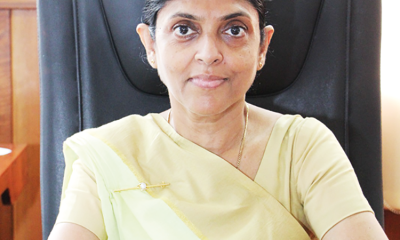
Country’s first woman Surveyor General appointed
-

 Business5 days ago
SriLankan Airlines makes ShakthiSAT Mission possible for talented Sri Lankan student
-

 Sports7 days ago
Tharanga, Weber headline stellar Lausanne javelin field
-
 Features6 days ago
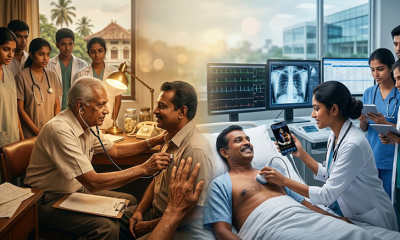
Medical education in Sri Lanka: Then and now
-
 Business7 days ago
Mannar’s offshore opportunity: the dollar question behind Sri Lanka’s oil and gas search
-
 Latest News6 days ago
Imran Khan moved to private hospital amid deteriorating health
-

 Latest News6 days ago
Government has declared 21, 22 and 23 August 2026 as national days of mourning
-
 Features4 days ago
My secondary schooling after Royal Primary