
Opinion
Buddhism sans rituals?

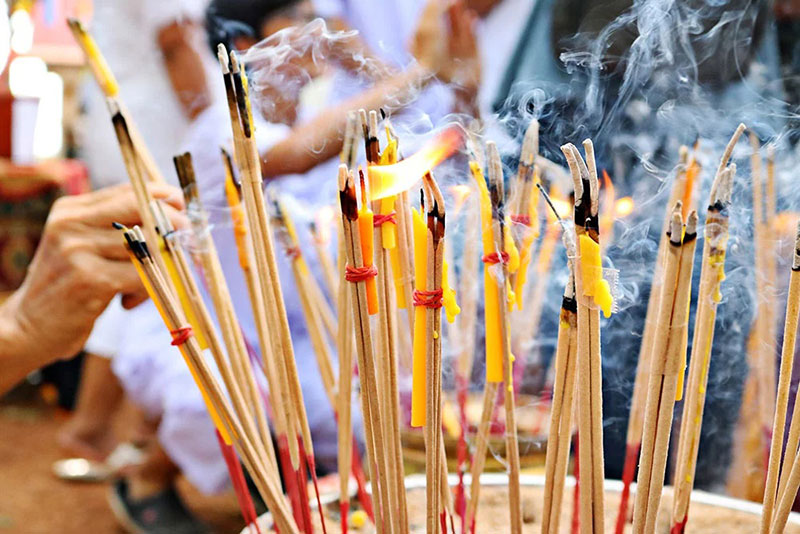
The growing attention to the discussion on holiness versus hollowness of rituals of Sri Lankan Buddhists has raised a legitimate question: is Buddhism without rituals possible? Even though one can produce a rational answer based on canonical material, presenting it in its entirety in a short article like this can be a stretch. Therefore, if readers see this write up as a collection of clues, they are not wrong.
The Pali canon says that those who are obsessed with words go nowhere, like an elephant stuck in mud. The solution offered is to see things without words or labels. As we puthujjana have not achieved that level of wisdom and are stuck with words for communication, it pays to make sure that we all are on the same page by defining the key words: Buddhism, Dhamma, and Ritual.
Buddha rediscovered a set of truths when he became enlightened; we can refer to them as Buddha Dhamma, even though the Pali word dhamma has other meanings. Western scholars use terms like ‘What the Buddha Taught’ and ‘Early Buddhism,’ instead. Buddha described the Dhamma or the set of truths this way: “Whether tathagatas arise or not, this order exists, namely, the fixed nature of phenomena, the regular pattern of phenomena or conditionality. This the tathagata discovers and comprehends. Having discovered and comprehended it, he points out, teaches it, lays it down, establishes, reveals, analyses, clarifies it, and says ‘look’…” (Karunadasa 2013). The all too familiar verse we recite to venerate Dhamma describes six qualities, two of which are ‘timeless’ (akalika) and ‘to be realised by the wise’ (paccattam veditabbo vinnuhiti).
In other words, they are universal truths, which do not change over time, and are valid anywhere in this universe. They can be affirmed as the truth by critical analyses. Over the last 150 years, western science has scrutinized what the Buddha taught, and has concluded that Buddha was right (Wallace 2003, Lopez 2008, Wright 2013, for example). An oft used catch phrase is that ‘Religion and Science do not mix.’ That, in fact, is exactly the point I wish to make here. However, I brought up science not to seek its affirmation of Dhamma, which it does not need as it is far ahead of science, and if anything, the reverse is the case, but to show another utility. Buddha said that one is free to elaborate the truth anyway they wish to enable their followers understand it. That is how the Pali canon has become so voluminous, thirty-three volumes and 20,000 printed pages covering over 10,000 discourses and exegesis. On the other hand, Assaji captured the truths in two sentences, which was sufficient for Upatissa to gain stream entry. In my experience, science is one of the best tools available to explain the truths to the denizens of this AI age. Besides, science and Dhamma share the common goal of ‘seeing things as they really are,’ even though the methodologies are different: one is experimental while the other is experiential.
Concluding that Dhamma is true from a scientific perspective is an enormously weighty undertaking; a truly deep understanding of both Dhamma and the relevant science is necessary to make that judgement. It is not like invoking quantum entanglement to “prove” rebirth, as some writers do, without understanding either. If I may put it differently, Dhamma can be derived from first principles (One should not assume that the present author has the in-depth knowledge of all these fields to make this assessment. The truth is that he is fortunate to have access to many generous thought leaders in a variety of fields). What I wish to make clear, without any doubts or ambiguity is that there are no beliefs, mysteries, magic, or higher powers associated with Dhamma; they only explain the regular pattern of phenomena or conditionality. They were discovered by pure human intelligence and, for the same reason, accessible to humans here, and now without any rituals, magical powers, or third parties – real or imaginary.
Now, to the second word, Buddhism. This is a term that late 19th century western scholars coined to describe practices followed in the name of Boodh. They used “ism” to show that such practices are based on beliefs in and worship of a superhuman power or powers. We can empathise with the limited knowledge of western scholars of the day, but we know that Buddha never claimed to be anything other than a human being. However, even with that knowledge, it is impossible to say that Buddhism as we practice does not fit the dictionary definition of a religion. To say otherwise is a sacrilege; for example, those of us old enough may recall that, in the nineteen sixties, a government was forced out for saying that Buddhism is not a religion; unfortunately, they did not define their words.
We must agree that Dhamma and Buddhism are two different things, even though they are intertwined in many ways. I have written about the origins of these practices, beliefs, rituals, and mysticism that makes Buddhism what it is in this paper recently (The Island 2023-12-05). However, it is sufficient to say that everything that is extraneous to Dhamma were acquired from many sources: Brahminism, Hinduism, and pre-Buddhist cults in historical times, and Christianity in recent times (Rahula 1956, Marasinghe 1974, Gombrich 1988, 1997, Obeyesekere 2018). This is where the catch phrase ‘Religion and science do not mix’ becomes relevant: those elements that are extraneous to Dhamma are neither empirical nor rational; they are based on beliefs, myths, or hearsay, and have no scientific basis.
The ability to model the future is an evolutionary driving force; while some animals have limited capabilities, it is the humans who have the highest skill in doing so. However, the quest to know, predict, and safeguard one’s destiny continues; we humans are not comfortable with unknowns. Throughout history people have presented creative ways to cater to this insatiable quest (for e.g., see Harari 2018). During Buddha’s time, it was Brahminism that fulfilled this need. It was in repudiation of these beliefs that Buddha presented the Four Noble Truths. While Buddha did not reject religions of the time, he categorically denied the ability of higher powers of any nature in safeguarding one’s destiny, here, or here after (Dhammapada verse 160). This is where following rituals or beliefs of any nature that are claimed to be salvific become contradictory to Dhamma. Buddha, Dhamma, and Sangha cannot liberate anyone, they only show the way; one reaches salvation by purifying one’s own mind. In fact, one of the shackles (samyojana) that must be broken on the path to liberation is the attachment to rites and rituals (silabbata paramasa).
Buddha set up the order of Monks, or the Sangha, as the mechanism to teach, spread, and perpetuate Dhamma for the benefit of all. Buddha also assigned distinct roles and responsibilities to Sangha and his lay followers. The role of Sangha was to teach the Dhamma to the laity, in addition to striving for their own salvation. Laity, in return, is expected to supply food, shelter to the Sangha, and follow the Dhamma leading to a happy and harmonious life. Unfortunately, his advice to the laity has been overlooked over the millennia (B. Rahula 2008), and today, we are being prescribed the formula intended for the Sangha or the monastics. Supporting the Sangha, or generosity, is just one aspect of the path to purifying the mind, but that alone is not sufficient to reach the goal.
Just as we take care of schools, universities, museums, or hospitals for our own benefit, supporting the Sangha and the place of worship is a social responsibility. The definition of ritual is any repetitive and patterned behaviour that is prescribed by or tied to a religious institution, belief, or custom, often with the intention of communicating with a deity or supernatural power. Therefore, supporting Sangha and places of worship, especially those with archeological value, should not fall under the category of rituals. One must explore the Forth Nobel Truth to get clarity on this subject.
Worship of trees, for example, predates Buddha, and Buddha statues did not exist until third century CE. Therefore, worship of either is not part of the salvific path prescribed in Dhamma. However, there is a third aspect: Buddhism is also associated with Buddhist arts, literature, and architecture. They are part of our heritage, and we have an obligation to preserve, protect, and perpetuate them to the best of our ability. This is a hard pill to swallow, but such activities have nothing to do with the path to purification. The poets, artists, and craftsmen have the artistic freedom, and they can express their version of Buddha’s life or his teaching to make the best impression on the audience. Mistaking artistic expressions for truths, historical facts or assigning any salvific value to their creations can have unintended negative consequences.
The challenge facing us is correctly understanding what Dhamma is, what activities belong to the Path (magga), what are social and cultural responsibilities, what are meaningless rituals, and, most importantly, what are frauds. We can ask the same question in a separate way: Should we live according to Dhamma or delegate our fate to beliefs, mysticism, false views, or quackery? Once we find the answer, we will see that elimination of rituals becomes a non-issue. Therefore, if Buddhism means the practice of Dhamma and continuing Buddhist arts, crafts, and traditions with the correct understanding, it can do without rituals.
As I alluded to at the beginning, convincing oneself that it is the true answer is not a trivial matter; and there are no short cuts. This leads to more relevant questions: Why do we, the ill trained laity, must fight this battle using our rusty, blunt weapons when there is a professionally trained, well equipped force whose duty is just that? Aren’t they the ones who should explain the fundamental importance of critical thinking? Has their inaction contributed to the crumbling of other social institutions, including the economy, when they ignore the issues and condone the ills for personal gains? Why do their supreme leaders stay silent when they can direct their troops to go out and spread the truth as their founder intended, instead of engaging in self-serving activities? On the other hand, with my humble apologies to the handful of troops who do just that, I must ask: are we, the laity, ready to heed the truth and give up the “short cuts” to liberation if it comes to that?
Geewananda
Gunawardana



“Suresh Sallay is the mastermind behind the Easter Sunday attack”: For argument’s sake, let us assume this to be true even though it is far from being proved ‘beyond reasonable doubt’ by a court of law. Minister Ananda Wijepala, however, in his statement to the parliament painted a picture of absolute certainty of Sallay’s guilt. The unfairness and the implications of this callous statement was well analysed in the editorial “Probes and politics” (The Island, 12 June). International media picked up Minister Wijepala’s statement, making Sallay guilty in the eyes of the world. Perhaps, they are not aware that what is stated in the parliament of Sri Lanka is not necessarily the truth! The more important question is how the reputational damage done to Sallay can be reversed.
Shortly after concluding his statement, Minister Wijepala referred to what he called ‘unexplained’ deaths including that of Rajeewa Jayaweera, in 2020. The fact that Rajeewa, unfortunately, took his own life has been confirmed, repeatedly, by his family. When rumours started circulating after the death of Kapila Chandrasena, Rajeewa’s brother Sanjeewa wrote an article titled, “Sri Lanka Airlines Airbus Scandal and the Death of Kapila Chandrasena and my Brother Rajeewa” (The Island, 17 May), wherein he stated:
“On behalf of my sisters and myself, I wish to state unequivocally that my brother, Rajeewa Jayaweera, took his own life in June 2020 due to personal circumstances. His death had absolutely no connection whatsoever to his writings regarding the Airbus scandal. Neither the Rajapaksa’s, nor any political actor, nor any state agency was involved in his death. The magisterial inquiry into the matter returned a verdict of suicide. Those who know me personally are aware of my forthright and combative nature. Had there been even the slightest credible suspicion surrounding my brother’s death I would never have rested until justice was pursued. Since this was established clearly as a case of suicide, I sincerely hope that those who continue to circulate unfounded theories will finally allow the matter to rest with dignity.”
In spite of this heartfelt appeal, Wijepala’s mention makes it very insensitive, adding to the agony of Sanjeeva and his sisters. Further, this inaccuracy casts doubts on the entire statement, as the minister seems ill-informed. Going by his statement, the CID seems to think it has evidence for a successful prosecution. If so, why is it allegedly ill-treating Sallay? Is this punishment before conviction or is there a more sinister motive?
Even if details of torture mentioned in some quarters could be disregarded as exaggerations, there is no doubt that Sallay has been subjected to ill-treatment, which resulted in his admission to hospital. It is noteworthy that Wijepala mentioned that Sallay became uncooperative the moment Gota was prevented from leaving the country. Perhaps, it is in an attempt to implicate the Rajapaksas that the Minister mentioned Rajeewa’s death, quite unjustifiably and insensitively.
The most important question is whether the CID’s confidence is misplaced and biased. The fact that it is biased is obvious as the director of the CID is Shani Abeysekara. He and his superior, Ravi Seneviratne, both, have an ulterior motive. They are accused of failure to prevent the Easter Sunday attacks in spite of the information furnished by many agencies including the one headed by Sallay. They are apparently trying to find a scapegoat. It was bad enough for the NPP government to pull these two out of retirement and instal them in high posts of law-enforcement, without clearing their names, but allowing them to be in charge of this investigation illustrates that they are clueless of the dictum that “Not only must Justice be done; it must also be seen to be done.” This dictum, derived from the principle of natural justice and is followed the world over, clearly shows that mere appearance of conflict of interest is sufficient ground for a conviction to be quashed.
The working hypothesis of the CID seems to be that Sallay masterminded the Easter Sunday terror attacks to ensure Gotabaya Rajapaksa’s election as President. It was obvious that Gota had an easy ride and there was absolutely no need for Sallay or anyone else to resort to terrorism to enable him to win.
It is surprising that the Director of the CID went to Paris to record a statement from Azad Moulana, who fled Sri Lanka to avoid arrest, to get confirmation of what the latter stated to Channel 4. By the way, expenses incurred by the team that went to the UK regarding Ranil’s expenses are kept under wraps in spite of an RTI request. Perhaps, the team spent more public money than Ranil did!
Those driven by a vested interest must be hoping that Sallay will continue his fast and perish. This would be a better outcome for them given the farcical manner in which investigations are being conducted. It is hoped that their dream will not come true.
by Dr Upul Wijayawardhana ✍️
“Thanks to the tireless mediation efforts of Pakistan and Qatar, significant progress has been made in ending the war in Lebanon…”
–Iran’s Foreign Minister Abbas Araghchi on X
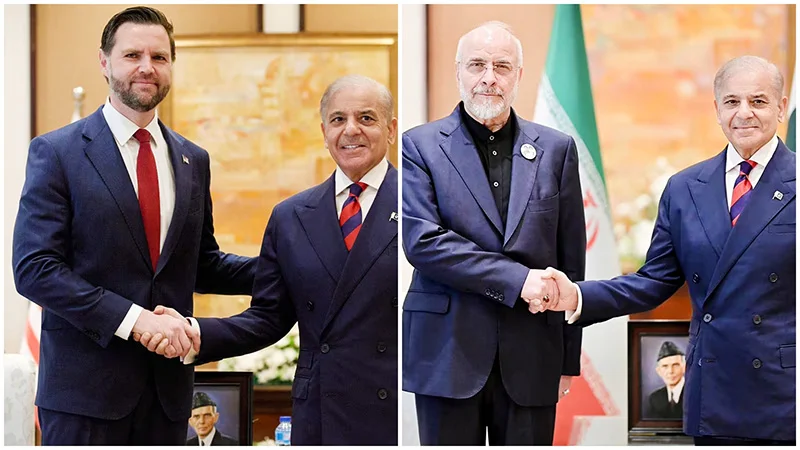
The recent Memorandum of Understanding (MoU) between Iran and the United States which resulted in a high-level meeting in Lucerne, Switzerland, is a testament to the highly skilled diplomacy of the South Asian nation, Pakistan, and is admirable for the very difficult task they undertook and achieved with panache. They remained unruffled throughout and continue to do so, despite the unpredictable nature of the relationship between the parties to the conflict, the US and Iran, at times turning publicly hostile, and subject to an influential spoiler in Israel determined to sabotage a positive outcome, making the process as delicate as defusing an explosive device with seconds to detonate.
Pakistan remained engaged steadfastly, even when the parties walked out of negotiations, refused to attend them, or seemed to give up any hope of a diplomatic endgame and returned to the Strait of Hormuz for actual and verbal wars. In the meantime, Lebanon was clearly being turned into the new Gaza, which was a red line for the Iranians.
The Pakistanis kept talking, visiting not only the two main belligerents USA and Iran, but the regional actors paying the price of an escalating conflict; perfecting the draft agreements while broadening the stakeholders who were invested in a peaceful diplomatic outcome, and aiming to do so as fast as was possible. It seemed like a long shot, especially with X messaging playing its now indispensable, often colorful role. The Pakistani team’s faith in the process was magnificently rewarded in the news coming out of Lucerne after the first day of negotiations of encouraging progress, with Qatar supporting Pakistan as joint mediator in the important venture.
This stage in the negotiations was described by Pakistani Prime Minister Shehbaz Sharif as “make or break”, which was also echoed by some analysts and mainstream media. The expectations were cautious but positive, and the world watched with renewed hope, if somewhat muted, as Pakistan presided over the opening media conference with confidence.
It wasn’t a perfect pitch to play on by any means: the Israelis had escalated their bombing of Lebanon, a million Lebanese were displaced and the Iranians had closed the Strait, yet again, with a day to go for the talks. As the teams were about to start negotiations, X swooped over Lake Lucerne dropping President Trump’s message about the Iranians being unable to return to “their f…..g country” if they didn’t open the Strait, the unprintable language no longer shocking through regular usage.
It was reported that the Iranians had included psychologists in their communications team in Teheran to comprehend the cultural idiosyncrasies of the President of the United States, which clearly helped them to remain engaged with the process in Lucerne despite the provocation. Iran’s response that the US should choose their words carefully because their weapons were at the ready to strike at Israel, had the media rushing to report that the talks had broken down. In a secondary issue, according to the Tasnim news agency, the US had wanted International Atomic Energy Agency (IAEA) Director General Rafael Grossi who was on site in Lucerne to be present at the talks, but Iran wouldn’t have it.
Great Innings
It is on this unenviable wicket that Pakistan, supported now by Qatar as mediators, seem to have played a beautiful innings.
The process was flawless. According to reports, the mediators met separately with the two teams to discuss the draft, before the main negotiations began. This would have minimised the points of disagreements which may have soured the atmosphere between the two signatories, while the mediators did the work to accommodate those views. The results announced after 12 hours of negotiations showed that all concerned stayed engaged with the process and were persuaded to sign on to a viable diplomatic roadmap.
According to the Ministry of Foreign Affairs of Qatar, which released the statement on the 22nd of June 2026 from Lucerne, they agreed to establish several creative mechanisms which have every chance of keeping things on track:
* A High Level Committee, which will provide political oversight on the mediation.
* Chief negotiators will report regularly to the High Level Committee
* Working groups on nuclear issues
* Working group on sanctions
* Working group for monitoring, and dispute resolution group to ensure the effective implementation of the MoU and on other matters.
* A communication line between the parties to avoid incidents and miscommunication with the aim of safe passage for commercial vessels through the Strait of Hormuz.
· A de-confliction cell between the parties, the Lebanese Republic and facilitated by the Mediators, to ensure the adherence of the termination of military operations in Lebanon.
Pakistan has always had well-trained, sophisticated diplomats. I was lucky to have met several and see their outstanding performances at the United Nations in Geneva, Paris, Lisbon and Singapore. They played a role well above the size of their economy or weight in world affairs. My first encounters with Pakistani diplomats were in Islamabad, where my father was Chargé d’Affaires at the Sri Lankan High Commission, and I made lifelong friends at the Institute of Modern Languages where trainee diplomats and military officers studied, and which I too attended.
Their diplomats were always well-spoken, well-versed in diplomatic practice and were often the first to protest if procedure was violated in those forums. They worked tirelessly, were no strangers to long hours, and were motivated to keep going until a result was reached. Their language skills, especially in the most widely used global language English, which they retained, as did India, as the language of higher education and administration, served them very well.
Pakistan and Sri Lanka
From what I have seen, Pakistan was impressive in their solidarity with their regional partners, often taking the lead to resolve issues, being regularly elected to speak for the OIC (Organization of the Islamic Conference), for example. Sri Lanka could unhesitatingly rely on their firm friendship and support, and played a leading role during my husband, Dr Dayan Jayatilleka’s tenure as Ambassador/PR in Geneva during the decisive last years of Sri Lanka’s war and in the immediate aftermath, when Sri Lanka was under severe pressure at the UN Human Rights Council.
As trusted supporters, my husband invited them to be part of a mechanism that he proposed to the EU of a “Quad” which would represent Sri Lanka’s interest, together with him as Sri Lanka’s Permanent Representative to the UNHRC, in all further negotiations with the EU which had 12 members in the Human Rights Council. The EU was exerting pressure on him to meet with the 12 of them for further talks on the draft resolution into which they meant to insert accountability for war crimes and to remove any reference to Sri Lanka’s sovereignty which Dayan had refused to countenance.
Pakistan readily agreed, as did India, as well as Cuba as the current chair of the NAM and Egypt as the incoming Chair of NAM, to form the Quad. As it happened, while the Quad was more than ready to debate any issues, the EU decided not to continue with the meeting after that show of regional and Global South solidarity and strength. The Quad however continued to operate as a unit and played a critical role at a moment in the proceedings when unexpected negotiations were called by the President of the Human Rights Council in the middle of the Special Session, and stood solidly together refusing to budge on the agreed draft. In this instant, India and Pakistan worked closely together in support of Sri Lanka, earning our eternal gratitude.
Pakistan’s emergence as a global player navigating complex international issues with such sophistication and facility, was no surprise to those who had seen them function. And yet it was not known widely. When Lakshman Kadirgamar was Foreign Minister of Sri Lanka, he sent my husband together with a few others to observe Pakistani Foreign Policy think tanks and to learn their modus operandi. The group returned impressed. The only surprise perhaps has been its overtaking of India, a great regional power, in global conflict resolution. India has been conspicuously silent, and has had no role in these important initiatives.
Exceptional Global Diplomacy
The Pakistani diplomatic initiatives taken when all seemed lost, and sustained against all odds have offered the world a valuable interlocutor in conflict resolution, and their place in global diplomacy is now acknowledged. The MoU between the United States and Iran is called the “Islamabad Memorandum of Understanding”. Analysts have said that this initiative is significant for the fact that unlike the JCPOA, regional actors rather than extra-regional ones have been made stakeholders, therefore has a considerable probability of success.
This is a significant achievement of no small measure, because Iran and the United States have been hostile for decades. In the only high-level meeting since 1979 between the two countries which took place recently in Islamabad, Pakistan has managed the process with remarkable patience, confidence and faith, to bring it along to a place of hope. According to Pakistan TV, at the end of the Lucerne meeting, JD Vance praised Pakistan’s role in bringing the US and Iran together to the negotiating table, calling PM Sharif and Field Marshal Munir, his best friends in the region. He had also said “We love Pakistan”.
Considering what Pakistan had actually attempted and succeeded in doing, this is remarkable. It has been able to by-pass the decade’s old propaganda against Iran as an existential threat in the region, especially to Israel, which was an established position in US policy circles. Consider the context: Trita Parsi, Executive Vice President of the Quincy Institute based in Washington revealed in an interview with Tucker Carlson that Israel has been pushing the narrative of Iran as an existential threat to their country for decades with success, while not believing it themselves within Israel. He said when he did his PhD on the subject, he interviewed several top officials including those in intelligence services in Israel, and found that rather than the irrational, destabilizing, suicidal actor they were portraying Iran as, successfully, to US policy circles, they believed the opposite, and regarded their adversary as a cautious calculating, rational actor. ().
JD Vance’s optimistic framing of the Lucerne discussions as a historic opportunity to transform the Middle-Eastern region for long term, sustainable peace is a testament to Pakistan‘s expert navigation of the diplomatic Hormuz Strait where a number of intractable issues had no safe passage, but are now freed for discussion.
With the dedication, expertise and diplomatic skills that the mediators have shown, the on-going process

itself may be considered a victory. The new development in this round of negotiations, that of active engagement of regional countries, may yet help protect the process, and assist in the complex navigation required to circumvent the mines that may be placed in its way.
by Sanja de Silva Jayatilleka
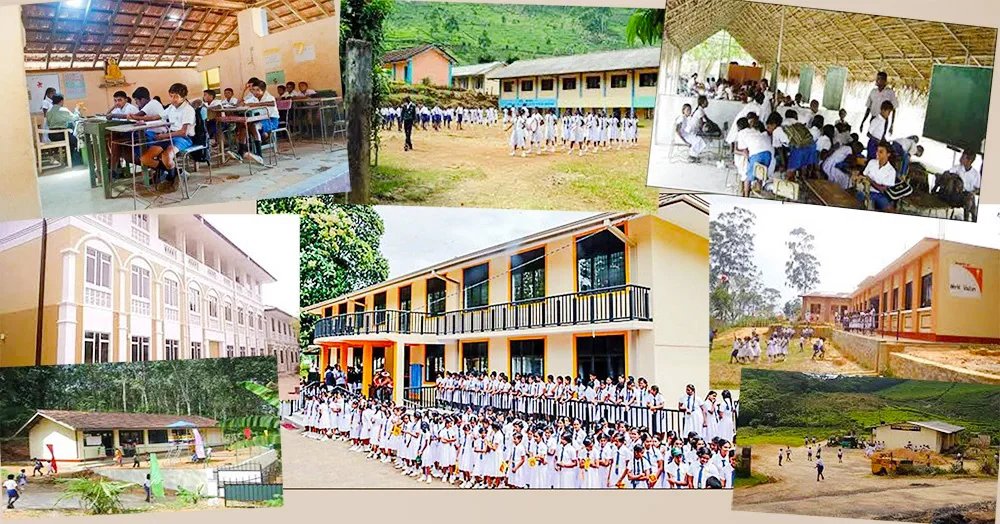
Education is widely recognised as the foundation of national development. For decades, Sri Lanka has maintained a strong commitment to free education, producing a highly literate population and creating opportunities for millions of students regardless of their socioeconomic background. While this achievement deserves recognition, the challenges of the twenty-first century demand a new approach to education. The modern world is characterised by rapid technological advancement, globalisation, and an increasingly competitive international job market. To ensure economic growth and prosperity, Sri Lanka needs an education system that prepares students not only for local employment but also for opportunities across the global workforce.
The traditional Sri Lankan education system has largely been designed around academic examinations and university entrance. Success is often measured by performance in the Grade Five Scholarship Examination, G.C.E. Ordinary Level Examination, and G.C.E. Advanced Level Examination. While these assessments have helped maintain academic standards, they have also created a culture that prioritizes memorization and examination results over practical skills, innovation, and adaptability. As a result, many graduates possess theoretical knowledge but lack the competencies required by modern employers.
The global job market is undergoing significant transformation. Technological innovations such as artificial intelligence, automation, robotics, and digital communication are reshaping industries worldwide. Many occupations that existed a decade ago have evolved dramatically, while entirely new professions have emerged. In this environment, employers seek individuals who can think critically, solve problems creatively, work collaboratively, and adapt quickly to change. Therefore, Sri Lanka’s education system must move beyond traditional learning models and embrace a curriculum that develops these essential skills.
One of the most important reforms should be the integration of digital literacy and technology education across all levels of schooling. In today’s world, computer skills are no longer optional; they are fundamental requirements for employment in nearly every sector. Students should be introduced to coding, data analysis, cybersecurity, artificial intelligence concepts, and digital communication tools from an early age. Familiarity with technology not only increases employability but also encourages innovation and entrepreneurship. By equipping students with technological competencies, Sri Lanka can create a workforce capable of competing in international markets and attracting foreign investment.
Another critical area is English language proficiency. English remains the dominant language of international business, science, technology, and higher education. Although English is taught in schools, many students complete their education without achieving fluency. This language barrier limits access to global employment opportunities and international professional networks. A modern education system should place greater emphasis on practical communication skills, including speaking, listening, presentation, and professional writing. Enhanced English proficiency would allow Sri Lankan graduates to engage confidently in multinational workplaces and global industries.
In addition to technical and language skills, the education system must focus on developing soft skills that are highly valued by employers worldwide. These include communication, teamwork, leadership, emotional intelligence, time management, and problem-solving abilities. Many international companies report that technical knowledge alone is insufficient for workplace success. Employees must also collaborate effectively with colleagues from diverse cultural and professional backgrounds. Schools can nurture these qualities through group projects, debates, leadership programmes, extra-curricular activities, and community service initiatives.
Furthermore, vocational and technical education should be given greater recognition and support. For many years, Sri Lankan society has emphasised university education as the primary path to success. However, global economies increasingly require skilled technicians, engineers, healthcare professionals, digital specialists, and tradespeople. Countries with strong vocational education systems often experience lower unemployment rates and better alignment between education and labour market needs. Sri Lanka should expand vocational pathways and create stronger partnerships between educational institutions and industries. Such collaboration can provide students with hands-on experience, internships, apprenticeships, and direct exposure to workplace environments.
Entrepreneurship education should also become a key component of the curriculum. The future workforce will not consist solely of employees working for established organizations. Many young people will create their own businesses, develop innovative products, and participate in the digital economy. Schools should teach financial literacy, business planning, marketing, innovation management, and basic economic principles. Encouraging an entrepreneurial mindset can help students identify opportunities, manage risks, and contribute to economic growth through job creation.
Another important reform involves the modernization of assessment methods. The current examination-focused system often rewards memorization rather than genuine understanding and practical application. Global employers are increasingly interested in competencies rather than examination scores alone. Therefore, schools should adopt more diverse forms of assessment, including research projects, presentations, portfolios, practical assignments, and collaborative problem-solving activities. Such methods provide a more accurate reflection of students’ abilities and encourage meaningful learning.
Teacher development is equally essential for successful educational transformation. Teachers play a central role in shaping student learning experiences. If educators continue to rely on outdated teaching methods, curriculum reforms will have limited impact. Continuous professional development programs should train teachers in modern pedagogical approaches, digital technologies, student-centered learning, and industry-relevant skills. Empowering teachers with contemporary knowledge and resources will enable them to prepare students more effectively for global career opportunities.
The education system should also foster global awareness and cultural understanding. As businesses increasingly operate across national borders, employees must be capable of working in multicultural environments. Subjects such as global studies, international relations, environmental sustainability, and intercultural communication can broaden students’ perspectives and prepare them for participation in a globalized world. Exposure to international issues helps students develop adaptability and appreciation for diversity, qualities that are highly valued in multinational organizations.
Moreover, stronger connections between education and industry are necessary. Curriculum development should involve input from employers, professional organizations, and industry experts to ensure that educational content remains relevant to labor market demands. Regular reviews and updates can help schools respond quickly to changing economic trends and technological advancements. Such collaboration reduces the gap between what students learn and what employers require.
Sri Lanka stands at a critical moment in its educational journey. While the country’s free education system has produced significant achievements, the demands of the global economy require a more future-oriented approach. An education system focused on the world job market should emphasize digital literacy, English proficiency, soft skills, vocational training, entrepreneurship, global awareness, and practical learning experiences. It should move beyond rote memorization and examination-centered learning toward the development of adaptable, innovative, and skilled individuals.
By implementing these reforms, Sri Lanka can create a workforce that is competitive on the international stage, capable of securing high-quality employment opportunities, and prepared to contribute meaningfully to national economic development. Investing in such an education system is not merely an educational reform; it is a strategic investment in the future success and prosperity of the nation.
BY Saumya Aloysius

Ben Stokes four-for, Ben Duckett hundred as England roar back

Venezuela shaken by magnitude 4.9 tremor days after major earthquakes

US strikes Iran in response to drone strike on commercial ship

Jangoo, Chase’s defiant stand takes West Indies close to parity

Heartbreak for Scotland as Sri Lanka clinch thriller to stay alive

Showers will occur at times in the Western, Sabaragamuwa and North-western provinces and in Galle, Matara, Kandy and Nuwara-Eliya districts

‘Dates have the highest sugar content to fight Coronavirus’

Sunday Island 27 December – Headlines

#SundayIsland 17th December – Headlines

Sunday Island – 28th March

Sunday Island Headlines – 21 March

Sunday Island – 21st February – Headlines
-

 Features6 days ago
Nanda Pethiyagoda Wanasundara as three generations of family saw her
-

 Features5 days ago
Sri Lanka developing independent hydrographic capabilities
-

 Editorial6 days ago
Fuel crisis: Beyond price debate
-
 Opinion4 days ago
Ranasinghe Premadasa: The man who would not take ‘No’ for an answer
-

 Latest News6 days ago
Sooryavanshi thumps fastest List A fifty as India A win tri-series
-

 News4 days ago
US Assistant Secretary of State for South and Central Asian Affairs meets President
-

 Business5 days ago
University of West London opens Sri Lanka’s first full UK university branch campus
-

 Features6 days ago
The Sirisena – Ranil conflict and events leading to MR’s return as PM