
Latest News
Elon Musk’s Tesla recalls two million cars in US over Autopilot defect

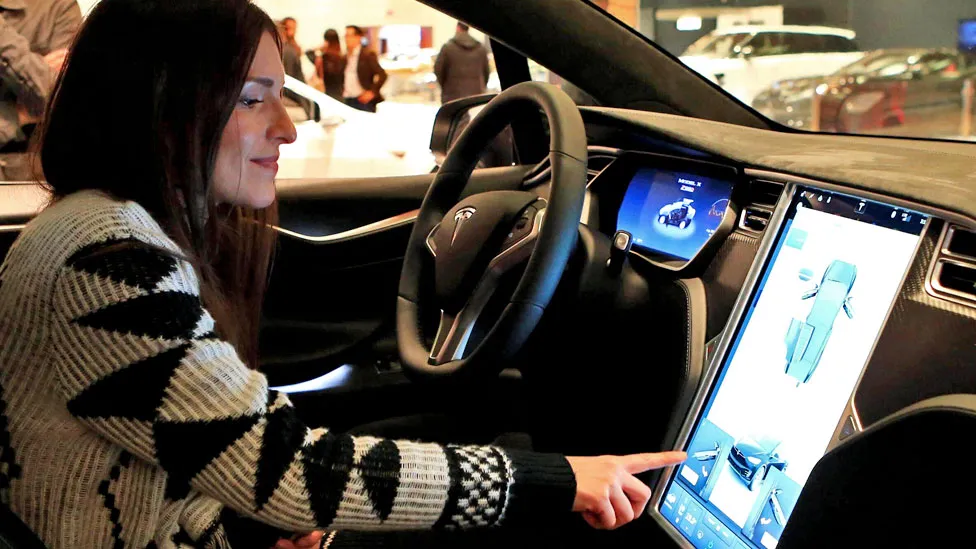
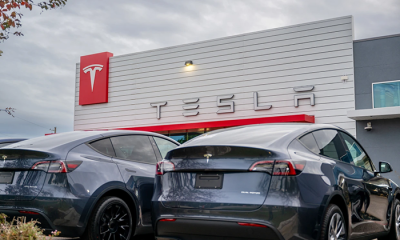
Tesla is recalling more than two million cars after the US regulator found its driver assistance system, Autopilot, was partly defective.
It follows a two year investigation into crashes which occurred when the tech was in use.
The recall applies to almost every Tesla sold in the US since the Autopilot feature was launched in 2015.
Tesla, owned by billionaire Elon Musk, said it would send a software update “over the air” to fix the issue. The update happens automatically and does not require a visit to a dealership or garage, but is still referred to by the US regulator as a recall.
The UK Driver and Vehicle Standards Agency said it was not aware of any safety issues involving Teslas in the UK, noting that cars sold in the UK are not equipped with all of the same features as cars in the US. “Teslas sold in the UK market are not self-driving and are not approved to do so,” a spokesperson said, adding that the agency would continue to monitor the situation.
Autopilot is meant to help with steering, acceleration and braking – but, despite the name, the car still requires driver input.
Tesla’s software is supposed to make sure that drivers are paying attention and that the feature is only in use in appropriate conditions, such as driving on highways.
But the US National Highway Traffic Safety Administration (NHTSA) said a two-year investigation of 956 Tesla crashes found that “the prominence and scope of the feature’s controls may not be sufficient to prevent driver misuse. Automated technology holds great promise for improving safety but only when it is deployed responsibly”, the NHTSA wrote, adding it would continue to monitor the software once it was updated.
Tesla did not respond to a request for comment.
According to the recall notice, the company did not concur with the agency’s analysis but agreed to add new features to resolve the concerns, including additional checks on turning on the self-driving features.
The recall comes a week aftera former Tesla employee told BBC he believed the technology was not safe. Lukasz Krupski, speaking after winning the Blueprint Prize which recognises whistleblowers, told the BBC: “I don’t think the hardware is ready and the software is ready. It affects all of us because we are essentially experiments in public roads”, he claimed.
Reacting to the news of the recall Mr Krupski told the BBC it was “a step in the right direction” but pointed out it was not just a problem in the US. “The hardware is the same in all the Teslas in the US, China etc.”, he said
Safety metrics
On Tuesday, Tesla defended the safety of Autopilot in a post on X (formerly Twitter) in response to a Washington Post article.
“Safety metrics are emphatically stronger when Autopilot is engaged than when not engaged” it wrote, pointing to statistics that suggested there were fewer crashes when the system was used.
Jack Stilgoe, associate professor at University College London, who researches autonomous vehicles, said Tesla should have spent more time developing the system in the first place. “The conventional way of ensuring safety is to check that a car is safe when it leaves the factory”, he told the BBC.
But despite this being the second recall this year affecting Tesla vehicles, Susannah Streeter of investment company Hargreaves Lansdown, said her assessment was that it should not check the carmaker’s momentum too greatly:
“This recall of 2 million cars on its own is not likely to seriously quash enthusiasm. The share price has dropped back slightly, but it doesn’t look like it’ll be hit by a bad bout of skidding. “After all, recalls in the car industry are far from unusual and the group also has the financial ability to invest in fixes”, she added.
Tesla has heavily promoted the technology in its cars and says remaining at the cutting edge of self-driving is key to its future growth.
Goldman Sachs analysts estimated this month that Tesla’s most advanced Autopilot offering, full self driving, could end up generating more than $50bn a year in revenue by 2030, up from $1bn-$3bn presently.
In the US, the full-self driving package costs $12,000, or a $199 monthly subscription fee.
“Autonomy is really where it’s at,” Mr Musk told investors this summer.
Additional alerts
Critics have said Tesla has misled customers about its software’s capabilities, contributing to risks.
The carmaker is facing other government investigations, as well as a number of lawsuits in the US in relation to crashes involving the software.
But a jury in one of the first cases to go to trial found that Tesla’s autopilot technology was not to blame.
The new controls that Tesla has agreed to do should help limit drivers from using Autopilot unsafely, said Professor Missy Cummings, director of the Autonomy and Robotics Center at George Mason University. But she added that there was “an opportunity missed” for regulators to require Tesla to make Autopilot features unavailable in places where it is not supposed to be used.
The recall centres on a part of Autopilot called Autosteer.
Autosteer helps keep a car in the correct lane in conjunction with “traffic-aware cruise control” which matches the speed of the car to that of the surrounding traffic. The driver is expected to have their hands on wheel and be ready to take over from the assistive system when required.
When Autosteer is on, systems in the car monitor that the driver is paying attention. If it detects the driver isn’t there are warning alerts. There are also alerts if the driver tries to use Autosteer in inappropriate circumstances.
According to the NHTSA recall report, the “over the air update” will include additional alerts and monitoring “to encourage the driver to adhere to their continuous driving responsibility whenever Autosteer is engaged.”
(BBC)








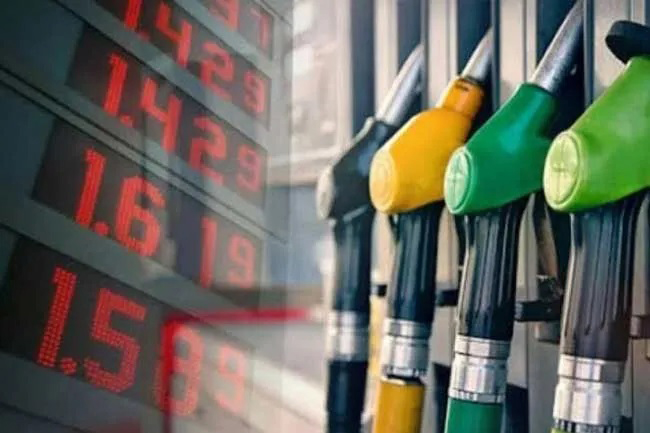
The Ceylon Petroleum Corporation (CEYPETCO) has announced a reduction in the prices of Petrol 92 and Petrol 95, effective from midnight today (30).
The price of Petrol 92 has been reduced by Rs. 15 per litre, from Rs. 414 to Rs. 399 while the price of Petrol 95 Octane has been reduced by Rs. 20 per litre, from Rs. 495 to Rs. 475
There will be no change in the prices of diesel, Super Diesel and kerosene under the latest revision.
Latest News
UPDATE: Seven killed and 23 missing after boat capsizes off northern Cyprus, says Turkish Cypriot PM

Seven people have died after a passenger boat capsized near northern Cyprus, the Turkish Cypriot PM says. Search and rescue operations are under way to find 23 people missing, says Ünal Üstel, the prime minister of the self-declared territory
He says 267 people were on board the vessel when it capsized, and 237 have been rescued
[BBC]
Iceland has voted against resuming talks on joining the European Union 13 years after they were broken off.
Public broadcaster RUV reported that 52.8% of 225,031 voters rejected the government’s proposal, while 47.2% had said yes. Some 12,600 votes separated them.
Prime Minister Kristrún Frostadóttir’s centre-left government promised to hold a referendum by 2027, but brought it forward because of international tensions, including US President Donald Trump’s threats against Greenland.
However, debate in this island nation of almost 400,000 people centred more on its fishing industry rather than security concerns.
With some 270,000 people eligible to vote, RUV reported the turnout of 82.5% was the highest in any election in Iceland since 2009.
Already part of the EU’s single market and Schengen border-free zone, EU membership would bring Iceland into the customs union and eventually the euro.
Iceland began its application to join the EU in 2009 in the wake of the 2008 financial crisis and the collapse of Iceland’s banking system.
Its application was already well advanced when a eurosceptic government came to power in 2013 and put talks on hold. Fishing rights was the biggest obstacle then – as it remains today.
Fish and marine industries account for almost 40% of Iceland’s exports and many No voters feared they would cede some control of their lucrative fishing grounds under the EU’s common fisheries policy.
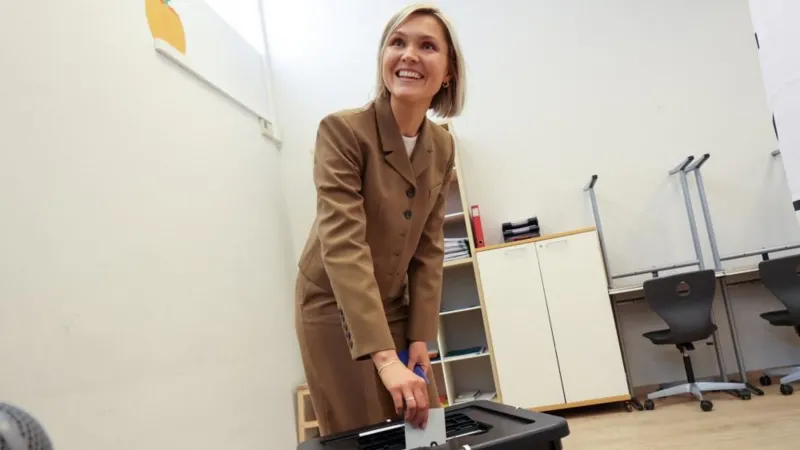
The referendum campaign fuelled debate about Iceland’s place in the world, Kristrún said after casting her ballot in the capital on Saturday.
“This is a great day, we’ve been waiting for this for years to be able to have a vote,” Kristrún said, adding that her government would continue its work regardless of the outcome.
The question on the ballot was: “Should Iceland resume accession negotiations with the European Union?”
A Yes vote would not have been a final decision on joining the EU, but a move towards an accession agreement, which would then have to be approved by a second referendum.
Equally, the No vote does not rule out the chance of Iceland resuming talks in the future.
While economic issues dominated the referendum campaigns, security concerns also featured.
Iceland is a founder member of Nato but it has no military and relies on its allies for defence.
The country has backed Ukraine during Russia’s full-scale invasion and officials have been alarmed by Russia’s increased maritime manoeuvres near the island.
Trump’s expressed interest in taking over Greenland has also raised concerns.
[BBC]

Petrol to cost less from midnight today (30)

Head teacher evacuated 900 children minutes before school washed away by Nepal floods

UPDATE: Seven killed and 23 missing after boat capsizes off northern Cyprus, says Turkish Cypriot PM

Iceland votes against restarting talks on joining EU

“Rathuwewi Mihimadala” Book Launched with the Participation of the Prime Minister

Turkiye, Somalia forces free cargo vessel hijacked by pirates

‘Dates have the highest sugar content to fight Coronavirus’

Sunday Island 27 December – Headlines

#SundayIsland 17th December – Headlines

Sunday Island – 28th March

Sunday Island Headlines – 21 March

Sunday Island – 21st February – Headlines
-

 News6 days ago
Missing doctor’s body found in Mahiyanganaya
-
 News6 days ago
Australia declines to release Finance Secy Suriyapperuma’s citizenship details
-

 News6 days ago
22A: BASL suggests CJ recuse himself from hearing petitions
-

 News3 days ago
Eight politicians in drug kingpin probe
-

 Editorial7 days ago
Govts. drag feet as undergrads age
-

 Business3 days ago
Sri Lanka opens up: A new season of direct connectivity
-

 Features5 days ago
Insights from Chieftains of Uva: Genealogy of two Kandyan Families – Part II
-

 Features3 days ago
Redefining ageing in Sri Lanka