
News
Lanka – Japan Friendship Society new office bearers

At a recent ceremony at the Sasakawa Hall, attended by the members of the Lanka Japan Friendship Society (LJFS), diplomats from the Japanese Embassy and members of the Japanese community in Sri Lanka, M.D (Tony) Saldin was formally elected as the19th President of the Society.
The induction ceremony was conducted by outgoing President Merrick Gooneratne in the presence of the Japanese Ambassador Hideaki Mizukoshi.
The following were elected to the EXCO for the year 2023/2024: Patron Hideaki Mizukoshi, Ambassador for Japan, Vice Patrons: Merrick Gooneratne/Immediate past President, Sumana Liyanage, Deepal Gunaratne, Mikinaga Hotta, President: M.D. (Tony) Saldin, Vice Presidents: A. Anandagoda, Jayaraja Chandrasekera, Prof. Gaminda Haegoda, Neomal Perera, Sunitha Wijepala, General Secretary: Samadara Mampitiye, Asst Gen Secretary: Diloshini Nesakumar, General Treasurer: M. Thiyagaraja, Asst Gen Treasurer: R. Kadirgamar Rajah, Executive Committee: Nemantha Abeysinghe, Dhammika Attygale, Dr. Vijaya Corea, Dr. PHP de Silva, Mahendra de Vaz, DARM Nishanthi Galhena, W.I. Gunawardena, Jannath Ismail, Dr, Upali Jayawardena, Brigadier Samantha Jayasundara, Captain Ganesh Mendis,Sarojini Nagendran, Dr. Rohan Pallewatte, Shanil Perera, S.N. Raghavan, Shelly Thenuwara, Manoranjan Wijebahu, Himani Wijemanne.
The Lanka – Japan Friendship Society was formed in the wake of Sri Lanka’s independence in 1948, when a few societies were coming up in order to build goodwill and friendship between countries which were well disposed towards Sri Lanka. The Ceylon–Japan Friendship Society as it was originally called, is believed to have been inaugurated around Feb 1966 when Japan was emerging as an industrial nation.
Sir Susantha de Fonseka who was Ceylon’s Ambassador in Japan promoted the idea of establishing this institution, which is now the oldest friendship society in Sri Lanka. Mr. Akira Matsui, the Japanese Ambassador was Sir Susantha’s counterpart in Sri Lanka.
Activities in the early days were confined to irregular meetings of fellowship held in the Embassy of Japan in Colombo. Sir Wilfred de Soysa, an outstanding philanthropist was designated the first President. Mr. Herbert Tennekoon and Sir Sangarapillai Pararajasingham followed and the focus of attention was the mutual friendship and co-operation among its members.
Eminent persons such as Messers Herbert Tennekoon, William Tennekoon, Sir Razik Fareed, Gamini Jayasuriya, Thomas Amarasuriya and Mr. C.X. Martyn involved themselves in matters concerning the society in the early days. Mr. M.D.H. Jayawardena, a Cabinet Minister was decorated with the Order of the Sacred Lotus by the Emperor of Japan, soon after he relinquished office as President of the society.
The Constitution of the Society was formulated by Mr. J.R. Jayewardene. Even after over 60 years the basic constitution was found to be adequate and remains more or less the same.
It was during the presidency of Mr. Ivor Paternott, that prime land down 22nd Lane, Kollupitiya was made available for the construction of the society’s permanent headquarters. This was possible through financial assistance provided by a Japanese millionaire and philanthropist Mr. Ryogi Sasakawa and the building was subsequently named after him.
EXCO and general meetings of the society are held in the numerous committee rooms and auditorium of the Sasakawa Cultural Centre.
(Excerpts from “The Lanka Japan Friendship Society – A historical note” by Fred Medis, Past President in 1960)

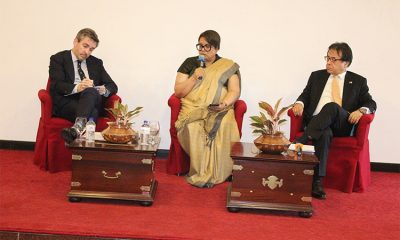

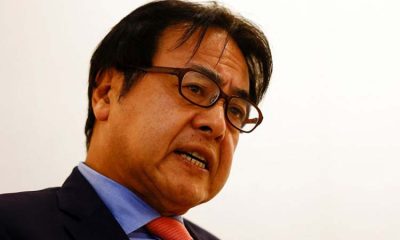



Sri Lanka has urged the Human Rights High Commissioner, Volker Türk, to end the country-specific mandate in respect of Sri Lanka where national processes demonstrated progress.
Addressing the 63rd Session of the United Nations Human Rights Council in Geneva, on 08 September, 2026, during the General Debate under the Agenda Item 2, Permanent Representative of Sri Lanka to the United Nations in Geneva, Ambassador Sumith Dassanayake emphasised that no Council mandate should be regarded as indefinite.
The written update on human rights situation in Sri Lanka was presented to the Council on 08 September and the General Debate was attended by the United Nations Human Rights High Commissioner, Volker Türk.
Dassanayake emphasised that at a time when the international community is confronted with grave and urgent human rights situations, including armed conflicts, displacement, and humanitarian crises, the Council must ensure its work and resources are directed towards the most pressing global challenges.
Dassanayake also emphasised to the High Commissioner that all mandates, particularly country-specific ones, should be subject to periodic review against clearly defined objectives and measurable outcomes. He called for sunset clauses and phase-out provisions to be explicitly incorporated into country-specific resolutions where appropriate.
Dassanayake stressed that when a country demonstrates progress through national processes, dialogue, cooperation, and technical assistance, the Council should provide a credible pathway towards concluding the relevant mandate.
The Supreme Court has dismissed about 40 fundamental rights petitions filed by nearly 1,050 police officers who were overlooked for promotions and challenged the promotion of other officers to various ranks in the Sri Lanka Police Service.
The judgment was delivered on Tuesday (08) by Supreme Court Justice Mahinda Samayawardhena, with Chief Justice Preethi Padman Surasena and Justice Sampath Wijeratne concurring.
The petitions challenged promotions made in 2019, 2020, 2021 and 2023 during the tenures of former Inspectors General of Police Pujith Jayasundara, C.D. Wickramaratne and Deshabandu Tennakoon.
The promotions under challenge included those from Police Constable to Police Sergeant, Police Sergeant to Sub-Inspector and Sub-Inspector to Inspector.
In its judgment, the Supreme Court held that the petitioners had failed to provide sufficient material to satisfy the Court that there had been irregularities in the promotion process.
The Court also held that the petitioners had failed to establish that their fundamental right to equal protection of the law, guaranteed under Article 12(1) of the Constitution, had been violated.
Accordingly, the Court dismissed the petitions (SI)
By S.K. Samaranayake
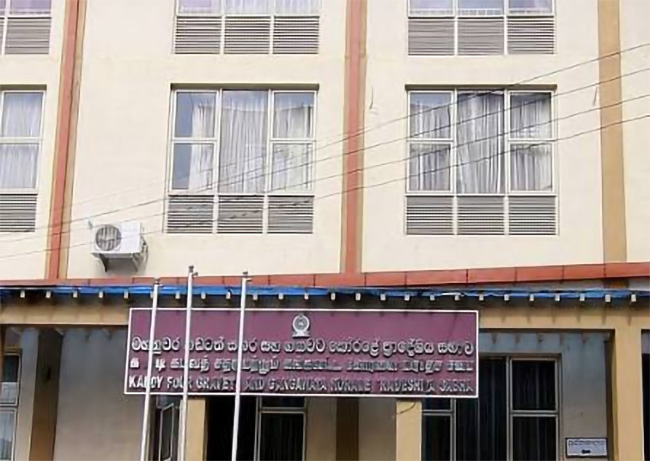
Tensions ran high yesterday (09) when shops located on the Mahaweli River reservation in the Thennekumbura area, within the Gangawata Korale Pradeshiya Sabha, were ordered to be removed.
Court officials, officers of the Mahaweli Authority and police arrived at the site to implement a court order directing the removal of the shops, prompting an angry reaction from the traders. State officials warned that, as the action was being carried out under a court order, anyone obstructing the execution of the order could be arrested for interfering with judicial duties.
The affected traders said they had been operating their businesses at the location for between 25 and 30 years, paying a monthly rent of Rs. 5,000 each to the Gangawata Korale Pradeshiya Sabha. They also said they had entered into agreements with the Mahaweli Authority, and described the sudden eviction as deeply unjust.
The traders claimed that although the court order required all the shops in the area to be demolished, a shop allegedly belonging to an NPP supporter had been spared.
An NPP member of the Gangawata Korale Pradeshiya Sabha, who arrived at the scene, was also met with strong protests from the agitated traders and members of the public.
Expressing their anger at both the Government and the visiting politician, the traders said they had already been left destitute by losses suffered during Cyclone Ditwah and that the eviction had plunged them into even greater hardship.
While saying they respected the court ruling, the traders voiced strong resentment over what they described as the selective enforcement of the law in favour of individuals linked to the ruling party. They lamented that families who had engaged in legitimate businesses and paid taxes under successive governments had now been driven onto the streets under the present administration.

Cool, clear, glowing skin in excessive heat

American Premium Water strikes Gold at Dragons of Sri Lanka 2026

Govt. asks UNHRC to do away with country-specific mandate targeting SL

FR petitions from nearly 1050 police officers dismissed by SC

CDS rings market opening bell to mark 35 years

Demolition of unauthorised structures causes tension

‘Dates have the highest sugar content to fight Coronavirus’

Sunday Island 27 December – Headlines

#SundayIsland 17th December – Headlines

Sunday Island – 28th March

Sunday Island Headlines – 21 March

Sunday Island – 21st February – Headlines
-

 News7 days ago
Denied of promotion to SC despite vacancies, justice Gurusinghe retires
-

 News7 days ago
22A: SC urged to suspend hearing, appoint full bench
-

 News5 days ago
Namal remanded until Sept. 18 over Airbus deal investigation
-

 Latest News4 days ago
Tharanga creates history with Diamond League crown in Brussels
-

 News7 days ago
Govt. seeks NATO assistance
-

 News4 days ago
Dispute which triggered listed company director being detained at BIA resolved
-

 Editorial7 days ago
Strange arithmetic goes unchallenged
-

 Features3 days ago
After the parade: What a traffic OIC’s walk-out tells us