
News
Prof. Vitarana says re-streamlining co-op movement the only way to save farmers from middlemen


By Saman Indrajith
LSSP leader Prof. Tissa Vitarana said that re-streamlining the cooperative movement is the only way to save farmers from middlemen who prevent both producers and consumers from enjoying decent prices in the market.
Participating in the third reading stage debate on budget 2021, MP Vitarana said that middlemen and miller mafia have become the bane of farmers.
“The middlemen and miller mafia get the farmers into a debt trap and buy their produce at prices they determine. If the cooperative system was strong, it could have purchased the produce of farmers at a decent price. That would also make way for the consumers to buy at a lower price. Re-streamlining the cooperative movement would be the solution to this,” he said.
“I was the Governor of the North Central Province during the first quarter of this year. It is an area known for its centuries-old irrigated agriculture. More than 65 percent of the people in the province depend on basic agriculture and agro- based industries. The province has immense potential for investors to start their businesses, especially in the agriculture, agro-based industries and livestock sectors. But I was sad to notice that malnutrition was prevailing in the province so badly”, he noted.
Prof. Vitarana further said: “As per the latest statistics, the province’s malnutrition was at 12.5 percent. One in every eight persons was suffering from malnutrition which was high among farmer families. I visited villages in the province and made inquiries. The villagers told me that they do not get the due price for their paddy. Owing to the debts, they had been compelled to sell to the middlemen and miller mafia.
“During the times of the Yahapalana government, their other sources of income also dried up. Two companies have got hold of controlling cattle farmers. Those who engaged in sand mining and brick manufacturing too have lost their incomes. I found that most of the families in the province have only one meal a day.
“The LSSP has an Agriculture Committee headed by Dr. Lionel Weerakoon, who was the former Director, Research of the Agriculture Department. We conducted a thorough research with him and researchers of the University of Rajarata, Mahailluppalama Field Crop Research and Development Institute and officials from the Mahaweli, Agriculture Department, Agrarian Services Board, Irrigation Department and the provincial council. Thereafter we conducted two seminars and a workshop for all stakeholders.
“The research and the subsequent events helped us identify the reasons for the sorry situation prevailing and the solutions for them as well. I table the report of the findings. It was found that there is a mismatch between the crops the farmers cultivate and the potential of the soil, sunlight and climate in the area. That should be optimized to get a better harvest. The province with an immense potential produces only five percent of the GDP.
“Distribution of lands was haphazardly done so they are occupied by various departments and ministries without contributing towards their development. The distribution of lands, optimization of crops and other agrarian services should be done in a scientific and composite manner. The produce of farmers should be value added. While I was the minister of Science and Technology, I promoted the setting up of Vidatha Centers for this purpose. But when I inquired from these officials, I found that they cannot operate to optimum levels as funds allocated to the centers have been reduced gradually during recent times.
“These issues should be addressed to help the farmers to get out of their present plight. Even after that is done, the farmers would not be able to raise their heads till they are hooked by scrupulous elements of the miller mafia. There are regional banks who could obtain loans at seven percent interest from the central bank and serve the people in the province, but they were not aware of it. The cooperative system should be reintroduced to help save the farmers and consumers from the middlemen and miller mafia”.



By Shamindra Ferdinando
The Opposition should intensity its focus on the forthcoming selection of a member of the Commission to Investigate Allegations of Bribery or Corruption (CIABOC) and remain vigilant as Speaker Dr. Jagath Wickremaratne, MP, the head of the Constitutional Council (CC) tasked with making the relevant recommendation, is under investigation by the CIABOC, sources familiar with the ongoing inquiry told The Island.
Chethiya Goonasekara, PC, is expected to complete his three-year term on Dec 31, 2026. Sources pointed out that CIABOC Commissioners are appointed by the President on the recommendation made by the 10-member Constitutional Council.
The CIABOC initiated the investigation following a complaint lodged by suspended Chief of Staff and Deputy Secretary General of Parliament Chaminda Kularatne in early February this year. Sources said that as Goonasekera is scheduled to complete his term toward the end of 2026, the CC would have to call applications soon to choose the successor.
Goonasekara received his appointment from President Ranil Wickremesinghe in January 2024. A Justice W. M. N. P. Iddawala was appointed Chairman of the CIABOC. The other commissioner is K. Bernard Rajapakse.
Asked whether Iddawala and Rajapakse, too, would complete their terms soon, sources said that in terms of the Anti-Corruption Act No 09 of 2023, the Chairman of CIABOC would hold office for a period of five years, second commissioner (K. Bernard Rajapakse) for four years and the third commissioner (Chethiya Goonasekara) for a period of three years.
Sources said that the Opposition as well as civil society representatives in the CC should take up the issue of Speaker facing an investigation by the CIABOC taking part in the forthcoming selection process. Responding to queries, sources emphasized that the issue was whether in terms of Section 107 of the Anti-Corruption Act the participation of the Speaker in the selection process amounted to a violation of the Act itself.
The current members of the CC are Dr Jagath Wickramaratne, Speaker and Chairman of the Constitutional Council, Dr. Harini Amarasuriya, Prime Minister, Sajith Premadasa, Leader of the Opposition, Bimal Rathnayake, MP, Aboobucker Athambawa, MP, Ajith P. Perera, MP, Sivagnanam Shritharan, MP, Austin Fernando, Civil society representative, Prof. Wasantha Seneviratne, Civil society representative and Ranjith Ariyaratne, Civil society representative.
Sources pointed out that in spite of the sensitivity of the case, the CIABOC recorded Kularatne’s statement in the second week of August, six months after he lodged the complaint.
The CIABOC on 3, 8 and 10 Sept recorded the statements from the Transport Officer, Deputy Director, Administration and Assistant Director, Finance regarding the use of facilities by the Speaker, those assigned to his staff and other relevant matters.
The NPP named Dr. Wickramaratne as the Speaker after Asoka Ranwala resigned over controversy regarding his higher education qualifications.
SJB lawmaker Dayasiri Jayaskera has repeatedly raised the issues concerning the Speaker with the focus also on the Speaker using two government-managed residences, relevant staff in addition to expenditure on food, transport and fuel provided to the Speaker’s private secretary.
Political sources said that trouble erupted after the Parliamentary Staff Advisory Council in late January sacked Kularatne accusing him of providing false information to secure his appointment. Before being appointed as the Deputy Secretary-General of Parliament in 2023, Kularatne held several high-ranking positions, including Secretary to the Chief Government Whip, Additional Secretary to the President, Additional Secretary to the Prime Minister, and Additional Secretary to the Leader of the Opposition.
The SJB declared in Parliament that Ranwala should be brought back as the Speaker as they have no faith in Wickramaratne. MP Mujibur Rahuman jokingly told parliament that the Opposition wouldn’t raise Ranwala’s educational qualifications.

The Government Medical Officers’ Association (GMOA) has stressed the need to conduct a comprehensive countrywide cadre revision urgently.
GMOA spokesman Dr. Lasitha Dhammika told The Island that the failure on the part of successive governments to conduct cadre revision caused the deterioration of the public sector health services. Due to the absence of required statistics, they hadn’t been able to fully comprehend the situation on the ground and to ascertain the requirements of the public.
Dr. Dhammika pointed out the expansion of the services without supporting statistics and the need to initiate an immediate cadre revision. According to him, the GMOA had raised this issue with successive governments without success. The GMOA spokesman said that they also sought relevant information from the Health Ministry in terms of the Right to Information (RTI) Act two weeks ago but was yet to receive response.
(SF)
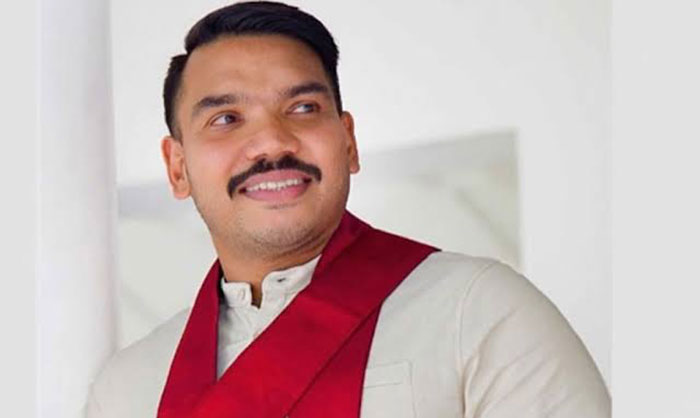
Sri Lanka Podujana Peramuna (SLPP) National Organiser and MP Namal Rajapaksa, currently held in remand custody, sent a defiant message from behind bars to supporters at the party’s “Jana Satana” rally in Anuradhapura on Saturday (12), vowing not to bow to what he described as political pressure from the government.
The message, issued from the Colombo Remand Prison, was addressed to those who gathered at the rally, which he described as a decisive new beginning for the SLPP.
Rajapaksa thanked supporters for their solidarity, saying he could feel the warmth of the brotherhood being shown to him, even from within the prison.
Quoting former South African President Nelson Mandela, he said “difficulties break some men but make others”, adding that the challenges his movement had faced had only made it stronger.
He credited his father with teaching him to grow stronger in the face of adversity.
Accusing the government of failing to honour its election promises, he pointed out that rising costs of living and tax burdens were placing considerable pressure on the public, including small and medium enterprises, farmers, fishermen and workers.
He alleged that state investigative institutions had been politicised under the government, claiming that allegations against individuals connected to the government were not being investigated fairly, though these claims were made by Rajapaksa and have not been independently verified.
Rajapaksa also criticised the government over its handling of constitutional reforms, the delay in holding Provincial Council elections and what he described as a lack of opportunities for young people entering the job market.
He concluded by declaring that he would not surrender to what he termed the Government’s political power and would not be intimidated, insisting that determination cannot be imprisoned.
He also urged supporters to remain peaceful, disciplined and respectful of the law throughout their campaign.

Showers above 100 mm are likely at some places in the Western, Central, Sabaragamuwa, Southern, North-central and North-western provinces

Shafali, Mandhana power India to eighth Asia Cup title

Tharanga wins Ultimate Javelin title

CIABOC member’s appointment: Controversy over Speaker under probe heading selection process

GMOA: Countrywide cadre revision not done since 2015

Namal sends defiant message from remand custody

‘Dates have the highest sugar content to fight Coronavirus’

Sunday Island 27 December – Headlines

#SundayIsland 17th December – Headlines

Sunday Island – 28th March

Sunday Island Headlines – 21 March

Sunday Island – 21st February – Headlines
-

 Sports3 days ago
DDS set to lose Test captaincy
-

 News6 days ago
Thailand shuts door on undesirables from Sri Lanka
-

 News3 days ago
Sri Lanka faces new grid challenge as rooftop solar surges: former CEB GM
-
 Business6 days ago
CEB successor company breaks into top three in competitive BESS tender
-

 Latest News3 days ago
Shafali, Deepti power India into sixth T20 Asia Cup final
-

 Opinion5 days ago
Navigating Sri Lanka’s Israeli Dilemma
-

 Latest News2 days ago
Sri Lanka thwart Fatima Sana challenge to secure Asia Cup final spot
-

 Features4 days ago
Lost for 90 years: Rare Goby resurfaces in Jaffna