
Features
Responsible investment of borrowed money


Could this be a way forward?
by Dr. Upatissa Pethiyagoda
Recent financial distress and the promise of financial help by the IMF, opens up a healthy opportunity to consider the manner in which we use the granted relief. Any lender must be convinced that there is a near certainty, that the borrower would exercise prudence in using such monies. Thus the finance should be used in projects where there is more than a fair chance of being successful enough to enable the beneficiary to pay back monies due.
It is reasonable to expect a certain degree of involvement (interference?) by lenders, in coaxing the recipient in such manner as to help avoid repetition of mistakes that have been responsible for the present distress. Unfortunately, cutting back the expenses incurred in providing some seemingly extravagant social or relief measures, can be highly sensitive politically. Our politics have sadly, helped to establish a “dependency syndrome,” reflected in the demonstration placards often voiced as “Diyaw, diyaw”!
Much of the “opposition” to IMF relief, can perhaps be because of denial of the “freedom of the wild ass,” or blunting the slimy skills of the pick-pocket. Better, let us invest the relief intelligently. The discourse can be logical, purposeful and impersonal.
The expected conflict is whether we should use these funds in such a manner as ushered in the fueling of the “Industrial Revolution” of a century or two ago, or seek fresh alternatives.
The fueling of the industrial revolution, is generally regarded historically as a four-step process. Several advances are recognized as having been pivotal. These included – invention of the steam engine, setting up of factories, tapping oil and coal reserves and colonialism to provide necessary raw materials to support manufacture of goods. Thus arose urbanization, exploitation of labour, class distinctions and a host of other new problems.
Popular convention recognizes four sequential steps, vaguely recognized as beginning with the invention of the steam engine and passing through construction of factories especially for textile manufacture, through coal and oil extraction, and colonialism to access sources of raw material and labour.
Chemical developments of new materials especially plastics, Semi-conductors, and computers, advance of fast communications, telephones, fast trains and aircraft plus much besides that are now taken for granted. Some have involved decades of diligent development by thousands of inventors, and millions of workers to turn out the articles and processes developed by researchers.
While these are obviously positive developments, they have at the same time also delivered ruinous environmental pollutants, nuclear weapons of mass destructive potential and of course an exponentially growing population, resulting in crime, inequity, depletion and destruction of natural resources. These have become the major considerations worldwide.
Unquestionably, industrialization has greater expansion potential than agriculture, forestry and fisheries. In our case there is a compelling host of social deficits that should be accommodated. Inexpensive and reliable power is a pre-requisite. This is clearly not there for us. When I look back on my personal experience, of something like 14 years,
I did not experience a single power interruption! This included four years in Iraq, then at war with Iran. The rest were in the “industrialized” West (including UK. USA and Italy) and short stays in Germany, Denmark, Switzerland, Israel etc. Not a single blackout! Unreliable power supply is a serious negative for industrialization..
The position of industrial development is much about “factory” technology. Maximum outputs from machinery, requiring the least input of labour. Cheap availability of power and machinery to manufacture are indispensable. Colonialism had much to do with procuring cheap raw material.
Labour in their home countries, was expensive and had to do with high wages and welfare facilities. It is interesting to note that countries in Temperate regions, that require fuel for warming, were still able to easily outstrip Tropical ones, exempt from this enormous burden. Success was achieved by coupling cheap labour with lesser need of expensive raw material.
Does this inversion of requisites for progress, (labour and raw material) create doubts on the applicability of formulae successful in the industrial West against those of the agrarian Tropics? Can we harness the benefits of both worlds and how?
Few would disagree that in our present state, with a long tradition of agriculture, it is natural that this is the sector most likely to respond to change and reform. This broadly speaking, could focus on:-
Protected Cultivation
Protected cultivation, mainly for high value market garden crops such as tomato, capsicum, lettuce and brinjal is no stranger for Up- Country vegetable farmers.A great opportunity exists for utilizing this empirically acquired knowledge, to cultivate the not inconsiderable extents of uncultivated land within a triangle roughly circumscribed by Kalutara, Gampaha and Negombo. It is most likely that improper drainage have rendered these extents unsuitable for paddy.
If so, it becomes an engineering problem, to arrange for proper drainage of these swamps and to enable intensive protected farming. In fact, it may make it feasible for freshwater fish production as well. The proximity of Colombo and the proposed Port City Project, tourist hotels, promise a large high-end and growing market.
Abundant sunlight, water and land are resources, seldom found together: in this sense this offers a huge potential.
Cage fisheries, mangroves and marine culture
Hundreds of kilometers of concrete-lined distribution channels lie within the Mahaweli Development areas. These constitute a vast potential for “cage fisheries”. These simply, are water-resistant meshes, fixed to a frame of width slightly more than that of the channel. The mesh is of a dimension to confine the introduced fingerlings in a system of constant water flow.
Feeding the fish would be supplemented with kitchen and other digestible domestic waste. Harvesting the fish is by simply lifting up the cage. Fast- growing fish like carp and tilapia should be ideal for such production. An added advantage is that the closest settler population, who directly need an assured source of animal protein, are thus served.
Much of a rich mangrove vegetation that has been degraded, is being helped to restore itself by large-scale planting up with nursery-produced indigenous species. This is presently managed by the Ministries of Environment, Fisheries and the Navy, assisted by volunteers from environment-conscious Associations. This is an important innovative project deserving to be supported.
It is designed to restore the vital breeding areas for crabs, lobsters, brackish-water fish and prawns. A complementary activity is to provide for algae and shellfish like oysters and clams. The value of mangroves in coastal protection was graphically evident when the last tsunami hit us.
” Agro-forestry”.
This is a terminology that has appeared relatively recently to describe a long existent system. Significantly, even in the much maligned “chena system” of shifting cultivation, the preparatory activity is described as “eli peheli kireema,” thus implying that the clearing was restricted, to allow sufficient light penetration required by the intended crop. Similarly, the traditional so called “Kandyan forest garden” is a semi-urban agroforest.
“Agro-forestry” implies a realization of the potential for reclaiming forest habitats, that have been degraded by human activity, with tree species of direct utility. Examples (from a virtually limitless number of options), would include jak, breadfruit, cacao, durian, mango, cotton, coffee, cloves, mangosteen, gamboge (goraka), nutmeg and several species of bamboo.

This would be an excellent opportunity to include jak (largest tree fruit up to 55 kilos and trees that can yield about 200 fruits per year).The choice of species, will mainly be dictated by considerations of canopy heights and spread, to accord with prevailing on site circumstances. Jak seeds (generally wasted) can rival chestnuts as a roadside snack. Utilization of “cashew apple” of which thousands of tons are wasted annually, also merits consideration.
Agroforestry is a departure from the earlier concept that forests were a sanctuary for trees, inviolate by human entry. This has been upturned by regarding forests as a “common good” belonging to and protected from, unlawful trespass, enforced by neighborhood beneficiaries.
The relatively recent and internationally recognized “carbon credits” scheme, is intended to encourage expansion of forests to ensure sustainability, and more urgently, as a means of combating “global warming” which is now accepted as a demonstrable threat to all humanity.
Several actions are designed, as in the case of “carbon credits” and conservation, to encourage countries to expand forest cover. (Incidentally, in Bhutan, noted for its exceptional environment, the existing forest cover of about 70% is declared as mandatory in the Constitution: and this is honoured).
Sri Lanka should position itself to draw maximum benefit from these existing global initiatives.
Crops of doubtful economic value
Red lentil or “Massoor dhal” (Lens esculenta) of which a considerable quantity is imported, will not perform here – simply because of our latitude, (closeness to the Equator). Curiously, some species of lentils require short days, while others need long days: we offer neither. Hence, lentils thrive even in the driest areas of Syria, Iran and Northern Pakistan, as a relatively poorly cared for crop.
Potato too performs poorly at our latitude. In comparison for instance with Bangladesh, notwithstanding climatic problems which abound, farmers are still able to sell their crop for a few cents per kilogram at harvest time. In Temperate countries, yields are about 20 to 30-fold. In Sri Lanka, it is barely six to 10-fold (at best).
It survives only because consumers are compelled to pay a very high price. In fact, the cost of fertilizer alone (at the rate of nearly a kilogram per meter of planted furrow), could hardly be covered from crop sales. In addition, a ton of sprouted “seed” potato is required per acre. The combined cost of seed and fertilizer is well above the means of farmers.
The key physiological issue here, is that tuber formation requires cool nights. By this token, potato should yield higher in the Jaffna area. Yields would thus be best when tuber formation and filling coincide with the cooler months.
The case of tea is also worrisome, if one takes into account the sunken “capital cost” and the devastating impact on soil fertility, of previously prime land. An unpleasant reality may eventually dawn.As with the case of potato farming, socio-economic considerations, prevail and over-shadow agronomic reality. There is need for dispassionate review. The prognosis is dire and cannot justify continued inaction.
Root crops
One generally associates “dietary carbohydrates” with cereals. However, in several countries the main sources are non-cereal. Cassava and plantain are more common in Africa, while yams (taro and dasheen) are important in South Pacific states. There is enormous untapped potential in root crops for providing dietary carbohydrates. Cassava as a staple and sweet potato (incidentally the second most popular crop in parts of the US), have received some recognition.
Sri Lanka has a great variety of root crops belonging to several genera. Alocasia and Colocasia, (Dasheen/Taro), Diascorea (wel ala) Amorphophallus (kidaran), Croton (innala), Canna (arrowroot) are among the better .known. Ginger and turmeric are the non-food, seasoning and culinary crops of importance.

Spices
The priority need, especially for export, is to maintain quality. In general, Sri Lankan spices are valued for their superior quality. Cinnamon, cardamom, cloves, pepper and nutmeg (mace), are valued in markets abroad. This has to be ensured, and warrants the establishment of a strong monitoring force to retain our leadership position. Cinnamon is perhaps a model success story, where in the face of strong competition from the less expensive “Cassia bark cinnamon,” the authentic form, has still held its own. Incidentally, Sri Lanka at one time had a 100% monopoly of the world market for this spice. Likewise, our pepper outdoes the Indonesian competition, although our position for cloves and cardamom is not quite the best.
Going organic
It is widely known that raising crops organically is preferable to relying on artificial nutrient fertilizers and agrochemicals. The ideal of course is a balance as the best mix.
The tragic misapplication of organic methods of farming especially among our paddy farmers, has driven them to pitiable desperation. This should not have been, and it was unpardonable folly that triumphed. While the hasty, ill-placed amateurism of persons /charlatans was proceeded with, ignoring the cautions of knowledgeable scientists, the proponents of this monstrous folly have conveniently disappeared, unpunished.
How many of these so-called advisors have heard of “biodynamic farming” or the names Rudolf Steiner or Podlinsky – main promoters of perhaps the most radical of organic methodologies. Their concepts, reliant on lunar and planetary positions, tradition, sentiment and mysticism, have drawn much criticism and doubt. The theoretical presumptions and practices are beyond conventional systematic science.
Meanwhile, adherents, farming thousands of hectares, predominantly in Australia, vouch for the success and efficacy of the prescribed methodologies. The claimed economic advantages are unbelievable. Nevertheless, our voluble and enthusiastic promoters, could do no harm by studying the impacts of this seemingly incredible system.
Whatever the impressions are, our previous methods included the conscious adoption of tradition – most importantly, the cultivation of trees for composting. Species like “wild sunflower,” dadap and glyricidia have all but disappeared. If we are serious, these species should be cultivated and not merely gathered. This also applies to claims for biofilm biofertilizer (BFBF), nitrogen fixing legumes, free- living nitrogen fixing bacteria and algae, crop rotations and “Liming”. Maybe the claims for biodynamic farming are unsubstantiated, but this need not deter fair investigation. Financial support for such is compelling.
Agro-exhibitions and Competitions
Such events present a fine opportunity as prompts for use by extension services. Tracking winners for improved methods useful for wider adoption, and no less importantly, sourcing planting materials that can be multiplied rapidly (if necessary by tissue culture) for release. This is most useful for tree fruits, particularly those appropriate for grafting.
The current enthusiasm for home gardening also richly deserves support. Many innovations and potentials ae evident.
The above thoughts are intended as a stimulus to be translated into specific projects that will have significant impacts. If nothing else, it is hoped that at least some may be usefully developed into “bankable” form.



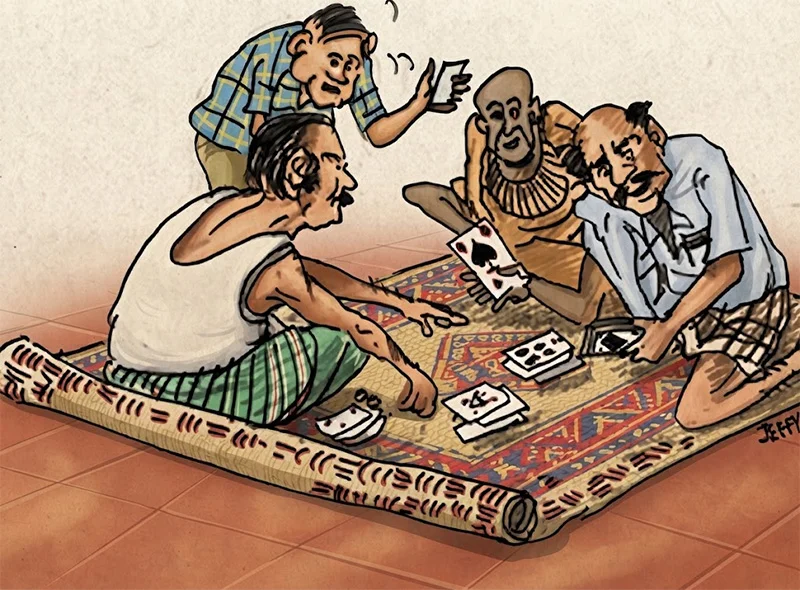
A quick guide to Buruwa
for the uninitiated
Buruwa is traditionally played with a 52-card pack, a standard deck. Players sit in a circle, and after the cards are shuffled by the dealer, one player who sits right side of the dealer can cut the deck and “request” a specific card from the dealer who must deliver it into two sets (hitting-the dealer’s side and asking-the opposite side), after set aside two cards, and the first player to collect their requested card wins. it’s quick, sociable, and genuinely simple to learn, which is a large part of why it has survived, largely unbothered by the law.
(The second instalment in a five-part series on the business of gambling, legal and illegal)
by Prof. C. A. Saliya
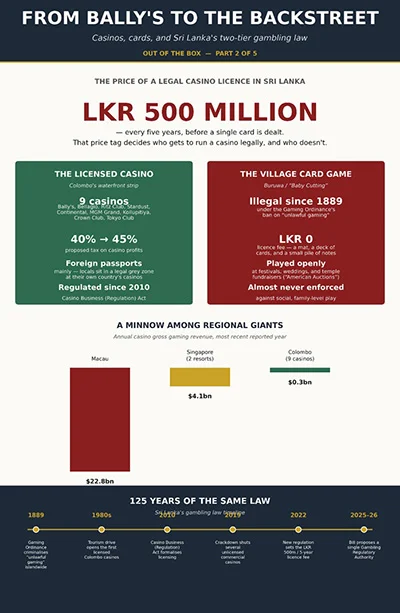
 Walk along the Colombo waterfront, after dark, and you’ll see it: a strip of glass and neon that would not look out of place in Macau or Manila, tucked in among the hotels and office towers. Bally’s. Bellagio Entertainment. The Ritz Club. Stardust. The Continental Club. MGM Grand Colombo. Kollupitiya Casino. Crown Club. Tokyo Club. Nine full-scale casinos, in one city, on one small island, more than most people realise, not that the country’s own citizens are technically allowed to use.
That last part isn’t a typo. Under Sri Lankan law, these casinos exist primarily for foreign passport holders. Locals occupy a strange legal shadow around their own country’s casino industry, not quite welcome, not quite banned, depending on which club, which night, and which security guard is on the door. It’s the first sign of something that runs through this entire industry, all the way down to the humblest card game in the smallest village: in Sri Lanka, who is allowed to gamble has always mattered more than whether gambling itself is right or wrong.
The price of a licence
Running one of those nine casinos legally is not cheap. Under the rules brought in a few years ago, a casino licence costs 500 million rupees, and it only lasts five years before you have to pay again. On top of that, the government has been pushing to raise the tax on casino profits from 40 percent to 45 percent (the Casino Business Licensing Regulation No. 1 of 2022, published on August 31, 2022).
Sit with those numbers for a moment, because they tell you something important about who actually gets to run a legal casino in this country. Half a billion rupees before you’ve dealt a single card, renewed every five years, on top of one of the highest profit tax rates applied to any industry here, that is not a price a small local businessman can pay. It is a price only a handful of large, well-financed groups can afford. The result is an industry that looks, on paper, like it’s tightly regulated and heavily taxed, which it is, but that regulation also happens to conveniently protect the handful of big players already inside the gate from any new competition. That is not necessarily corruption. It is just how licensing fees this steep tend to work everywhere in the world: they keep an industry “controlled,” and they also keep it small, exclusive, and dominated by whoever could afford to get in early.
For scale, look at Sri Lanka’s neighbours in the casino business. Macau, the former Portuguese colony now part of China, pulls in more casino revenue in a single year, over $22 billion at last count, than most entire countries collect in tax. Singapore’s two giant resort casinos, Marina Bay Sands and Resorts World Sentosa, bring in a combined $4 billion or more. Sri Lanka’s nine-casino Colombo strip is a genuine tourism asset and a real contributor to state revenue, but next to those regional giants, it is still a minnow swimming with sharks, which is exactly why the government keeps trying to expand and formalise it rather than shrink it.
The card game everyone plays and nobody arrests
 Now step away from the waterfront and into a completely different world, one that exists in every town and village on the island, at every funeral house, every festival season, informal gambling pots.
It’s called Buruwa. Some people call it “Baby Cutting.” It’s a simple, fast-moving card game, a well-worn 52-card deck, players taking turns to request a card, a person to get the card they asked for taking the round. There’s no croupier, no neon, no five-hundred-million-rupee licence but only a commission called Tome which is charged from the dealer if the dealer wings a three rounds, usually 20% of the winning amount. Just a mat, a deck of cards, and a small pile of notes that keeps changing hands.
Here’s the thing: Buruwa has been against the law since 1889. The old Gaming Ordinance from that year criminalised what it called “unlawful gaming”, playing a game of chance for money in any public place, in most circumstances, and that law is still technically on the books today. And yet Buruwa is arguably the most socially normal form of gambling in the entire country. It isn’t hidden. It’s played in the open, in front of children, blessed almost by tradition itself. Funeral houses themselves often as a fundraising events, with a genuine gambling element to them, to raise money for entirely legitimate and community causes.
This is the part of Sri Lanka’s gambling story that rarely makes it into any government report: an activity that is, on paper, a criminal offence, is in practice one of the most widely tolerated pastimes in the country, precisely because almost everybody has played it at some point, in some form. You cannot arrest an entire village. And no government, in more than a century of trying, has seriously attempted to.
It isn’t only card games in village settings, either. Head into some of Colombo’s more exclusive private clubs and you’ll find money changing hands over poker, bridge, tombola, darts, snooker and billiards, all technically covered by the same 1889 definition of “unlawful gaming” if played for a stake, and all almost entirely ignored by anyone in a position to enforce that law.
When the law does bite
Enforcement isn’t completely theoretical, though, it’s just extremely selective. In 2019, Sri Lankan authorities shut down several illegal casinos operating in Colombo, not village card circles, but full commercial operations offering slot machines and table games without a licence, competing directly with the nine legal venues on the waterfront. That distinction matters. When the state does step in, it is almost always to protect the revenue and market position of licensed operators against unlicensed commercial competitors, not to stamp out gambling as a social activity. A family playing Buruwa has essentially nothing to fear. A businessman running an unlicensed slot-machine parlour has everything to fear. The law on paper treats both as the same crime. The law in practice treats them as entirely different worlds.
Where the new law fits in
Sri Lanka is now in the middle of rewriting the rulebook for all of this. A new Bill would scrap three old, separate laws, the ones covering horse racing, general gambling, and casinos, and replace them with a single Gambling Regulatory Authority responsible for the whole industry, online and offline. It’s a genuinely significant modernisation, and we’ll examine it properly in our final instalment.
But here’s a question worth asking now, before that new authority even opens its doors: will it change anything at all for Buruwa? Almost certainly not, and, honestly, it probably shouldn’t try to. A regulator built to license casinos, tax betting operators, and police online platforms has neither the tools nor, frankly, the moral standing to start prosecuting card games at funeral houses. The more interesting question the rest of this series will keep returning to is whether that’s a sensible, deliberate choice, leave the harmless social gambling alone, focus enforcement on the commercial and online operators where the real money and the real harm actually sit, or whether it’s simply a gap nobody in government has ever bothered to think through. (See Inset)
Next week, Part 3 turns to a very different kind of “casino”, one that never uses the word gambling at all, dresses itself up as investing, and lives entirely on your phone: the world of forex and CFD trading apps.
(Prof. C. A. Saliya, is a charted accountant, academic, researcher and former banker. He is the author of SAMAJA GAVESHAKAYA and Springer Publication DOING SOCIAL RESEARCH. He can be contacted at saliya.ca@gmail.com. The views expressed in this article are his own and do not necessarily represent those of the organisations with which he is affiliated.)
A catholic response to national pursuit of accountability
By Rev. Dr. Rashmi M.Fernando, S.J.
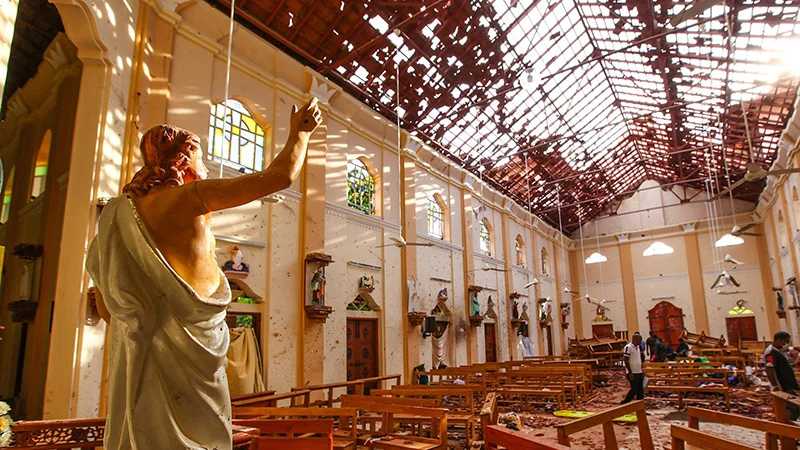
Sri Lanka appears to be entering a decisive chapter in its ongoing investigations regarding the Easter Sunday bombings, in 2019, and other accountability issues. For decades, our nation has carried the heavy burden of unresolved wounds: corruption, enforced disappearances, political assassinations, abductions, financial crimes, abuse of power, and the many forms of violence that have left individuals, families, and communities searching for truth and closure. Many citizens have cast their votes with the hope that a new political administration would have the courage to pursue accountability where previous governments have failed.
Why Justice if Forgiveness is a Christian Virtue?
As investigations continue and legal processes unfold, however, another familiar phenomenon has emerged. Those who fear accountability, or those who perceive themselves or their political allies to be threatened by investigations, increasingly appeal to religion—particularly the Catholic Church—to argue that Christians should simply “forgive and forget.”
Some have even criticized local Church leaders for continuing to seek the truth, suggesting that Christians should move on because forgiveness lies at the heart of the Gospel. If Christians are called to forgive, why continue investigating crimes? Why pursue accountability? Why insist on knowing who was responsible?
The argument sounds pious. But it is profoundly incomplete. It raises a fundamental question for Christians, and particularly for Catholics: Does forgiveness require us to abandon the pursuit of justice? If not, why?
The Cry of the Oppressed is the Cry of the Church Demanding Justice
The answer of the Christian tradition is unequivocal: No. Indeed, authentic Christian faith does not ask us to choose between forgiveness and justice. It calls us to hold them together. The Catholic tradition begins with a simple but profound conviction: every human being possesses an inviolable dignity because every human being is created in the image and likeness of God.
Consequently, any act of violence committed both personally and collectively is not merely a violation of a rule. It is ultimately a violation of God’s image and likeness and, consequently, the very dignity and nature of the whole of humanity. For this reason, Catholic Social Teaching (CST) reminds us that the common good is not simply whatever benefits the majority or those who possess power. The common good includes the social conditions that allow every person and community to flourish.
Moreover, CST has a particular concern for those whose voices are the weakest, those whose voices are made weak, and those whose dignity is most easily ignored. This is the foundation of the Church’s preferential option for the poor and vulnerable. When people are abducted, when families are denied the truth about disappeared loved ones, when public resources are stolen, when political power is abused, when the poor are exploited, when violence is permitted to go unpunished, or when institutions are manipulated to protect the powerful, something more than law is being violated. The dignity of persons and the moral foundations of society itself are being wounded.
That is why the Church cannot be indifferent when victims are silenced. Because they lack political power, the Church cannot remain neutral when families continue to live with unanswered questions. She cannot call for peace while ignoring the cry for justice of those who have suffered. A peace built upon silence is not necessarily peace. Often it is a sign that the poor and the wounded have cried without anyone to hear them. That is why the Christian faith requires a voice, a voice that cries out for truth, dignity, responsibility, the common good, solidarity, and restoration.
Promotion of Justice is an Absolute Requirement of the Service of Faith
The Church does not seek political power by standing with victims. She stands with them because the God she worships is the God who hears the cry of the needy. The God of the Scriptures repeatedly hears the cry of the poor, the widow, the orphan, the stranger, and the oppressed. The Jesus of the Gospels consistently moves toward those whom society pushes to the margins.
The Second Vatican Council gave Catholics a renewed understanding of the Church’s relationship with the world. Gaudium et Spes famously reminds us that the “joys and hopes, the griefs and anxieties” of the people of our time are also the joys and hopes, griefs and anxieties of Christ’s followers. The Church, therefore, cannot isolate herself inside sanctuaries while society suffers outside her doors. When injustice wounds society, silence is not always neutrality. Silence itself becomes a moral decision.
The conviction of the Council has particular significance for the Society of Jesus. The 32nd General Congregation of the Society of Jesus, in 1975, articulated one of the defining principles of contemporary Jesuit mission: “The service of faith, of which the promotion of justice is an absolute requirement.”
The wording matters. The promotion of justice is not presented as an optional consequence of faith—as though some Christians might be interested in justice while others might simply concentrate on prayer and personal holiness. It is an absolute requirement of authentic faith. The Jesuit understanding of mission subsequently developed around the inseparable relationship between faith, justice, reconciliation, and dialogue. Later General Congregations of the Society emphasised reconciliation with God, with one another, and with creation.
Reconciliation here does not mean dismissing, forgetting, or unnoticing. Neither does it mean protecting perpetrators from accountability. Nor does it mean asking victims to sacrifice truth for the convenience of society. Forgiveness without truth becomes sentimentality. Justice without forgiveness can become vindictiveness.
The Reality of Social Sin Beyond Individuals
The distinction between faith and justice becomes even more important when we recognise that sin is not always merely individual. Catholic Social Teaching (CST) speaks of structures that can perpetuate injustice. Pope John Paul II, particularly in Sollicitudo Rei Socialis, developed the language of “structures of sin” to describe social, economic, political, and cultural arrangements in which sinful choices become embedded and reproduced. This means that Christian responsibility does not end with asking, “Who committed the individual wrong?” We must also ask: What structures allowed it to happen? Who benefited from it? Who was silenced? Which institutions failed? What must change so that it does not happen again?
For this reason, the liberation theologians in the Church, such as Gustavo Gutiérrez, Jon Sobrino, and Ignacio Ellacuría, insisted that the Gospel requires Christians to confront structures that perpetuate human suffering. Ellacuría, the Jesuit theologian murdered in El Salvador, in 1989, spoke of the need to “take the crucified people down from the cross.” The phrase is powerful because it reminds us that Christian compassion cannot remain merely emotional. It must become transformative. To stand beside the crucified is also to ask why they were crucified in the first place—and what must change so that others are not crucified tomorrow.
Archbishop Óscar Romero of El Salvador, who was assassinated while celebrating Mass after courageously speaking against violence and social injustice, once observed that there are things that can be seen only through eyes that have cried.
This is a profound theological truth. Those who have never experienced disappearance may speak casually about “moving on.” Those who have never lost a loved one to political violence may find accountability inconvenient. Those who have never lived with poverty may speak easily about patience. Those who have never been abused by power may find it easy to preach forgiveness to those who have.
But the Christian tradition insists that we listen first to the wounded. This is not because victims are always right about every question. It is because justice begins with hearing. Before reconciliation, there must be truth. Before truth can become healing, the wounded must be permitted to speak. And before society asks victims to forgive, society should have the humility to ask what it has done—or failed to do—to protect them.
Forgiveness Never Cancels Justice—and Justice Never Cancels Forgiveness
One misunderstanding about Christian faith is the assumption that forgiveness demands silence, and silence demands complicity. It does not. Forgiveness is, first and foremost, an interior act of the human heart. It is a personal process through which a victim gradually refuses to allow hatred, resentment, and the desire for revenge to imprison the soul. To forgive is to surrender the desire for vengeance and to place oneself, and ultimately the offender, into the merciful hands of God. But forgiveness does not mean that the injustice committed is dismissible, acceptable, or justified. A victim may freely choose to forgive, but that person cannot and should not, by personal forgiveness, absolve wrongdoers from their responsibility to protect others from being harmed in the same way. Society has a responsibility to establish the truth, protect the innocent, hold wrongdoers accountable, and prevent the repetition of injustice.
While forgiveness is personal, justice is communal and, as such, it has meaning because human beings do not live as islands or isolated individuals. We live together—as families, communities, institutions, and nations. What one person does to another can affect an entire community. A crime committed against one human being is a wound caused in the entire social fabric. Justice, therefore, seeks to protect the common good, uphold the dignity and rights of every person, establish equity, repair what has been broken, and ensure accountability.
If a person steals from the public, forgiveness does not eliminate the obligation to restore what can be restored.
If a person abuses public office, repentance does not automatically remove the need for accountability. If a person participates in violence, forgiveness does not require society to abandon the pursuit of truth. If someone has disappeared, forgiveness does not mean that the family should stop asking what happened. A Christian victim, as in the case of the Easter Bombing, may forgive. But mere seeking truth, on behalf of that victim, both individually and communally, is an act of solidarity with the wounded and the suffering.
Speaking on the side of the wrongdoers, if a person sins privately, the Christian faith requires that that person reconcile with God and with his or her own conscience. But if he or she commits a crime against another person, while forgiveness of God and reconciliation with the self is always a personal job, and available upon genuine remorse, request, and change of heart, there is a social dimension that the offender should fulfill, as given in the constitution or the law. Religious language must never become a shield behind which perpetrators escape accountability.
Forgiveness, Justice, and Mercy
The life of Jesus makes the distinction among forgiveness, justice, and mercy quite unmistakable. When Jesus encountered sinners, He repeatedly offered forgiveness. To the woman caught in adultery, He said: “Neither do I condemn you. Go, and from now on do not sin anymore” (Jn 8:11). Notice the two dimensions of this encounter. Jesus forgives, but He does not deny sin. He does it with great mercy and calls for conversion. The past is not rewritten. Instead, the sinner is offered a new future. Mercy does not erase truth; it makes transformation possible.
The same Jesus, who forgave individuals, also confronted social and structural wrongdoing. He overturned the tables of those who had transformed the Temple into a marketplace (Mt 21:12–13). He publicly challenged religious leaders who exercised authority while neglecting the weightier matters of the law: justice, mercy, and faith (Mt 23:23). Jesus did not remain silent simply because He was preaching forgiveness. He confronted hypocrisy. He challenged the abuse of authority. He defended the dignity of the vulnerable. He challenged structures that placed religious burdens upon ordinary people while those in authority protected themselves.
And at the very moment of His own execution, Jesus prayed: “Father, forgive them, for they know not what they do” (Lk 23:34). Yet His forgiveness did not make the crucifixion just. The Cross remains one of history’s most profound revelations of human violence, injustice, and the abuse of power. Jesus forgave His executioners without declaring their actions righteous. That is the foundation and the meaning of the Christian Cross and suffering, and that’s where the Church’s concern for justice becomes particularly important.
A Call
Christian theology cannot simply comfort victims while leaving intact the structures that produce suffering. The Church’s preferential option for the poor requires Catholics to stand with those whose voices are least likely to be heard. While solidarity with them requires us to recognise that the suffering of another is not simply “their problem,” forgiveness demanding victims to remain silent is a distortion of the Gospel. Prayer and worship that do not concern justice could become mere sentimentality. The Eucharist we celebrate at the altar must eventually lead us to the human being who suffers beyond the walls of the church.
Hailing from St. Sebastian’s Parish, Katuwapitiya, Negombo—where alone 117 people were killed in the Easter Sunday bombing in 2019—and as someone who continues to accompany the victimised children and families in their ongoing journey of grief, healing, and the search for truth, ever since that unfortunate day and to this day. I reckon that our greatest danger should not be that justice may fail. Rather, our greater danger should be that, in the pursuit of justice, we may lose our souls. Jesus asked, “What profit would there be for one to gain the whole world and forfeit his life?” (Mk 8:36). When adapted these words to our own context here, one might ask: What does it profit us if we, one day, obtain every political victory, every judicial judgment, and every public apology, but in the process lose our peace, fill our hearts with anger, hatred, and resentment, and surrender our capacity to forgive and to pray for those who persecute us?
The pursuit of justice must never cost us our humanity or our place in heaven. We must seek the truth, demand accountability, and work for justice with courage—but without allowing the wounds inflicted upon us to transform us into what we oppose. We can pursue justice without hatred, demand accountability without vengeance, and seek truth while leaving room for mercy. For the Christian, the ultimate victory is not merely that justice is done, but that, in seeking justice, we do not lose the capacity to love. The Gospel never asks us to choose between faith and justice. Rather, it calls us to practice a faith that does justice—for the greater glory of God and for the greater dignity of every human person. Forgiveness heals the heart. Justice heals the social wound. Mercy makes both possible. The Christian vocation is to pursue a deeper synthesis: truth with mercy, justice with forgiveness, accountability with the possibility of redemption.
Author
Rev. Dr. Rashmi M. Fernando, S.J., is a professor at the College for Business Administration (CBA), Special Assistant to the Provost, and Cabinet Fellow for Global Affairs at Loyola Marymount University (LMU), Los Angeles, California; and Pastoral Coordinator for the Sri Lankan Catholic Community (SLCC) in California, USA.
by Jehan Perera
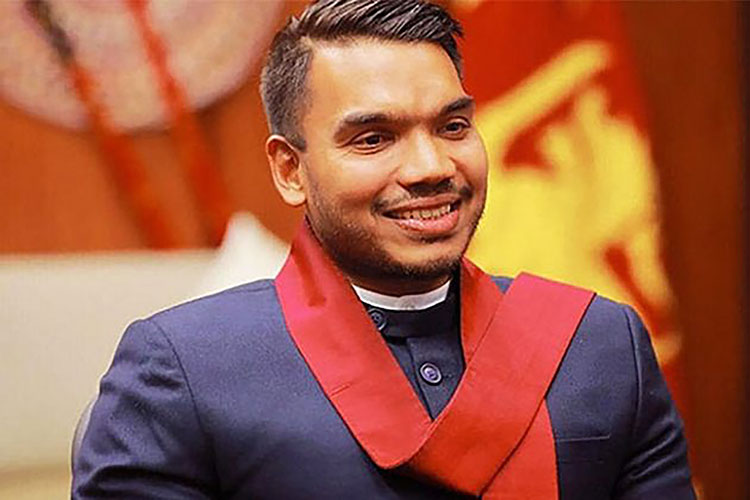
The arrest of SLPP National Organiser and Member of Parliament Namal Rajapaksa on corruption charges related to the massive Airbus purchase scandal of 2013 has captured the centre stage of public attention. He was arrested by the Commission to Investigate Allegations of Bribery or Corruption (CIABOC) on September 4 and remanded until September 18. The allegations concern an alleged payment of US$800,000 connected to the procurement of Airbus aircraft by SriLankan Airlines. Opposition political parties working together with the SLPP have condemned the arrest as being politically motivated. They point to the mass opposition public rally to be organised by the SLPP on September 12 as being the reason for the arrest.
The SLPP together with other opposition political parties have been trying to get back to the public eye as being viable opposition political parties after the drubbing they received at the last presidential and general elections held in 2024. However, they face a daunting task. They face a government with a 2/3 majority in Parliament and a President who currently enjoys a 75 percent approval rating with the people as indicated in the recent CPA survey. The main issue that led to the electoral watershed in 2024 was corruption and abuse of power that was widely believed to have fed into the collapse of the national economy in 2022. The arrest of the SLPP National Organiser and the charges against him bring back the issue of past corruption to the fore.
There is a strong public case for pursuing accountability for corruption, irrespective of the political status of those being investigated. President Anura Kumara Dissanayake has claimed that if all alleged corruption and wrongdoing uncovered by the government were fully investigated, hardly anyone among those responsible would be left untouched. The fact that an alleged wrongdoer in the Airbus scandal is the scion of one of the most formidable political dynasties in the country and is the leader of a major political party is not deterring the government.
Enormous Scale
The present government is demonstrating a greater determination coupled with political will to push the accountability process forward compared to previous governments. This is not the first occasion on which Namal Rajapaksa has been arrested as part of government investigations into corruption. In 2015, the government headed by President Maithripala Sirisena and Prime Minister Ranil Wickremesinghe launched a major investigation into the Airbus deal as the amounts at stake were enormous. In 2013, SriLankan Airlines had contracted for six A330-300s and four A350-900s, with further A350 leases arranged for a fleet renewal programme valued at over US$2.5 billion. That figure is comparable in size to the US$3 billion IMF bailout and shows the scale of exposure the loss-making state-owned carrier was taking on. SriLankan Airlines decided to exit the leases starting in 2015–2016 following the change of government. The penalties paid exceeded US$100 million.
After the catastrophe, the Sirisena-Wickremesinghe government appointed a high powered investigation body. Despite the Board of Inquiry’s recommendation that former executives face criminal prosecution, no one named in the report was ever successfully prosecuted. The Airbus case is particularly important because what is at stake is not simply the size of the alleged bribe. What is more troubling is the deliberate commitment of scarce public resources to a loss-making enterprise, for a personal gain far smaller than the cost imposed on the national budget. Corruption is not only about what an individual allegedly gets as a commission or bribe. It is also about the public resources committed, institutions weakened, and opportunities lost when decisions serve private rather than public benefit.
Having completed two years in power, like past governments, the NPP government is still trying to define who was responsible for the current state of affairs in the country. Instead, they need to shift their thinking on what institutions and systems must be changed so that past problems cannot easily recur. This means moving from anti-corruption politics to systems reform. This distinction is crucial. One can prosecute a set of corrupt individuals and still leave behind a system that produces another set. Conversely, if procurement, appointments, public finance, political financing, policing and judicial processes and reconciliation are redesigned properly, opportunities for corruption and political abuse will be reduced. For the NPP, therefore, the real measure of success should not simply be how many former politicians are investigated or prosecuted. It should be whether, by the end of its term, Sri Lanka has become a country in which it is substantially harder for any future government to abuse public power.
Broader Accountability
This broader understanding of accountability is particularly important because financial crimes and corruption, grievous though they be, are not the only set of gross misdeeds that plunged the country to the bottom rungs of development in the world. There is another issue of accountability that needs to be pursued. This is to find out what happened to the tens of thousands of missing persons due to political violence in the past four to five decades which has put Sri Lanka in the second spot internationally for the number of missing persons. Amnesty International has estimated that at least 60,000 and possibly as many as 100,000 people have been subjected to enforced disappearance in Sri Lanka since the 1980s.The numbers are so large that they should shock the conscience of the country. It is telling that the disappearance of a person does not attract the same public attention as the disappearance of money.
A missing million dollars matters because it belongs to the people. A missing person matters because that person belongs to a family, a community, a country. Both are failures of the same underlying obligation that the state apply accountability equally, to money and to people, regardless of who is harmed or who is implicated. While lost public money weakens the economy, disappeared people weaken the body politic itself. In the case of Sri Lanka, the disappeared are disproportionately Tamil, though people of all communities have vanished during the country’s cycles of violence. The question this raises is whether ethnic minority citizens believe the state cares for them as it does the ethnic majority. A citizen should not have to ask whether the state cares about the disappearance of a person because that person was Tamil, Muslim or Sinhalese. Nor should a family have to wait for decades for an answer simply because the disappearance occurred during a period of political violence. This needs to be pursued with the same political will that is now being demonstrated in relation to corruption. The pursuit of accountability for corruption can therefore become an opportunity to demonstrate that accountability is not selective. It needs to apply to financial wrongdoing, abuse of power, violations of rights and the failure of institutions to protect citizens.
The government has an opportunity to show that accountability is not about settling political scores with the previous rulers. It is about establishing a standard of public responsibility that applies to everyone and every institution.This is also important for national unity, both in name and in spirit. If ethnic minority citizens are to feel a sense of belonging to the Sri Lankan state, they need to know that their suffering matters as much as the loss of public money. Otherwise, unresolved grievances will remain a wound in the body politic and continue to weaken it. The missing people matter as much as the missing millions. In fact, people matter more than money in our society. The real test of accountability is whether Sri Lanka can build institutions and systems in which neither public money nor people can disappear without consequence.

Showers will occur in the Western and Sabaragamuwa provinces and in Galle and Matara districts

Justice Minister hits back at CLA

First visit by an Indian Defence Minister since IPKF deployment

“I’m not a war criminal, I fought for my country”: Shavendra Silva

Govt. tells UN 22nd Amendment meant to strengthen judicial independence

Legacy of enforced disappearances: Vital facts conveniently forgotten to whitewash LTTE and India

‘Dates have the highest sugar content to fight Coronavirus’

Sunday Island 27 December – Headlines

#SundayIsland 17th December – Headlines

Sunday Island – 28th March

Sunday Island Headlines – 21 March

Sunday Island – 21st February – Headlines
-

 News6 days ago
Denied of promotion to SC despite vacancies, justice Gurusinghe retires
-

 Latest News7 days ago
Grade 5 scholarship exam results released
-

 News6 days ago
22A: SC urged to suspend hearing, appoint full bench
-

 News4 days ago
Namal remanded until Sept. 18 over Airbus deal investigation
-

 Latest News3 days ago
Tharanga creates history with Diamond League crown in Brussels
-

 News6 days ago
Govt. seeks NATO assistance
-

 Editorial6 days ago
Strange arithmetic goes unchallenged
-

 News3 days ago
Dispute which triggered listed company director being detained at BIA resolved