
News
NPLs seen peaking around 13-pct, some sectors hit up to 30-pct


ECONOMYNEXT –Sri Lanka’s non-performing loans after the latest currency crisis is showing signs of having peaked but some sectors are hit worse than others with problem loans dating back from Coronavirus moratoriums, a banking official said.
Hotels, transport and arts and entertainment sectors had bad loans of 30 to 20 percent, while the overall level was lower. There is a marginal set of borrowers whose loans had been re-structured at high rates and these could turn bad if no action is taken, they said.
“The good news is that our NPLs have now kind of slowed down,” Bingumal Thewarathanthri, who is chairman of Sri Lanka Banks’ Association, told the Sri Lanka Economic Summit 2023. “It was 13.6 percent. Now it is hovering around 13.1, 13.2 percent. The net is down to 7.2 from 7.8 percent. Very clearly we have come to the end of this process.”
Saying Sri Lanka’s NPLs were low around 2.5 percent in 2017, he added: “NPLs came down but suddenly went up in 2018 and 2019 because credit to private sector was double digit when the economy was growing at low single digits,” he said.
Meanwhile, Thewarathanthri said, Sri Lanka’s bad loans hit 15.8 percent in 1999, and that level was not reached in the current crisis. But some sectors are more badly affected than others
“In terms of sectors, tourism NPLs are 33 percent,” he said. “Very clearly some of the tourism sector enterprises will not recover. You can clearly see the stress in that sector. Transport and logistics is 30 percent. Disposable incomes have come down, less consumption, the sector is impacted. Some of our clients who went down during covid will never recover,” sadly.
“Interestingly arts and entertainment is also close to 20 percent. Again, when disposable income goes down there is an impact to arts and entertainment. You first eat.”
After the Easter Sunday blast, hotels were given relief. In 2020 more broad-based relief was given and extended.
“There are no standard moratoriums going forward,” Thewarathanthri said. “Banks are fully aware of who is in stress and there is a lot of restructuring happening as we speak.
There were three types of enterprises, that took moratoriums, he said. “Some took the moratoriums and somehow paid, They disposed some assets, they took cost action, they understood the size of the business what is possible, what is not possible. I would say close to half were actually have gone ahead and done that.
“There is a good 20 percent I would say who had taken the moratorium and done other things.They thought they can buy time and wait and they did not have to settle these loans. They are in stress. These firm with no cash flow are lobbying for more moratoriums.
There was a third sector which took moratoriums who were unable to settle due to due to inadequate cashflows. Some hotels had recovered close to 80 percent of pre-Covid level but were not fully recovered, but were managing to service the debt.
Many loans of the loans were restructured in the recent past at “very high rates”, which the banks had to look at again.
“That component I think all of us in the banking community will have to take a look at that component and see what more can be done,” he said.
“If there is no cashflow there is no payment. Period. We can celebrate the NPLs have come to the bottom but you never know. If that portfolio goes bad, that’s a good portfolio going bad.
“The promoters are good, the business models are good. But sadly the cashflows are not supporting. So that individual banks are actively looking at them and supporting them.”
Several other countries which had currency troubles are also hit.Ghana, a country which defaulted, amid a severe currency crisis, has about 20 percent bad loans.Bad loans in Bangladesh, which is going through ‘external stress’ was 10 percent, Thewarathanthri who is also Chief Executive of Sri Lanka’s Standard Chartered Bank said.
“There is stress in the banking systems post-Covid,” he said. “Central banks have done moratoriums. There is stress in the banking systems coming out of the moratoriums as well. What we have seen is actually larger companies have taken market share … and grown.”
Similar trends were seen in Sri Lanka, he said. “SME turnovers are down by seven to 30 percent in Asia. Some of our SMEs have completely gone down.”



By Shamindra Ferdinando
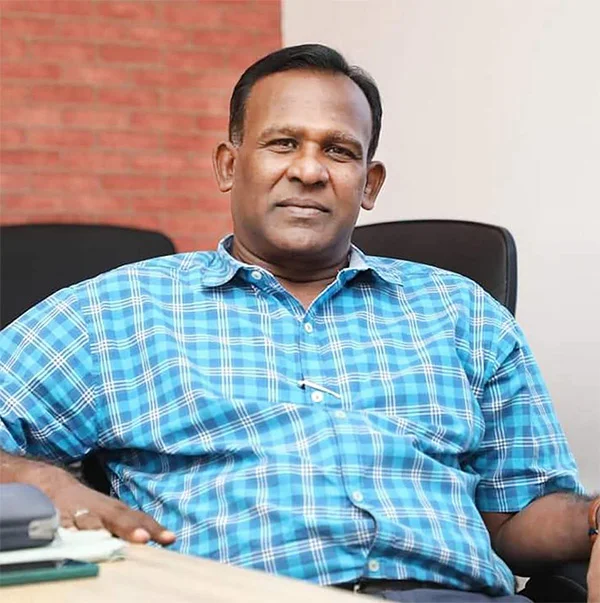
The use of low quality coal, over a period of time, had led to the developing crisis at the Lakvijaya Coal Power Plant (LVPP) at Norochcholai that compelled the boastful NPP government to implement power cuts, former Lanka Electricity Company (Private) Limited (LECO) Chairman Bandula Chandrasekera said yesterday.
The government imposed one-hour countrywide power cuts on 19 Oct.
Chandrasekera, now a consumer rights activist, warned that though the government declared the power cuts would be limited to three days, the situation could take a turn for the worse.
The top United Republican Front (URF) activist said so in response to the government’s claim that Saturday’s sudden drop in electricity generation at the country’s only coal-fired power plant hadn’t been caused by the quality issue of coal.
The former LEOCO Chief emphasised that the country was paying a very heavy price for the controversial procurement of low-quality coal for the 2025/2026 season.
“Procurement of low quality coal is not an allegation. It has been accepted by a seven-member committee, headed by K. L. R. C. Wijayasinghe, Additional Secretary, Energy Ministry, appointed by Parliament,” Chandrasekera said, pointing out that the government was trying to mislead the public into believing that the use of coal supplied by Trident Chemphar wasn’t the cause of the current power crisis.
The expert committee that investigated the coal scam had disclosed losses caused by substandard coal, Chandrasekera said, adding that the total losses/damages could be as much as Rs 20 bn.
Trouble erupted in Dec, 2025 when LVPP began using coal purchased from the new supplier, whose selection was challenged by the Auditor General in a special report submitted to Parliament, in April this year, he said.
Since the government entered into a deal with the Indian company, LVPP has so far received 19 ship loads of coal. An investigation conducted on the orders of the Public Utilities Commission of Sri Lanka (PUCSL) revealed that the use of low-quality coal had had a detrimental impact on the LVPP.
The Frontline Socialist Party (FSP) exposed the corrupt deal in Sept. 2025. The NPP run Parliament ignored the disclosure made by the JVP breakaway faction.
Chandrasekera said that the Committee asserted that it would cost approximately Rs 80 mn to restore the LVPP to the previous status. Responding to The Island queries, Chandrasekera emphasised the country couldn’t meet the power requirement unless the LVPP operates without hindrance. Those who had been, for whatever reason, switched to South African coal provided by the Indian supplier should be held accountable and punished, Chandrasekera said, recalling how the NPP parliamentary group defeated the no-confidence motion moved against the then Power Minister Kumara Jayakody, who later quit, as the enormity of the scam and its repercussions shook the government.
Chandrasekera said that the government couldn’t maintain services though the powers that be intended to meet the power deficit with the help of hydropower generated by the Victoria power station. The ex-official underscored the need to inquire into the failure of the authorities to implement the backup plan last Saturday. Had Victoria met the requirement, last Saturday’s countrywide power failure, that lasted from 11.43 am to 11 pm could have been averted, Chandrasekera said.
He also questioned the controversial government decision to disconnect solar power over the weekend as the absence of solar generation obviously aggravated the problem. Chandrasekera emphasised that the latest countrywide power outage exposed the government whose basic strategy was to blame everything on the Opposition.
“We sincerely hope the Presidential Commission inquiring into the coal scams also looks into the situation developing at LVPP due to the use of substandard coal. According to him, the loss caused by the recent outage was estimated to be around Rs 16 bn and the crisis could not be addressed by propaganda campaigns, especially on social media. But, if other factors, including the expenditure on hydro and thermal generation were taken into consideration, the losses could be as much as Rs 20 bn.
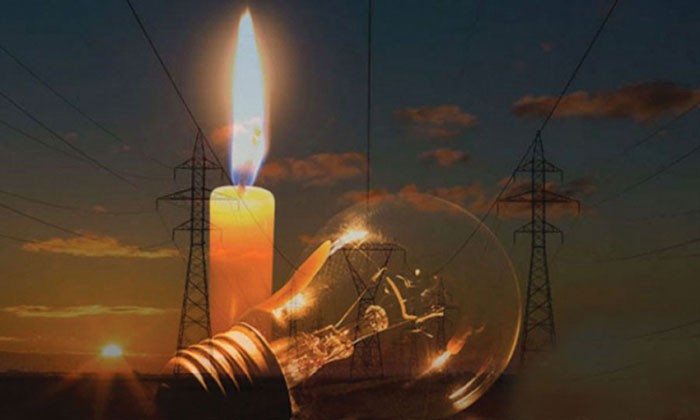
Power cuts continued across the country yesterday and are expected to continue today following the shutdown of all three generating units at the Lakvijaya Power Plant in Norochcholai.
The Public Utilities Commission of Sri Lanka (PUCSL) said approval had been granted on Monday (19) following a request by the National System Operator (NSO) to impose scheduled power cuts.
Accordingly, one-hour power cuts were scheduled between 4.30 p.m. and 9.00 p.m., with the country divided into four zones. Hospitals and locations providing essential services were exempted.
The three Norochcholai generating units remain out of operation following the countrywide power failure last Saturday, prompting the NSO to introduce daily power cuts to manage the available electricity supply.
NSO Chief Executive Officer Buddhika Samarasekara said the power cuts would be necessary yesterday and today (21).
By Shamindra Ferdinando
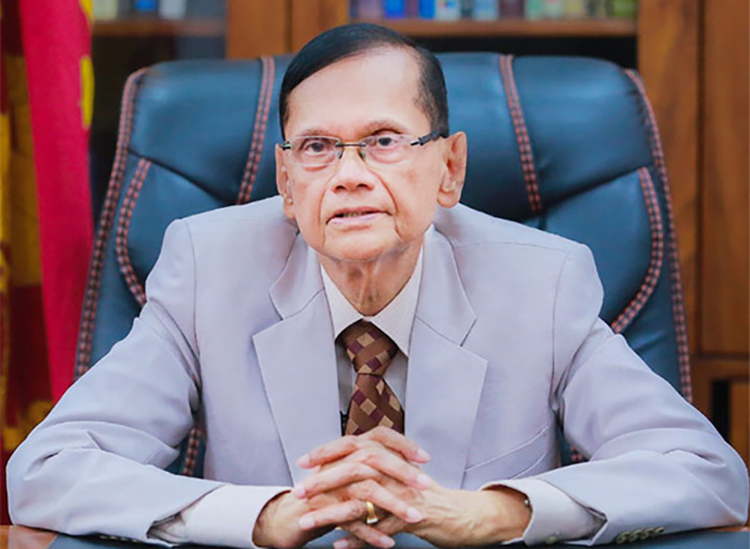
Prof. G. L. Peiris yesterday said he had not been concerned at all about being arrested when the Commission to Investigate Allegations of Bribery or Corruption (CIABOC) summoned him to record a statement regarding an ongoing investigation.
Addressing the media outside the CIABOC, the former External Affairs Minister emphasised that his family had never taken anything from people but contributed to their welfare. The internationally renowned academic said that he didn’t accept lucrative opportunities abroad but remained committed to do whatever possible for the public here.
The CIABOC questioned Prof. Peiris on the launch of the Shangri-La Hotel project here. The Convener of the Janathawadi Joint Opposition said that when the top management of the hotel got in touch with
him, he had brought the matter to the notice of the then President Mahinda Rajapaksa, who promptly gave the go ahead.
Shangri-La was opened in Nov. 2017 with the participation of the then President Maithripala Sirisena and Prime Minister Ranil Wickremesinghe.
Prof. Peiris said that he had been appointed External Affairs Minister nearly a year after the successful conclusion of the war against the LTTE in May 2009. Shangri-La, which owned over 100 hotels at that time, was keen to explore the possibility of opening a hotel here and the government had swiftly grabbed the opportunity. Referring to the opening of ITC Ratnadeepa, in late April 2024, Prof. Peiris explained the importance of foreign investment, particularly after the end of the 30-year war that caused massive devastation.
Responding to media queries, Prof. Peiris said that he strongly opposed efforts to silence political opponents but accepted the need to investigate waste, corruption and irregularities. “People shouldn’t be targeted over their political stand,” the ex-lawmaker said, adding that he as the Minister tasked with attracting such special investments worked in line with the overall government policy.

Showers above 100 mm are likely at some places in the Western, Sabaragamuwa, Central, North-western, Northern and Southern provinces and in Anuradhapura district.

Low-quality coal causes power cuts: Ex-LECO Chief

Power cuts continue

GL stresses importance of post-war Shangri-La investment after CIABOC questions him

Coal inquiry gets extension until 16 December

Dilshan, Hirupama named best athletes at All Island Schools Games Athletics Championships

‘Dates have the highest sugar content to fight Coronavirus’

Sunday Island 27 December – Headlines

#SundayIsland 17th December – Headlines

Sunday Island – 28th March

Sunday Island Headlines – 21 March

Sunday Island – 21st February – Headlines
-

 Features3 days ago
Kotahena:A Small Enclave, An Extraordinary Legacy
-
 News4 days ago
Asgiri Mahanayake calls for immediate release of Gnanasara Thera
-

 News3 days ago
Record 1,600 students take Russian Classical Ballet examination in Sri Lanka
-
 News6 days ago
AC President recuses himself from hearing prison attire case pertaining to Gnanasara Thera
-
 News5 days ago
Naval officer testifies Yoshitha received Rs. 5.15 mn in salaries during SLN service
-
 News3 days ago
Karannagoda pushed for £24,536 for Yoshitha’s UK training, Court told
-

 Editorial5 days ago
Saving Anojan: Beyond Executioner’s Blade
-
 News6 days ago
CID informs Fort Magistrate’s Court investigation into money laundering case against Namal completed