
News
Sri Lanka strives to boost marine safety and revenue through navigational chart production

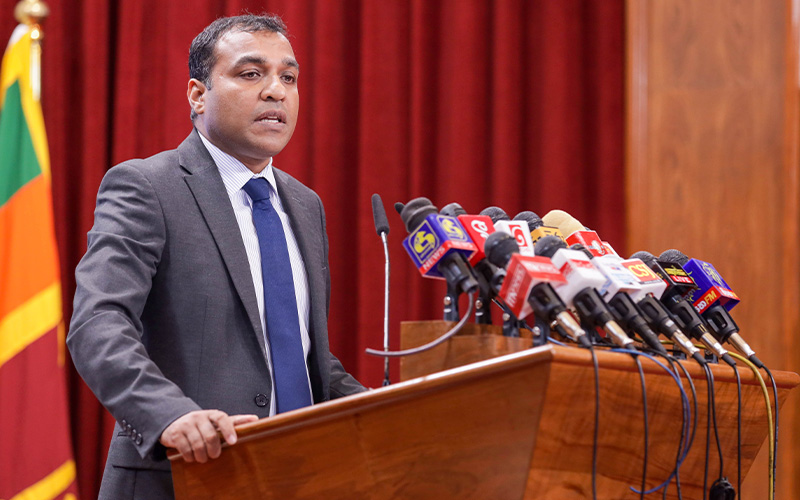
In a televised discussion, Pramitha Tennakoon, State Minister of Defence, highlighted Sri Lanka’s need to produce 122 electronic navigational charts covering the Sea of Sri Lanka, revealing that only six have been created thus far.
However, the government has taken steps to finaliSe these charts by mid -2025, he said.
“Sri Lanka needs a deep water multi beamer and a shallow water multi beamer to produce these charts. If we have one of each, it will take us two years to produce the 122 charts. However, I think we can have two of each machine. So, we think we can finalize the charts within a year to 18 months. We are trying to finalize the charts by mid-2025,” he said.
The country has continued to neglect the opportunity to earn significant foreign revenue by providing electronic navigational charts to ships that cross the Sea of Sri Lanka every day, the state minister of defence said.Sri Lanka in 2022 took the first steps to become a country that produces these charts, he said.
Tennakoon said a state institution had been entrusted with producing these electronic navigational charts. However, not a lot of progress had been made, he said.
However, he said the Sri Lanka Navy had expressed willingness to undertake the task of mapping out an essential map for safe marine navigation for ocean-going ships sailing in Sri Lankan waters. This is one of the busiest sea lanes. Annually, about 45,000 ships cross the sea of Sri Lanka, he said.
“Most people think these ships should come to our ports for us to make an income. This is not true. When I took over as state minister of defence, officials from the Navy’s hydrography office came to meet me. They showed me how busy the sea of Sri Lanka is and that we can make hundreds of millions of dollars each year by selling electronic navigational charts,” he said.
Many countries require merchant ships to have these maps on board for safe navigation when they have entered a specific country’s waters, wherever the ships’ destination may be, and pay for the host country’s service, he said.
Electronic navigational charts are a marine geo-spatial product and service required to be used by international law to ensure the safe navigation of merchant ships.
Those ships did not necessarily have to enter a country’s seaport, the state minister said.
” But they need to use it while sailing in a country’s waters to comply with safety protocols. An electronic navigational chart will measure the water depth, the shape of the seafloor and coastline, the location of possible obstructions and physical features of the sea at the time and help keep maritime transportation moving safely and efficiently in any given region. The map obtains necessary data by surveying with multibeam echosounders. The accuracy of the hydrography map is critically important for many applications to reduce uncertainties while sailing in coastal lines, he said.
“They indicate shoals, rocks and wrecks that could be hazards to navigation. They also collect information on water levels, tides, currents, etc. The maps will indicate the shoreline and square nautical miles of a country’s waters, which are considered critical to navigation. Now, the government has focused on mapping out an indigenous hydrography map to earn foreign currency from the service because it is our business, and we have to claim it,” Tennakoon said.
Each vessel needs two electronic navigational charts, and as a coastal nation, Sri Lanka also has a responsibility to provide these charts, he said.
“However, Sri Lanka still relies on paper charts, and some of these are over 100 years old. We need 122 electronic navigational charts to cover the Sea of Sri Lanka. We have only produced six of these charts. Furthermore, we still depend on charts made by the British,” he said
Tennakoon said that producing those charts was vital for our national security, economic prosperity and sovereignty. 200 million dollars was equal to the total annual turnover of the Sri Lanka Ports Authority, he said.
“Trust in the accuracy of our existing charts is low. All ships are insured. When they travel through areas that are not properly chartered, the insurance premium is higher. If our charts are better, the cost of transporting goods to Sri Lanka by ship will drop.,” he said.
In January 2023, the President issued a special gazette proclamation to establish a National Hydrographic Office. The state minister said the navy has been called upon for mapping.
“The national hydrographic bill has been presented and accepted to the cabinet. This was presented to Parliament by the Minister of Justice on 03 October. Now anyone can challenge the bill,” he said. (RK)





In a swift search and rescue (SAR) operation, the Sri Lanka Navy on 22 Jun 2026 rendered assistance to a one-day fishing trawler that had failed to return to its intended destination.
Reportedly, the fishing trawler and its 02 crew members ran into trouble due to adverse weather conditions off the north coast of the island. The rescue mission was launched
immediately following an alert from the Department of Fisheries and Aquatic Resources regarding the overdue trawler.
Responding to the distress call, the Maritime Rescue Coordination Centre (MRCC) Colombo, coordinated the deployment of naval craft for the SAR operation.
During the operation, naval personnel located the distressed trawler and its 02 fishermen in the seas off the Analaitivu Island and they were brought to safety.
Maintaining a round-the-clock vigil, the Sri Lanka Navy, through the coordination of MRCC Colombo, remains constantly prepared to deploy assets and extend vital lifesaving assistance to the naval and fishing communities facing perils within the Sri
Lankan Search and Rescue Region.

The NPP government has not taken a final decision regarding filling of the vacancies in the judiciary.
A group of Opposition MPs, led by SJB leader Sajith Premadasa, on 12 June, requested Speaker Dr. Jagath Wickremeratne to take up the issue of judicial vacancies with President Dissanayake. Opposition sources said that there were four vacancies, each in the Court of Appeal and the Supreme Court, and the inordinate delay had adversely affected the judiciary.
Government sources indicated that there was no change in the status quo as regards filling of vacancies. Referring to the government proposal to extend the retirement age of judges, authoritative sources said that no final decision had been taken yet.
SJB lawmaker Dayasiri Jayasekera told The Island that they would raise the issue in Parliament this week.
He said that the deliberate delay in making appointments to superior courts and the move to extend the retirement age couldn’t be taken separately.
The MP noted that the Bar Association of Sri Lanka, the Lawyers’ Collective, the Colombo High Court Lawyers’ Association, Colombo Magistrate’s Court Lawyers’ Association and the Bar Association of Badulla had opposed the government move.
There hadn’t been any public statements in support of the government move, MP Jayasekera said, urging the government to end uncertainty in the judiciary.
by Shamindra Ferdinando
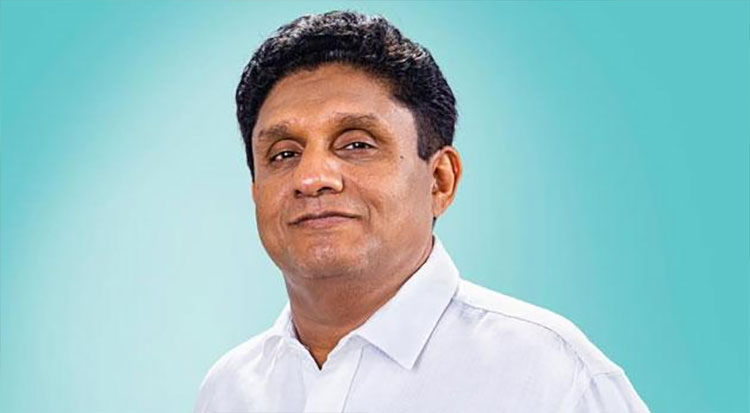
SJB leader Sajith Premadasa has invited the UNP and other political parties to join his party. Premadasa, who is also the leader of the Opposition, has emphasised that the UNP and the SJB could reach a consensus on policies but his party wouldn’t, under any circumstances, accept whatever formula to share positions. Premadasa said so, speaking to the media over the weekend, after meeting the Mahanayaka Thera of the Malwatta Chapter of the Siyam Nikaya Most Venerable Thibbatuwawe Sri Siddhartha Sumangala Thera.
A statement issued by the Opposition Leader’s Office quoted MP Premadasa as having extended an invitation to all political parties to give up extremist policies and join the SJB.
The SJB leader alleged that the NPP government feared facing elections and that was the reason for the inordinate delay in holding Provincial Council polls. PC polls were last held in 2012, 2013 and 2014, on a staggered basis. Premadasa said that if PC polls were held his party would definitely win the majority of PCs.Premadasa also urged the government to reduce electricity tariffs and fuel prices.

ICC launches post-pregnancy return-to-play guidelines

Chamari Athapaththu: ‘I think I’m a failure as a captain’

Navy’s prompt search and rescue mission saves lives at sea

UK’s Starmer resigns as prime minister

President chairs discussion on providing swift solutions to challenges in apparel sector

Schools close as more than half of France under red heat alerts

‘Dates have the highest sugar content to fight Coronavirus’

Sunday Island 27 December – Headlines

#SundayIsland 17th December – Headlines

Sunday Island – 28th March

Sunday Island Headlines – 21 March

Sunday Island – 21st February – Headlines
-

 News7 days ago
Beijing Capital Airlines to resume flights to Colombo signalling boost to tourism
-
 Features6 days ago
Killing of Colombo’s ancient trees — a warning on UN’s World Desertification Day – 17 June
-

 News4 days ago
Creditor receives USD 2.5 mn as Lankan public bears loss from theft of Treasury funds
-

 News3 days ago
Creditor not yet paid
-
 News3 days ago
Consumers bearing 22% tax burden despite 18% VAT claim: Dr. Harsha de Silva
-

 Opinion5 days ago
Beyond diagnosis: A strategic design for 7% growth by 2029 (Part I)
-

 Opinion7 days ago
Fifty years after Soweto uprising
-

 Sports7 days ago
Catch every moment of the 2026 FIFA World Cup free on the Dialog PLAY App