
News
Norochcholai environmental impact affects entire country – COPE

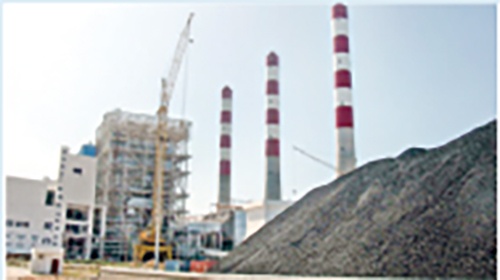
Chairman of the COPE (Committee on Public Enterprises), Prof Charitha Herath, on Tuesday, said the entire country was affected by the Norochcholai Lakvijaya coal power plant complex and thus the Central Environmental Authority (CEA) had a pivotal role to play in the supervision of the power plant complex.
COPE studied the coal power plant complex and its environmental impact, during a meeting on Tuesday in Parliament.
The environmental assessment of the Norochcholai Lakvijaya Power Plant should not be left to the Environmental Authority of the North Western Provincial Council alone. The Central Environmental Authority (CEA) must also be involved as issues created by the power plant, for example air pollution, had an impact on the entire country, the COPE Chairman said.
Prof. Herath added that given the Lakvijaya Power Plant had ambitious expansion plans; the Central Environmental Authority and the Provincial Environmental Authority should carry out those assessments jointly.
It was also revealed that the Ceylon Electricity Board had suffered a loss of Rs. 85 billion last year because no new power plants had been constructed since 2015 and the emergency power purchases at high prices.
These facts were revealed by the CEB officials summoned before the COPE on Tuesday to give evidence on a probe conducted on the Norochcholai Lakvijaya coal power plant complex and its environmental impact.
Ministers Susil Premajayantha, Mahindananda Aluthgamage, Nalaka Godahewa, Sarath Weerasekara, Ajith Nivard Cabraal, MPs Patali Champika Ranawaka, Eran Wickramaratne, Jagath Pushpakumara, Premanath C. Dolawatta, S. M. Marikkar, Nalin Bandara and Ranjan Ramanayake were also present at the meeting presided by COPE Chairman Prof. Herath.
Herath said that according to the long-term plan of the Lakvijaya coal power plant, a 300 megawatt plant was to be added to the complex by 2023 and further 300 megawatts by 2026.
CEB officials were asked by MP Patali Champika Ranawaka whether the Lakvijaya power complex could facilitate the increased capacity as stated. The officials said that they were still looking ar the issue and that the expansions would be carried out only if the relevant requirements could be met.
The committee also focused on the management of fly-ash collected at the plant. There are large piles of fly-ash in the yard, and Herath said that Rs. 26 million was spent each year to spray water on the fly-ash. The Chairman asked what the CEB was being done about the 6,580,000 tons of fly-ash stored in the premises. The officials said that they were trying to manufacture bricks using it.
The COPE noticed that the first of the three units operating at the Lakvijaya Power Plant did not operate at full capacity and that there had been several breakdowns.
Ranawaka said that immediate action needed to be taken as the Lakvijaya Power Plant contributed to most of the country’s electricity generation.
Streamlining of the cooling water disposal method at the complex, the impact of the ground water in the area, the quality of coal, and the capacity of unloading coal were also discussed at the COPE meeting.



Text and Pic by Priyan de Silva
Director General of the Commission to Investigate Allegations of Bribery and Corruption (CIABOC) Ranga Dissanayake has questioned whether some promises contained in the National People’s Power (NPP) manifesto, A Thriving Nation – A Beautiful Life, could be fulfilled even if the government wanted to implement them.
Dissanayake raised the issue during a discussion following the release of the third biannual report on manifesto monitoring by the March 12 Movement, at the BMICH, on Wednesday.
He questioned whether the report had taken into account legal and institutional constraints affecting the implementation of certain pledges.
Citing the proposal to establish Anti-Corruption Investigation Offices in each district, Dissanayake said such offices could be established only with the agreement of CIABOC and that amendments to the Anti-Corruption Act would be necessary.
He also referred to the pledge to abolish the Executive Presidency, noting that successive governments had made similar commitments since 1994. He questioned whether there had been adequate consideration of where the powers vested in the Executive President would be transferred if the system were abolished.
On the proposal to establish a Public Prosecutor, Dissanayake questioned whether the Government intended to maintain the office alongside the Attorney General, who currently performs prosecution-related functions.
Executive Director of the Institute for Democratic Reforms and Electoral Studies (IRES) Manjula Gajanayake said Dissanayake’s remarks should be regarded as his personal views and not as Government policy.
Monitoring and Evaluation Consultants M. Thilakarajah and D.D. Mataharaarachchi presented the third-phase findings, covering January to June 2026.
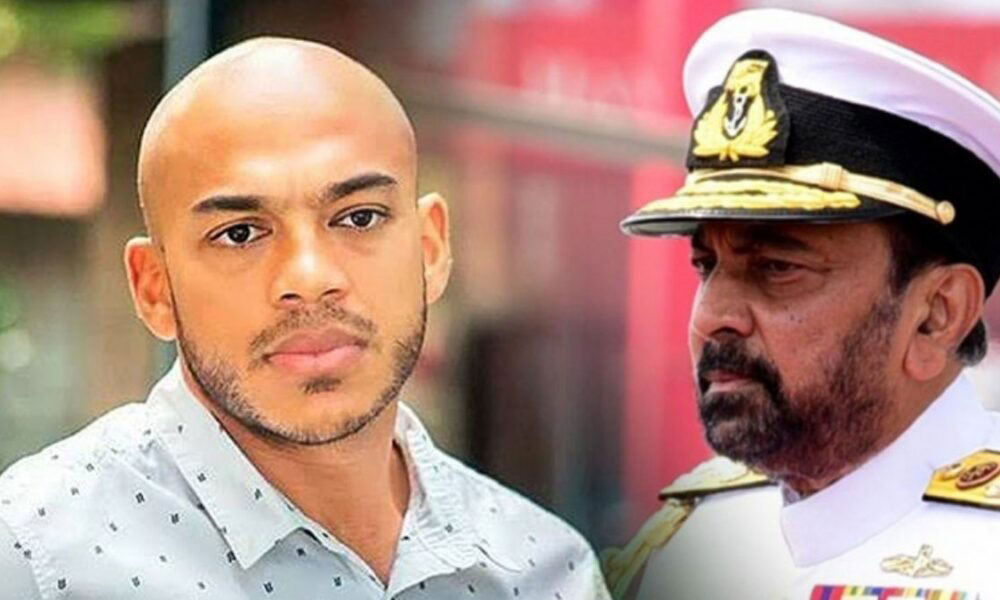
The corruption case filed by the Commission to Investigate Allegations of Bribery or Corruption (CIABOC) against former Navy Commander, Admiral of the Fleet Wasantha Karannagoda, and Yoshitha Rajapaksa was set for a pre-trial conference by the Colombo High Court.
The case was taken up before the Colombo High Court on Thursday (17), when the accused, who are currently out on bail, appeared before the court. After considering the submissions made, the court ordered that the case be called for a pre-trial conference.
The CIABOC had filed the case against the accused, alleging that a corruption offence was committed by sending Yoshitha Rajapaksa, son of former President Mahinda Rajapaksa, for training at the Royal Naval College in the United Kingdom despite him not having the required qualifications.

The Colombo Magistrate’s Court yesterday directed the Inspector General of Police (IGP) to conduct an investigation and submit a report on whether a statement made by former Minister Wimal Weerawansa at a political rally, in Anuradhapura, on September 12, amounted to contempt of court.
Deputy Solicitor General Janaka Bandara, appearing for the Commission to Investigate Allegations of Bribery or Corruption (CIABOC), made the request when a complaint filed against MP Namal Rajapaksa in connection with the Airbus issue was taken up.
Bandara also handed over to court a compact disc containing the relevant speech made by Weerawansa.
After considering the request, Colombo Chief Magistrate Asanga S. Bodaragama directed the IGP to conduct an investigation into the matter and submit a report to court.

Showers in the Western, Sabaragamuwa and North-western provinces and in Galle, Matara, Kandy and Nuwara-Eliya Districts

Some NPP manifesto promises may be difficult to fulfil – CIABOC DG

Yoshitha and ex-Navy chief Karannagoda’s case fixed for PTC

Court orders probe into Wimal’s rally speech

Court to rule on Dilith’s writ petition on September 30

Shanakiyan urges urgent action over reported death sentence for Lankan in Saudi Arabia

‘Dates have the highest sugar content to fight Coronavirus’

Sunday Island 27 December – Headlines

#SundayIsland 17th December – Headlines

Sunday Island – 28th March

Sunday Island Headlines – 21 March

Sunday Island – 21st February – Headlines
-

 News6 days ago
Gnanasara Thero absconding after SC ruling
-

 Opinion5 days ago
From Galkissa (Mount Lavinia) to Tambuttegama
-

 Latest News7 days ago
ITS Giuseppe Garibaldi’ departs Colombo
-

 Business6 days ago
HNB Finance strengthens Board with four independent directors
-

 News2 days ago
US embassy won’t comment on IGP’s probe into joint drug raid
-

 Sports6 days ago
Culture within cricket team worrying authorities
-

 Features5 days ago
Sri Lanka’s university crisis: Brain drain and union action demand urgent reform
-

 Features4 days ago
The emptying university: why are academics leaving?