
News
Revenue collection remains indomitable challenge – President’s trade union chief


By Shamindra Ferdinando
President Ranil Wickremesinghe’s Director General of Trade Unions Saman Ratnapriya said that the failure on the part of successive governments to efficiently collect due tax revenue had undermined the national economy.
The former UNP National List MP said that uncollected tax revenue, according to parliamentary records, remained over Rs 900 bn. Therefore, uncollected colossal sums left in abeyance remained a problem, Ratnapriya told a regular media briefing at his office on the third floor of the Lake House building on Tuesday (14).
Ratnapriya said that a special unit had been established at the Presidential Secretariat in line with the overall measures to address the issue at hand.
The civil society activist said so when The Island asked him to explain how the Wickremesinghe-Rajapaksa government intended to pay the Rs. 10,000 cost-of-living allowance to 1.3 mn workers, beginning April 2024, and pay the arrears (January to March) in Oct., in stages, unless tangible measures were taken to streamline revenue collection.
At the onset of the briefing Ratnapriya explained the slow turn-around of the economy since the declaration of bankruptcy in April 2022. Ratnapriya recalled at the time UNP leader Ranil Wickremesinghe accepted the Finance portfolio, the Treasury was in two minds about paying the July 2022 public servants’ salary. Some believed the July salary should be paid in two parts, but Wickremesinghe ruled that out. “Today, the government is in a position to increase the public sector monthly cost of living allowance from Rs, 7,800 to Rs. 17,800 and pensioners’ allowance from Rs. 3,525 to Rs. 6025, an increase of Rs 2,500.
Ratnapriya emphasized that the government wouldn’t obtain loans nor print money to pay for the allowances. Instead, taxes would be collected to pay these allowances in line with overall strategy discussed and adopted to address issues at hand in consultation with international lending bodies, including the IMF and the World Bank.
Pointing out that neither President Wickremesinghe, in his capacity as the Finance Minister, nor previous administrations, had taken tangible action to collect unpaid taxes, The Island asked whether trade unions would make representations in this regard. Ratnapriya acknowledged that a country couldn’t move forward unless taxes were collected. According to him, the unit established at the Presidential Secretariat now worked with the Inland Revenue Department to enhance revenue collection efforts.
Ratnapriya alleged that those responsible for the tax collection apparatus resisted attempts to streamline the process. The trade union activist pointed out how tax authorities conveniently failed to tax casinos regardless of Treasury directive.
Ratnapriya said that implementation of digitized tax structure over the next few years would streamline the process and effectively collar those who had been dodging paying their taxes.
The Island also raised the contentious issue of successive governments allowing certain institutions, including the Central Bank and CEB, to pay the PAYE (Pay As You Earn) tax of their employees. Ratnapriya acknowledged that some institutions had done so but President Wickremesinghe stopped that practice. “As of today, institutions do not pay PAYE tax on behalf of their workers. The President’s directive is in operation. This should continue.”
Commenting on political developments, Ratnapriya said that President Wickremesinghe had already declared that presidential and parliamentary polls would be held in 2024 and 2025, respectively. The President also indicated his readiness to conduct Provincial Council polls if the country so desired, Ratnapriya said, claiming that Local Government polls would be a waste of time. Ratnapriya added that the public would have to pay the salaries of 8,700 councillors if Local Government polls were held, but now even without them those councils are functioning smoothly.
Ratnapriya insisted that the latest budget was not meant to promote the government ahead of impending national elections.
Responding to another query, Ratnapriya said that some of those who launched protest campaigns demanding Rs 20,000 actually hoped for Rs 5,000. A smiling Ratnapriya said that he knew what was going on as those trade union leaders happened to be his friends and associates. Ratnapriya insisted that the vast majority of public sector workers were happy with Rs 10,000 cost-of-living allowance. Therefore, those who intended to pursue protest campaigns demanding their original demand for Rs 20,000 wouldn’t receive any public support they required because of the dire circumstances facing the country.



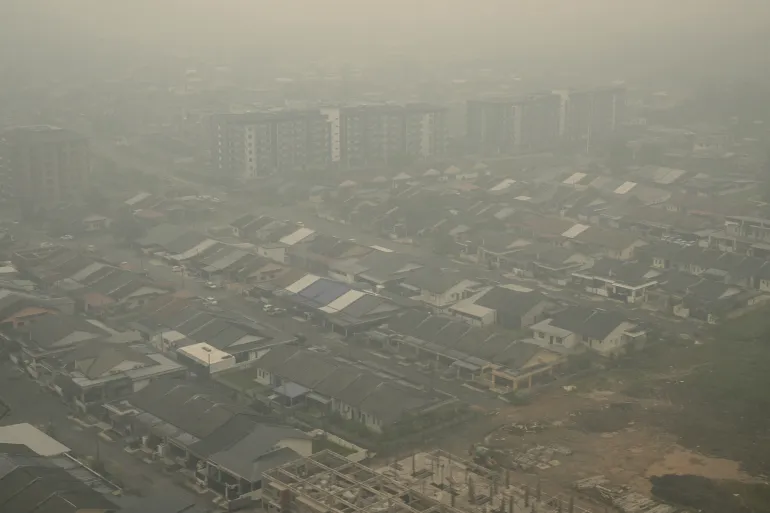
Malaysia has declared a state of emergency in a district in Sarawak state after haze caused by wildfires in neighbouring Indonesia increased air pollution to “hazardous” levels.
King Sultan Ibrahim “has consented to the declaration of emergency throughout Serian Division, Sarawak, following haze conditions that have reached air pollution levels hazardous to public health and safety”, Prime Minister Anwar Ibrahim’s office said in a statement on Thursday.
The declaration followed a formal request from the Sarawak Disaster Management Committee after the region’s Air Pollutant Index reached levels warranting consideration of a local emergency.
Under the order, 647 schools in Serian will close from Monday until at least the end of next week, alongside government and private offices, plantations, construction sites and quarries, with only essential services continuing to operate.
The state’s disaster management authorities said a three-day cloud-seeding operation launched on Thursday would be extended to at least Monday, citing forecasts of “more conducive cloud formations” during that period.
Sarawak State Disaster Management Committee chairman Douglas Uggah Embas, speaking at a news conference in Kuching, stressed that the emergency applied only to Serian, not the entire state, but urged residents there to take the situation seriously.
“Please minimise outdoor activities and avoid strenuous activities outdoors,” he said.
Sarawak, in the northern part of Borneo island, has been heavily affected by haze for weeks, as have the neighbouring states of Sabah and Peninsular Malaysia.
(Aljazeera)
Latest News
Sun directly overhead Moratuwa, Kesbewa, Handapangoda, Idalgashinna, Yudhaganawa, Kotiyagala and Panama about 12.08 noon today (05)


The sun is going to be directly over the latitudes of Sri Lanka from 28th of August to 07th of September due to its apparent southward relative motion.
The nearest places of Sri Lanka over which the sun is
overhead today (05) are Moratuwa, Kesbewa, Handapangoda, Idalgashinna, Yudhaganawa, Kotiyagala and Panama about 12.08 noon

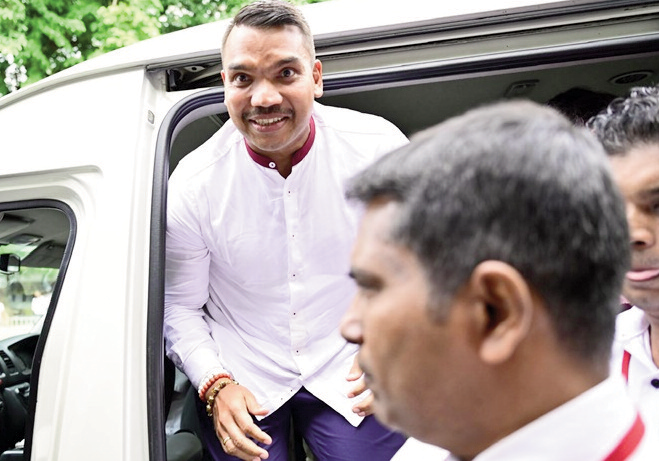
Sri Lanka Podujana Peramuna (SLPP) National Organiser and Parliamentarian Namal Rajapaksa was yesterday remanded until September 18 by the Colombo Chief Magistrate’s Court following his arrest by the Commission to Investigate Allegations of Bribery or Corruption (CIABOC) in connection with an investigation into the controversial SriLankan Airlines Airbus aircraft transaction.
Rajapaksa appeared before the CIABOC at around 9.15 am yesterday to record a statement after being summoned over the transaction. He was taken into custody following several hours of questioning and subsequently produced before the Colombo Chief Magistrate.
The investigation centres on allegations surrounding the acquisition of six Airbus A330 and eight A350 aircraft by SriLankan Airlines in 2013, in connection with an alleged USD 2 million bribe.
Former SriLankan Airlines Chief Executive Officer Kapila Chandrasena and his wife, Priyanka Niyomali Wijenayake, had previously been named in connection with the alleged bribery.
Chandrasena was arrested on March 12 as part of an investigation launched by the CIABOC under the Anti-Corruption Act and was subsequently released on bail. He was later found dead on May 8 while on bail, with police suspecting that his death was a suicide.
Open warrants have been issued for the arrest of Wijenayake, who is named as the second suspect, and Shamindra Rajapaksa, named as the third suspect, in the case pending before the Fort Magistrate’s Court in connection with the Airbus transaction.
The investigation has also received assistance from Airbus, with a delegation from the company’s parent group in France visiting Sri Lanka during the first week of August. The delegation provided statements and other assistance to the CIABOC as part of the ongoing inquiry.
Rajapaksa’s arrest and remand yesterday mark a further development in the widening investigation into the controversial aircraft deal.

Malaysia declares emergency in Sarawak as haze from Indonesia worsens

UAE keep semi-final hopes alive after convincing win over Indonesia

Sun directly overhead Moratuwa, Kesbewa, Handapangoda, Idalgashinna, Yudhaganawa, Kotiyagala and Panama about 12.08 noon today (05)

Showers above 75 mm are likely at some places in the Uva, Central and Eastern provinces and in Polonnaruwa and Mullaittivu districts after 2.00 p.m

Namal remanded until Sept. 18 over Airbus deal investigation

Dengue cases surpass 96,000 this year

‘Dates have the highest sugar content to fight Coronavirus’

Sunday Island 27 December – Headlines

#SundayIsland 17th December – Headlines

Sunday Island – 28th March

Sunday Island Headlines – 21 March

Sunday Island – 21st February – Headlines
-

 Features7 days ago
“Wrap Me Up in My Blazer”— A Gentlemanly Bradby Reminiscence
-

 Features6 days ago
When Sri Lankan stories find their own voice
-
 Features7 days ago
JVP/NPP government as seen from outside by Lionel Bopage now domiciled in Australia
-

 News6 days ago
BASL takes exception to Justice Ganepola being denied a place in SC
-
 Features7 days ago
Prof. Savitri Goonesekere: What has she done?
-

 News3 days ago
Denied of promotion to SC despite vacancies, justice Gurusinghe retires
-

 Latest News3 days ago
Grade 5 scholarship exam results released
-

 News3 days ago
22A: SC urged to suspend hearing, appoint full bench