
News
SF calls for system overhaul, protests against corruption

By Shamindra Ferdinando
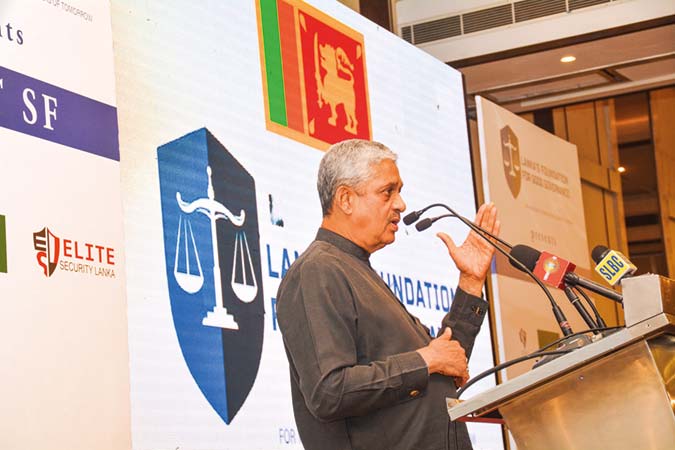
Field Marshal Sarath Fonseka, MP, has stressed the pivotal importance of public protests against waste, corruption, irregularities and mismanagement.Alleging that those who had been entrusted with the task of governing the country have instead ruined it, Chairman of the Samagi Jana Balawegaya (SJB) Fonseka, on Thursday, said that every citizen should bear the responsibility for taking a stand against what he called an utterly corrupt political party system in place.
The war-winning Army Commander said so at an event organised by the Foundation for Good Governance at the Galadari Hotel Grand Ballroom.
Referring to the acceleration of political-economic-social crisis after the last presidential election held in Nov. 2019 and the rapid ruination caused during Gotabaya Rajapaksa’s presidency, lawmaker Fonseka urged the electorate to think prudently before exercising their franchise.
Urging the public to protest against politicians destroying the country, the Field Marshal said that it would be a grave mistake on their part to turn a blind eye to what was going on in the country. “Do not expect others to take up issues which affect the entire community. Accept your responsibility to engage in protests whenever you feel things aren’t right,” the Gampaha District lawmaker said, adding that he didn’t speak keeping an eye on the presidential election.
MP Fonseka said that if the public took a strong stand against wrongdoings on the part of the executive and the legislature, far reaching changes could be achieved in two or three years and a comprehensive change in seven years.
Those who really believed in Gotabaya Rajapaksa ended up disappointed and the country was now in a deepening crisis as it struggled to overcome the severe economic down caused by successive governments, one-time leader of the now defunct Democratic Party (DP) said.
Fonseka served the Yahapalana government (2015-2019) as a Cabinet Minister after UNP leader Ranil Wickremesinghe accommodated him on his National List. DP failed to secure a single seat at the 2015 general election and was subsequently dissolved.
At the onset of the event, President of the Foundation for Good Governance Richard de Zoysa declared that Fonseka whose role in the eradication of terrorism for once and for all couldn’t be disputed, and he is the man to lead the country out of the current crisis. Zoysa said that Fonseka had the strength and capacity to create an environment conducive for the younger generation to move in and play a spearheading role in politics. Zoysa emphasised Fonseka’s readiness to undertake reforms with the focus on the education sector. The need and the right of children living in the remotest parts of the country to receive an English education was stressed by Zoysa.
MP Fonseka dealt with a spate of contentious issues, including privatisation proposed as a key element in the country’s response to the economic crisis. The Field Marshal said that profit-making state enterprises shouldn’t be privatised under any circumstances. The MP stressed the urgent need to consolidate industries to cut down on imports and a cohesive effort to attract both foreign and local private investment.
The SJB MP said that one didn’t need to have achieved the status of an economist to realise that the country was on a wrong path and those responsible for managing the national economy had badly let down the country. Comparing what Sri Lanka could offer to foreign tourists with that of the Maldives, Pakistan and India, the former Army Commander questioned the pathetic failure on the part of successive governments to improve and expand the tourism sector. The MP recommended the setting up of more night clubs and casinos and other facilities to attract tourists in line with overall strategy to cater to their needs.
The lawmaker explained how even the super-rich here experienced the continuing crisis. When those who owned several expensive vehicles stepped out of their luxurious air conditioned homes they found the environment depressing for obvious reasons, the number one war hero said, warning of the growing threat posed by young people leaving the country.
Fonseka explained how low level politicians over the past decades caused such a catastrophe, the young simply wanted to get away from their motherland. Even the super-rich and the rich hadn’t been spared, the Field Marshal said, alleging that the bankrupt country was in the grips of what he called a Mafia network that devoured the national economy. The money was in the hands of the Mafia, MP Fonseka declared, alleging that the country had been looted and the money deposited in offshore accounts. Fonseka declared that the country had to be saved from these crooks who controlled all sectors and plundered the national wealth at will.
The Sinha Regiment veteran said that the country was in such a precarious situation he didn’t see a way out of the deteriorating crisis. Alleging that politicians destroyed the country, MP Fonseka found fault with the public service and what he called corrupt dealers. The MP asserted contrary to various estimates as much as 70 percent of the country were poor.
Fonseka said that the country should identify the priorities and take tangible measures to address the issues at hand. The soldier-turned-politician stressed the responsibility on the part of the government to rectify the foreign exchange crisis while paying sufficient attention to strengthening agriculture, fisheries, health, and education sectors. The MP made special emphasis on the need to improve public transport system at all levels to help the public to cut down on expenses. Those struggling to make ends meet had been compelled to spend so much on transport they couldn’t cope up with other expenses, the MP said.








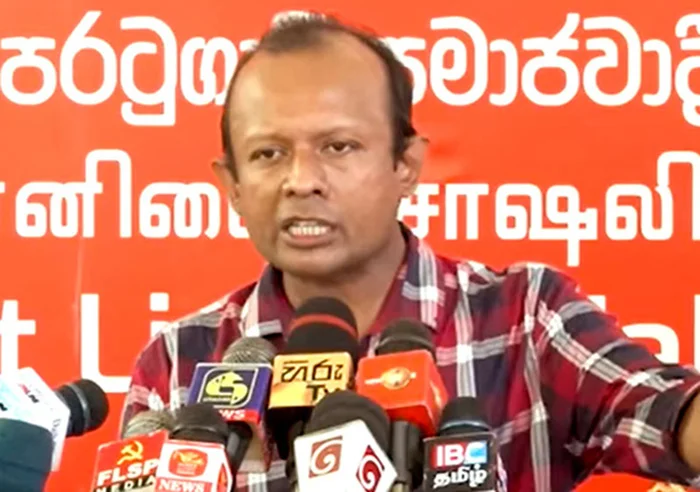
The Frontline Socialist Party (FSP) yesterday accused the government of seeking to use the proposed Protection of the State from Terrorism Act (PSTA) to suppress popular political activity, claiming that some of its provisions were more repressive than those of the Prevention of Terrorism Act (PTA).
FSP Education Secretary Pubudu Jayagoda told a media briefing, in Nugegoda, that the definition of terrorism in the Bill was so broad that it could be used to label almost any form of popular political activity as terrorism.
He said the Bill’s approach to defining terrorism was based largely on attempts to compel a government, or an international organisation, to do, or refrain from doing something, rather than on internationally recognised criteria, such as killings, causing serious bodily harm, kidnapping or acts intended to spread terror among the public.
Jayagoda also alleged that the Bill transferred substantial powers from the judiciary to the executive, while extending powers of arrest, investigation and detention to the armed forces, in addition to the police.
He claimed that the government had sought to portray the Bill as a replacement for the PTA while retaining or introducing provisions that could facilitate political victimisation and repression.
The FSP also questioned the government’s decision to proceed with the Bill, despite having previously sought public views on an earlier draft.
Jayagoda said a draft had been published earlier this year, with the period for public submissions ending on February 28, but the Bill subsequently gazetted was essentially the same draft with some provisions rearranged.
Jayagoda also referred to a letter reportedly sent by Attorney-at-Law Saliya Peiris, a member of a Committee, chaired by President’s Counsel Rienzie Arsecularatne, that had been appointed to draft the legislation. He said Peiris had stated, in the October 06 letter, that changes had been made to the draft prepared by the Committee.
“This means that even the Committee, appointed to prepare the Bill, was a deception,” Jayagoda alleged.
He said that the PSTA was fundamentally similar to the Anti-Terrorism Bill introduced by the previous government, in 2023, which the National People’s Power (NPP) opposed and challenged in court.
“If the NPP opposed that Bill then and is now bringing the same legislation before Parliament, the government must explain its position,” he said.
Jayagoda called on NPP MPs to oppose the PSTA in Parliament and urged trade unions and other groups to build a broad public movement against the legislation.
He challenged the government to an open debate on the Bill.
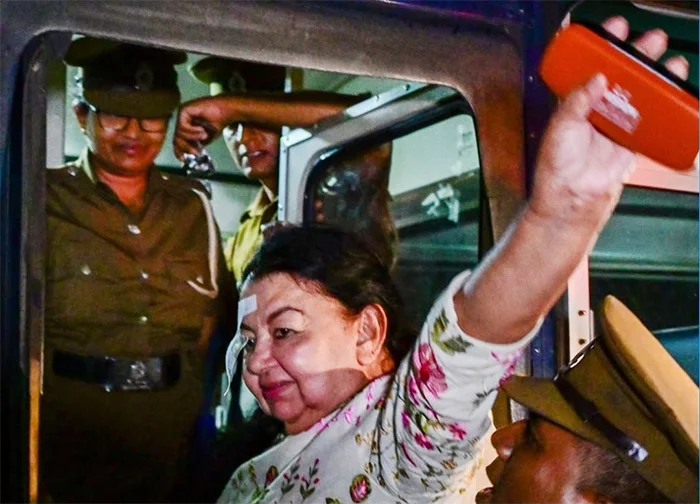
Former First Lady Shiranthi Rajapaksa was yesterday remanded until 13 October after being produced before the Colombo Magistrate’s Court following her arrest by the Commission to Investigate Allegations of Bribery or Corruption (CIABOC).
Shiranthi, wife of former President Mahinda Rajapaksa, was arrested at her residence on Poorwarama Road, Kirulapone, after CIABOC officers recorded a statement from her for nearly two hours.
According to the CIABOC, the arrest was made over allegations that Rs. 10 million obtained from the National Savings Bank through the Siriliya Saviya organisation was misappropriated.
The money was allegedly obtained to provide a Computed Tomography (CT) scanner to the children’s hospital. Investigators allege that the scanner was not provided and that the funds were instead unlawfully used.
CIABOC is investigating alleged offences under the Public Property Act and corruption-related provisions in connection with the transaction and other financial activities involving Siriliya Saviya, which was headed by Rajapaksa.
Rajapaksa returned to Sri Lanka on Monday night on a flight from Malaysia after travelling overseas for medical treatment. She left for Singapore on 16 September after being admitted to a private hospital in Colombo on 15 September following an illness.
She had been due to appear before the Financial Crimes Investigation Division (FCID) on 13 October in connection with its investigation into the financial affairs of Siriliya Saviya.
Meanwhile, her lawyers filed an anticipatory bail application before the Maligakanda Magistrate’s Court on Monday, seeking an order preventing her arrest in connection with the FCID investigation.
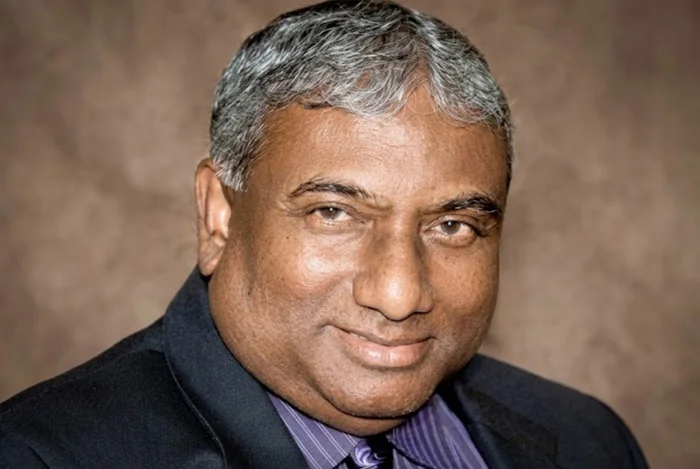
Former National Savings Bank (NSB) Chairman Pradeep Kariyawasam was yesterday granted bail by the Colombo Magistrate’s Court following his arrest by the Commission to Investigate Allegations of Bribery or Corruption (CIABOC).
Kariyawasam, husband of former Chief Justice Shirani Bandaranayake, was arrested in connection with the Bribery Commission’s investigation into the ‘Siriliya Saviya’ account linked to former First Lady Shiranthi Rajapaksa.
The investigation concerns financial activities involving the Siriliya Saviya initiative, which was headed by Rajapaksa, wife of former President Mahinda Rajapaksa.
CIABOC is continuing investigations into the alleged financial irregularities relating to the account.

Showers above 100 mm are likely at some places in the Western, Sabaragamuwa, Central, Uva and Southern provinces and in Anuradhapura district

PSTA worse than PTA: FSP

Shiranthi R remanded until 13 Oct.

Former NSB Chairman Kariyawasam granted bail

Katchatheevu row: India SC urges fishermen to avoid Sri Lankan waters

Remembering Juvenal, Coke, Acton and Machiavelli

‘Dates have the highest sugar content to fight Coronavirus’

Sunday Island 27 December – Headlines

#SundayIsland 17th December – Headlines

Sunday Island – 28th March

Sunday Island Headlines – 21 March

Sunday Island – 21st February – Headlines
-

 Editorial7 days ago
Colombo Port drug bust: The plot thickens
-

 Features5 days ago
The first woman in the foreign service or Ceylon Overseas Service it was then called
-

 Editorial6 days ago
Fuelling discontent and protest
-

 News4 days ago
Geneva takes up Sallay’s case and govt. ignores opportunity to answer accusations
-

 Foreign News5 days ago
Ten injured after car crashes into rugby supporters in Australia
-

 Latest News6 days ago
Tharindu Rathnayake, bowlers secure Asian Games Bronze for Sri Lanka
-

 News5 days ago
Nearly 20 Iranian tankers stranded off Lanka amid US sanctions
-

 Features4 days ago
Sri Lanka Cricket Bill: Governance reform is not yet a cricket strategy