
News
IMF reaches staff-level agreement on first review of Sri Lanka’s Extended Fund Facility arrangement


IMF staff and the Sri Lankan authorities have reached a staff-level agreement on economic policies to conclude the first review of the 48-month EFF-supported programme. Sri Lanka will have access to SDR 254 million (about 330 million U.S Dollars) in financing once the review is approved by the IMF Management and IMF Executive Board.
Macroeconomic policy reforms are starting to bear fruit and the economy is showing tentative signs of stabilization. Sustaining the reform momentum and addressing governance weaknesses and corruption vulnerabilities are critical to put the economy on a path towards lasting recovery and stable and inclusive growth.
Completion of the review by the IMF’s Executive Board requires: (i) the implementation by the authorities of all prior actions; and (ii) the completion of financing assurances reviews.
After constructive discussions with the authorities in Colombo and during the Annual Meetings in Marrakech, Morocco, IMF Senior Mission Chief for Sri Lanka, Peter Breuer, and Deputy Mission Chief, Katsiaryna Svirydzenka, issued the following statement:
“The IMF team reached a staff-level agreement with the Sri Lankan authorities on the first review under an economic reform programme supported by a 48-month Extended Fund Facility (EFF) arrangement . The arrangement was approved by the IMF Executive Board for a total amount of SDR 2.3 billion (about US$3 billion) on March 20, 2023.
“The staff-level agreement is subject to the approval by IMF management and the IMF Executive Board in the period ahead, contingent on: (i) the implementation by the authorities of all prior actions; (ii) the completion of financing assurances reviews, which will include confirming whether adequate progress has been made with debt restructuring to give confidence that the restructuring will be concluded in a timely manner and in line with the programme’s debt targets.
“Upon approval by the IMF Executive Board, Sri Lanka would have access to SDR 254 million (about US$330 million), bringing the total IMF financial support disbursed under the arrangement to SDR 508 million (about US$660 million).
“The authorities remain committed to the ambitious reform agenda under the EFF and their reform efforts have been commendable, including rapid disinflation and a significant fiscal adjustment expected by the end of this year. Program performance at end-June was satisfactory, with all quantitative performance criteria for end-June met, except the one on expenditure arrears. All indicative targets were also met except the one on tax revenues. Most structural benchmarks were either met or implemented with delay by end-September 2023. Notably, the authorities published on time the Governance Diagnostic Report. Sri Lanka is the first country in Asia that has undergone the IMF Governance Diagnostic exercise. Progress is still ongoing on the revenue measures to support the fiscal consolidation during 2024 in line with programme parameters.
“The economy is showing tentative signs of stabilization. Inflation is down from a peak of 70 percent in September 2022 to 1.3 percent in September 2023, gross international reserves increased by $1.5 billion during March-June this year, and shortages of essentials have eased. Despite these early signs of stabilization, full economic recovery is not yet assured. Growth momentum remains subdued, with real GDP in the second quarter contracting by 3.1 percent on a year-on-year basis and high-frequency economic indicators continuing to provide mixed signals. Sri Lanka’s external position has weakened as a result of prolonged debt restructuring discussions, and reserve accumulation has slowed in recent months. Agreeing on debt treatments consistent with restoring debt sustainability quickly will be key to resolving uncertainty that is constraining Sri Lankan businesses and external financing.
“Sustaining the reform momentum is of paramount importance in steering the economy towards a sustained recovery and fostering stable, inclusive economic growth. We welcome the authorities’ commitment to increase revenues and signal better governance by adopting needed tax measures, strengthening tax administration, and actively eliminating tax evasion.
Maintaining cost recovery in fuel and electricity pricing helps mitigate fiscal risks arising from state-owned enterprises. Further strengthening the social safety net remains critical to protect the poor and the vulnerable. While inflation has decelerated faster than expected, continued monitoring is warranted to help anchor inflationary expectations and support macroeconomic stability. Against continued external uncertainty, it remains important to rebuild external buffers through strong reserves accumulation.
“Following the authorities’ domestic debt operation, the critical next step is to secure an agreement with official creditors on a debt treatment consistent with the IMF Executive Board-approved program parameters and debt targets. We have taken note of a tentative agreement between Sri Lanka and the Export-Import Bank of China and look forward to analyzing the details when we receive them.
We urge all official creditors to move forward and agree on an appropriate debt treatment in line with the financing assurances they provided. We understand negotiations between commercial creditors and Sri Lanka are ongoing and emphasize the need to restore debt sustainability in a robust manner. Delays risk worsening the economic outlook for Sri Lanka, widening its financing gaps, hindering its return to sustainable growth, and thereby reducing its capacity to repay.
“The authorities’ commitment to implement key recommendations of the recently published Governance Diagnostic Report is a welcome step. Concrete steps towards addressing corruption risks and strengthening accountability will be essential for rebuilding economic confidence and making growth more robust and inclusive.
“The IMF team held meetings with President and Finance Minister Ranil Wickremesinghe, Central Bank Governor Dr. P. Nandalal Weerasinghe, State Minister Shehan Semasinghe, Secretary to the Treasury K.M. Mahinda Siriwardana, and other senior government and CB officials. The IMF team also met with Parliamentarians, representatives from the private sector, civil society organizations, and development partners”.







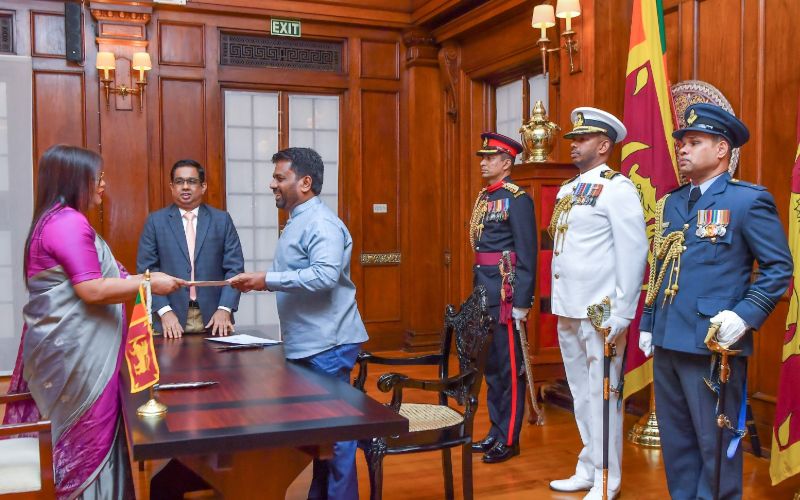
Ms Sajeewani Dilka Lakmali Karunannayake was sworn in as a Judge of the Court of Appeal before President Anura Kumara Dissanayake at the Presidential Secretariat this afternoon (03).
She previously served as an Additional Solicitor General at the Attorney General’s Department.
The appointment has been made to fill a vacancy on the Court of Appeal.
Secretary to the President Dr Nandika Sanath Kumanayake was also present on the occasion.
(President’s Media Division)
Latest News
Sun directly overhead Madampe, Thorayaya, Thotagamuwa, Rattota and Kalavanchikudy about 12.09 noon today (03)


The sun is going to be directly over the latitudes of Sri Lanka from 28th of August to 07th of September due to its apparent southward relative motion.
The nearest places of Sri Lanka over which the sun is overhead today (03) are Madampe, Thorayaya, Thotagamuwa, Rattota and
Kalavanchikudy about 12.09 noon.

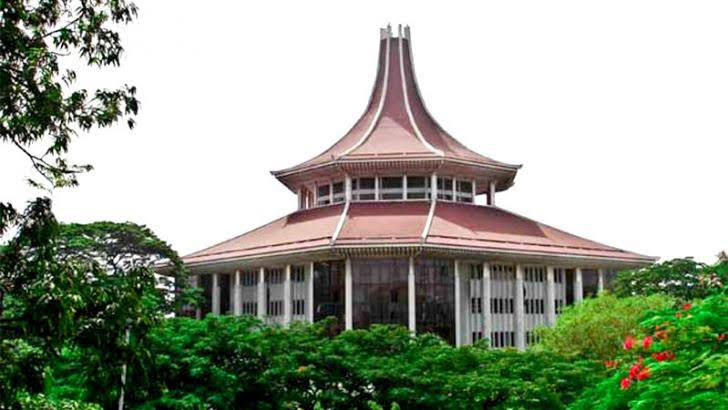
Attorney-at-Law Sugandhika Fernando, on behalf of the Vinivida Foundation, petitioned the Supreme Court yesterday (02), seeking a full bench, excluding Chief Justice Preethi Padman Surasena, to hear the petitions challenging the 22nd Amendment Bill. She also requested that the hearing be suspended immediately until the matter was fully heard and determined.
Among the respondents are Chief Justice Surasena, the first respondent, and Attorney General Parinda Ranasinghe. Justices Yasantha Kodagoda, Shiran Gooneratne, Achala Wengappuli and Priyantha Fernando have also been named as respondents.
The petitioner has sought to have quashed the decision of the first respondent to appoint a five-member bench, which she alleged was made in violation of the norms of public law. She also sought a bench comprising all Supreme Court judges, excluding those cited as respondents, to hear the special determination applications on the 22nd Amendment.
The petitioner further contended that Chief Justice Surasena, who is due to retire on December 1, 2026, would be the main beneficiary of the 22nd Amendment.
The hearing of the petitions continued for a second day yesterday (02) before a five-member Supreme Court bench comprising Chief Justice Preethi Padman Surasena and Justices Achala Wengappuli, Arjuna Obeyesekere, Sampath Abeykoon and Gihan Kulatunga.
The hearing, which commenced on Tuesday morning, continued for nearly 12 hours, until 10:30 p.m.
Solicitor General Viraj Dayaratne, appearing for the Attorney General, submitted yesterday that the Government had presented the 22nd Amendment Bill to the Constitution and the Judicature (Amendment) Bill with the objective of expanding and streamlining the country’s judicial system.
After the Solicitor General’s submissions concluded, counsel representing the petitioners requested an opportunity to respond to the Solicitor General and the intervening petitioners. However, the Chief Justice declined to allow the petitioners’ counsel to make further oral submissions, concluded the determination hearing and directed them to file written submissions instead.

New Court of Appeal Judge Sajeewani Dilka Lakmali Sworn In

India to host inaugural Women’s Champions Trophy in February

Sun directly overhead Madampe, Thorayaya, Thotagamuwa, Rattota and Kalavanchikudy about 12.09 noon today (03)

Afternoon thundershowers in the Northern, North-central, Eastern and Uva provinces in next few days, starting from today (03).

22A: SC urged to suspend hearing, appoint full bench

Govt. seeks NATO assistance

‘Dates have the highest sugar content to fight Coronavirus’

Sunday Island 27 December – Headlines

#SundayIsland 17th December – Headlines

Sunday Island – 28th March

Sunday Island Headlines – 21 March

Sunday Island – 21st February – Headlines
-

 News7 days ago
Eight politicians in drug kingpin probe
-

 Features5 days ago
“Wrap Me Up in My Blazer”— A Gentlemanly Bradby Reminiscence
-
 Business7 days ago
Sri Lanka opens up: A new season of direct connectivity
-

 Features4 days ago
When Sri Lankan stories find their own voice
-

 Features7 days ago
Redefining ageing in Sri Lanka
-

 Editorial7 days ago
The toxic legacy of two lakes
-
 Business7 days ago
Jaffna Teaching Hospital secures lifeline water supply via ADB-funded Thalaiyadi sea water desalination plant
-
 Features5 days ago
JVP/NPP government as seen from outside by Lionel Bopage now domiciled in Australia