
News
Former Foreign Secretary outlines enormity of Indian poaching in Lankan waters depriving our fishermen’s livelihood

By Rathindra Kuruwita
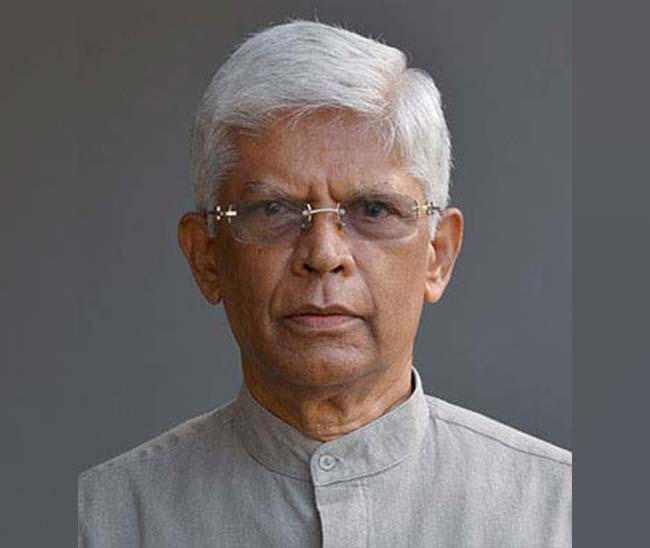
There are about 3,500 trawlers operated by Indian fishermen operating around South India, out of which about 2,000 poach in Sri Lankan territorial waters, Bernard Goonetilleke, Chairman of the Pathfinder Foundation, said.
He said that Indian fishermen arrive about 500 meters from Sri Lanka’s shores three days a week, adding that a few years ago, it was estimated that Sri Lanka lost about 80 million U.S. dollars due to poaching and that the number should have increased significantly by now.
In the first few decades, following independence, Sri Lankan and Indian fishermen operated without boundary restrictions, Goonetilleke said.
However, agreements signed in 1974 and 1976 demarcated sea boundaries, the retired Foreign Secretary said. The 1974 Agreement was regarding historic waters between Sri Lanka and India in the Palk Strait and Palk Bay. This agreement also formally confirmed Sri Lanka’s sovereignty over the Kachchativu Island.
Article 5 of the 1974 Agreement states that “subject to the foregoing, Indian fishermen and pilgrims will enjoy access to visit Kachchativu as hitherto, and will not be required by Sri Lanka to obtain travel documents or visas for these purposes.”
Article 6 of the Agreement states that “vessels of India and Sri Lanka will enjoy in each other’s waters such rights as they have traditionally enjoyed therein.”
In this article, only the navigational rights of the vessels of both Sri Lanka and India over each other’s waters have been preserved.
An Agreement between Sri Lanka and India on the Maritime Boundary between the two countries in the Gulf of Mannar and the Bay of Bengal and related matters was signed in 1976.
The Agreement said “each party shall have sovereign rights and exclusive jurisdiction over the Continental Shelf and the Exclusive Economic Zone (EEZ) as well as over their resources, whether living or non-living, falling on its side of the aforesaid boundary,” it said adding that “each Party shall respect rights of navigation through its territorial sea and exclusive economic zone in accordance with its laws and regulations and the rules of international law.”
The 1974 and 1976 Agreements, taken together with the Exchange of Letters, that was signed between Kewal Singh, the then Foreign Secretary to the Government of India, and W.T. Jayasinghe, then Secretary to the Ministry of Defence and Foreign Affairs of Sri Lanka, has put the question of fishing rights beyond doubt. Paragraph 1 of the Exchange of Letters very clearly rules out any fishing rights for the fishermen of the two States in the waters of the other state which reads as follows; “fishing vessels and fishermen of India shall not engage in fishing in the historic waters, the territorial sea and the EEZ of Sri Lanka, nor shall the fishing vessels and fishermen of Sri Lanka engage in fishing in the historic waters, the territorial sea and the EEZ of India, without the express permission of Sri Lanka or India, as the case may be.”
While Indians lost access to Sri Lankan waters, local fishermen lost access to Pedro Bank, and Wadge Bank, the continental shelves off Cape Comorin at the southern tip of India, which had been profitable commercial fishing grounds since the 1920s for both Indian and Sri Lankan boats.
Goonetilleke said that although these agreements were signed, Sri Lankan fishermen were absent from the seas off the country’s north for about 30 years due to the war with the LTTE.
“We had to restrict the movement of Sri Lankan fishing boats. During that time, Indian fishermen operated in our waters freely. They still come to our waters based on that habit,” he said.
The Chairman of the Pathfinder Foundation said that Indian trawlers are large and numerous. Because of this, they have managed to compel Sri Lankan fishermen to stay home for three days of the week.
“Usually they operate on Monday, Wednesday and Saturday. They ask our fishermen not to operate on those days. Our boats are usually under 23 feet. When they lay the nets and wait, and if large Indian trawlers engage in bottom trawling or pair trawling, they can drag away our nets, our catch and even our boats. When this happens, there is often conflict,” he said.
Indians, for the past few decades, have been asking Sri Lanka to issue permits to their fishermen to operate in Sri Lankan waters, the Chairman of the Pathfinder Foundation said. However, there is stiff opposition to this among the Sri Lankan fishermen, he said.
“Sri Lanka has banned bottom trawling in 2017/18. Earlier, circa 2010, Indian fishermen, during a discussion with Sri Lankan counterparts, agreed to stop bottom trawling by 2012. The 2018 regulations note what steps are to be taken against Indians who poach in our waters.
“However, given that most of the Indians arrested do now own the boats and Sri Lanka’s recognition that these fishermen are compelled to take these jobs due to poverty, the 2018 law has a number of humanitarian provisions. For example, when we arrest Indian fishermen, we have to tell the Indian consulate, legal action has to be taken within 30 days, and we do not harass them while in custody. However, we only arrest a handful of them when they come to our waters three days a week and in fleets of thousands,” he said.

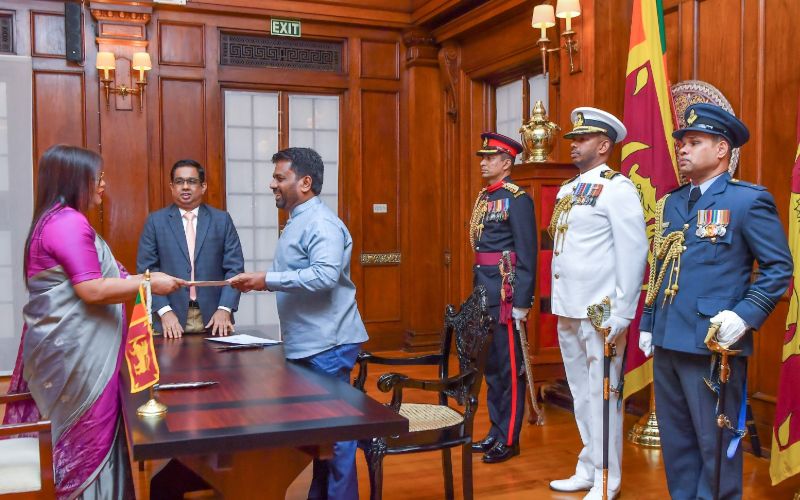
Ms Sajeewani Dilka Lakmali Karunannayake was sworn in as a Judge of the Court of Appeal before President Anura Kumara Dissanayake at the Presidential Secretariat this afternoon (03).
She previously served as an Additional Solicitor General at the Attorney General’s Department.
The appointment has been made to fill a vacancy on the Court of Appeal.
Secretary to the President Dr Nandika Sanath Kumanayake was also present on the occasion.
(President’s Media Division)
Latest News
Sun directly overhead Madampe, Thorayaya, Thotagamuwa, Rattota and Kalavanchikudy about 12.09 noon today (03)


The sun is going to be directly over the latitudes of Sri Lanka from 28th of August to 07th of September due to its apparent southward relative motion.
The nearest places of Sri Lanka over which the sun is overhead today (03) are Madampe, Thorayaya, Thotagamuwa, Rattota and
Kalavanchikudy about 12.09 noon.

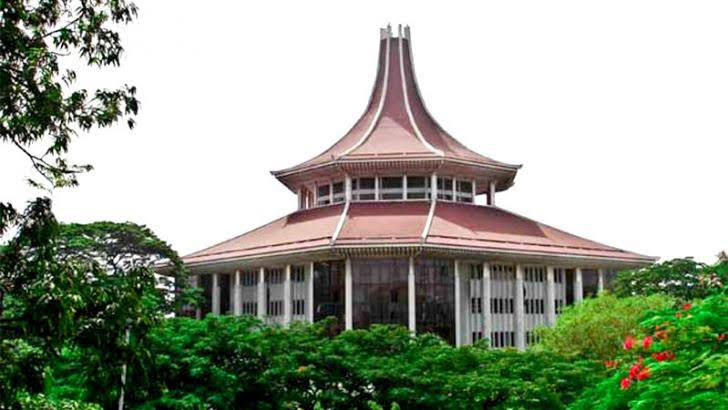
Attorney-at-Law Sugandhika Fernando, on behalf of the Vinivida Foundation, petitioned the Supreme Court yesterday (02), seeking a full bench, excluding Chief Justice Preethi Padman Surasena, to hear the petitions challenging the 22nd Amendment Bill. She also requested that the hearing be suspended immediately until the matter was fully heard and determined.
Among the respondents are Chief Justice Surasena, the first respondent, and Attorney General Parinda Ranasinghe. Justices Yasantha Kodagoda, Shiran Gooneratne, Achala Wengappuli and Priyantha Fernando have also been named as respondents.
The petitioner has sought to have quashed the decision of the first respondent to appoint a five-member bench, which she alleged was made in violation of the norms of public law. She also sought a bench comprising all Supreme Court judges, excluding those cited as respondents, to hear the special determination applications on the 22nd Amendment.
The petitioner further contended that Chief Justice Surasena, who is due to retire on December 1, 2026, would be the main beneficiary of the 22nd Amendment.
The hearing of the petitions continued for a second day yesterday (02) before a five-member Supreme Court bench comprising Chief Justice Preethi Padman Surasena and Justices Achala Wengappuli, Arjuna Obeyesekere, Sampath Abeykoon and Gihan Kulatunga.
The hearing, which commenced on Tuesday morning, continued for nearly 12 hours, until 10:30 p.m.
Solicitor General Viraj Dayaratne, appearing for the Attorney General, submitted yesterday that the Government had presented the 22nd Amendment Bill to the Constitution and the Judicature (Amendment) Bill with the objective of expanding and streamlining the country’s judicial system.
After the Solicitor General’s submissions concluded, counsel representing the petitioners requested an opportunity to respond to the Solicitor General and the intervening petitioners. However, the Chief Justice declined to allow the petitioners’ counsel to make further oral submissions, concluded the determination hearing and directed them to file written submissions instead.

New Court of Appeal Judge Sajeewani Dilka Lakmali Sworn In

India to host inaugural Women’s Champions Trophy in February

Sun directly overhead Madampe, Thorayaya, Thotagamuwa, Rattota and Kalavanchikudy about 12.09 noon today (03)

Afternoon thundershowers in the Northern, North-central, Eastern and Uva provinces in next few days, starting from today (03).

22A: SC urged to suspend hearing, appoint full bench

Govt. seeks NATO assistance

‘Dates have the highest sugar content to fight Coronavirus’

Sunday Island 27 December – Headlines

#SundayIsland 17th December – Headlines

Sunday Island – 28th March

Sunday Island Headlines – 21 March

Sunday Island – 21st February – Headlines
-

 News7 days ago
Eight politicians in drug kingpin probe
-

 Features5 days ago
“Wrap Me Up in My Blazer”— A Gentlemanly Bradby Reminiscence
-
 Business7 days ago
Sri Lanka opens up: A new season of direct connectivity
-

 Features4 days ago
When Sri Lankan stories find their own voice
-

 Features7 days ago
Redefining ageing in Sri Lanka
-

 Editorial7 days ago
The toxic legacy of two lakes
-
 Business7 days ago
Jaffna Teaching Hospital secures lifeline water supply via ADB-funded Thalaiyadi sea water desalination plant
-
 Features5 days ago
JVP/NPP government as seen from outside by Lionel Bopage now domiciled in Australia