
News
Fitch Upgrades Sri Lanka’s Long-Term Local-Currency IDR to ‘CCC-‘


Fitch Ratings upgraded Sri Lanka’s Long-Term Local-Currency Issuer Default Rating (IDR) to ‘CCC-‘ from ‘RD’ (Restricted Default), in its latest report.Fitch typically does not assign Outlooks to sovereigns with a rating of ‘CCC+’ or below. The Long-Term Foreign-Currency IDR has been affirmed at ‘RD’ and the Country Ceiling at ‘B-‘.
The Short-Term Local-Currency IDR has been downgraded to ‘RD’ from ‘C’ following the exchange of treasury bills held by the Central Bank and subsequently upgraded to ‘C’ in line with the Sovereign Rating Criteria, as we believe the local-currency debt exchange has now been completed.
A full list of rating actions is at the end of this rating action commentary.
KEY RATING DRIVERS
Local-Currency Debt Exchange Completed: The upgrade of Sri Lanka’s Long-Term Local-Currency IDR to ‘CCC-‘ reflects the completion of the local-currency portion of Sri Lanka’s domestic debt optimisation (DDO) plan, launched in July 2023, following the exchange of the Central Bank of Sri Lanka’s (CBSL) treasury bills and provisional advance into new treasury bonds and bills on 21 September 2023.
We assume the debt restructuring will lower Sri Lanka’s gross financing needs over the medium term, in line with the targets under the IMF’s Extended Fund Facility, and support an improvement in the country’s debt metrics over time. Local-currency restructuring could accelerate progress towards the restructuring of external debt.
Government Debt Remains High: General government debt and the interest costs faced by the government will remain high, despite the debt restructuring. Sri Lanka’s gross general government debt-to-GDP ratio is set to fall only gradually to just above 100% of GDP by 2028, from 128% of GDP in 2022, according to IMF programme forecasts published in March 2023, which incorporated a local- and foreign-currency debt restructuring scenario. The IMF scenario forecast the government interest-to- revenue ratio will decline to 42% by 2028, from over 70% in 2022.
Lower Financing Needs: The authorities expect the completion of the local-currency debt exchange to lower Sri Lanka’s gross government financing needs (GFN)/GDP by about 1.5pp over 2027-2032, according to documents published in July. External debt restructuring, which authorities expect to reduce GFN by an additional 2.6pp, remains critical to achieving the target of reducing GFN below 13% by 2027-2032, from 34% in 2022.
Reduction in Terms: The DDO on the local-currency debt entailed an extension of maturities on certain categories of domestic debt and offered several options, including nominal haircuts, currency redenomination and maturity extensions. Outstanding treasury bills purchased by the CBSL in the primary market were converted into 10 step-down fixed-coupon new treasury bonds and 12 existing treasury bills.
Stronger Revenue Generation Key: We believe IMF programme implementation, in particular fiscal measures, will be central to achieving debt sustainability. The risks remain significant, in our view, as a record of weak revenue generation presents challenges to achieving a faster reduction in the budget deficit and the general government debt-to-GDP ratio.
Authorities have taken several tax measures since May 2022 to improve revenue collection, including raising the corporate income tax rate to 30% from 24%, increasing the VAT rate to 15% from 8%, and raising fuel excise taxes. This resulted in revenue collection rising 43% yoy in 1H23. Additional measures in the pipeline include removing product-specific VAT exemptions before 2024 and introducing a property tax before 2025.
External Metrics Improving: Sri Lanka’s foreign-exchange (FX) reserves have been improving, with gross FX reserves rising to USD3.6 billion in August 2023, from USD1.9 billion at end-2022, partly the result of IMF disbursements and suspension of external debt servicing. However, without access to international capital markets, the sovereign remains dependent on official financing sources. We expect a gradual pick-up in exports in 2024-2025 after a contraction in 2023. Overseas worker remittance inflows are also rising. We therefore expect the current account deficit to stabilise at 1.6% of GDP over 2024-2025.
Slow Economic Recovery: GDP contracted by 2.7% yoy in 2Q23, slowing from the 12% contraction in 1Q23. Agriculture and services grew in 2Q23, but industry continued to shrink, although at a slower pace from 1Q23. We expect GDP to contract by 1.4% yoy in 2023 before growing by 3.3% and 3.5% in 2024 and 2025, respectively. Inflation, measured by the Colombo CPI, averaged around 30% yoy until August 2023 but continued the decline from end-2022. The CBSL has cut the standing deposit facility rate by a cumulative 350bp since January 2023. We expect another rate cut before end-2023.
Downside Risks to Banks Easing: The exclusion of banks’ holdings of treasury securities from the DDO has alleviated some of the pressure on their capital positions from weakening loan quality and rupee depreciation as well as any immediate funding and liquidity stresses. We believe any incremental risk to the banks’ capital from foreign-currency debt restructuring is likely to be manageable given their limited exposure to the defaulted sovereign bonds (3.6% of their combined total assets at end-1H23) and high provision coverage.
Foreign-Currency IDR in Default: The sovereign remains in default on foreign-currency obligations and has initiated a debt restructuring with official and private external creditors. The Ministry of Finance’s statement on 12 April 2022 said it had suspended normal debt servicing of several categories of external debt, including bonds issued in international capital markets, foreign currency-denominated loans and credit facilities with commercial banks and institutional lenders.
ESG – Governance: Sri Lanka has an ESG Relevance Score of ‘5’ for Political Stability and Rights as well as for the Rule of Law, Institutional and Regulatory Quality and Control of Corruption. These scores reflect the high weight that the World Bank Governance Indicators (WBGI) have in our proprietary Sovereign Rating Model (SRM). Sri Lanka has a medium WBGI ranking in the 45th percentile, reflecting a recent record of peaceful political transitions, a moderate level of rights for participation in the political process, moderate institutional capacity, established rule of law and a moderate level of corruption.
ESG – Creditor Rights: Sri Lanka has an ESG Relevance Score of ‘5’ for Creditor Rights, as willingness to service and repay debt is highly relevant to the rating and is a key rating driver with a high weight. The affirmation of Sri Lanka’s Long-Term Foreign-Currency IDR at ‘RD’ reflects a default event.
RATING SENSITIVITIES
Factors that Could, Individually or Collectively, Lead to Negative Rating Action/Downgrade
– The Local-Currency IDRs would be downgraded if further restructuring or a default on local-currency debt becomes probable due to an unsustainable debt burden or inability to raise revenue.
– The Long-Term Foreign-Currency IDRs are at the lowest level and cannot be downgraded further.
Factors that Could, Individually or Collectively, Lead to Positive Rating Action/Upgrade
– A sustained decline in the general government debt-to-GDP ratio that is underpinned by strong implementation of a medium-term fiscal consolidation strategy and improved growth performance.
– Completion of the foreign-currency commercial debt restructuring that Fitch judges to have normalised the relationship with private-sector creditors may result in an upgrade.
In accordance with the rating criteria for ratings in the ‘CCC’ range and below, Fitch’s sovereign rating committee has not used the SRM and QO to explain the ratings, which are instead guided by the agency’s rating definitions.
Fitch’s SRM is the agency’s proprietary multiple regression rating model that employs 18 variables based on three-year centred averages, including one year of forecasts, to produce a score equivalent to a LT FC IDR. Fitch’s QO is a forward-looking qualitative framework designed to allow for adjustment to the SRM output to assign the final rating, reflecting factors within our criteria that are not fully quantifiable and/or not fully reflected in the SRM.
COUNTRY CEILING
The Country Ceiling for Sri Lanka is ‘B-‘. For sovereigns rated ‘CCC+’ or below, Fitch assumes a starting point of ‘CCC+’ for determining the Country Ceiling. Fitch’s Country Ceiling Model produced a starting point uplift of zero notches. Fitch’s rating committee applied a +1 notch qualitative adjustment to this, under the balance of payments restrictions pillar, reflecting that the private sector has not been prevented or significantly impeded from converting local currency into foreign currency and transferring the proceeds to non-resident creditors to service debt payments.
Fitch does not assign Country Ceilings below ‘CCC+’, and only assigns a Country Ceiling of ‘CCC+’ in the event that transfer and convertibility risk has materialised and is affecting the vast majority of economic sectors and asset classes.
REFERENCES FOR SUBSTANTIALLY MATERIAL SOURCE CITED AS KEY DRIVER OF RATING
The principal sources of information used in the analysis are described in the Applicable Criteria.
ESG CONSIDERATIONS
Sri Lanka has an ESG Relevance Score of ‘5’ for Political Stability and Rights as WBGI have the highest weight in Fitch’s SRM and are highly relevant to the rating and a key rating driver with a high weight. As Sri Lanka has a percentile rank below 50 for the respective governance indicator, this has a negative impact on the credit profile.
Sri Lanka has an ESG Relevance Score of ‘5’ for Rule of Law, Institutional & Regulatory Quality and Control of Corruption as WBGI have the highest weight in Fitch’s SRM and are therefore highly relevant to the rating and are a key rating driver with a high weight. As Sri Lanka has a percentile rank below 50 for the respective governance indicators, this has a negative impact on the credit profile.
Sri Lanka has an ESG Relevance Score of ‘4’ for Human Rights and Political Freedoms, as the Voice and Accountability pillar of the WBGI is relevant to the rating and a rating driver. As Sri Lanka has a percentile rank below 50 for the respective governance indicator, this has a negative impact on the credit profile.
Sri Lanka has an ESG Relevance Score of ‘5’ for Creditor Rights as willingness to service and repay debt is highly relevant to the rating and is a key rating driver with a high weight. Sri Lanka’s Long-Term Foreign-Currency IDR is ‘RD’ as the sovereign is in default on its foreign-currency debt obligations.
The highest level of ESG credit relevance is a score of ‘3’, unless otherwise disclosed in this section. A score of ‘3’ means ESG issues are credit-neutral or have only a minimal credit impact on the entity, either due to their nature or the way in which they are being managed by the entity. Fitch’s ESG Relevance Scores are not inputs in the rating process; they are an observation on the relevance and materiality of ESG factors in the rating decision.









The National Business Facilitation Centre (NBFC), which is being established under the Presidential Secretariat with the aim of removing administrative and regulatory barriers that exist among government institutions in relation to investment and industry and expediting these processes, will be opened tomorrow (22).
The centre is being established on the President’s initiative with the aim of bringing about a positive transformation in the industrial sector. The centre will provide solutions to issues that arise in dealing with the government machinery when starting and operating a business, while also coordinating with the relevant government institutions to provide the necessary facilities.
The “ViYASA” National Business Facilitation Centre (NBFC) has been established at Building C-80, Hector Kobbekaduwa Mawatha, Colombo 07, and is headed by Senior Additional( Secretary to the President, Seevali Arukgoda.
The centre will be opened under the patronage of Minister of Labour and Deputy Minister of Finance and Planning Dr Anil Jayantha Fernando and Minister of Industry and Entrepreneurship Development Sunil Handunnetti, with the participation of Secretary to the President Dr Nandika Sanath Kumanayake.
The website https://nbfc.presidentsoffice.gov.lk is also scheduled to be officially launched on the occasion.
President’s Media Division)
Latest News
Court of Appeal Judge M. Sri Mevan Anthony Edirimannasuriya Corea appointed as Acting President of the Court of Appeal

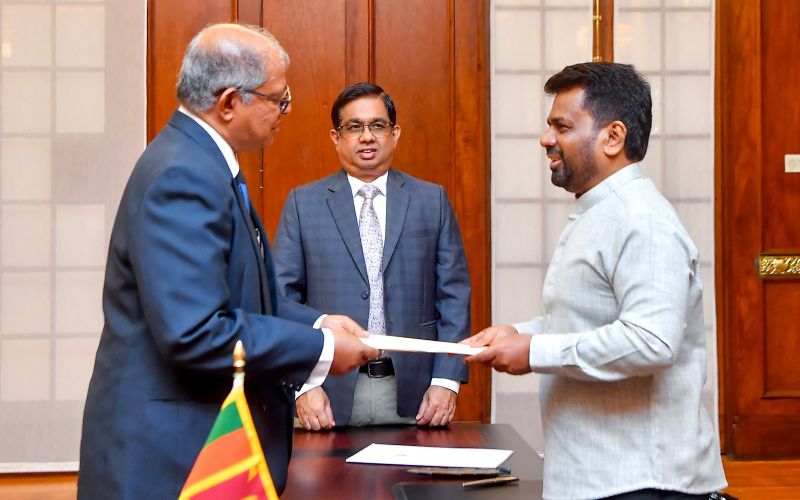
President Anura Kumara Dissanayake has appointed Court of Appeal Judge Mayadunna Sri Mevan Anthony Edirimannasuriya Corea as the Acting President of the Court of Appeal.
The appointment has been made as President’s Counsel Nalin Rohantha Abeysuriya, who currently serves as President of the Court of Appeal, will be overseas until the 24th.
Accordingly Judge Mayadunna Corea was sworn in as Acting President of the Court of Appeal before President Anura Kumara Dissanayake at the Presidential secretariat this morning (21).
Secretary to the President Dr Nandika Sanath Kumanayake was also present at the occasion.
(President’s Media Division)
Latest News
President instructs expediting further measures concerning Sivarasa Anojan, sentenced to death in Saudi Arabia
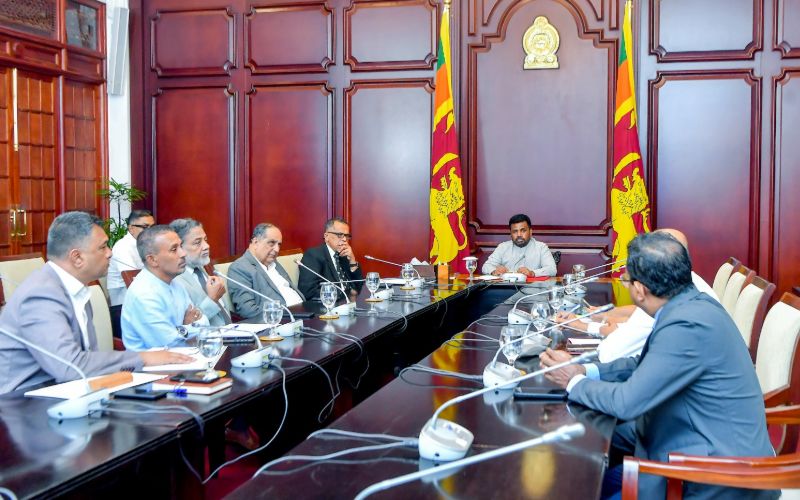
A discussion to review the further measures that could be taken regarding Sivarasa Anojan, a young Sri Lankan national who has been sentenced to death in Saudi Arabia, was held at the Presidential Secretariat this afternoon (21), under the patronage of President Anura Kumara Dissanayake.
The discussion focused on the measures taken to date concerning Sivaraasa Anojan and the further diplomatic and legal steps that could be pursued. Attention was also given to expediting the necessary further measures that could be taken to secure his release.
President Anura Kumara Dissanayake instructed officials to continue the necessary diplomatic engagement with the relevant authorities in Saudi Arabia and to maintain close and continuous involvement in all further measures concerning the case.
Reaffirming the Government’s continued attention to the safety and welfare of Sri Lankans living and working overseas, the President also stressed the need for the relevant ministries and institutions to work in close coordination and pursue all possible measures that could be taken in connection with the case.
Deputy Speaker Rizvie Salih, Deputy Minister of Religious and Cultural Affairs Muneer Mulaffer, Governor of the Western Province Hanif Yusoof, Secretary – Ministry of Foreign Affairs, Foreign Employment and Tourism Aruni Ranaraja, Secretary to the Ministry of Defence Air Vice Marshal Sampath Thuyacontha (Retd), Attorney General Parinda Ranasinghe and officials of the Ministry of Foreign Affairs, Foreign Employment and Tourism were also present at the discussion.
(President’s Media Division)

“ViYASA” National Business Facilitation Centre (NBFC) to be opened tomorrow (22)

Court of Appeal Judge M. Sri Mevan Anthony Edirimannasuriya Corea appointed as Acting President of the Court of Appeal

President instructs expediting further measures concerning Sivarasa Anojan, sentenced to death in Saudi Arabia

It’s Shafali vs Athapaththu as Sri Lanka seek to stop India juggernaut

Trophy row unlikely to repeat in Japan

Powerful explosions at Syrian army site near Aleppo injure at least four

‘Dates have the highest sugar content to fight Coronavirus’

Sunday Island 27 December – Headlines

#SundayIsland 17th December – Headlines

Sunday Island – 28th March

Sunday Island Headlines – 21 March

Sunday Island – 21st February – Headlines
-

 News5 days ago
US embassy won’t comment on IGP’s probe into joint drug raid
-

 News4 days ago
Bid for Basil’s extradition nears final stage: Police
-

 News3 days ago
Shanakiyan urges urgent action over reported death sentence for Lankan in Saudi Arabia
-

 Features7 days ago
The emptying university: why are academics leaving?
-

 Business5 days ago
All-new Bolero MaXX unveiled in Sri Lanka
-

 Opinion7 days ago
Who committed genocide and created mass graves in Sri Lanka?
-

 News2 days ago
Namal Rajapaksa Buddhist gambit fails, bail denied
-

 Opinion5 days ago
A journalist who wrote across the divide