
News
Great power rivalry, geopolitics hamper economic recovery of Global South: RW

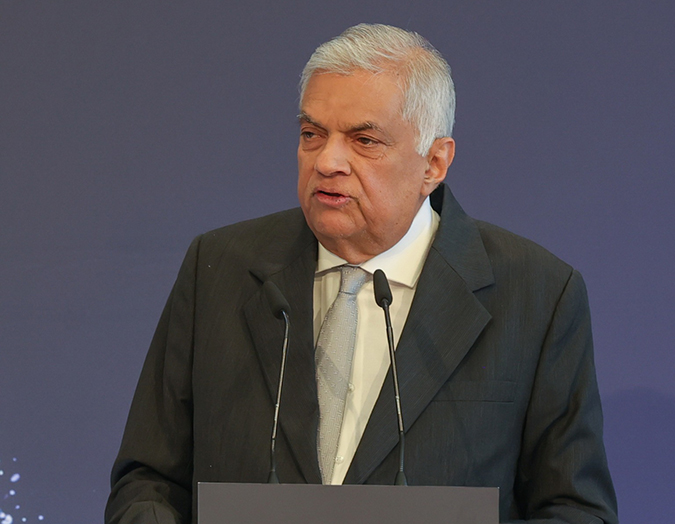
The west has labelled China’s Belt and Road Initiative as a cohesive programme, and the participating countries like Sri Lanka are looked upon with suspicion, President Ranil Wickremesinghe said on Thursday (28) at the Berlin Global Conference.
“This will further hurt economic prospects in the global South, and the polarisation will become more evident,” he said.
Great power rivalries and geopolitics have been an emerging threat to open access to trade, investment, capital, and technology that are vital for the economic recovery of the developing world, President Wickremesinghe said.
The President also mentioned that recently US national security advisor Jake Sullivan had rejected the Washington Consensus at an address at the Brookings Institute.
“With the new concept of de-risking and decoupling, the developing South, which was compelled to follow the Washington Consensus, is now asked to do a 180 degree turn even without consultation with us. With decoupling, whatever it is, we have been asked to change the system. We were compelled to get into it. Now, we are told it is no longer relevant.”
Wickremesinghe went on to say the global south is now looking for alternative leadership, given the expansion of the BRICS and the downgrading of G20. In 2024, the US leadership might change and that people are wondering what policy changes would ensue.
“We know in 2024, the US leadership may not be there. Then who is going to act? So I think it’s a chance for the EU to come up and work with the other countries. There’s no one else. So I am suggesting that the EU, together with G20 BRICS, certainly the USA, and some selected other Asian and African nations, the IMF and the NDBs, and you can bring in the big financial institutions, private ones, sit down and find urgent solutions.”
The world requires a constructive dialogue between the West and China, said the President.
“We need a constructive dialogue between the US and China. We need a constructive dialogue between the EU and China. Otherwise we will not move forward. So this is the stark reality. It’s a question of how we get together and how we work, and who’s going to take the lead in 2024.”
The following are excerpts of the speech: “I don’t think in any other period of modern history have we gone through this type of a crisis. And in all these instances, it’s the developing economies and the global south that has suffered extremely. We are now faced with stubbornly high inflation in advanced economies, oil prices edging towards US $100 a barrel, and monetary tightening by the global central banks.
“One example is that Sri Lanka’s export to Europe has not increased at all this year … so far this year. That’s an indication of how we are being affected as we try to recover from the crisis we face. The confluences of factors face serious risk for many developing countries. In the global south, we are facing rising import costs, food, energy, insecurity, and the problems of our exports. The resulting balance of payment stress translates into a weaker economy for all of us. The difference between the advanced economies and the developing nations is that you all have all the buffers and reserves to deal with these shocks. We haven’t. And it’s from here that the sovereign debt crisis started.
“In this context, I think the world may be in another crisis if corrective measures are not taken immediately. Many developing countries find themselves with large debt burdens. For example, the IMF has no mechanism to face this new situation. When Sri Lanka declared bankruptcy, all foreign funding ceased and that started the political crisis. If not for the help given by the World Bank in regraduating Sri Lanka, and the help given by my old friend Samantha Power in funding us with fertilisers, the chances were I would not be able to come here today. I would not have been in the position.
“The funding on the table is woefully inadequate to address the vast challenges at hand. So we haven’t got any money. But we do have 100 billion with the IMF. Let’s start with that money. 100 billion is better than nothing. Then let’s see how we can raise the rest of it. Because though I talk of Sri Lanka, I must say Africa’s needs, especially of the low-income countries, are far greater than ours. And the problems Africa faces need not be described by me because I think there are enough representatives here. The developing countries require financing up to US 5.9 trillion to fulfil their nationally determined contributions. Then further US 4 trillion, for clean energy technology to achieve net zero emissions, look at Sri Lanka’s financing needs for our climate prosperity plan to succeed. We need 26 five billion US dollars by 2030.
“These is a country that’s bankrupt. And with the IMF states, we’ll have for the next few years a growth rate of 3.5% if you are lucky. Here again, global coordination and leadership to resolve these challenges have simply not been sufficient to address the magnitude of the urgency of the problem. So what we need here is a new architecture.
Now we’ve been talking of the many crises and shocks we have discussed today. And we’ve been talking about what we have to do. First, we’ve all agreed that the core of the international financial architecture today was designed almost 80 years ago. The world has seen dramatic changes since then with many emerging economies in Asia, Middle East, South America, and Africa becoming global economic powerhouses.”


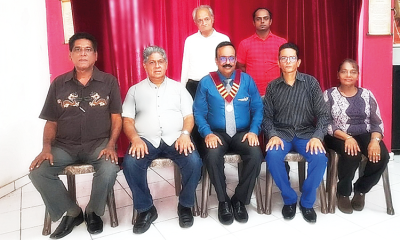





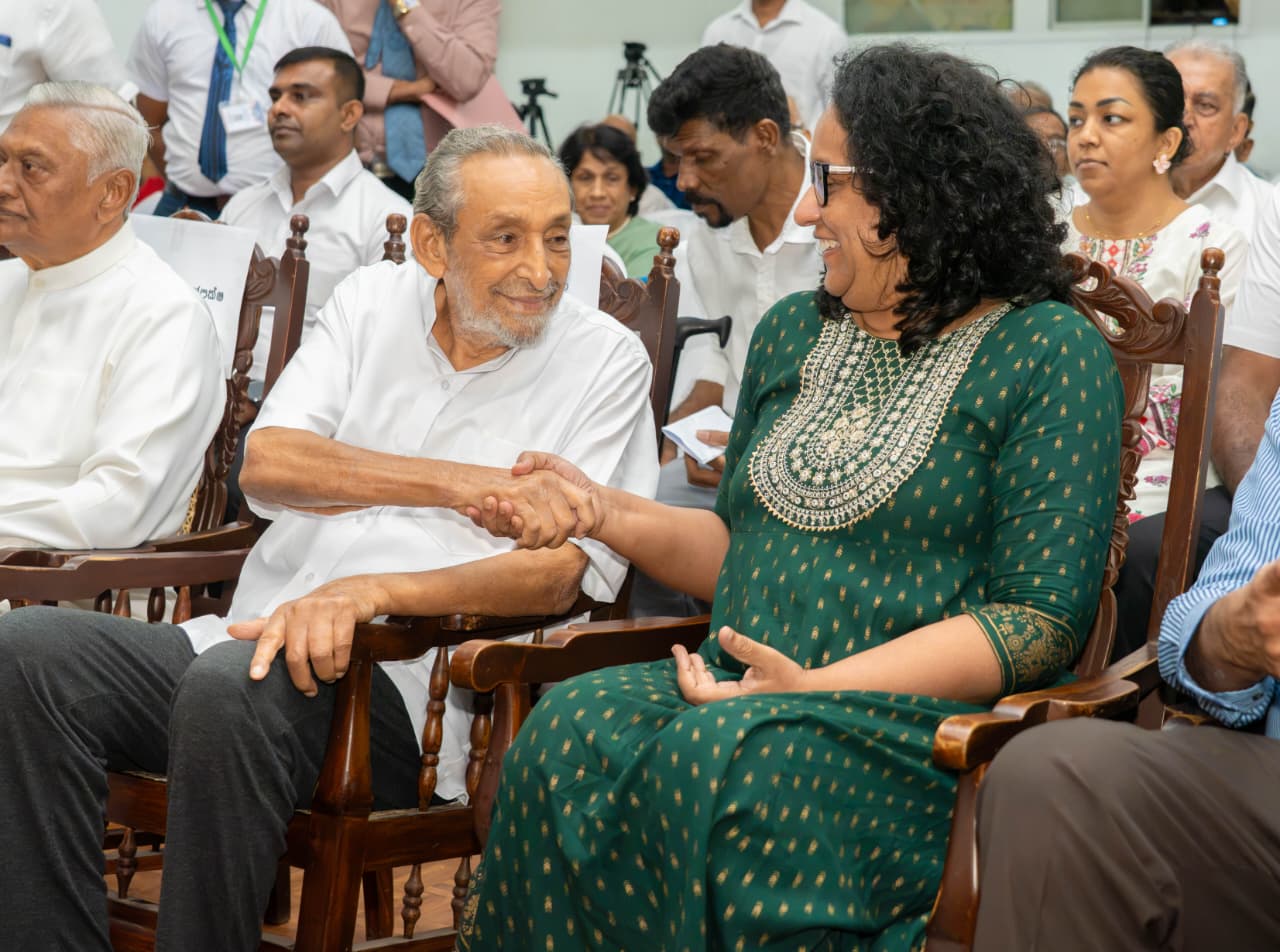
The book “Rathuwewi Mihimadala”, written based on the life story of Vasudeva Nanayakkara, Leader of the Democratic Left Front, was launched on Friday [August 28] at the Bandaranaike Memorial International Conference Hall (BMICH) in Colombo, with the participation of Prime Minister Dr. Harini Amarasuriya.
Speaking to the media afterwards about Vasudeva Nanayakkara, Prime Minister Dr. Harini Amarasuriya stated:
“Vasudeva Nanayakkara is a prominent figure in Sri Lankan politics, particularly within the left-wing political movement. There were several influential figures within the left movement, and that left-wing influence also contributed to bringing the country to where it is today. Politically, there were areas where we agreed and areas where we did not. However, I have great respect for the contribution made by Vasudeva Nanayakkara to left-wing politics. When I entered Parliament in 2020, Vasudeva Nanayakkara was also in Parliament. We sat in the same row, and we spoke about many important as well as interesting moments in his political career. I believe some of these experiences have also been included in this book.”
The event was attended by members of the Maha Sangha, Minister of Justice Harshana Nanayakkara, former President Maithripala Sirisena, former Speakers Karu Jayasuriya and Chamal Rajapaksa, as well as party members, family members and friends.
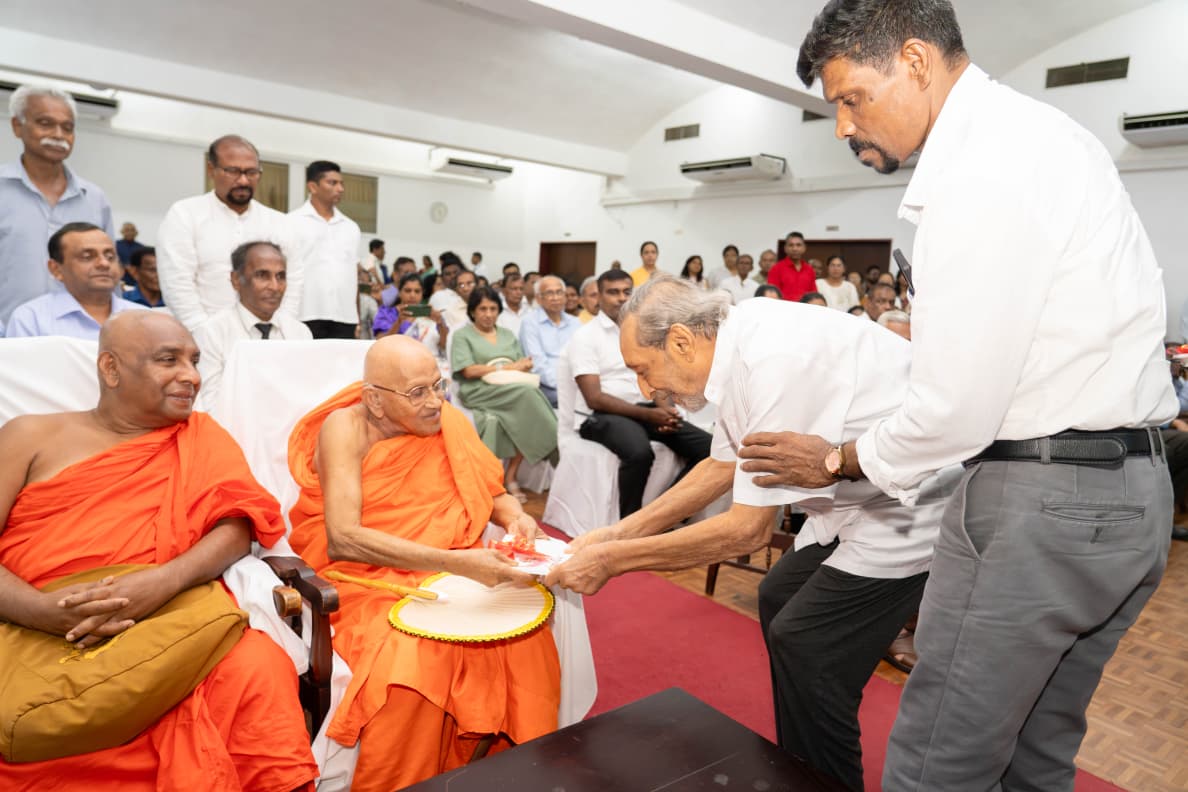
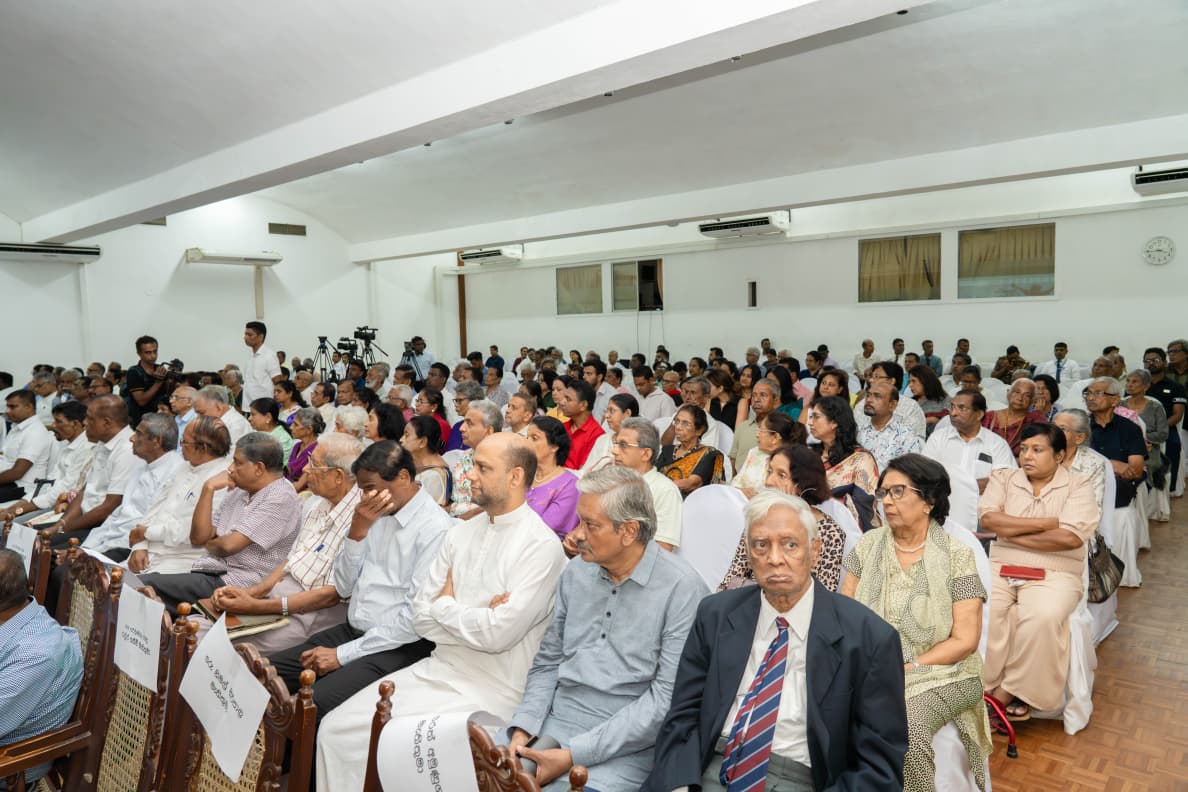
[Prime Minister’s Media Division]
Latest News
Sun directly overhead Mannar, Periyamadu, Puliyankulam, Welioya and Pulmoddai about 12.11 noon today (30)

The sun is going to be directly over the latitudes of Sri Lanka from 28th of August to 07th of September due to its apparent southward relative motion.
The nearest places of Sri Lanka over which the sun is overhead today (30) are Mannar, Periyamadu, Puliyankulam, Welioya and
Pulmoddai about 12.11 noon.
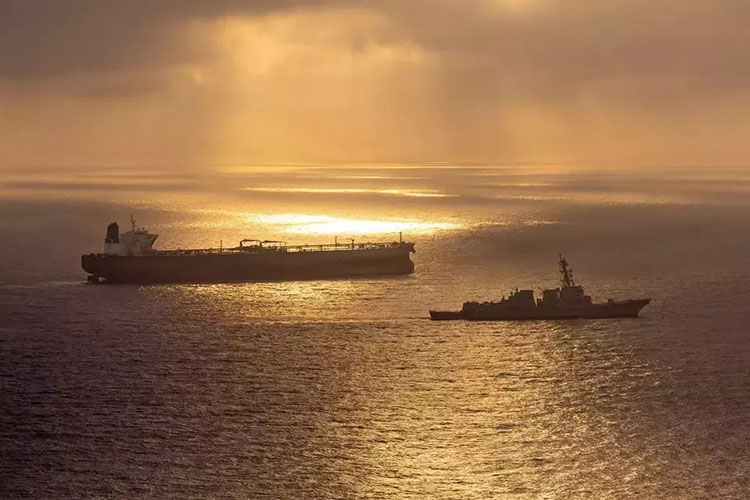
(AFP) Sri Lanka’s maritime authorities were monitoring a fleet of 11 US-sanctioned Iranian oil tankers just off the island’s southern coast, the foreign minister said Wednesday.
The tankers were spotted close to the Galle harbour where an Iranian frigate, IRIS Dena, was sunk by a US submarine in March, killing 104 sailors. Sri Lanka’s navy rescued 32 Iranian sailors from that frigate.
Iranian vessels have been in limbo, unable to return to their home port because of a US blockade.
Sri Lanka’s Foreign minister Vijitha Herath said the tankers were in international waters where they had freedom of navigation.
“These ships are away from our territorial waters… we have no hold on them, nor have we facilitated them,” Herath told AFP.
The military deployed reconnaissance aircraft and patrol boats to monitor the vessels outside Sri Lanka’s 12-nautical-mile territorial waters, a military official told AFP on condition of anonymity.
“There is no indication of any ship-to-ship transfer of oil or illegal discharge of pollutants, so there is no basis for Sri Lankan authorities to take action against them,” the official said.
Many Iranian merchant vessels moved east towards the Strait of Malacca and Singapore due to US sanctions, while several remained near Sri Lankan waters, authorities said.
Sri Lankan officials said Washington had not formally notified Colombo about sanctioned Iranian-flagged vessels

Head teacher evacuated 900 children minutes before school washed away by Nepal floods

UPDATE: Seven killed and 23 missing after boat capsizes off northern Cyprus, says Turkish Cypriot PM

Iceland votes against restarting talks on joining EU

“Rathuwewi Mihimadala” Book Launched with the Participation of the Prime Minister

Turkiye, Somalia forces free cargo vessel hijacked by pirates

Ferry carrying 260 people capsizes off northern Cyprus coast

‘Dates have the highest sugar content to fight Coronavirus’

Sunday Island 27 December – Headlines

#SundayIsland 17th December – Headlines

Sunday Island – 28th March

Sunday Island Headlines – 21 March

Sunday Island – 21st February – Headlines
-

 News6 days ago
Missing doctor’s body found in Mahiyanganaya
-
 News6 days ago
Australia declines to release Finance Secy Suriyapperuma’s citizenship details
-

 News6 days ago
22A: BASL suggests CJ recuse himself from hearing petitions
-

 News3 days ago
Eight politicians in drug kingpin probe
-

 Editorial7 days ago
Govts. drag feet as undergrads age
-
 Features5 days ago
Insights from Chieftains of Uva: Genealogy of two Kandyan Families – Part II
-

 Business3 days ago
Sri Lanka opens up: A new season of direct connectivity
-

 Features3 days ago
Redefining ageing in Sri Lanka