
Editorial
Does the U.S. deserve Donald Trump?

Last week’s piece by Vijaya Chandrasoma in the Sunday Island (Sept. 10) was illustrated with two attention grabbing cartoons. One of them, depicting Donald Trump shackled by the ball and chain of a prisoner and a senile looking Joe Biden with a walking aide was particularly arresting. It eloquently depicted the stark choice before the voters at next year’s presidential elections in the U.S.
Trump entered the political scene in 2015, with no previous experience in politics or governance. His main claim to fame was his role in the popular reality TV show, The Apprentice, which he hosted for 14 seasons. He was fired by NBC for the derogatory, racist remarks he made about Mexican immigrants during the announcement of his candidacy for the 2016 presidency under the aegis of the Republican Party.
Donald Trump inherited a fortune of nearly $300 million on the death of his father, Fred Trump, in the late 1990s. Since then, he has had a checkered career in real estate, including the ownership of several international golf courses and hotels, office buildings and a now defunct casino in Atlantic City.
Fred’s career was no less checkered. He was arrested at a 1927 Memorial Day Ku Klux Klan parade, when 1000 white-robed Klansmen marched through the Jamaica, Queens neighborhood, spurring an all-out brawl in which seven were arrested, one of them being Fred Trump. Of course, Donald Trump denied these charges. “He was never arrested. He had nothing to do with this”, Donald told the Daily Mail during a 2015 interview. He added, “This never took place. And he was never even there. It’s a completely false story”. These comments parroted almost to the word the protestations Trump made in his defense for his role in the January 6 insurrection.
Never took place. Never even there. Completely false story. Fake News.
Fred Trump had inculcated a culture of racial discrimination in his son, a streak of racism and white supremacy that has never left Donald Trump. Trump had his college education at the prestigious Wharton Business School of the University of Pennsylvania, where he claims he graduated at the top of his class. However, late Professor of Marketing at Wharton, Dr William Kelley, said that “Donald Trump was the dumbest goddam student I ever had”. In 30 years of teaching.
Fast forward to 2015, when he embarked on his political career, leaving behind six bankruptcies, two wives, five children, 28 cases of sexual assault and numerous frauds and unpaid debts in his wake. Trump was one of 17 candidates for the Republican nomination in 2016, through which he bullied and lied his way to win by a large majority. A presidential contender with experience only in business failures and sexual assaults, running against undeniably the most qualified candidate for the presidency in US history.
Hillary Clinton, the Democratic nominee in 2016, graduated from Yale Law School in 1973. Having served as a congressional legal counsel, she moved to Arkansas, where she married Bill Clinton, whom she had met at Yale Law. She served as the First Lady of Arkansas (1979 to 1981 and again from 1983 to 1992), the First Lady of the United States (1992 to 2000) and Senator of the United States (2001 to 2009). She lost the Democratic nomination to President Barack Obama in 2008, who appointed her to his cabinet as Secretary of State in 2009.
With an impeccable record in politics and governance, running against a vulgar, failed businessman and sexual predator, Hillary was the overwhelming favorite to win the 2016 presidency. As election day neared, Hillary was enjoying a comfortable lead, when her popularity started eroding with news about the use of her private server for government business; but she was mainly outmaneuvered by false rumors spread about her on social media, with a little bit of help from friends of Russian President Putin, who seemed to have a special bond with Trump.
Trump won the 2016 presidency with a comfortable Electoral College majority of 304/227, though Clinton won the popular vote by nearly three million votes. Trump inherited from President Obama a healthy economy, with 72 continuous weeks of economic growth and the lowest unemployment and inflation rates in decades. Trump immediately claimed that this great economy was created by him alone.
The four years of Trump’s first and only term cannot be fully described with justice in this comment, but three “achievements” are worthy of special mention. He immediately showed his appreciation of his donors with a tax cut of $1.5 trillion, which reduced the corporate tax rate from 35% to 21%, helping only the super-wealthy and leaving the most vulnerable out in the cold; the denial of the deadly spread of the Covid pandemic and the stubborn refusal to impose protective measures, which caused hundreds of thousands of avoidable deaths; and the piece de resistance – planning and inciting a violent insurrection at the seat of the nation’s democracy, the Capitol, in a desperate attempt to cling on to power.
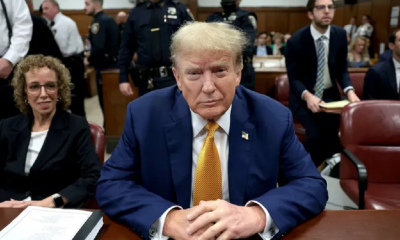
The mystery for the ages is that a man who has been allowed to polarize the richest, most powerful nation in the world to the cusp of civil war; who has been charged, arrested and on bail for 91 felonies, including obstruction of justice, espionage and sedition; and who has vowed to imprison his political opponents if he wins the 2024 election. Such a man is still the favorite for the Republican Party nomination for the presidency, with a fair chance of regaining the White House in 2024.








Hardly a day passes in this country without major drug detections and underworld killings. Inspector General of Police Priyantha Weerasooriya, speaking at this year’s Police Day ceremony in Colombo on Thursday (03), said police had seized large amounts of narcotics, including 1,416 kg of Crystal Methamphetamine, 946 kg of heroin, and 1,282 kg of cannabis and taken into custody 1,612 illegal firearms, including T-56 assault rifles and pistols, so far this year.
Sri Lanka is awash with illegal firearms, which have found their way into the underworld during the past several decades. Protracted armed conflicts led to an exponential increase in the number of lethal weapons in the wrong hands.
Immediately after the 2024 regime change, the MPs who had obtained repeater guns from the Defence Ministry were asked to return those weapons, and they readily complied for obvious reasons. But those guns account for only a fraction of the weapons issued to politicians and others over the decades. In January 2019, the then Defence Secretary Hemasiri Fernando disclosed that about 4,700 pistols and revolvers had been licensed but there was no information about those who had obtained them. Some individuals possessed as many as 15 small firearms each, he said.
One may recall that in 2023, the then State Minister Pramitha Tennakoon informed Parliament that the defence authorities had issued about 700 firearms to 154 politicians in the late 1980s, when the JVP went on a killing spree, but none of them had been returned. That figure cannot be accurate. According to anecdotal evidence, thousands of firearms were issued to politicians under threat during that period, and almost all of them have gone missing.
In the late 1980s, the JVP did not spare anyone who refused to obey its illegal orders. Its death-dealing sparrow units physically eliminated anyone who had the courage to voice dissent. Some political activists threatened by the JVP banded together to protect themselves, and the armed groups they formed, such as the PRRA (People’s Revolutionary Red Army) became as ruthless as the JVP killing squads; they eventually helped beat the JVP at its own game. Some of them switched their allegiance to the UNP, and worked as its shock troops.
The leftist parties and the SLFP, too, had to protect themselves against the JVP hit squads. The UNP set in motion a Caravan of Death, which scoured the country, killing JVP activists and suspects. What happened to the firearms used by pro-UNP vigilantes to carry out those extrajudicial killings?
Chris Smith, an expert on the proliferation of firearms, especially in South Asia has in his report, In the Shadow of a Cease-fire: The Impacts of Small Arms Availability and Misuse in Sri Lanka, has revealed that the weapons given to politicians in the late 1908s numbered more than 11,000. Many of them were not returned. The National Commission against the Proliferation of Illicit Small Arms (NCAPISA), established by President Chandrika Bandaranaike Kumaratunga in 2004, once quoted a senior police officer attached to the Police Central Armoury at the time as having said that 80% of those weapons had been returned. Even if so, going by Smith’s figure, more than 2,200 weapons have gone unaccounted for.
The proliferation of illicit firearms in Sri Lanka can be attributed to several key factors, according to researchers; they include gunrunning, illegal operations carried out by rogue elements in the police and the armed forces, local arms manufacturing, and criminals gaining access to arms caches of the LTTE. It may be recalled that the Colombo Crime Division produced 12 suspects before the Colombo Chief Magistrate on March 22, 2019, for having supplied weapons retrieved from buried LTTE arms caches in Kilinochchi to criminal gangs elsewhere. It was revealed in January 2025 that as many as 73 T-56 assault rifles had gone missing from an unnamed army camp. Soon after the decimation of the JVP’s military wing in 1989, a police sergeant sold a large stock of firearms, seized from the JVP and stored in the Kuliyapitiya police station, to underworld gangs at Rs. 15,000 each. The police could recover only some of those weapons.
The police must go all out to find the illegal firearms used by the JVP during its second uprising (1987-89). Most of the JVP’s arms caches have not been traced. SJB MP Dayasiri Jayasekara told Parliament on 27 Feb. 2025 that more than 2,000 illegal firearms looted by the JVP between 1987 and 1989 had gone missing. The JVP attacked several police stations and military camps and grabbed weapons. In April 1987, it seized the entire arsenal at the Pallekele army camp. Now that the JVP-led NPP has formed a government and launched a campaign to eliminate gun violence, the Defence Ministry may be able to ascertain information about those missing firearms, as we argued in a previous editorial comment.
The NCAPISA dealt extensively with the issue of illegal weapons in circulation in Sri Lanka. Its survey report contains valuable information, which, however, needs to be updated. Defence authorities should study this document thoroughly and commission a fresh survey on illicit firearms while carrying out operations to neutralise criminal gangs and seize lethal weapons in their possession.
The need for the police and the defence bigwigs to adopt a broader and more strategic approach to ridding the country of the scourge of illegal firearms, which snuff out lives almost daily, cannot be overstated.

Saturday 5th September, 2026
The Commission to Investigate Allegations of Bribery or Corruption (CIABOC) yesterday arrested National Organiser of the SLPP and MP Namal Rajapaksa in connection with a probe into an alleged Rs.100 million bribe linked to an airbus deal. It also took into custody former Minister Johnston Fernando over an investigation into an allegation that he arbitrarily cancelled a properly awarded contract and procured chairs from a company of his choice for the Polgolla Mahinda Rajapaksa Auditorium thereby causing a loss of Rs. 7.4 million to the state. Rajapaksa was remanded until 18 September.
The Opposition claims that its prominent members who are critical of the JVP-NPP government have become victims of a political witch-hunt, and legal action against them is aimed at silencing them. This claim is not entirely false, but those who are trying to portray themselves as victims failed to be above suspicion while in power.
There is no gainsaying that all those who have caused losses to the state coffers through corrupt deals, etc., must be brought to justice. Several former ministers have been imprisoned for misusing state funds. Opinion may be divided on the severity of the sentences awarded to them; the principle of proportionality in criminal law requires that punishment be commensurate with the seriousness of the offence and the offender’s degree of culpability, and penalties should not be excessively harsh or unduly lenient. However, the general consensus is that politicians and public officials who enrich themselves and/or further the interests of their parties by misusing state funds must be made to face the full force of the law. So, punishment meted out to corrupt politicians and their lackeys gladden the hearts of ordinary people.
Most politicians market their humble beginnings, as it were, during election campaigns to endear themselves to the public while living the life of Riley. Curiously, the SLPP politicians who asked for compensation for their properties torched by violent protesters during Aragalaya, were not required to explain how they had acquired those assets. The SLPP government generously paid colossal amounts of state funds as compensation.
Public sympathy is not with the politicians who are protesting against legal action against them over bribery, corruption and other such transgressions, and what they are facing now is generally considered their comeuppance. However, the government, which claims that everyone is equal before the law at present, will have to explain why the ruling party politicians who have committed the same offences as their Opposition counterparts are treated differently.
One may recall that Kumara Jayakody while serving as a Cabinet Minister in the current government, faced a very serious allegation that in 2016 as the Manager of the Procurement and Import Division of the Ceylon Fertiliser Company, he had caused a loss of over Rs. 8. 8 million to the state by influencing a procurement process related to the refurbishment of a warehouse complex for the benefit of a private company. The offences he and former Minister Fernando are alleged to have committed are similar in many respects. But Jayakody was not arrested. He was allowed to appear before the Colombo High Court, where he was indicted and given bail.
How can the government claim that everyone is equal before the law? Aren’t the ruling party politicians and their associates ‘more equal than others’ like the Pigs in Orwell’s Animal Farm?
Friday 4th September, 2026
Doomed are the nations that look on while rulers seek to perpetuate their grip on power through undemocratic means. John Stuart Mill famously observed in 1867: “Bad men need nothing more to compass their ends, than that good men should look on and do nothing.”
Adolf Hitler established an authoritarian rule in Germany by throttling democracy, which enabled him to capture power, and the entire world suffered as a result. His rise to power followed the Nazi Party’s victory at the July 1932 election, albeit without an absolute majority. After becoming the Chancellor, Hitler did not overthrow the Constitution. Instead, he systematically destroyed it from within by exploiting its emergency provisions, suspending its safeguards, manipulating the legislature and the judiciary and obtaining legal authority through legal amendments, etc., to introduce laws in defiance of it.
Today’s comment however is not about the Third Reich or what Hitler did to the Weimar Constitution. Instead, it is about Zimbabwe, a multi-party democracy that descended into dictatorship, and how that country’s Constitution was manipulated to undermine judicial independence.
In 2021, President Emmerson Mnangagwa’s government hurriedly secured the passage of a constitutional amendment Bill to raise the retirement age of judges, provoking a debate over whether it was proper to amend the Constitution to increase judicial tenure just in time to keep an incumbent Chief Justice in office. That amendment was obviously not part of a wider judicial reform initiative; it immediately opened the way for the then Chief Justice Luke Malaba to remain in office for another five years.
President Mnangagwa and his government craftily camouflaged their real intention, which was to retain Malaba, who was loyal to them; they undertook to raise the mandatory retirement age of the Chief Justice, Deputy Chief Justice and Judges of the Constitutional Court and the Supreme Court from 70 to 75. Malaba’s 70th birthday was only eight days away when the controversial constitutional amendment was passed. The government claimed that Parliament had lawfully changed the retirement age of judges, thereby authorising the continuation of the incumbent senior judges. But that regime could not dupe its critics and the international community, who pointed out that the Constitution did not allow any amendment to be introduced to the term-limit provision, benefiting the serving judges. They also argued that the amendment had been crafted and timed specifically to benefit Chief Justice Malaba.
Legal challenges and arguments were mainly focused on whether constitutional safeguards intended to prevent politicians from manipulating judicial tenure could be circumvented by a mere constitutional amendment without a referendum. Two applications challenging the position of the Mnangagwa government were filed before the High Court, and on the day Malaba turned 70, a three-judge High Court bench ruled that he had ceased to be the Chief Justice as well as a judge because increasing the retirement age effectively extended judicial tenure and therefore could not be applied to the serving judges without approval at a national referendum. The High Court ruled that it would amount to a violation of constitutional protections to allow an incumbent judge to benefit from the retirement age revision. The Mnangagwa regime tore into the High Court, condemning the bold judgement and appealed against it.
The appeal was lodged with Zimbabwe’s Constitutional Court, whose judges themselves had been cited in the original litigation as they were among the beneficiaries of the constitutional amendment at issue. They had no qualms about acting in contravention of the much-cherished legal maxim, nemo judex in causa sua, which holds that no person should adjudicate a matter in which he or she has a personal interest. The Constitutional Court overturned the High Court judgement, and Malaba remained in office.
Interestingly, when the revision of the judges’ retirement age was first mooted, Malaba was in the centre of a controversy over his handling of the Opposition’s legal challenge to the 2018 presidential election results. In the same year, the Constitutional Court, with Malaba presiding, dismissed the Opposition’s challenge to Mnangagwa’s election and confirmed Mnangagwa as President. Ironically, three years later, Malaba’s tenure was extended by a constitutional amendment moved under Mnangagwa’s presidency. A quid pro quo?
Malaba’s continuation in office was widely seen as an indication of the judiciary having become an appendage of the Executive. After his controversial extension of tenure, Malaba acted in a manner that was widely seen as partial to the Executive, and the constitutional amendment that enabled him to remain in office came to be dubbed the “Malaba Clause”. He retired a few months ago.
The Malaba affair may not have caused Zimbabwe to face a new round of sanctions, but it resulted in much international opprobrium, with the UN expressing serious concerns about the controversial constitutional amendment that undermined judicial independence.
One can only hope that no other country will suffer the same fate as Zimbabwe, where the separation of powers has been eroded and constitutional and judicial processes are manipulated for political ends.

Shree Charani, Prema Rawat spin Pakistan out for 55 in one-sided contest

Sun directly overhead Bentota, Thiniyawala, Iththakanda, Udawalawe, and Kataragama about 12.08 noon t9day (06)

Showers above 75 mm are likely at some places in the Uva and Eastern provinces.

Tharanga creates history with Diamond League crown in Brussels

UN welcomes Lanka’s anti-graft drive, seeks end to impunity

Dispute which triggered listed company director being detained at BIA resolved

‘Dates have the highest sugar content to fight Coronavirus’

Sunday Island 27 December – Headlines

#SundayIsland 17th December – Headlines

Sunday Island – 28th March

Sunday Island Headlines – 21 March

Sunday Island – 21st February – Headlines
-

 Features7 days ago
When Sri Lankan stories find their own voice
-

 News7 days ago
BASL takes exception to Justice Ganepola being denied a place in SC
-

 News4 days ago
Denied of promotion to SC despite vacancies, justice Gurusinghe retires
-

 Latest News4 days ago
Grade 5 scholarship exam results released
-

 News4 days ago
22A: SC urged to suspend hearing, appoint full bench
-

 Midweek Review5 days ago
The local and global dynamics of Sri Lanka’s 22nd Amendment
-

 Business7 days ago
ADB-funded Thalaiyadi plant serves as blueprint for vulnerable dry zones in Sri Lanka
-
 News4 days ago
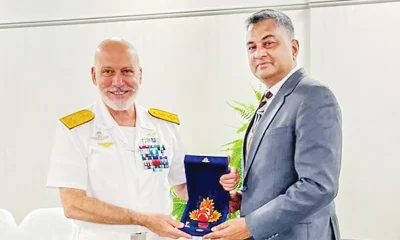
Govt. seeks NATO assistance