
News
Fitch downgrades SL’s Long-Term Local-Currency IDR to ‘RD’

Global rating agency, Fitch, in its latest report downgraded Sri Lanka’s Long-Term Local-Currency (LTLFC) Issuer Default Rating (IDR) to ‘RD’ (Restricted Default) from ‘C’.
In a press release Fitch said the ratings on its local-currency bonds tendered in the domestic debt exchange have been downgraded to ‘D’ from ‘C’ while its other four local-currency bonds not tendered in the domestic debt exchange have been affirmed at ‘C’.
The Long-Term Foreign-Currency (LTFC) IDR has been affirmed at ‘RD’, and the ratings on Sri Lanka’s foreign-currency bonds have been affirmed at ‘D,’ Fitch said.
Given that Fitch typically does not assign outlooks to sovereigns with a rating of ‘CCC+’ or below, all issue ratings have subsequently been withdrawn, the press release said.
“Fitch has withdrawn the issue ratings of Sri Lanka’s foreign and local-currency bonds as these are no longer considered to be relevant to the agency’s coverage,” Fitch said.
Given below is the press release in full: “Distressed Debt Exchange: The downgrade of Sri Lanka’s LTLC IDR reflects the partial completion of an exchange of Sri Lanka’s T-bonds on 14 September as part of a broader domestic debt optimisation (DDO) launched in July 2023. The DDO also includes conversion of T-bills held by the Central Bank of Sri Lanka (CBSL) into treasury bonds (T-bonds), which has not yet been completed.
“In Fitch’s view, the exchange of T-bonds constitutes a distressed debt exchange (DDE) under the agency’s criteria, given that the maturity extension of the tendered bonds represents a material reduction in terms versus the original contractual terms, and given that the exchange is needed to avoid a traditional payment default.
“Reduction in Terms: Eligible bonds for which tenders were received and accepted have been exchanged into 12 new instruments of equal size and the same aggregate principal amount, maturing between 2027 and 2038. Accepted tenders reached about 37% of the outstanding principal amount of eligible bonds outstanding as of 28 June 2023. Accepted tenders were predominantly by superannuation funds, which will face higher tax rates on income from T-bonds if they did not meet a participation threshold.
“Local-Currency Debt Service Continuing: Fitch believes that Sri Lanka has continued to service the T-bonds throughout the DDO process, and that T-bonds not tendered in the exchange will continue to be serviced as per their original terms, including but not limited to the entirety of the 12 series of T-bonds (out of 61 eligible series) for which no valid tenders were received. Four of these 12 series were rated by Fitch and were affirmed at ‘C’ prior to withdrawal.
“Local-Currency Restructuring Incomplete: Under Fitch’s rating criteria, the LTLC IDR will remain in ‘RD’ until the debt exchange is completed in its entirety. Fitch deems the process incomplete, as the exchange of T-bills held by CBSL is still pending. Fitch regards the T-bills as public debt securities, and they are also held by private investors.
“Foreign-Currency IDR in Default: The sovereign remains in default on foreign-currency obligations and has initiated a debt restructuring with official and private external creditors. The Ministry of Finance had issued a statement on 12 April 2022 that it had suspended normal debt servicing of several categories of external debt, including bonds issued in international capital markets, foreign currency-denominated loans and credit facilities with commercial banks and institutional lenders.
“ESG – Governance: Sri Lanka has an ESG Relevance Score of ‘5’ for Political Stability and Rights as well as for the Rule of Law, Institutional and Regulatory Quality and Control of Corruption. These scores reflect the high weight that the World Bank Governance Indicators (WBGI) have in our proprietary Sovereign Rating Model (SRM). Sri Lanka has a medium WBGI ranking in the 45th percentile, reflecting a recent record of peaceful political transitions, a moderate level of rights for participation in the political process, moderate institutional capacity, established rule of law and a moderate level of corruption.
“ESG – Creditor Rights: Sri Lanka has an ESG Relevance Score of ‘5’ for Creditor Rights, as willingness to service and repay debt is highly relevant to the rating and is a key rating driver with a high weight. The affirmation of Sri Lanka’s LTFC IDR at ‘RD’ and downgrade of LTLC IDR to ‘RD’ reflect a default event.
“The Country Ceiling for Sri Lanka is ‘B-‘. For sovereigns rated ‘CCC+’ or below, Fitch assumes a starting point of ‘CCC+’ for determining the Country Ceiling. Fitch’s Country Ceiling Model produced a starting point uplift of zero notches. Fitch’s rating committee applied a +1 notch qualitative adjustment to this, under the balance of payments restrictions pillar, reflecting that the private sector has not been prevented or significantly impeded from converting local currency into foreign currency and transferring the proceeds to non-resident creditors to service debt payments.
Fitch does not assign Country Ceilings below ‘CCC+’, and only assigns a Country Ceiling of ‘CCC+’ in the event that transfer and convertibility risk has materialised and is affecting the vast majority of economic sectors and asset classes.”








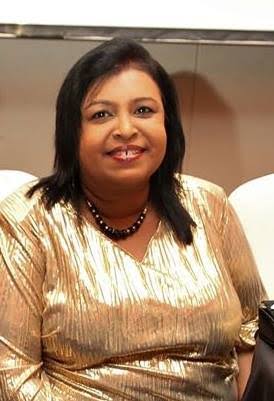
It has been reported quoting family sources that veteran singer Mariazelle Goonetilleke has passed away this morning (10) at the age of 68
She had been receiving treatment at the Kalubowila Teaching Hospital.
The wife of retired Major General Suresh Sallay has lodged a further complaint with the Human Rights Commission of Sri Lanka (HRCSL), alleging that her husband’s fundamental rights continue to be violated as Criminal Investigation Department (CID) officers prevent him from having confidential consultations with his lawyer while he is under detention at the National Hospital.
In a letter addressed to the HRCSL Chairman on Thursday, Mrs. S.B.M.S.B. Sallay has said the latest complaint was filed in relation to an earlier complaint concerning the detention and treatment of her husband.
Full text of the letter: I, Mrs. S.B.M.S.B. Sallay, respectfully write to lodge this further complaint in relation to my earlier complaint bearing reference H RC-HO-1 103-26, concerning the detention and treatment of my husband, Retired Major General Suresh Sallay.
I wish to bring to the attention of the Commission a further serious violation of his fundamental rights that occurred on 08 July 2026 during a consultation between my husband and his Attorney-at-Law, Mr. Asith Siriwardena, while my husband remains under detention and is receiving treatment at the National Hospital.
I am informed by his Counsel that he is presently permitted to consult with my husband only once a week for a period of approximately twenty minutes. During the consultation held on 08 July 2026, officers of the Criminal Investigation Department (CID) stationed at the Cardiac Coronary Care Unit of the National Hospital informed Counsel that they had received instructions from higher authorities that my husband should not be permitted to meet with his
legal counsel in private. Consequently, the officers remained present throughout the consultation and refused to permit a confidential lawyer-client meeting.
This conduct constitutes a grave infringement of my husband’s fundamental right to communicate privately and confidentially with his legal counsel. Confidential communication between an accused or detainee and his lawyer is an indispensable safeguard of the right to legal representation, the right to prepare his defence, and the right to a fair trial. The denial of confidential legal consultations undermines these fundamental protections guaranteed under the Constitution of the Democratic Socialist Republic of Sri Lanka and the applicable provisions governing persons detained under the Prevention of Terrorism Act.
The confidentiality of communications between a lawyer and client is also a well-recognized principle under international human rights law and forms an essential safeguard against arbitrary detention, coercion, and unfair legal proceedings.
In view of the foregoing, I respectfully request the Human Rights Commission of Sri Lanka to urgently intervene and take all necessary steps within its statutory mandate to:
1. Ensure that my husband is afforded immediate and unrestricted confidential access to his legal counsel without the presence or supervision of law enforcement officers;
2. Inquire into the instructions allegedly issued by higher authorities requiring CID officers to remain present during lawyer-client consultations;
3. Direct the relevant authorities to cease any practice that interferes with confidential legal consultations; and
4. Take such further action as the Commission considers appropriate to safeguard my husband’s constitutional and human rights.
This complaint is made as a further complaint to Complaint No. H RC-HO-1103-26, and I respectfully request that it be placed on the same file and considered together with my previous complaints.
I respectfully seek the Commission’s urgent intervention in this matter.
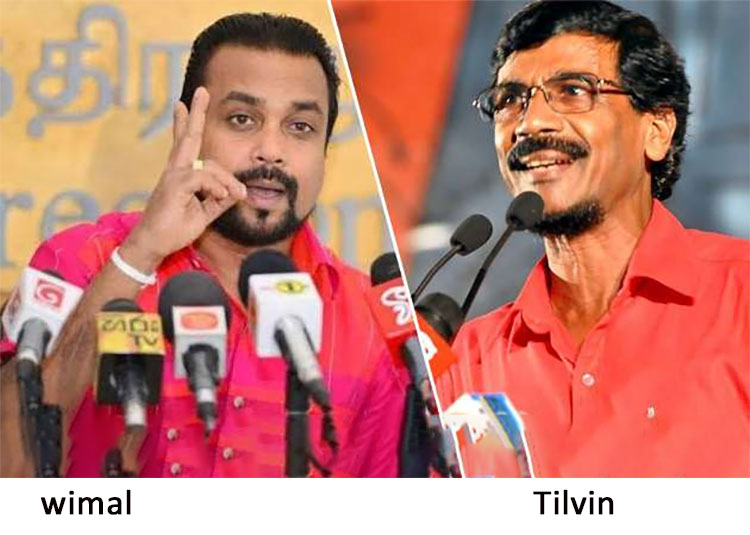
The Supreme Court yesterday (9) upheld a Colombo Commercial High Court order directing former Minister Wimal Weerawansa to pay Rs. 1 million in damages to Janatha Vimukthi Peramuna (JVP) General Secretary Tilvin Silva for violating intellectual property rights.
A three-member Supreme Court bench dismissed in its entirety an appeal filed by Weerawansa challenging the earlier Commercial High Court ruling.
The case was instituted by Silva, who alleged that Weerawansa had violated provisions of the Intellectual Property Act by publishing his book “Neththa Wenuwata Aththa” (“Truth Instead of Lies”), which contained the JVP’s political ideology and official party documents without authorisation.
The Supreme Court also affirmed the order restraining the publication and distribution of the book in its existing form. However, the court ruled that the book could be republished if the 60-page section identified as infringing intellectual property rights was removed.

Dharmaraja and Kingswood set for historic rugby clash on Saturday

Sri Lankan singer Mariazelle Goonetilleke passes away at the age of 68

Tensions erupt in Indian state after 11-year-old raped and murdered

US and Iran trade attacks as Khamenei is buried

Several spells of showers will occur in the Western, Sabaragamuwa and North-western provinces and in Galle, Matara, Kandy and Nuwara-Eliya districts

Canadian PM visits Saudi Arabia to strengthen energy, mining partnerships

‘Dates have the highest sugar content to fight Coronavirus’

Sunday Island 27 December – Headlines

#SundayIsland 17th December – Headlines

Sunday Island – 28th March

Sunday Island Headlines – 21 March

Sunday Island – 21st February – Headlines
-

 News6 days ago
Singapore-based Buddhist monk marks nearly four decades of humanitarian service
-

 News7 days ago
Freedom 250: US Embassy celebrates America’s 250th Independence Day through magic of American cinema
-
 News20 hours ago
Herath warns prospective migrant workers not to get fleeced by racketeers
-

 News5 days ago
AI concerned over proposed SL military deployment in Haiti
-

 Midweek Review3 days ago
Unexpected focus on ‘pieces of tin’ worn by military men
-
 Latest News4 days ago
Nyamhuri and Ngarava stun Bangladesh by defending 141
-

 Features6 days ago
The NPP’s New Challenge: Balancing Easter Lawfare and Economic Welfare
-

 News2 days ago
Negombo Prison riot: Ensuring protection of prisoners fundamental responsibility of the state – UN