
Business
SEC announces revisions to corporate governance rules after 15 years


-
Amendments are aimed at reinforcing investor confidence in the capital market
-
Listed Companies required to establish policies for whistleblowing, anti-bribery and corruption
-
Audit Committees, Related Party Transactions Review Committees also need to be established
-
Fit and proper assessment criteria for directors and CEOs
The Securities and Exchange Commission (SEC) of Sri Lanka has announced revisions to Corporate Governance Rules applicable to entities listed on the Colombo Stock Exchange with effect from 1st October 2023.High standards of Corporate Governance with accountability and transparency are critical to building investor confidence in the capital market and is therefore a priority on the SEC’s regulatory agenda. The SEC recognising the need to improve the level of Corporate Governance among Listed Companies in the market initiated a process of amending the Rules on Corporate Governance through a process of stakeholder and public consultations. Based on the stakeholder and public responses the Rules were revised to enhance the governance structures and responsibilities of the Board of Directors and Board Committees of the companies.
These amendments which are in line with global best practices are intended to give clear direction on good Board and management practices that will help build investor and stakeholder confidence.
According to the amended Rules, Listed Companies are required to, among others, establish and maintain Board Policies for Risk Management and Internal Controls, Relations with Shareholders and Investors, Whistleblowing, Corporate Disclosures, Environmental, Social and Governance Sustainability and Anti-Bribery and Corruption. The Rules will require Listed Companies to disclose these policies as well as the implementation details of such policies on their respective company websites and make reference to the website content in their annual reports.
As an important mechanism for the check and balance process in the governance of companies, the revisions require the establishment and operationalisation of Nomination and Governance Committees, Remuneration Committees, Audit Committees, Related Party Transactions Review Committees and where appropriate Risk Committees. Other key Rules include, minimum number of Board members, segregation of the position of Chairman and Chief Executive Officer, appointment of a Senior Independent Director in specific instances, ‘Fit and Proper’ Assessment Criteria for directors and CEOs, criteria for determining independence of directors and requirements on Alternate Directors. Whilst the effective date is 01st October 2023 for most Rules, there will be provision for extended time limits on certain Rules in order to enable companies to reorganize their Board structures.
These revisions are the result of the continued collaborative efforts between the SEC, CSE and the industry to strengthen Sri Lanka’s corporate governance framework. The last update of the Rules on Corporate Governance was in 2008.

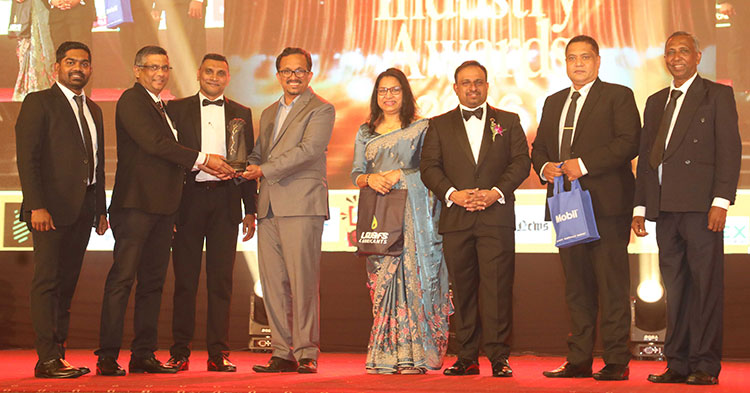
CEAT Kelani Holdings has been adjudged the Best Tyre Manufacturer in the ‘Component Manufacturer’ Category at the country’s inaugural Automobile Industry Awards presented by the Automobile Industry Council (AIC) of Sri Lanka, in a significant endorsement of the company’s leadership in the country’s fast-evolving vehicle assembly sector.
The awards were presented at Temple Trees at a ceremony attended by government ministers, senior public officials, industry leaders and stakeholders from across Sri Lanka’s automobile ecosystem. Conceived as a national platform to recognise excellence, innovation and sustainability, the awards evaluate performance across criteria including technology, market impact, customer satisfaction and industry leadership.
CEAT Kelani’s recognition reflects its commanding position in the Original Equipment (OE) tyre segment, where the company supplies tyres for more than 90% of the vehicles assembled in Sri Lanka. Having entered the local vehicle assembly industry in 2012 with its first OE tyre supply, CEAT has rapidly established itself as the preferred tyre partner for assemblers, supplying over 150,000 OE tyres annually across a diverse range of vehicles including cars, SUVs, motorcycles, scooters, buses and commercial vehicles.
Today, CEAT tyres are fitted as original equipment on more than 30 locally assembled vehicle models spanning 11 global brands, underscoring the confidence placed in the company’s product quality, consistency and performance.
The company’s leadership in this segment is reinforced by its achievement of IATF 16949:2016 certification, making it the first tyre manufacturer in Sri Lanka to secure this globally recognised automotive quality standard. This certification affirms CEAT Kelani’s capability to meet the stringent requirements of international automotive OEMs while optimising supply chain efficiency and reliability.
CEAT tyres supplied to vehicle manufacturers undergo rigorous validation processes and have demonstrated superior performance across key parameters such as safety, durability, braking efficiency, ride comfort and noise reduction. Low rolling resistance and minimal vibration further enhance driving efficiency and user experience, aligning with global expectations of modern mobility solutions.
Beyond its industrial impact, CEAT Kelani also contributes significantly to the national economy. By manufacturing tyres locally, the company helps conserve valuable foreign exchange through import substitution, while sourcing 100% of its natural rubber requirements domestically, supporting the livelihoods of more than 10,000 rubber cultivator families.
The Automobile Industry Council, the apex body representing Sri Lanka’s automobile sector, was established under the joint leadership of key government ministries and operates as a private-sector-led, not-for-profit organisation. Its mandate includes driving sustainable growth, strengthening industry competitiveness and fostering collaboration between public and private stakeholders.

Reinforcing its commitment to delivering premium lifestyle value and rewarding experiences to its customers, the Commercial Bank of Ceylon has unveiled a significant enhancement to its Max Loyalty Rewards platform, enabling its cardholders to convert reward points into airline miles through a strategic integration with the national carrier’s ‘FlySmiLes’ programme and the frequent flyer programmes of other airlines.
Effective immediately, holders of Commercial Bank Premium and Platinum credit cards and Elite debit cards can seamlessly convert their accumulated Max Loyalty Rewards Points into FlySmiLes miles, unlocking faster access to flights and travel privileges with SriLankan Airlines.
The upgrade also encompasses other international frequent flyer programmes, broadening the global travel options available to eligible cardholders by extending the reach of the platform across multiple international travel networks, the Bank said.
The move represents a decisive step in elevating the everyday utility of credit and debit card spend, allowing routine transactions to translate directly into meaningful travel rewards. With SriLankan Airlines expected to be the preferred choice for the majority of customers, the partnership with the national carrier anchors the proposition, offering both familiarity and tangible value in the conversion of points to miles.
To mark the launch, Commercial Bank is offering a highly competitive promotional conversion rate of six Max Loyalty Rewards Points to one FlySmiLes mile, valid through 31st December 2026. The Bank said this market-leading rate significantly accelerates the journey from daily spend to international travel, enhancing the appeal of the Bank’s card portfolio.
Commenting on this latest development, Hasrath Munasinghe, Chief Operating Officer of Commercial Bank, said the enhancement reflects the Bank’s continued focus on delivering differentiated value to its customers. “Max Loyalty Rewards points are among the most valuable benefits offered to our cardholders, turning everyday spending into rewarding experiences,” he said. “Commercial Bank is also the first and only Bank to offer Max Loyalty Rewards points to both credit and debit cardholders, extending these benefits beyond credit cards. By partnering with SriLankan Airlines and other global carriers, we have significantly strengthened the Max Loyalty Rewards platform. Our cardholders can now think beyond conventional rewards and convert their everyday spending into memorable travel experiences. This is about enabling them to go further, more often, with greater ease.”
The airline miles conversion feature is available at no additional cost to eligible cardholders, with no enrolment or processing fees. Access is fully integrated into the existing Max Loyalty Rewards platform, allowing users to log in with their current credentials, view balances, and convert points instantly alongside standard merchant redemptions.
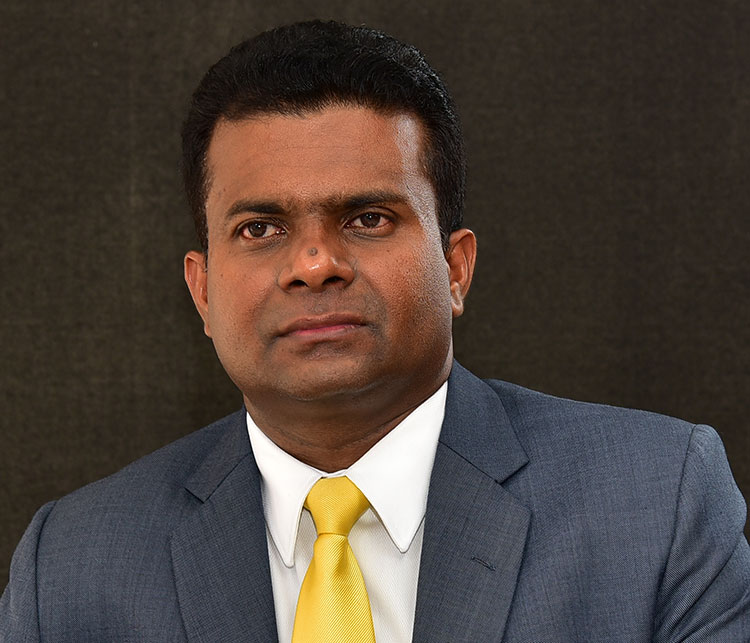
C.W. Mackie PLC has appointed Mangala Perera as its new Group Chief Executive Officer (Group CEO), strengthening its senior management team with an experienced corporate leader with over 26 years of cross-industry experience.
Perera, who has served as a Director of C.W. Mackie PLC since April 2, 2012, currently holds the position of Executive Director – Group Chief Operating Officer of the company. He has held senior roles in marketing and general management both locally and internationally.
In addition to his responsibilities at C.W. Mackie PLC, Perera serves as Managing Director of Sunquick Lanka (Private) Limited and holds directorships at Sunquick Lanka Properties (Private) Limited, Kelani Valley Canneries Limited, Ceymac Rubber Company Limited and Ceytra (Private) Limited. He is also a Non-Executive Director of Phoenix Industries Limited.
Perera’s academic and professional credentials span multiple disciplines, including a Master’s degree in Financial Economics from the University of Colombo, a BSc (Hons.) Special Degree in Marketing Management from the University of Sri Jayewardenepura and a Postgraduate Diploma in Business and Financial Management from the Institute of Chartered Accountants of Sri Lanka.
He is also a visiting lecturer in Postgraduate Studies in Management at the University of Colombo and the University of Kelaniya, and contributes to several national-level project committees and professional judging panels as an active marketing practitioner.
Beyond the corporate sector, Perera has been involved in sports administration and previously served as President of the Sri Lanka Mercantile Volleyball Federation, where he played a key role in promoting volleyball and beach volleyball in Sri Lanka.
The company said the appointment reflects its continued focus on strengthening leadership and driving future growth.

Tunisia out of World Cup after 0-4 defeat by Japan

Vance arrives in Switzerland for US-Iran talks

FFSL renews National Team Head Coach Abdullah Almutairi under “The Next Chapter” program

Gakpo, Brobbey doubles give Dutch 5–1 World Cup win

Trump vows Iran will not charge Strait of Hormuz tolls, but says US might

Showers will occur in the Western, Sabaragamuwa and North-western provinces and in Galle, Matara, Kandy and Nuwara-Eliya districts

‘Dates have the highest sugar content to fight Coronavirus’

Sunday Island 27 December – Headlines

#SundayIsland 17th December – Headlines

Sunday Island – 28th March

Sunday Island Headlines – 21 March

Sunday Island – 21st February – Headlines
-

 News7 days ago
Release of 2025 O/L results likely to be delayed
-

 Sports7 days ago
Tharanga set for high-profile javelin clash in Ostrava
-

 News7 days ago
Theft of USD 2.5 mn from Treasury: CoPF accused of complicity in NPP cover-up
-

 News6 days ago
Beijing Capital Airlines to resume flights to Colombo signalling boost to tourism
-

 Features5 days ago
Killing of Colombo’s ancient trees — a warning on UN’s World Desertification Day – 17 June
-

 Opinion7 days ago
Decoding Trump’s 12.5% “Forced Labor Tariff” on Sri Lanka
-

 Opinion7 days ago
Palm leaf manuscripts of Sri Lanka – Part V
-

 News2 days ago
Creditor not yet paid