
Features
CHRISTIANS IN SRI LANKA:

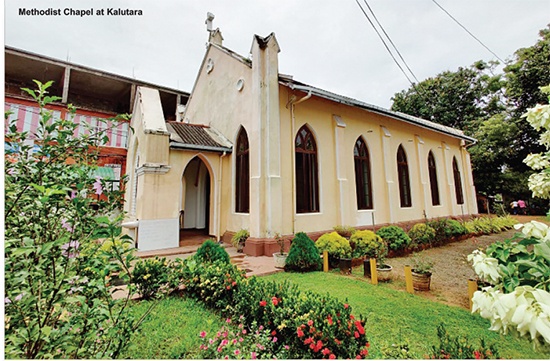
Living in Harmony amidst Challenges after Easter Terrorist Attacks of 2019
by Prabhath de Silva
Sri Lanka has attracted the attention of ancient and modern colonial empires, foreign countries ,merchants, travelers and missionaries over the centuries owing to its strategic and prominent location at a crossroads of maritime routes traversing the Indian Ocean.
 The Portuguese were the first European colonial power to arrive in Sri Lanka in 1505. Their presence in Sri Lanka’s maritime provinces between 1505 and 1656 CE, which began as an interaction of trade and commerce, later developed into a colonial rule in the maritime provinces from 1597. The maritime provinces were ruled by the Dutch East India Company from 1656 to 1796. The British captured the maritime provinces of the Island in 1796 . When native feudal Chiefs ceded the sovereignty of the interior native Kandyan Kingdom to the British Empire by the Kandyan Convention of 1815, the whole Island came under the British rule. Sri Lanka gained independence from the British in 1948.
The Buddhist missionaries from India during the reign of Emperor Asoka introduced Buddhism to Sri Lanka in the 3rd Century BCE, and it soon became the established religion of the ancient Sinhalese monarchy and the majority Sinhalese people. The Sinhalese majority community is predominantly Theravada Buddhist [93% of the Sinhalese population] and only a 7% of the Sinhalese population is Christian. Hinduism has been in existence since at least the 2nd century BCE The Sri Lankan Tamils are predominantly Hindu [ 85% of the Sri Lankan Tamil population]. A 15% of the Sri Lankan Tamil population is Christian. The Muslim settlers who came from the Arabian Gulf and later from South India brought Islam to the Island beginning in the 8th Century CE , converting native women upon marriage. Sri Lankan Muslims constitute 9.3 % of Sri Lankan’s population
During the presence of Portuguese in the Island (1505 to 1658), Catholic missionaries actively engaged in evangelization of natives. Thousands of native Sinhalese Buddhists and Tamil Hindus embraced the Christian Faith. The maritime provinces of Sri Lanka came under the rule of Dutch East India Company after its armies defeated the Portuguese in a series of battles between 1640 and 1658. The Dutch immediately banned Catholicism in Sri Lanka by laws. Through the brave and zealous endeavors of the Catholic missionaries from Goa, a territory of Portuguese in India, a territory of Portuguese in India, the Catholic Church in Sri Lanka which had become an outlawed underground church, survived and grew amidst persecution during the Dutch occupation. In last few decades of the Dutch rule in the maritime provinces, beginning from the 1750 s the Dutch granted religious freedom to Catholics.
From the beginning of their rule, the British granted religious freedom to all religions. The Catholic church emerged as the largest Christian church. The British permitted the Catholic Church in Sri Lanka to establish schools and charitable institutions. Catholic missionaries came from France, Belgium, Ireland, Italy, and Goa. During the British colonial rule, Anglican, Methodist, Baptist and The Salvation Army missionaries from the British Isles introduced their respective forms of Christianity to the Island in the 19th century. They established schools and charitable institutions throughout the Island. During the early British period, the American missionaries from the Congregationalist churches arrived in Sri Lanka and established churches, schools , the Island’s first western medical school in 1851, and medical missions in the Northern Province. In the early 20th century, when Sri Lanka was still a colony of the British, missionaries from the American Pentecostal churches introduced their brand of Christianity to the Island. According to the Census of 2012, a 70.2% of Sri Lankans were Theravada Buddhists, 12.6% were Hindus, 9.7% were Muslims (mainly Sunni), 7.4 Christian [Catholic 6.1%, other Christians 1.3 %] and 0.05% others.
Christians in Today’s Sri Lankan Society
In order to present a kaleidoscopic picture of today’s Christian community in Sri Lanka and the issues and challenges they face, I interviewed three pastors and four lay persons of four different Christian denominations in Sri Lanka for this article.
Voices of Pastors
 On one Sunday morning when the sun was shining bright, I stepped into the Methodist Chapel at Kalutara, a town (predominantly Buddhist) situated in the western coast of Sri Lanka 42 km south of Colombo. The Sunday worship service was in progress. Methodist Church of Sri Lanka was founded by the early British Methodist Missionaries who arrived in the Island in 1814. It was these first missionaries who had established the Methodist congregation at Kalutara through their zealous missionary endeavours in 1814. Methodist Church of Sri Lanka today has approximately 25,000 members throughout the Island. Methodist congregation of Kalutara currently has a membership of 90 people consisting of Sinhalese and a few Tamils.
After the service, I spoke to the Methodist Minister in charge of this congregation, Rev. Sunil Weerasinghe (60). “Every Sunday we proclaim God’s Word and His love, and we encourage people to live in peace with their neighbors. Most people in our congregation are a low income earners. There are only a few middle class families. In the pastour church helped people find work or start their own small businesses. After all, it is better teach someone to fish than give him fish.” Rev.Weerasinghe laments: “Methodist Church of Sri Lanka nowadays have no funds for such self-employment projects.
In evening of that Sunday, I met Rev. Shirley Faber (61),President of the Christian Reformed Church of Sri Lanka (formerly known as the Dutch Reformed Church in Sri Lanka ) at his residence in Dehiwala, a suburb of Colombo. It is the oldest Protestant denomination in the Island founded by the Dutch East India Company in 1642. The Christian Reformed Church which had around 200,000 members by the end of the Dutch colonial rule in the maritime provinces of Sri Lanka in 1796, is today one of the tiniest Christian denominations today with a membership of approximately 6000 people. Speaking of ecological and social concerns, Rev. Faber said: “The mandate of the Christian Churches is not only to preach the Gospel but also to show Christian concern and love for people and the love for God’s creation. God created the world and handed over the control of His beautiful creation to the human beings. We ought to know that we are only the stewards of His creation. As stewards of His creation, we should display good stewardship. We are accountable to God as to how we utilize the resources in His creation. The Churches should show its concern for ecological and social issues. In our society, wealth and resources are unfairly distributed. During the Covid-19 crisis, our church helped both Christians and non-Christians. We should show our love for people regardless of their religion not with the motive of converting them to Christian faith’.
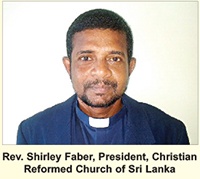 As for the theological challenges, Rev. Faber is of the view that some charismatic Pentecostal churches which promote and propagate the ‘new theology of prosperity’ (health and wealth), poses a challenge in that they entice the less informed members of mainline Christian churches to join them by their controversial teachings.
Easter Sunday Attacks : Seeking Justice
On 21 April 2019, Easter Sunday, three churches (two Catholic and one Evangelical Pentecostal) and three luxury hotels in Sri Lanka, Colombo, were attacked in a series of terrorist suicide bombings launched by a local Islamic extremist terrorist group which had embraced the ideology of ISIS. A total of 267 people were killed including at least 45 foreign nationals and eight bombers, and at least 600 were injured. Among those who were killed and injured, there were many children and women. The church bombings were carried out during Easter worship services in St. Sebestian’s Church, Katuwapitiya in Negombo, St. Anthony’s Church in Colombo and Zion Pentecostal Church in Baticaloa.
Out of the 267 people killed and 600 injured, about 221 killed and an overwhelming majority of the injured were Christians attending Easter Services in the three churches. On April 21 last year, Easter Sunday, a series of suicide bomb attacks launched by a local extremist Islamic group which has embraced the ISIS ideology inside three churches and three luxury hotels in Sri Lanka. Out of the 267 people killed and 600 injured, about 221 killed and an overwhelming majority of the injured were Christians attending Easter Services in the three churches. On April 21 last year, Easter Sunday, a series of suicide bomb attacks launched by a local extremist Islamic terrorist group which has embraced the ISIS ideology inside three churches and three luxury hotels in Sri Lanka. “The impact of the attacks is still noticeable. Christians seek justice for the victims and their next of kin, “says Rev. Dr. Noel Dias, a Catholic priest, a former Senior Lecturer in Public International Law at the University of Colombo and an Attorney-at–Law, who resides at the Archbishops’ House of Colombo.
Rev. Dr. Noel Dias remarked: “The leadership of the Catholic Church played a decisive role in containing the probable escalation of retaliatory violence against the Muslim community by appealing to her faithful not to retaliate but to forgive the attackers in a true Christian spirit. The Easter terror attacks have left a lasting impact on Christians. They are still seeking justice for the victims and their families.” These concerns are echoed every day by the Christians and other people in Sri Lanka and abroad. Mr. Mike Pompeo, US State Sectary who was on an official visit to Sri Lanka on the 27th and 28th October, did not forget to place a wreath at St. Anthony’s Church in Colombo on 28 th October 2020. In his Twitter, Pompeo said: “Today, I laid a wreath at the Shrine of St. Anthony, one of the sites of the 2019 #EasterAttacks which killed and injured hundreds of innocent people. We stand with the Sri Lankan people and the world to defeat violent extremism and bring perpetrators to justice.”
 There are some questions that remain to be answered. The most important of them all is: Why didn’t the Sri Lanka’s authorities in charge of security who had repeatedly received prior foreign intelligence reports about these terror attacks and the suicide bombers during the two weeks prior to the attacks, take appropriate action to arrest the suicide bombers and prevent them? The investigations including a concluded Parliamentary Select Committee inquiry and an on-going Presidential Commission Inquiry have not yet conclusively answered these questions even after one and a half years. Suspected perpetrators have so far been indicted in the High Court for trial in connection with the Easter attacks.
As for the spiritual challenges posed by the Easter Attacks, Rev. Dr. Noel Dias said: “The martyrdom is the seed of the Church. These challenges remind us of what C. S. Lewis once said: ’Pain insists upon being attended to. God whispers to us in our pleasures, speaks in our consciences, but shouts in our pains. It is his megaphone to rouse a deaf world.’
Speaking of the role of the Catholic Church in pastoral care, Rev. Dr. Dias opined: “Catholic Church is in the fore-front of organized pastoral activity, which performs very well in the educational and social service sectors. There is a great need for pastoral care in terms of building a rapport between the clergy and the laity. In terms of political involvement, Catholic Church in Sri Lanka does not get involved in party politics but raises her voice and concern when the occasion demands justice and reasonableness in the political and social context. In the perspective in theology, the church should refrain from being elitist. External pomp, over emphasis of material structures must be moderated. There is a greater need in this direction. In terms of fostering family relationships, Catholic Church is better organized than the other religious denominations. However, there is still an urgent need to address issues like pornography, drug and alcohol addiction etc.”
Voices of the Lay Christians:
Aruna Silva (50), a father of six children, who earns his livelihood as a three-wheeler taxi driver and a painter of motor vehicles said: ” I was born and bred as a Methodist. I moved to this area in 1995 and joined this congregation. There is religious freedom in the country. There were a few occasional isolated incidents of religious violence against Christian churches by a few extremist groups.” Aruna opined: “I believe that the persuasive and aggressive forms of evangelism used by some evangelical Pentecostal churches disregarding sensitivities of other religions, at times though not always, may have provoked the extremist elements to attack Christian places of worship in some rural areas”.
Naveen, a 20 year old young undergraduate student in Information Technology who is a member of this Methodist congregation at Kalutara said: “I am proud to be a Christian in Sri Lanka as it gives me a unique privilege to show my Christian testimony to non-Christian brothers and sisters by my words and deeds of love. Our good deeds would speak louder than our words. In order to help the poor people to improve their economic conditions, the church should first identify their skills and help them to earn an income in the areas they are so skilled”.
Janice Benjamin (32) is a young educated Catholic mother of five children, housewife and an active member of the Catholic movement known as “Neocatecumenal Way” founded by Kiko Argüello, a Spanish artist and Carmen Hernández in 1964. She lives in Colombo and is a member of St. Lawrence’s Church there. Janice strongly believes that “Satan is waging his final war against the family”. Says Janice, “I personally see how it is absolutely true in the context of the Church here. Many Catholics, I believe, are not given proper and adequate instructions on the Catholic Church and its history, its rich teachings, and as such it is very obvious to see the prevalence of many attacks on the family. The Neocatecumenal Way is a tiny minority within the Catholic Church. In the Neocatechumenal Way, we are given a lot of insight on the teachings of the church and the Bible particularly on marriage, family, children, contraception, abortion, and homosexuality. It is very sad to see only a minority in the church practice the official teaching of the Church on these issues. Many would go with the tide and agree with the modernist views of society. Sadly, many of my friends say that unless the Church adapts to the modern trends, it will lose its members.”
The Neocatecumenal Way of which Janice is a member, promotes the idea of having children as many as possible. Says Janice: As a young mother of five children, I would say that it is definitely a challenge for me to raise my five kids in a society which considers having more than one or two children is old fashioned and stupid. There are struggles economically, and physically and it is draining our energy and resources. But in the midst of all these I see the love of God resonates in my family of five children who are a blessing from God.”
Speaking of the most important reform needed in the Catholic Church, Janice opined: “In my opinion, the Catholic Church in Sri Lanka has to be more vocal in its teachings. The Church should do more to inculcate the rich traditions and values in her faithful, younger generations and children. The teachings of the church and the Bible should be slowly introduced to the children not in a moralistic and legalistic sense but in a way of showing them that this is how the Love of God is reflected.”
Professor Rathnajeevan Hoole (68) is a member of the Anglican Church in Sri Lanka. He belongs to the congregation of St. James’ Church in Nallur, Jaffna, his native place in the Northern province of Sri Lanka chiefly inhabited by Sri Lankan Tamils. Professor Hoole, is a former Senior Professor of Electrical Engineering at the University of Peradeniya and State University of Michigan. He is well known for his role as one of the three members of Sri Lanka’s Election Commission. Professor Hoole’s father was an Anglican clergyman. Professor Hoole has served as a member of the Diocesan Council of the Colombo Diocese of the Anglican Church in Sri Lanka for several years. A When interviewed by me, Professor Hoole expressed his concerns about the general level of education prevalent among the pastors in the Anglican Church of Sri Lanka and in other non-Catholic churches. Said Professor Hoole: “The educational standards of our protestant pastors have deteriorated over the last few decades. Pastors of non-Catholic mainline churches (except the pastors of Christian Reformed Church) are trained at Pilimatalawa Theological College where liberal theology is taught, while the pastors of evangelical free churches and Christian Reformed Church receive their theological education from evangelical/Pentecostal seminaries. The most important reform required is to groom educated Protestant pastors. Many Anglicans and other non-Catholic Christians seem against or ignorant of the creeds and Catholic side of our faith. The free churches even think the Lord’s Prayer is Roman Catholic. So unsatisfactory is our theological education. They think transference from Roman Catholicism is conversion. Most of the educated Jaffna Tamil Christians left Sri Lanka and settled down in the western countries during last six decades due to the ethnic tensions and a 30 year Civil War that ended in 2009”.
The Catholic Church in Sri Lanka and worldwide maintains very high and uniform educational standards for its clergy. In order to become a Catholic priest, a seminarian should first read for a Bachelor of Philosophy degree awarded by Gregorian University or Urban University of Rome in English medium after his General Certificate of Education (Advanced Level)-Sri Lanka’s matriculation examination. In addition to this a seminarian is required to read for a second degree of Bachelor of Theology awarded by one of these two universities. These degree are recognized by the university grants Commission of Sri Lanka and universities throughout the world.
Amidst all the challenges, the significant contributions of Christianity to the social and moral development of Sri Lankan society in some aspects remain highly significant. The most significant and prominent among such legacies is the formal educational system of primary and secondary schools in Sri Lanka. It is a lasting legacy of Christian missionaries. The missionaries of mainline Christian denominations (Catholic and non-Catholic) were responsible for introducing a formal modern educational system by establishing their respective networks of schools throughout the iIsland increasing the literacy of the people. The non-Christians were the largest beneficiaries of the Christian missionary school system. The leaders of Buddhist, Hindu and Muslim communities who had received their education from the Christian missionary schools later established Buddhist, Hindu and Muslim school networks on the lines of the Christian missionary school model in the last quarter of the 19th century and in the first half of the 20th century. The British colonial government provided financial aid to both Christian and non-Christian school networks. The Christian missionary school networks served as the models for both State and non-Christian schools. The Catholic and Protestant Churches were the pioneers in establishing Reformatories for juvenile offenders, Schools for the Blind and Deaf, children’s homes, elders’ s homes, hospitals and industrial schools for young persons etc. The concept of monogamous marriage was introduced to Sri Lanka by Christian colonial rulers and missionaries. It is now a well accepted and entrenched concept among the Buddhists and Hindus. Christian influence can also be seen in wedding ceremonies and funerals and in other moral and social aspects too.



 ‘Adapt, shrink or die’ – thus runs the warning issued by the Trump administration to UN humanitarian agencies with brute insensitivity in the wake of its recent decision to drastically reduce to $2bn its humanitarian aid to the UN system. This is a substantial climb down from the $17bn the US usually provided to the UN for its humanitarian operations.
Considering that the US has hitherto been the UN’s biggest aid provider, it need hardly be said that the US decision would pose a daunting challenge to the UN’s humanitarian operations around the world. This would indeed mean that, among other things, people living in poverty and stifling material hardships, in particularly the Southern hemisphere, could dramatically increase. Coming on top of the US decision to bring to an end USAID operations, the poor of the world could be said to have been left to their devices as a consequence of these morally insensitive policy rethinks of the Trump administration.
Earlier, the UN had warned that it would be compelled to reduce its aid programs in the face of ‘the deepest funding cuts ever.’ In fact the UN is on record as requesting the world for $23bn for its 2026 aid operations.
If this UN appeal happens to go unheeded, the possibilities are that the UN would not be in a position to uphold the status it has hitherto held as the world’s foremost humanitarian aid provider. It would not be incorrect to state that a substantial part of the rationale for the UN’s existence could come in for questioning if its humanitarian identity is thus eroded.
Inherent in these developments is a challenge for those sections of the international community that wish to stand up and be counted as humanists and the ‘Conscience of the World.’ A responsibility is cast on them to not only keep the UN system going but to also ensure its increased efficiency as a humanitarian aid provider to particularly the poorest of the poor.
It is unfortunate that the US is increasingly opting for a position of international isolation. Such a policy position was adopted by it in the decades leading to World War Two and the consequences for the world as a result for this policy posture were most disquieting. For instance, it opened the door to the flourishing of dictatorial regimes in the West, such as that led by Adolph Hitler in Germany, which nearly paved the way for the subjugation of a good part of Europe by the Nazis.
If the US had not intervened militarily in the war on the side of the Allies, the West would have faced the distressing prospect of coming under the sway of the Nazis and as a result earned indefinite political and military repression. By entering World War Two the US helped to ward off these bleak outcomes and indeed helped the major democracies of Western Europe to hold their own and thrive against fascism and dictatorial rule.
Republican administrations in the US in particular have not proved the greatest defenders of democratic rule the world over, but by helping to keep the international power balance in favour of democracy and fundamental human rights they could keep under a tight leash fascism and linked anti-democratic forces even in contemporary times. Russia’s invasion and continued occupation of parts of Ukraine reminds us starkly that the democracy versus fascism battle is far from over.
Right now, the US needs to remain on the side of the rest of the West very firmly, lest fascism enjoys another unfettered lease of life through the absence of countervailing and substantial military and political power.
However, by reducing its financial support for the UN and backing away from sustaining its humanitarian programs the world over the US could be laying the ground work for an aggravation of poverty in the South in particular and its accompaniments, such as, political repression, runaway social discontent and anarchy.
What should not go unnoticed by the US is the fact that peace and social stability in the South and the flourishing of the same conditions in the global North are symbiotically linked, although not so apparent at first blush. For instance, if illegal migration from the South to the US is a major problem for the US today, it is because poor countries are not receiving development assistance from the UN system to the required degree. Such deprivation on the part of the South leads to aggravating social discontent in the latter and consequences such as illegal migratory movements from South to North.
Accordingly, it will be in the North’s best interests to ensure that the South is not deprived of sustained development assistance since the latter is an essential condition for social contentment and stable governance, which factors in turn would guard against the emergence of phenomena such as illegal migration.
Meanwhile, democratic sections of the rest of the world in particular need to consider it a matter of conscience to ensure the sustenance and flourishing of the UN system. To be sure, the UN system is considerably flawed but at present it could be called the most equitable and fair among international development organizations and the most far-flung one. Without it world poverty would have proved unmanageable along with the ills that come along with it.
Dehumanizing poverty is an indictment on humanity. It stands to reason that the world community should rally round the UN and ensure its survival lest the abomination which is poverty flourishes. In this undertaking the world needs to stand united. Ambiguities on this score could be self-defeating for the world community.
For example, all groupings of countries that could demonstrate economic muscle need to figure prominently in this initiative. One such grouping is BRICS. Inasmuch as the US and the West should shrug aside Realpolitik considerations in this enterprise, the same goes for organizations such as BRICS.
The arrival at the above international consensus would be greatly facilitated by stepped up dialogue among states on the continued importance of the UN system. Fresh efforts to speed-up UN reform would prove major catalysts in bringing about these positive changes as well. Also requiring to be shunned is the blind pursuit of narrow national interests.

 Hi! Great to be back after my Christmas break.
Thought of starting this week with egg white.
Yes, eggs are brimming with nutrients beneficial for your overall health and wellness, but did you know that eggs, especially the whites, are excellent for your complexion?
OK, if you have no idea about how to use egg whites for your face, read on.
Egg White, Lemon, Honey:
Separate the yolk from the egg white and add about a teaspoon of freshly squeezed lemon juice and about one and a half teaspoons of organic honey. Whisk all the ingredients together until they are mixed well.
Apply this mixture to your face and allow it to rest for about 15 minutes before cleansing your face with a gentle face wash.
Don’t forget to apply your favourite moisturiser, after using this face mask, to help seal in all the goodness.
Egg White, Avocado:
In a clean mixing bowl, start by mashing the avocado, until it turns into a soft, lump-free paste, and then add the whites of one egg, a teaspoon of yoghurt and mix everything together until it looks like a creamy paste.
Apply this mixture all over your face and neck area, and leave it on for about 20 to 30 minutes before washing it off with cold water and a gentle face wash.
Egg White, Cucumber, Yoghurt:
In a bowl, add one egg white, one teaspoon each of yoghurt, fresh cucumber juice and organic honey. Mix all the ingredients together until it forms a thick paste.
Apply this paste all over your face and neck area and leave it on for at least 20 minutes and then gently rinse off this face mask with lukewarm water and immediately follow it up with a gentle and nourishing moisturiser.
Egg White, Aloe Vera, Castor Oil:
To the egg white, add about a teaspoon each of aloe vera gel and castor oil and then mix all the ingredients together and apply it all over your face and neck area in a thin, even layer.
Leave it on for about 20 minutes and wash it off with a gentle face wash and some cold water. Follow it up with your favourite moisturiser.
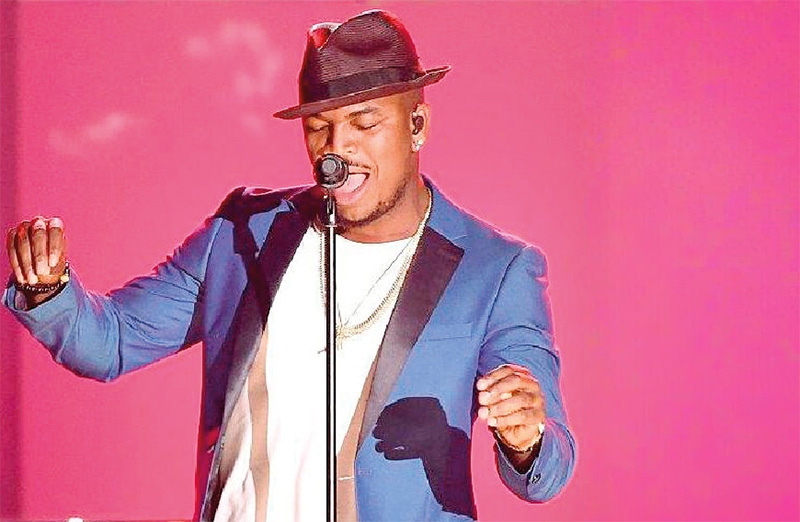
 Superlatives galore were used, especially on social media, to highlight R&B singer Ne-Yo’s trip to Sri Lanka: Global superstar Ne-Yo to perform live in Colombo this December; Ne-Yo concert puts Sri Lanka back on the global entertainment map; A global music sensation is coming to Sri Lanka … and there were lots more!
At an official press conference, held at a five-star venue, in Colombo, it was indicated that the gathering marked a defining moment for Sri Lanka’s entertainment industry as international R&B powerhouse and three-time Grammy Award winner Ne-Yo prepares to take the stage in Colombo this December.
What’s more, the occasion was graced by the presence of Sunil Kumara Gamage, Minister of Sports & Youth Affairs of Sri Lanka, and Professor Ruwan Ranasinghe, Deputy Minister of Tourism, alongside distinguished dignitaries, sponsors, and members of the media.
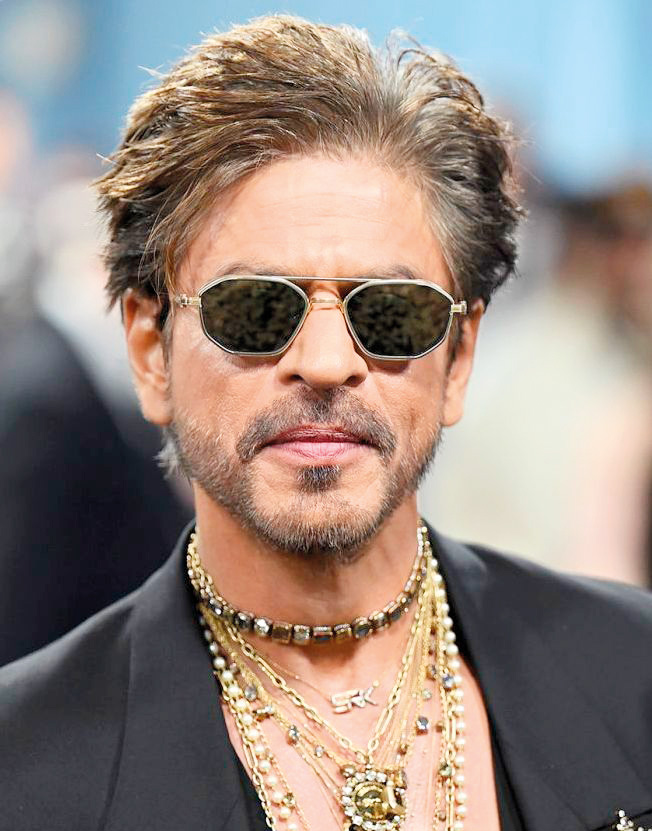
Shah Rukh Khan: Disappointed his fans in Sri Lanka
According to reports, the concert had received the official endorsement of the Sri Lanka Tourism Promotion Bureau, recognising it as a flagship initiative in developing the country’s concert economy by attracting fans, and media, from all over South Asia.
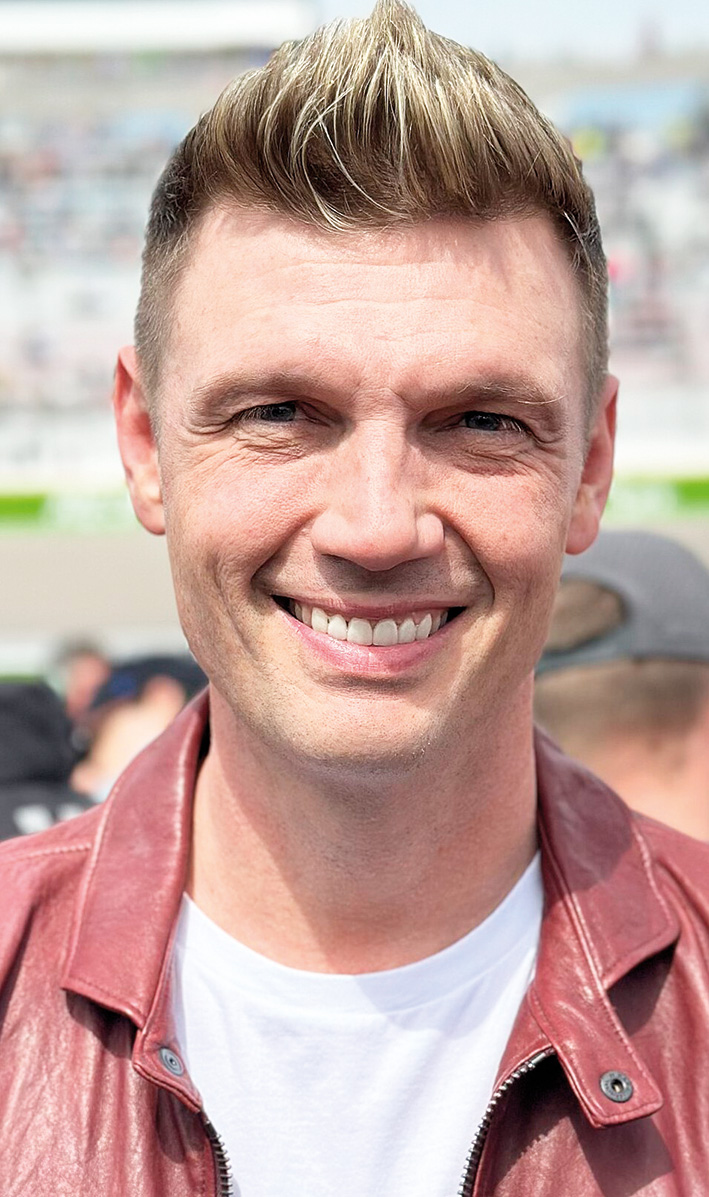
Nick Carter: His concert, too, was cancelled due to “Unforeseen circumstances
However, I had that strange feeling that this concert would not become a reality, keeping in mind what happened to Nick Carter’s Colombo concert – cancelled at the very last moment.
Carter issued a video message announcing he had to return to the USA due to “unforeseen circumstances” and a “family emergency”.
Though “unforeseen circumstances” was the official reason provided by Carter and the local organisers, there was speculation that low ticket sales may also have been a factor in the cancellation.
Well, “Unforeseen Circumstances” has cropped up again!
In a brief statement, via social media, the organisers of the Ne-Yo concert said the decision was taken due to “unforeseen circumstances and factors beyond their control.”
Ne-Yo, too, subsequently made an announcement, citing “Unforeseen circumstances.”
The public has a right to know what these “unforeseen circumstances” are, and who is to be blamed – the organisers or Ne-Yo!
Ne-Yo’s management certainly need to come out with the truth.
However, those who are aware of some of the happenings in the setup here put it down to poor ticket sales, mentioning that the tickets for the concert, and a meet-and-greet event, were exorbitantly high, considering that Ne-Yo is not a current mega star.
We also had a cancellation coming our way from Shah Rukh Khan, who was scheduled to visit Sri Lanka for the City of Dreams resort launch, and then this was received: “Unfortunately due to unforeseen personal reasons beyond his control, Mr. Khan is no longer able to attend.”
Referring to this kind of mess up, a leading showbiz personality said that it will only make people reluctant to buy their tickets, online.
“Tickets will go mostly at the gate and it will be very bad for the industry,” he added.

Zohran Mamdani sworn in as New York City mayor

In pictures: New Year welcomed around the world

Foreign warships commended for their assistance during weather disaster in Sri Lanka

Machu Picchu train crash leaves one dead and dozens injured

I invite you to step into 2026 with renewed energy, hope, and determination – PM

Fairly heavy showers about 75 mm are likely at some places in the Central and Uva provinces and in Batticaloa and Ampara districts

‘Dates have the highest sugar content to fight Coronavirus’

Sunday Island 27 December – Headlines

#SundayIsland 17th December – Headlines

Sunday Island – 28th March

Sunday Island Headlines – 21 March

Sunday Island – 21st February – Headlines
-
 News7 days ago
Street vendors banned from Kandy City
-

 Sports4 days ago
Gurusinha’s Boxing Day hundred celebrated in Melbourne
-
 News2 days ago
Leading the Nation’s Connectivity Recovery Amid Unprecedented Challenges
-

 News7 days ago
Lankan aircrew fly daring UN Medevac in hostile conditions in Africa
-

 Sports5 days ago
Time to close the Dickwella chapter
-

 Features3 days ago
It’s all over for Maxi Rozairo
-

 Features7 days ago
Rethinking post-disaster urban planning: Lessons from Peradeniya
-

 Opinion7 days ago
Are we reading the sky wrong?