
News
Implementation of Yahapalana strategy President’s real intention – Manohara


Lt. Gen. Dias warns of Eelam through constitutional means
By Shamindra Ferdinando
Former Army Chief of Staff Lt. Gen. Jagath Dias asks whether a plan is underway to help establish Eelam by constitutional means.The Gajaba Regiment veteran asked a gathering at Sri Sambuddhathva Jayanthi Mandiraya whether they realised that the full implementation of the 13th Amendment to the Constitution would pave the way for a separate state in the Northern and Eastern province for all practical purposes.
The former frontline combat veteran said so, addressing a recent meeting to educate the people on the danger of the full implementation of the 13th Amendment to the Constitution, enacted in the late 1988 in terms of the Indo-Lanka Accord signed in the previous year virtually at the point of a gun held by New Delhi.
Having served the Army for over 35 years, Jagath Dias retired in Dec. 2015. At the time of his retirement, he held the rank of Major General. The ex-soldier said that he felt the urgent need to oppose the Wickremesinghe-Rajapaksa government move as it would lead to the disintegration of the country.
Those who had fought the LTTE, at the risk of their lives to bring the war to a successful conclusion in May 2009, were aghast at the current moves to facilitate the separatist agenda, the wartime General Officer Commanding (GoC) of the 57 Division said. The first Division, deployed on the Vanni front in March 2007, as the LTTE abandoned its bases in the East, the formation was tasked with regaining Kilinochchi.
The former GoC queried whether withdrawal of some military bases, at the expense of national security, giving up control of archeological sites, privatization of public assets and weakening of the military, were meant to create an environment, conducive for the breaking up of the country.
Lt. Gen. Dias who had never addressed such a public gathering before said that the implementation of the 13th Amendment couldn’t be justified, under any circumstances, as India failed to execute her side of the Accord that was forced on Sri Lanka.
Recalling the direct Indian military intervention, in 1987, as troops engaged in first brigade-level offensive in the Vadamaratchchi region of the Jaffna peninsula were on the verge of capturing Vellupillai Prabhakaran, the retired officer recalled stressing that the LTTE couldn’t be disarmed in terms of the Agreement. Therefore, Sri Lanka was not obliged to honour the accord, the Gajaba veteran said, urging fresh appraisal of the country’s response to the emerging threat.
India completed the withdrawal of its troops in March 1990. Referring to the May 1991 assassination of Congress I prime ministerial candidate Rajiv Gandhi contesting the general election, Lt. Gen. Dias explained how in the absence of proper defence and foreign policies, the LTTE gradually developed into a formidable conventional fighting force, inclusive of a deadly suicide wing that claimed the lives of so many innocents. The ex-combat officer compared the growth of the LTTE with the corresponding failure on the part of successive governments to realize the impending danger and counter the threat.
Sri Lanka should keep in mind that India forced the controversial constitutional amendment after having threatened the then executive, Lt. Gen. Dias said.At the onset of his speech, the ex-solder emphasized that he didn’t represent any political party or particular ideology. “I was influenced by the unexpected political changes last year and subsequent developments,” Lt. Gen. Dias said, declaring that the division of the country wouldn’t be allowed.
President’s Counsel Manohora de Silva, who had been always at the forefront of campaigns against separatist agenda, warned that President Ranil Wickremesinghe’s real intention was to implement constitutional proposals that were submitted by a parliamentary committee during the Yahapalana administration during which he served as the Prime Minister.
The constitutional expert said that President Wickremesinghe had been quite clear about his intention when he addressed the Parliament on 09 Aug., regarding the course of action he intended to take with regard to the issue at hand.
Referring to the constitutional proposals formulated by a parliamentary committee that included Presidents Counsel M.A. Sumanthiran (TNA) and Jayampathy Wickremaratne (UNP National List), Manohara de Silva PC said that the overall project was meant to strip Sri Lanka of its unitary status.
Pointing out that the Chief Government Whip Prasanna Ranatunga declared their support for 13A plus, immediately after President Wickremesinghe’s 09 Aug. speech, Manohara de Silva said that the UNP leader and the SLPP leader Mahinda Rajapaksa seemed to be on the same page.
Recently, rebel SLPP MP Prof. Channa Jayasumana asked former President Gotabaya Rajapaksa to state his position on President Wickremesinghe’s plan as the latter was elected in July last year to complete the five-year term won overwhelmingly by the former President at the Nov. 2019 presidential election. Prof. Jayasumana said that the former President could not keep quiet when his mandate was used contrary to the wishes of the electorate that elected him.
The President’s Counsel said that all previous presidents, including Chandrika Bandaranaike Kumaratunga, who believed in devolution, refrained from implementing certain provisions in the 13th Amendment as they realized the danger.
Referring to the relevant sections in the 13th Amendment, Manohara de Silva explained how the full implementation could quickly lead to chaos. The lawyer discussed the circumstances under which the Northern and Eastern provinces could amalgamate again to consolidate the Tamil homeland theory.
Reminding how Dinesh Gunawardena voted against the 13th Amendment in 1988 when it was presented at the behest of India, Manohara said he was utterly disappointed at the way the MEP leader remained silent when President Wickremesinghe advanced his political agenda. The lawyer stressed the responsibility on the part of Cabinet ministers to state their position on the 13th Amendment or be prepared to face the consequences.
The President’s Counsel explained how the full implementation of the 13th Amendment could reduce the national police to the task of providing protection to ‘VIPs’ whereas provincial police, under the Chief Ministers, take charge of law and order.
The outspoken lawyer urged the PM and other parliamentarians to ascertain the rapid developments taking place and take decisions with national interest in their hearts.








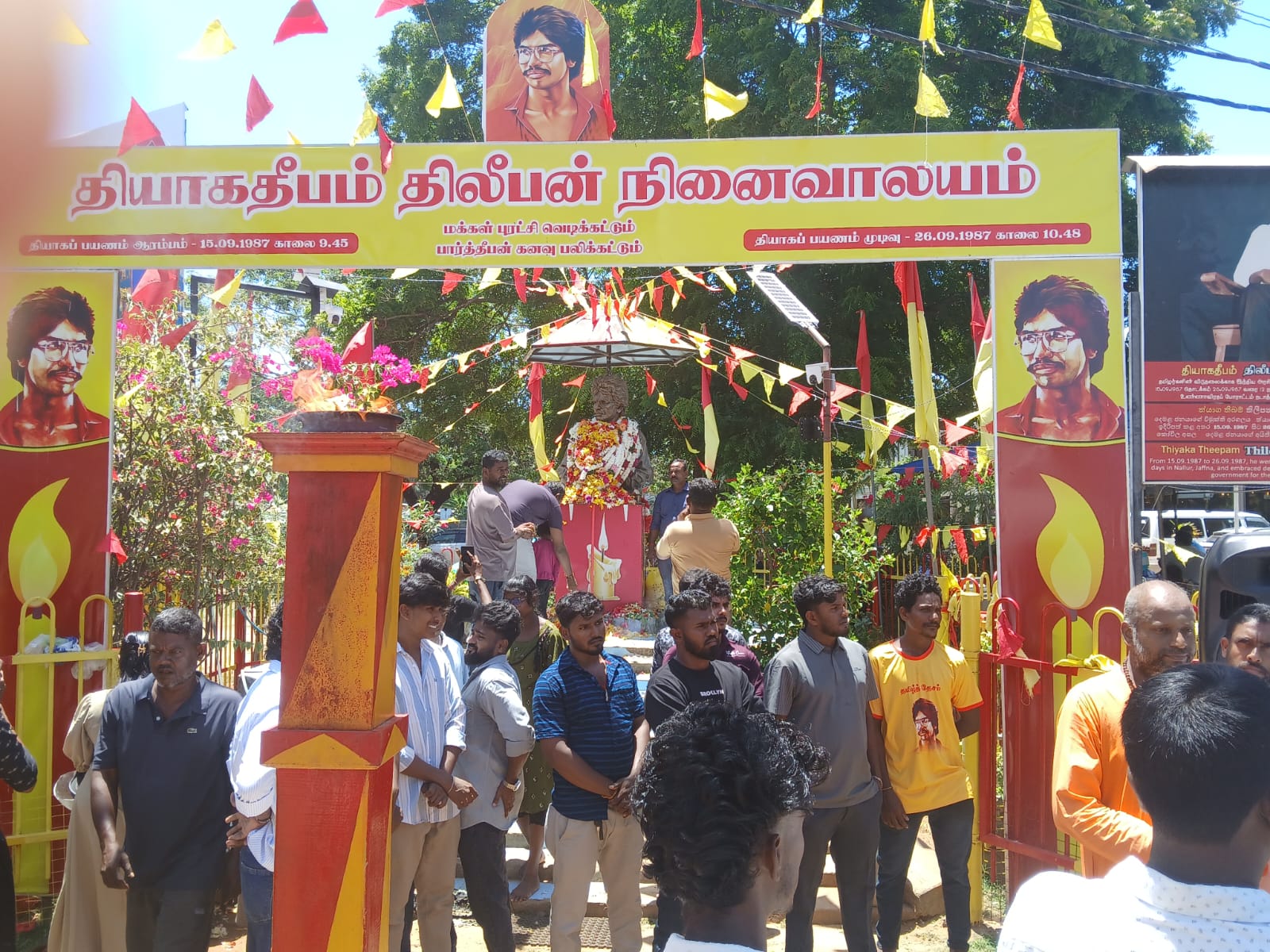
A commemorative service was held in memory of Rasaiah Parthipan commonly known by the nom de guerre ‘Thileepan’ in Nallur Jaffna this morning (26).
Parthipan a revolutionary member of the LTTE and a student of the University of Jaffna, commenced a hunger strike on 15th September 1987 untill his death on 26th September 1987. He was 23 years old at the time of his demise.
Latest News
Landslide Early Warnings issued to the districts of Colombo, Galle, Gampaha, Hambanthota, Kalutara, Kandy, Kegalle, Kurunegala, Matara, Nuwara Eliya and Ratnapura


The National Building Research Institute has issued landslide early warnings to the districts of Colombo, Galle, Gampaha, Hambanthota, Kalutara, Kandy, Kegalle, Kurunegala, Matara, Nuwara Eliya and Ratnapura from 16:00 hrs on 25.09.2026 To 16:00 hrs on 26.09.2026
Accordingly,
LEVEL III [RED] landslide early warnings have been issued to the Divisional Secretaries Divisions and surrounding areas of Neluwa, Nagoda, Niyagama and Thawalama inthe Galle district, Ganga Ihala Korale, Udapalatha, Doluwa and Pasbage Korale in the Kandy district, and Kothmale West, Ambagamuwa, Kotmale East and Norwood in the Nuwara Eliya district.
LEVEL II [AMBER] landslide early warnings have been issued to the Divisional Secretaries Divisions and surrounding areas of Elpitiya, Baddegama and Karandeniya in the Galle district, Walallawita in the Kalutara district, Deltota, Udunuwara, Gangawata Korale, Yatinuwara and Panvila in the Kandy district, Aranayake, Dehiowita, Mawanella, Deraniyagala and Yatiyanthota in the Kegalle district, Thalawakelle in the Nuwara Eliya district and Ratnapura and Pelmadulla in the Ratnapura district.
LEVEL I [YELLOW] landslide early warnings have been issued to the Divisional Secretaries Divisions and surrounding areas of Seethawaka and Padukka in the Colombo district, Attanagalla and Mirigama in the Gampaha district, Katuwana and Walasmulla in the Hambanthota district, Ingiriya and Bulathsinhala in the Kalutara district, Hatharaliyadda, Poojapitiya, Medadumbara, Kundasale, Ududumbara, Thumpane, Akurana, Pathadumbara, Harispattuwa and Pathahewaheta in the Kandy district, Warakapola, Bulathkohupitiya, Galigamuwa, Kegalle and Ruwanwella in the Kegalle district, Mallawapitiya, Alawwa, Polgahawela and Mawathagama in the Kegalle district, Pitabeddara, Kotapola and Pasgoda in the Matara district, Nuwara Eliya in the Nuwara Eliya district and Elapatha, Ayagama, Nivithigala, Kuruwita and Kalawana in the Ratnapura district
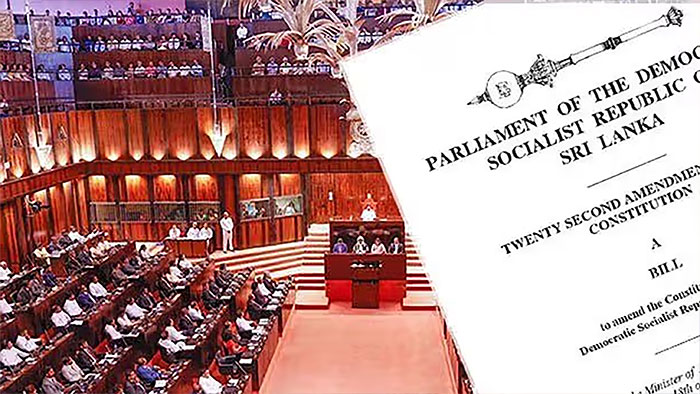
Parliament yesterday passed the Twenty-Second Amendment to the Constitution Bill and the Judicature (Amendment) Bill with two-thirds majorities, with 158 MPs voting in favour and 63 against each Bill.
The Illankai Tamil Arasu Kadchi (ITAK) and Sri Lanka Muslim Congress (SLMC) voted with the SJB against the Bills.
NDF MPs Ravi Karunanayake and Faizer Musthapha and SJB Badulla District MP Nayana Wasalathilaka were not present when the votes were taken.
The final vote on the Judicature (Amendment) Bill was announced at around 8.08 p.m. after Opposition MPs called for divisions on its clauses during the Committee Stage.
The votes followed a two-day debate which commenced on Thursday (24), after Justice and National Integration Minister Harshana Nanayakkara presented the Bills for their Second Reading.
The Supreme Court’s determination on the Bills was presented to Parliament on Tuesday (22) by Speaker Dr Jagath Wickramaratne. The Court determined that the 22nd Amendment Bill did not require approval at a referendum and could be passed by a special two-thirds majority in Parliament.
The amendment provides for raising the mandatory retirement age of Supreme Court judges from 65 to 67 and that of Court of Appeal judges from 63 to 65. It also provides for the Chief Justice to retire at 67 or after completing six years in office, whichever comes earlier.
The Speaker informed Parliament that the Judicature (Amendment) Bill could be passed by a simple majority.
The SJB opposed the legislation and its MPs attended Parliament dressed in black yesterday. The party also staged a protest at Polduwa Junction, Battaramulla, under the theme “No to 22, which destroys democracy”, with Opposition Leader Sajith Premadasa and several SJB politicians participating.

Thileepan rembered on 39th death anniversary

Landslide Early Warnings issued to the districts of Colombo, Galle, Gampaha, Hambanthota, Kalutara, Kandy, Kegalle, Kurunegala, Matara, Nuwara Eliya and Ratnapura

Showers in the Western, Uva and Sabaragamuwa provinces and in Galle, Matara, Kandy, Nuwara-Eliya, Batticaloa and Ampara districts.

22A, Judicature Amendment Bills passed with 2/3 majority

TIN mandatory for key transactions from Nov. 1

Navy brings 25 Indonesian fishermen ashore after trawler capsizes

‘Dates have the highest sugar content to fight Coronavirus’

Sunday Island 27 December – Headlines

#SundayIsland 17th December – Headlines

Sunday Island – 28th March

Sunday Island Headlines – 21 March

Sunday Island – 21st February – Headlines
-

 News7 days ago
Namal Rajapaksa Buddhist gambit fails, bail denied
-

 Features7 days ago
Why the spelling Sri Lankan names in English vary
-

 Features7 days ago
Three bands, a new identity: Sri Lankan wolf snake recognised as distinct species
-
 Business7 days ago
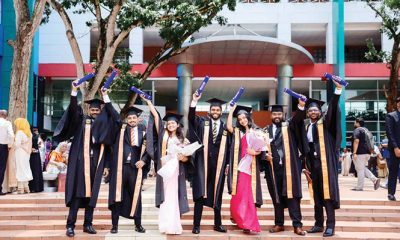
SLIIT holds largest-ever convocation
-

 News7 days ago
Vehicle prices drop by up to Rs. 1 mn, says importers’ body
-
 News7 days ago
Govt monitors reported Saudi death sentence – Foreign Ministry
-
 Business7 days ago
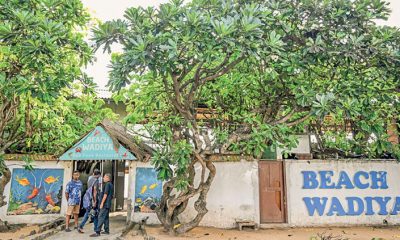
Lanka’s famed beach shack battles demolition
-

 Business7 days ago
All-new Bolero MaXX Pik-Up unveiled in Lanka