
News
Lankan asylum seeker in Australia begins 1,000km walk

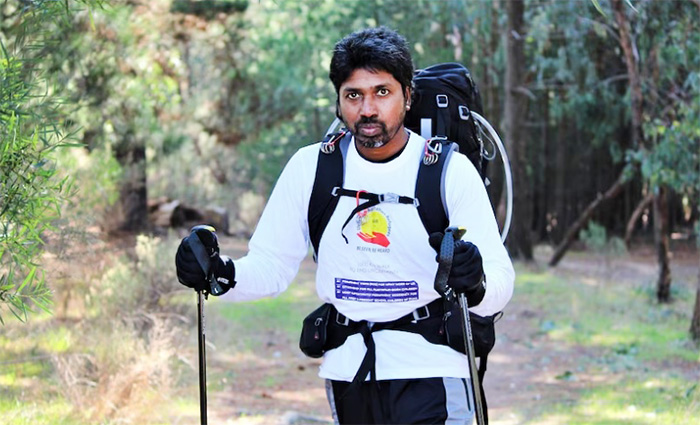
A Sri Lankan asylum seeker in Australia has initiated a 1000km-long journey on foot from Ballarat to Sydney, in a bid to bring the attention of Australian Prime Minister Anthony Albanese to refugee families living in limbo and to seek permanent residency in Australia.
A report published by the Australian Broadcasting Center News said: Neil Para has been living in the regional Victorian city of Ballarat in Australia for more than 8 years with no visa.
He is one of approximately 12,500 people who have been living in Australia for more than a decade but are ineligible to apply for permanent residency under the new Resolution of Status visa – about 2,500 have no visa at all, according to foreign media.
Para fled Sri Lanka in 2008 amidst the civil war, to Malaysia, leaving his wife, Sugaa, behind.
In 2012, along with his eight-month pregnant wife, and two kids, Para travelled by boat to Christmas Island, an Australian external territory, via Indonesia.
The family spent time in a detention centre in Darwin, then community detention, before being released on a bridging visa in September 2013, when they moved to Ballarat.
Para was able to work while on a bridging visa for four months, until their application for protection was rejected and their visa was revoked.
The family has relied on community members to pay their rent and cover bills for almost nine years, while lodging appeals against the rejection and applications for ministerial intervention.
Para has said not having access to Medicare had deprived her children of their childhood, as she did not allow them to do things that carried the risk of getting hurt.
The youngest daughter is now an Australian citizen, however, the family faces deportation at any time.
Para is planning to walk about 30 kilometres each day with the goal to arrive by September 09.
More than 100 volunteers are expected to be part of the journey, driving his support vehicle and offering him a place to stay each night.
Para has gathered more than 11,500 signatures on an online petition to deliver to Prime Minister Anthony Albanese on arrival in Sydney.
A spokesperson for Australia’s Department of Home Affairs said in a statement it would not comment on individual cases due to privacy obligations.
The spokesperson said each case was assessed on its merits, taking into account individual circumstances and the most current and relevant country of origin information.


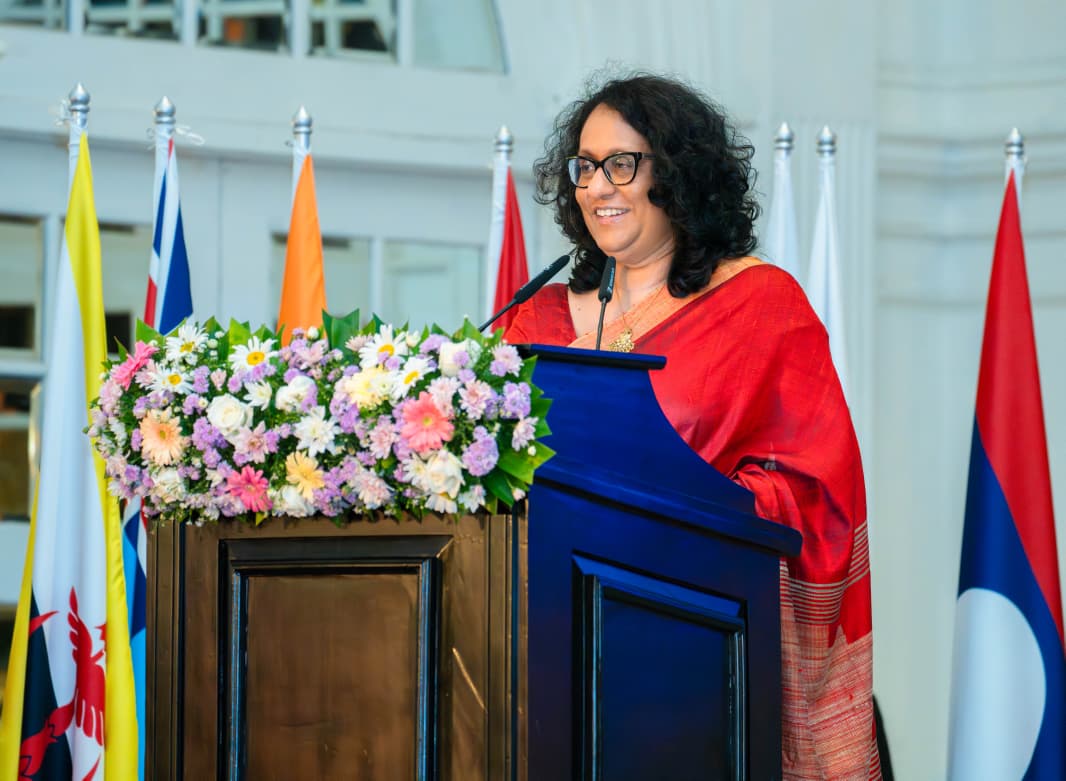
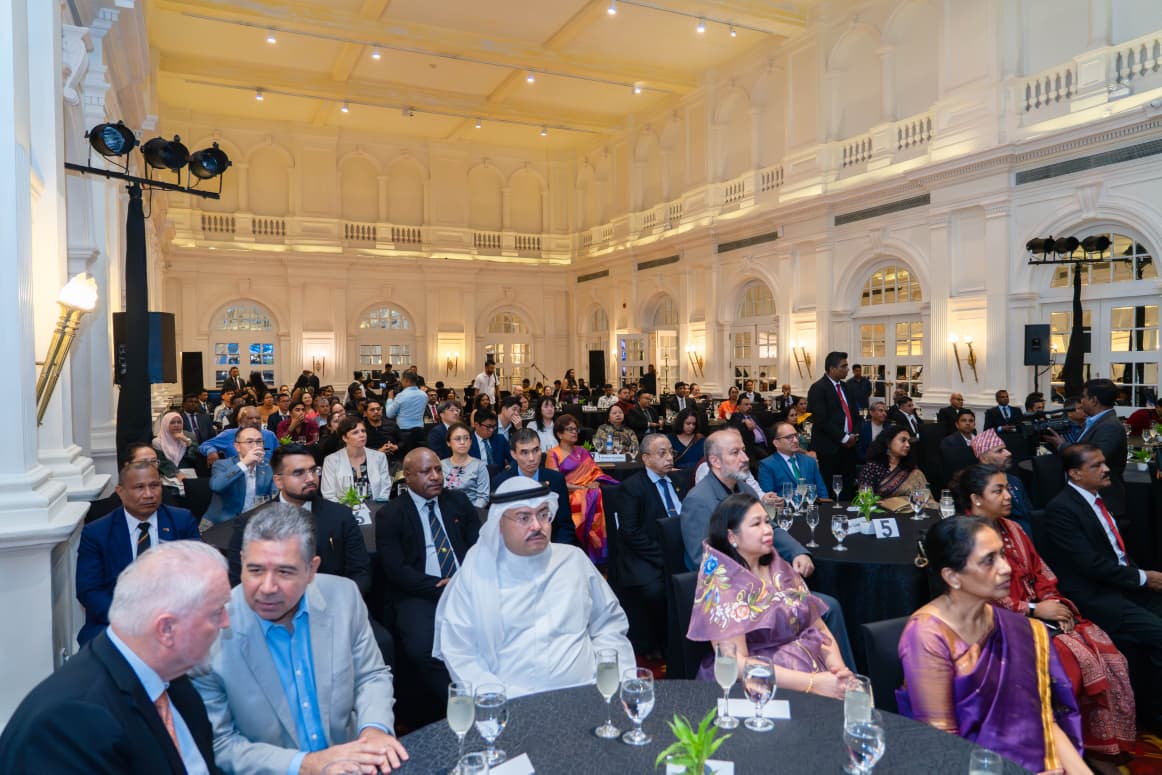
The 75th Anniversary Celebration of the Colombo Plan was held on Friday 03 July at the Galle Face Hotel in Colombo under the patronage of Prime Minister Dr. Harini Amarasuriya.
Delivering the keynote address, the Prime Minister stated that the Colombo Plan was established 75 years ago at a time when many Asian nations were embarking on the path to independence while confronting challenges of post-war reconstruction and economic development.
She noted that it is a matter of great pride for Sri Lanka that the organization bears the name “Colombo” and that the country continues to serve as its host.
The Prime Minister further noted that, as Sri Lanka pursues digital transformation, sustainable transport systems, and resilient supply chains, the Colombo Plan’s early investments in the country’s energy, agriculture, irrigation, and transport sectors continue to form an important part of the nation’s development foundation.
The Prime Minister also highlighted the significant contribution of the Colombo Plan’s Drug Advisory Programme in addressing the global drug menace, which has a profound impact on youth, public health, and social stability. The Prime Minister emphasized that, under the leadership of the President, the Government of Sri Lanka has accorded high priority to combating the drug menace and expressed appreciation for the continued support extended by the Colombo Plan towards these efforts.
The Prime Minister further stated that today’s world is far more complex than it was in 1951, with rapid technological transformation, climate challenges, and evolving geopolitical dynamics. In this context, the Prime Minister stressed that regional organizations such as the Colombo Plan must continue to evolve, becoming more adaptive and responsive to contemporary challenges. The Prime Minister also underscored the importance of strengthening cooperation in education and human capital development, while fostering greater awareness among younger generations of the value of international cooperation.
During the ceremony, a special tribute was paid to Dr. Benjamin P. Reyes in recognition of his distinguished service as Secretary-General of the Colombo Plan over the past four years. The newly appointed Secretary-General, Chulamee Chartsuwan, was also welcomed.
To commemorate the 75th anniversary, a special commemorative postage stamp and the publication titled “Colombo Plan 75 Years – 75 Stories” were officially launched.
The event was attended by Deputy Minister of Foreign Affairs and Foreign Employment Arun Hemachandra, Ambassador of Vietnam to Sri Lanka and Chairperson of the Colombo Plan Council Trinh Thi Tam, along with many distinguished guests.
Prime Minister’s Media Division


Dengue hyper-epidemic not yet under control, PHI Union warns
The Public Health Inspectors’ (PHI) Union of Sri Lanka on Friday said the country’s dengue hyper-epidemic situation has still not been brought under control, warning of a fresh rise in cases amid changing weather conditions.
Acting President of the PHI Union Upul Rohana said that although the situation has shown some improvement in areas where outbreaks were first reported, new clusters of infection are now emerging in other parts of the country.
He urged the public to maintain, and not reduce, current dengue prevention activities under any circumstances.
Rohana noted that light showers had begun in several areas under prevailing weather conditions, increasing the risk of mosquito breeding as vector density is already high.
He also identified unoccupied properties as a major challenge in dengue control, pointing out that houses belonging to persons working abroad, as well as newly purchased but uninhabited properties in urban areas, were contributing significantly to mosquito breeding sites.
Meanwhile, the National Dengue Control Unit (NDCU) said on Friday that dengue cases reported so far this year have exceeded 57,000, with 57,668 infections and 35 deaths recorded countrywide.
The NDCU said 1,253 new cases were reported within the past 24 hours alone.District-wise, Colombo has recorded 11,811 cases so far this year, while Gampaha has reported 11,443 cases, making them the two most affected districts.

The Court of Appeal on Friday dismissed a revision application filed by Yoshitha Rajapaksa in connection with the money laundering case popularly known as the “Menik Malla” case.
The application challenged a ruling of the Colombo High Court, which had earlier rejected a preliminary objection raised by the defence during trial proceedings.
The judgment was delivered by a bench comprising Justices Amal Ranaraja and Sumudu Premachandra.

Australia bowl in final, both teams unchanged

Evacuations in Guam as super typhoon Bavi approaches

India A win series after Gurnoor Brar demolishes Sri Lanka A

China and Russia to hold annual joint naval drills

A rivalry renewed – Sabalenka and Osaka meet again

Iran’s China envoy vows ‘special’ Hormuz treatment for ‘friendly’ countries

‘Dates have the highest sugar content to fight Coronavirus’

Sunday Island 27 December – Headlines

#SundayIsland 17th December – Headlines

Sunday Island – 28th March

Sunday Island Headlines – 21 March

Sunday Island – 21st February – Headlines
-
 News7 days ago
LAWASIA warns against ad hoc initiative to increase judges’ retirement ages
-
 Features6 days ago
Climate action to bring South Asia together
-
 News6 days ago
Chamuditha to seek removal of injunction on Youtube programme
-

 News2 days ago
Freedom 250: US Embassy celebrates America’s 250th Independence Day through magic of American cinema
-

 News3 days ago
CIABOC to question Harak Kata on Rs. 200 mn bribery allegation
-
 News18 hours ago
Singapore-based Buddhist monk marks nearly four decades of humanitarian service
-
 News3 days ago
SLAF conducts successful rescue mission under UN command in Central African Republic
-

 Midweek Review5 days ago
H’tota port’s strategic status remains focal point of geopolitical scrutiny