
Business
Ceylinco Life ranked Sri Lanka’s Most Valuable Insurance Brand overall

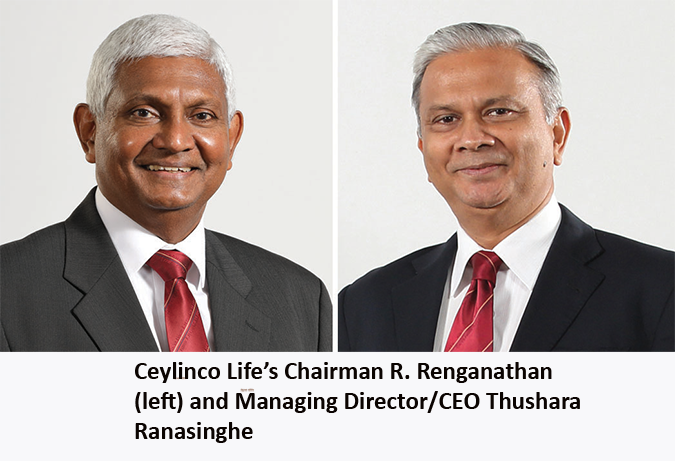
Ceylinco Life has been ranked the most valuable brand in Sri Lanka’s insurance industry across both Life and General Insurance categories in the 2023 rankings of the country’s top 100 brands published by Brand Finance, the world’s leading independent brand valuation consultancy.
Brand Finance has assigned a brand value of Rs 3.5 billion for the Ceylinco Life brand, which is higher than the value of the highest-ranked brand in the General insurance sector as well, in the recently released rankings. Ceylinco Life has also moved up one place in the overall rankings to 27th position on Brand Finance’s ‘Sri Lanka 100’ which include the largest banks, telcos, conglomerates and retail giants.
Ceylinco Life has also received a ‘AA’ Brand Rating from Brand Finance this year which denotes its low credit risk and strong ability to meet financial obligations.
Commenting on the Company’s latest ranking by Brand Finance, Ceylinco Life Managing Director/CEO Thushara Ranasinghe said: “We have consistently been recognised as the most valuable life insurance brand in Sri Lanka. Reaching the top of the entire insurance sector in a year that has witnessed an overall drop in brand values due to the challenges faced by the country, speaks volumes for the resilience of the brand. This is an important validation that the Ceylinco Life brand has continued to build trust and confidence among consumers.”
Referring to the life insurance industry in the country, the Brand Finance report noted that “the Life Insurance industry has faced challenges due to reduced disposable income caused by inflation, rupee devaluation and tax reforms, leading to a decline in demand and premium payment capacity. Additionally, increasing interest rates have diverted clients towards alternative investment options, posing a threat to the life insurance business.”
“Ceylinco Life was able to retain its position as the top-ranked brand in the Life Insurance segment in Sri Lanka 100 and, amongst other life insurers Ceylinco Life records the lowest drop in the brand value (-9% comparing to 2022 FY),” Brand Finance said.
In addition to calculating brand value, Brand Finance also determines the relative strength of brands through a balanced scorecard of metrics evaluating marketing investment, stakeholder equity, and business performance. Compliant with ISO 20671, Brand Finance’s assessment of stakeholder equity incorporates original market research data from over 100,000 respondents in 38 countries and across 31 sectors.
Ceylinco Life ended 2022 with assets of Rs 191.5 billion, consolidated income of Rs 45.63 billion, gross written premium income of Rs 29.16 billion, a Life Fund of Rs 134.9 billion and an investment portfolio of Rs 165.9 billion. In May this year the Company achieved several noteworthy milestones in financial performance with total assets surpassing the Rs 200 billion mark, total equity topping Rs 50 billion, and investments in financial assets exceeding Rs 175 billion.
Adjudged Sri Lanka’s ‘Brand of the Year’ and ‘Service Brand of the Year’ by the Sri Lanka Institute of Marketing (SLIM) and ‘Best Life Insurer in Sri Lanka’ by World Finance for the ninth consecutive year in 2022, Ceylinco Life was conferred the ‘Peoples Life Insurance Service Provider of the Year’ title at 2023 SLIM Kantar Peoples Awards for the 17th consecutive year. Ceylinco Life has been the country’s leading life insurer for more than half of the 35 years it has been in existence. The Company was also certified a ‘Great Workplace’ in Sri Lanka for the third consecutive year in 2022. Ceylinco Life has close to a million lives covered by active policies and provides innovative life insurance solutions which offer protection while de-risking the goals and ambitions of the Company’s policyholders.













by Claude Gunasekera
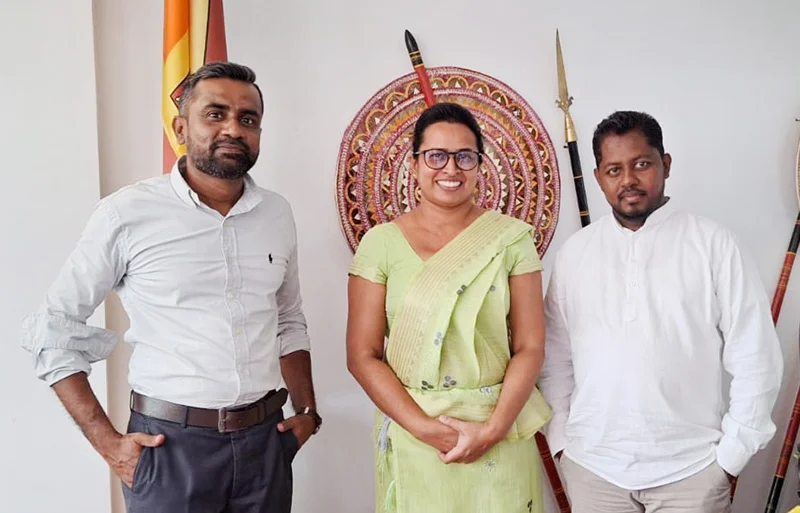
The Sri Lanka Tourism Development Authority (SLTDA) officially launched its nationwide capacity-building campaign, “Grow your Tourism Business with National Tourism Skilling Programme (NTSP),” August 31, from the scenic regional hub of Ella. Directed under the leadership of the Tourism Deputy Minister, Prof. Ruwan Ranasinghe, the comprehensive initiative aims to transform micro, small, and medium enterprises (MSMEs) by accelerating their digital readiness and business formalization across the local hospitality ecosystem.
The entire islandwide operation is under the direct coordination of Ms. Tharanga Rupasinghe, the SLTDA Director of Standards and Quality Assurance, ensuring that all rural operators align seamlessly with international hospitality standards. By utilizing the framework of the NTSP, the campaign focuses on delivering essential digital payment tools, modern online marketing insights, and compliance frameworks directly to village-level enterprises, handcraft artisans, and independent tour operators. Speaking at the launch event in Ella, Tourism Deputy Minister Prof. Ruwan Ranasinghe emphasised that sustainable growth in the travel sector relies heavily on empowering smaller stakeholders to become resilient, data-driven participants in the modern market. “True economic resilience in our tourism sector cannot be achieved through large-scale infrastructure alone, but must be built from the ground up by transforming our local communities and regional MSMEs into direct, digitally enabled beneficiaries of global travel traffic,” Prof. Ranasinghe noted. Through this synchronized, localized training approach, the SLTDA intends to systematically protect cultural heritage while elevating the service quality benchmarks of regional travel hotspots nationwide.
Regional hospitality groups, led by the Ella Tourism Association, have strongly welcomed the launch of the SLTDA national skilling campaign, calling it a vital step toward safeguarding the destination’s international reputation. Local operators noted that rapid commercial growth in the Uva Province has highlighted an urgent need for structural standardization, making the arrival of the National Tourism Skilling Programme (NTSP) highly timely. The grassroots response focused heavily on the benefits of formalization and digital integration for the region’s diverse service sector. The Ella Homestay Owners Collective praised the focus on digital payment tools, noting that transition support will help smaller vendors capture direct bookings and reduce their reliance on third-party booking commissions.
The Uva Tuk-Tuk and Adventure Guides Association highlighted that the safety and compliance training will build trust with high-spending international travelers, effectively raising service quality benchmarks across the town. Local association leaders emphasized that having Ms. Tharanga Rupasinghe, SLTDA Director of Standards and Quality Assurance, directly coordinate the field training ensures the program addresses practical, local challenges rather than just theoretical rules. Following the initial rollout, regional committees have pledged to work alongside the SLTDA to ensure that even the smallest village artisans and micro-enterprises achieve official registration, positioning Ella as a model hub for high-quality, community-driven sustainable tourism.
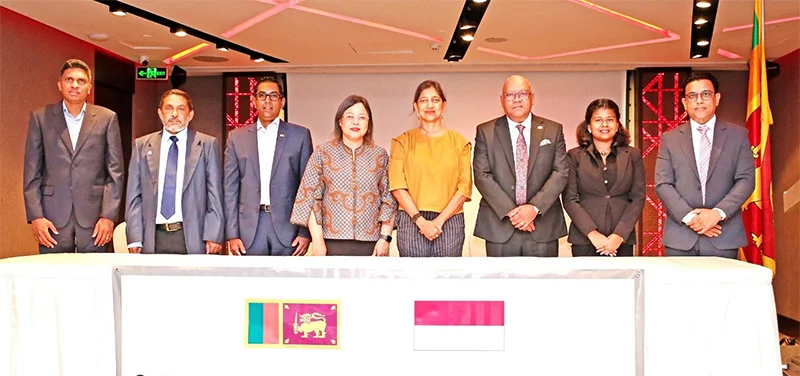
The Sri Lanka–Indonesia Business Council of The Ceylon Chamber of Commerce held its 3rd Annual General Meeting recently, bringing together Council members and key stakeholders to review the Council’s activities and priorities for the year ahead. The AGM was graced by Dewi Gustina Tobing, Ambassador of Indonesia to Sri Lanka and Patron of the Council
Delivering her address, Dewi Gustina Tobing, Ambassador of Indonesia to Sri Lanka, provided a comprehensive overview of Indonesia’s political and economic landscape, highlighting the country’s focus on promoting economic independence, strengthening sectoral resilience, improving public welfare, and facilitating both inbound and outbound investment.
Re-elected as President of the Council for 2026/27, Sheamalee Wickramasingha, Chairman / Group Managing Director of Ceylon Biscuits Ltd. acknowledged the instrumental role played by the Ambassador in the re-establishment of the Council and reflected on the Council’s key achievements during the past year. She highlighted the successful Sri Lanka–Indonesia Business Delegation to Indonesia, which provided valuable opportunities for Sri Lankan businesses to engage with Indonesian counterparts and explore avenues for commercial cooperation.
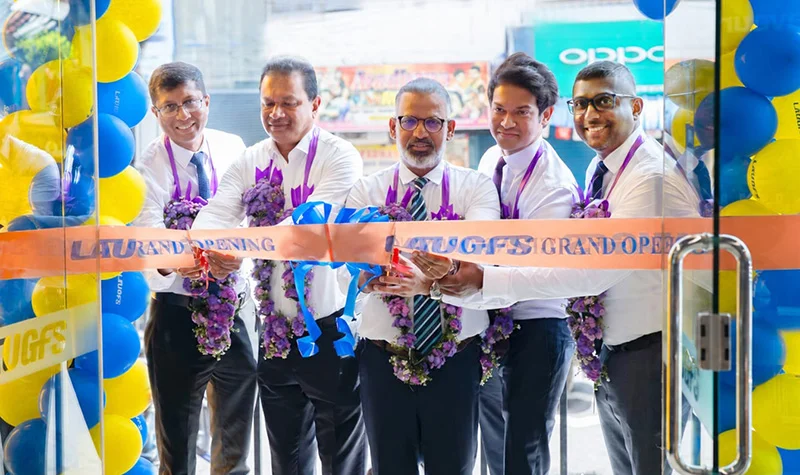
LAUGFS Supermarkets has further strengthened its growing retail presence with the opening of its 46th outlet at No. 78, K.B. Christy Perera Mawatha, Kotahena. The new outlet operates 24 hours a day, offering customers a wide range of products together with bakery and hot food options, providing greater convenience and accessibility to the surrounding community.
The new Kotahena outlet further expands LAUGFS Supermarkets’ growing network and reflects the Group’s continued focus on strengthening its presence in strategic locations across the country. The opening ceremony was attended by the Group Chairman, Group Executive Vice Chairman, Acting Group Managing Director/Group Executive Director and senior management.
Commenting on the opening, the Sector Managing Director/CEO – Retail, Niroshan De Silva, said, “The opening of our 46th outlet reflects the dedication, teamwork and determination of our people, who have worked exceptionally hard to bring this outlet together. The new Kotahena outlet is designed to offer customers greater convenience, with an inbuilt bakery and hot food facility that provides freshly prepared food alongside our wide range of products, all under one roof. Our focus is to ensure that every LAUGFS Supermarket operates to the highest standards and consistently delivers quality, convenience and service excellence to our customers.”
The opening of the Kotahena outlet marks another significant milestone in LAUGFS Supermarkets’ ongoing expansion, bringing its products and services closer to more customers while further enhancing its 24-hour retail offering. With its growing network of outlets and continued focus on customer convenience and service excellence, LAUGFS Supermarkets remains committed to strengthening its presence and creating greater value for customers across Sri Lanka.

US Supreme Court rejects Trump mail ballot restrictions ahead of midterms

Eastern Province Divisional Secretariats recognized for outstanding performance

Students of Rahmaniya Maha Vidyalaya Eravur visit Presidential Secretariat and President’s House

Showers above 100 mm expected at times in the Western, Sabaragamuwa, Central, Uva and Southern provinces, and in Ampara and Batticaloa districts

Controversy over absence of Agriculture Minister, Deputy at NPP’s inaugural farmers’ rally

Thousands march in Jaffna demanding international investigation into Chemmani

‘Dates have the highest sugar content to fight Coronavirus’

Sunday Island 27 December – Headlines

#SundayIsland 17th December – Headlines

Sunday Island – 28th March

Sunday Island Headlines – 21 March

Sunday Island – 21st February – Headlines
-

 Sports4 days ago
DDS set to lose Test captaincy
-

 News4 days ago
Sri Lanka faces new grid challenge as rooftop solar surges: former CEB GM
-
 Latest News4 days ago
Shafali, Deepti power India into sixth T20 Asia Cup final
-

 Latest News3 days ago
Sri Lanka thwart Fatima Sana challenge to secure Asia Cup final spot
-
 Opinion6 days ago
Navigating Sri Lanka’s Israeli Dilemma
-
 Features5 days ago
Lost for 90 years: Rare Goby resurfaces in Jaffna
-

 News2 days ago
Gnanasara Thero absconding after SC ruling
-

 News3 days ago
Ammunition cache found in old Kandy bungalow