
Business
DFCC Bank breaks new ground as Sri Lanka’s 1st bank in the Metaverse with DFCC Galaxy


DFCC Bank, Sri Lanka’s Bank for Everyone, has recently launched DFCC Galaxy, making it the first-ever Sri Lankan bank to open a virtual branch in the Metaverse. With this new development, DFCC Bank has taken a pioneering step, setting a benchmark for innovation and digitalisation in Sri Lanka’s banking and financial services space. DFCC Galaxy is set to revolutionise the banking industry in Sri Lanka, providing customers with a new, more exciting, accessible, and engaging way to Bank.
DFCC Galaxy provides an immersive banking experience, allowing customers to explore the virtual branch, interact with other users, play interactive games, and enjoy many benefits. Customers can also use DFCC Galaxy to access a 24×7 chatbot and live customer support, making banking more convenient. DFCC Galaxy is a virtual branch experience that can be enjoyed and explored from the comfort of your home.
“We are extremely excited to announce the launch of DFCC Galaxy. This is a significant milestone, not just for us as a bank, but also as the 1st Bank in Sri Lanka to open a virtual branch in the Metaverse,” exclaimed Thimal Perera, CEO at DFCC Bank, “DFCC Galaxy demonstrates our commitment to continuous innovation and providing our customers with a banking experience that is both convenient and engaging. Digital innovation and integration are key focus areas for DFCC and are clearly outlined in our sustainability strategy, which is our roadmap towards emerging as “the” Bank for green finance in Sri Lanka by 2030. Virtual banking and the shift towards digital are essential in helping us create more resilient societies and minimising our carbon footprint, and we are proud to be a leader in the space with this initiative.”
DFCC Bank has always been driven by customer centrism, and DFCC Galaxy is just another example of the Bank’s dedication towards providing its customers with the best possible banking experience based on their needs and desires. Customers and the public can use DFCC Galaxy to obtain assistance with account opening and credit card applications and access information on DFCC Bank’s diverse financial products and services, making banking more accessible. Why not check out DFCC Galaxy yourself by visiting https://galaxy.dfcc.lk/ and explore the first metaverse banking experience in Sri Lanka!
DFCC Bank, driven by its commitment to customer centricity, sustainable finance, and social upliftment, has consistently been among the digital transformation leaders within Sri Lanka’s banking and financial services space. The Bank was the first or among the first to introduce many revolutionary technologies, such as omnichannel AI-assisted instant customer support, DFCC Video Chatz and digital banking apps and services such as DFCC Virtual Wallet – the perfect companion for your financial and lifestyle needs – and DFCC iConnect – which provides SMEs and corporates in Sri Lanka the latest cutting-edge digital cash management, financial tracking, and transactional banking services. DFCC Bank is also responsible for extensively advocating for and promoting financial inclusivity through its digital banking services across Sri Lanka. DFCC Galaxy is another crucial step on this incredible journey.


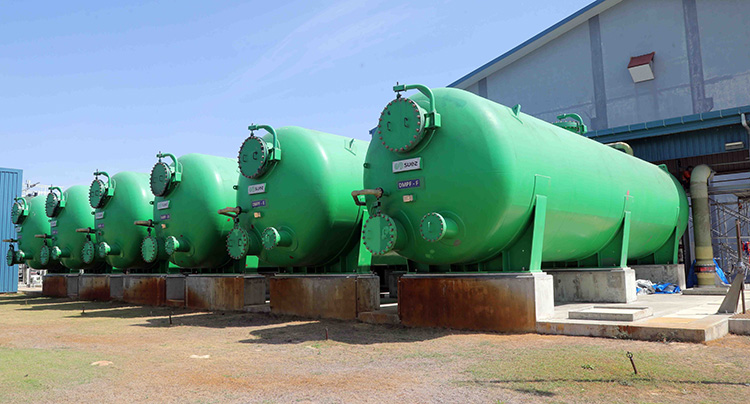
Sri Lanka should adopt a diversified water-security strategy, says chief engineer
By Sanath Nanayakkare
For generations, the Jaffna Peninsula has relied almost entirely on an underground freshwater lens. With no major perennial rivers to lean on, the region has long walked a tightrope between water scarcity, seasonal droughts, and a creeping groundwater salinity that has challenged communities across the North. Today, however, a monumental shift is underway along the windswept Vadamaradchi coast.
To understand how Sri Lanka is rewriting its water security playbook, one need only look to the Thalaiyadi Seawater Reverse Osmosis (SWRO) Plant.
V. Vijayakanth, Chief Engineer of the Jaffna Kilinochchi Water Supply and Sanitation Project (JKWSSP), recently explained the engineering marvels, environmental safeguards, and long-term vision driving this landmark infrastructure project.
“Building a multi-million-gallon desalination plant on an open, deep-sea coastline facing the Indian Ocean was no small feat,” he said.
Vijayakanth noted that the project required extensive marine, geotechnical, and ecological investigations before a single pipe was laid.
“The scale of the marine installation was striking: an intake and outfall system featuring roughly 1,300 metres of large-diameter pipeline, buried two metres beneath the seabed in water depths reaching up to 12 metres. Because ocean work is strictly dictated by nature, the team had to mobilise an excavator-mounted barge from India and execute a complex offshore operation within a very tight window before the onset of the monsoon.”
“One of the greatest historical hurdles of reverse osmosis technology has been its heavy appetite for electricity. To keep operational costs in check, the Thalaiyady plant integrates state-of-the-art isobaric pressure-exchanger energy recovery systems. These devices capture hydraulic energy from the high-pressure brine reject stream and transfer it directly back to the incoming seawater feed – recovering roughly 95% of available energy and slashing power requirements.”
“Environmental stewardship was equally central to the design. To prevent high-salinity discharge from harming the marine ecosystem, the plant utilizes an offshore outfall equipped with specialized diffusers positioned more than 500 metres from the shore. This ensures rapid mixing within a tightly monitored zone, safeguarding local marine life,” he said.
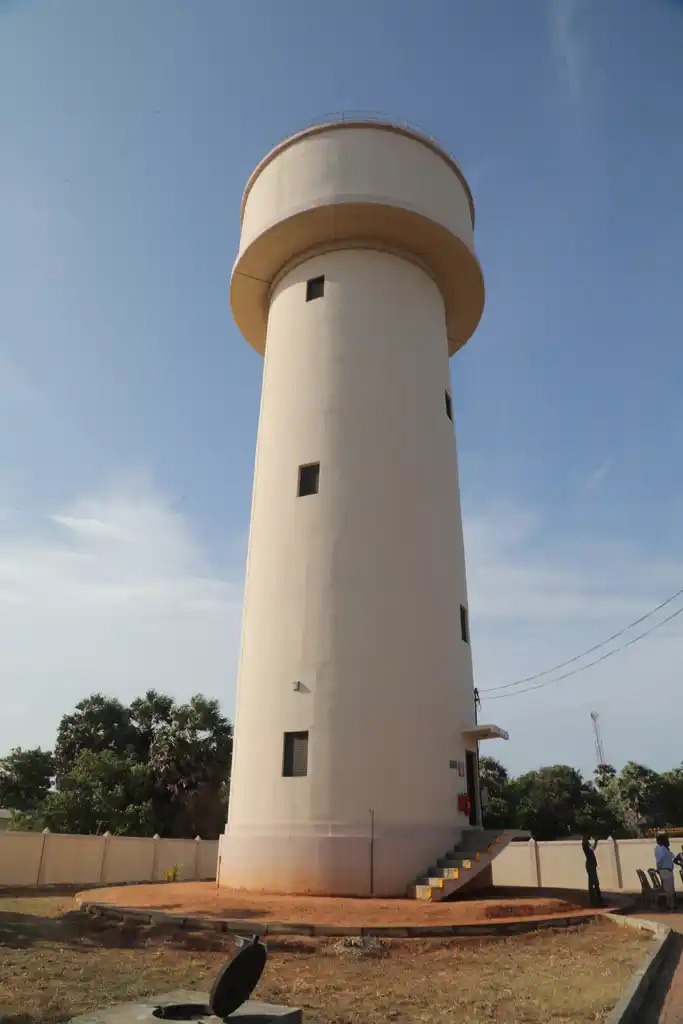
Karaveddi Water Supply Scheme
The impact of the plant is already tangible on the ground. Producing water that meets rigorous national quality standards (SLS 614:2013), the facility feeds into a vast transmission network linked to elevated service reservoirs. These tanks regulate hydraulic pressure across sprawling distribution routes, bringing relief to areas historically plagued by hard, brackish water.
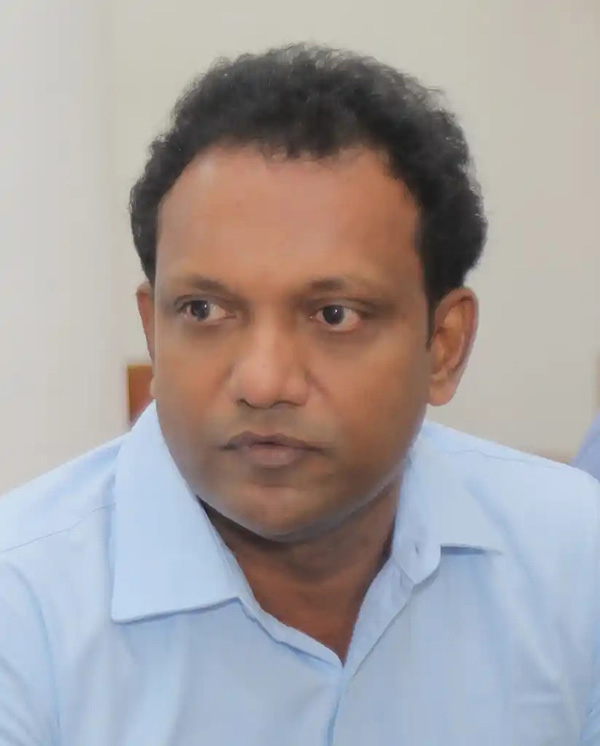
V. Vijayakanth, Chief Engineer of Jaffna Kilinochchi Water Supply and Sanitation Project (JKWSSP)
Currently, about 1,600 households in the Karaveddi Zone are actively connected to the desalinated supply, with water flowing across a regional network stretching from Kodikamam and Jaffna City down to distant island communities like Delft, Kayts and Punguduthivu.
The peninsula’s total daily drinking water demand hovers around 50,000 cubic metres for a population of roughly 600,000. Operating at full capacity, the Thalaiyadi plant yields 24,000 cubic metres per day – meeting nearly half of the region’s current needs.
Yet, planners are already looking decades ahead. Driven by economic development, tourism, and proposed industrial zones like Kankesanthurai, projected potable water requirements for domestic, commercial, and industrial needs are expected to climb from 95,000 cubic metres per day in 2025 to 135,000 by 2045, and 175,000 by 2065. Meeting this future trajectory will require a diversified national strategy combining desalination with surface-water preservation and rainwater harvesting.
When asked whether Sri Lanka should lean exclusively on seawater conversion amid intensifying climate volatility, Vijayakanth emphasised the need for a balanced approach: “Sri Lanka should adopt a diversified water-security strategy, prioritising sustainable surface-water development, groundwater protection, rainwater harvesting, water conservation, treated wastewater reuse and catchment protection. Desalination can complement these sources as a valuable climate-resilient and drought-proof option where appropriate.”
Backed by financial and technical collaboration from the Asian Development Bank (ADB), the project has given the National Water Supply and Drainage Board (NWSDB) invaluable expertise in advanced desalination management. Crucially, a two-year hands-on training program is ensuring that local technical staff master everything from membrane upkeep to preventive maintenance.
As climate variability accelerates, Thalaiyadi serves as a vital proof-of-concept. While energy-intensive desalination cannot replace conventional freshwater sources everywhere, Vijayakanth emphasises that it stands as an indispensable, drought-proof shield for Sri Lanka’s vulnerable dry zones – turning the ocean itself into a secure foundation for the nation’s future.
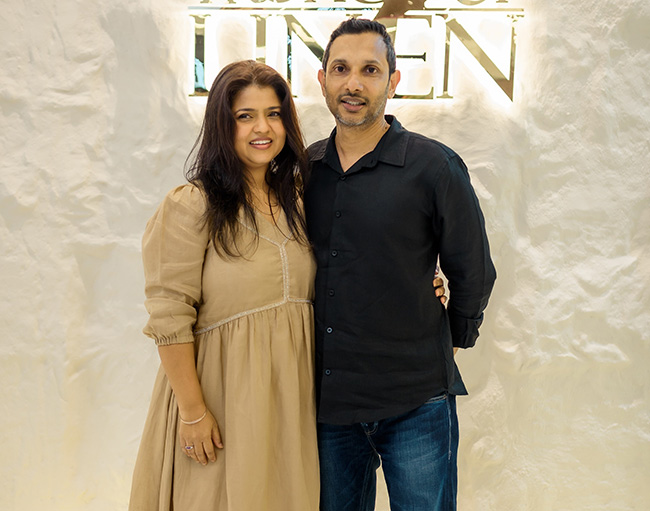
Sri Lankan fashion label Tropic Of Linen recently opened the doors to its second boutique, located at The Shoppes at City of Dreams.
For over a decade, linen has formed the core of the brand’s inspiration and business ethos. Its textures, movement, and natural irregularities carry through the striking interior of Tropic Of Linen’s newly opened second store. Large sculptural forms in wind-worn sandstone sit against softer curves, while a grand olive tree anchors the heart of the store, reaching up toward a skylight and giving life to the entire space.
Drawing on her background in fine art and design, co-founder Minha Akram envisioned a layered, sensory interior intended to draw people into the world of Tropic Of Linen and invite them to linger.
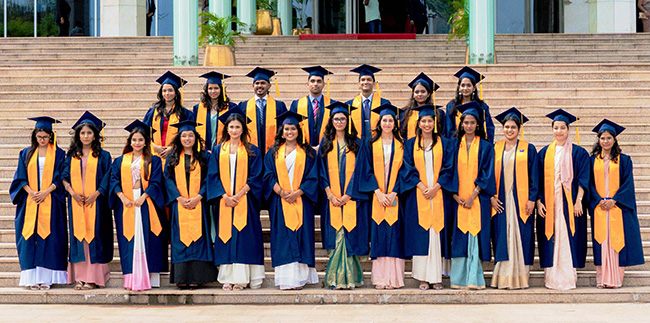
ANC Education held its 2026 graduation ceremony at BMICH, Colombo, celebrating graduates across multiple programmes. The cohort included 53 BBA graduates from Northwood University, 22 Psychological Sciences graduates from Northern Arizona University, 320 Pearson BTEC HND graduates, and 29 BTEC Level 7 graduates, alongside foundation, diploma, and transfer pathway students. Senior representatives from partner institutions attended.
Best Performer Awards recognised outstanding academic achievement. The event honoured years of hard work and support from families and educators. Since 2002, ANC has provided local and international pathways. Graduates now pursue careers, further studies, or international opportunities.

Sri Lanka lose Women’s Champions Trophy hosting rights

Iran attacks US bases in Jordan after US strikes Larak Island

Showers will occur in the Western, North-western and Sabaragamuwa provinces and in Galle, Matara, Kandy and Nuwara-Eliya districts.

Sun directly overhead Neriyakulam, Punewa, Kebithigollewa, Pankulam and Sinhapura at about 12.10 noon today (31)

BASL takes exception to Justice Ganepola being denied a place in SC

Sajith challenges govt. to hold PC polls

‘Dates have the highest sugar content to fight Coronavirus’

Sunday Island 27 December – Headlines

#SundayIsland 17th December – Headlines

Sunday Island – 28th March

Sunday Island Headlines – 21 March

Sunday Island – 21st February – Headlines
-

 News7 days ago
Missing doctor’s body found in Mahiyanganaya
-

 News7 days ago
Australia declines to release Finance Secy Suriyapperuma’s citizenship details
-

 News4 days ago
Eight politicians in drug kingpin probe
-

 News7 days ago
22A: BASL suggests CJ recuse himself from hearing petitions
-

 Features2 days ago
“Wrap Me Up in My Blazer”— A Gentlemanly Bradby Reminiscence
-

 Business4 days ago
Sri Lanka opens up: A new season of direct connectivity
-
 Features6 days ago
Insights from Chieftains of Uva: Genealogy of two Kandyan Families – Part II
-

 Features4 days ago
Redefining ageing in Sri Lanka