
Midweek Review
LTTE’s Balasingham, Garnier and Western diplomatic missions

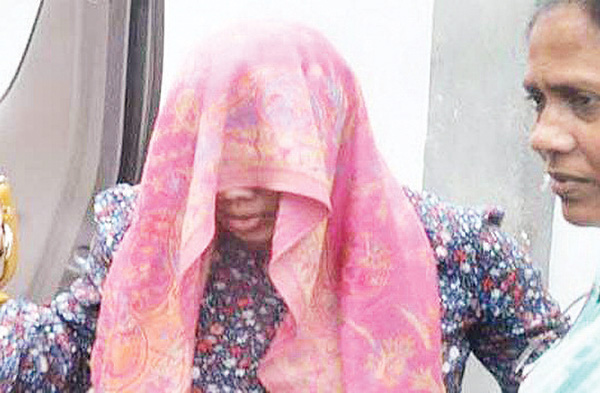
Analysis of telephone data revealed that Swiss embassy employee Garnier Banister Francis had been in touch with Chief Inspector Nishantha Silva before the latter left for Switzerland. She had also been in touch with several others. Had she really desired to migrate to Switzerland with her family, the Swiss mission here could have arranged it. They could have left the country without making an issue. Unfortunately, Sri Lanka seems still blind to the machinations of Western powers. That is the undeniable truth. However, the government response to the Swiss accusation can be considered an exception. The then Foreign Secretary Ravinatha Aryasinha and Defence Secretary Kamal Gunaratne on Dec 01, 2019 briefed Swiss Ambassador Hanspeter Mock and the Deputy Chief of Mission. They set the record straight. CCTV footage, Uber taxi and telephone records as well as GSP data proved Mock wrong (Alleged abduction: Swiss Ambassador’s claim not true-gov., The Island, Dec 02, 2019) It wouldn’t be wrong to say that the Swiss Ambassador lied. The issue is whether the local employee misled the Ambassador or she was part of a wider conspiracy.
By Shamindra Ferdinando
There hadn’t been a previous instance of a local employee of a diplomatic mission, based in Colombo, receiving international media attention before Garnier Banister Francis ended up in the New York Times in late Nov., 2019. The British Broadcasting Corporation (BBC), as well as the Indian media, reported the alleged incident, following the New York Times (NYT) exclusive headlined ‘Sri Lanka critics fear a crackdown is underway, and some flee.’
The alleged abduction of a female Swiss Embassy employee, just a week after the swearing in of Gotabaya Rajapaksa as the seventh executive President, rattled the government. Even Anton Stanislaus Balasingham, 68, the late theoretician of the Liberation Tigers of Tamil Eelam (LTTE), hadn’t received such prominent media attention during the time he had served the British High Commission, in Colombo, as a translator. Balasingham captured media attention after he received the LTTE recognition as its spokesperson. That was years after he left the BHC, Colombo, and got married to Australian-born Adele, a nurse by profession, in 1978. British passport holder Balasingham passed away at his South London home on Dec. 14.
Francis received wide media coverage after she alleged being abducted by government agents on the evening of November 25, 2019, near St. Bridget’s Convent, sexually assaulted, and questioned regarding Sri Lankans who sought asylum in Switzerland. She claimed to have been abducted by five persons who arrived in a Toyota Corolla car soon after she left the Embassy at No 63, Gregory’s Avenue (Srimath R.G. Senanayake Mawatha), Colombo 07.
Both the UNP and the JVP immediately and blindly found fault with the government. They didn’t even bother to wait for a preliminary inquiry before accepting the Swiss Embassy employee’s claim. The NGO grouping, generally funded by the West, too, wholeheartedly backed her claim.
Maria Abi-Habib and Sameer Yasir reported the abduction in the NYT online edition on Nov. 27, the day the then Swiss Ambassador, in Colombo, complained to the then Prime Minister Mahinda Rajapaksa, at his Wijerama Mawatha residence, about the abduction. They updated the story on Nov. 29, 2019.
By the time the NYT reported the alleged abduction, now admitted in the Colombo High Court as a lie by the accuser, the local police hadn’t been at least aware of the ‘incident.’ But, the Embassy had briefed the New York Times journalists of the incident. They quoted diplomatic officials in Colombo as having said that the men held the Embassy employee for several hours and then, before releasing her, threatened to kill her if she told anyone. For a country like Switzerland that maintains a lily white image, despite getting super wealthy by secretly handling black money, from around the world, under convenient banking secrecy laws, is capable of committing any heinous crime. Remember the country’s banks also stole funds of Jews burnt in Hitler’s gas chambers.
They were further quoted as having claimed the men appeared to be focused on finding information about a Sri Lankan detective who had been investigating President Gotabaya Rajapaksa. NYT refrained from naming the detective.
NYT was referring to Chief Inspector Nishantha Silva of the Criminal Investigation Department (CID) who left for Switzerland with the blessings of the then Swiss Ambassador in Colombo Hanspeter Mock. The investigator with obvious stained hands was accompanied by his wife and three children.
NYT quoted Swiss Foreign Ministry spokesperson Pierre-Alain Eltschinger as having declared: “We can confirm that a local employee of the Embassy was detained against her will on the street and threatened at length by unidentified men in order to force her to disclose Embassy-related information.”
“Switzerland regards this incident as a very serious and unacceptable attack,” he said, adding that the Swiss government was “demanding an immediate and complete investigation into the circumstances surrounding the incident.”
Sri Lanka last week brought the high profile case to a conclusion. Colombo High Court Judge Namal Balalle on Friday (Nov. 14) sentenced Francis to two years RI suspended for five years. She was also ordered to pay Rs. 2 mn as compensation to the government and fined Rs. 5,000. She is now free to join her husband and two children in Switzerland.
Probably the person who should be compensated is former President Gotabaya Rajapaksa whose administration was the target of this wholly staged drama to malign it no sooner he became the President with an overwhelming mandate.
The judgement was delivered four years after the alleged incident. Francis pleaded guilty to charges in open court. Judge Balalle lifted the travel ban imposed on Francis. She was represented by former President of the Bar Association Kalinga Indatissa, PC.
The Bar Association, during Indatissa’s tenure as its President, took offence over the high handed statement issued by the Swiss government on Dec. 30, 2019, as regards the proceedings pending in the Magistrate’s Court of Colombo over the purported abduction of Garnier Francis. The Bar Association issued a strongly worded statement that condemned the Swiss position and their motives. At the Magistrate Court, Upul Kumarapperuma appeared with Sudharshana Gunawardena. Once the case was moved to High Court, Indatissa led the defence team.
Manohara de Silva, PC, strongly criticized the Swiss mission here over the incident. The Island carried two statements issued by the lawyer. The then Chairperson of the HRCSL, Dr. Deepika Udugama, too, in respons to The Island query issued a statement that dealt with the issue. She stressed the need for investigators to have access to the Swiss Embassy employee.
The Swiss Embassy employee’s canard was exposed by our intrepid investigators who wasted no time in perusing CCTV and other evidence before interested parties could have tampered with them.
Swiss salvo
A few days after the alleged incident, the Swiss mission, in Colombo, issued the following statement: “On 25 November 2019, a serious security incident, involving a local employee of the Embassy of Switzerland, in Colombo, occurred. The employee was detained against her will in the street, forced to get into a car, seriously threatened at length by unidentified men and forced in order to disclose Embassy-related information.
Several false pieces of information are circulating in the reporting of this incident. The Swiss Embassy in Colombo is issuing the following clarifications: (1) The Swiss Embassy immediately lodged a formal complaint and is fully cooperating with the Sri Lanka authorities in order to support police investigation and initiate an inquiry over the case, while duly considering the health condition of the victim and her relatives. (2) Due to a deteriorating health condition, the victim is currently not in a state to testify. (3) It has been alleged that the Swiss government rejected a request for the extradition of an employee of the Sri Lankan Criminal Investigation Department (CID) and his family. No such request has been submitted.
Having declared the Embassy was fully cooperating with authorities, Hanspeter Mock accommodated the local employee in the mission till Dec. 8, 2019. She reported to the CID on the afternoon of Dec. 08, 2019, but declined to undergo medical examination in the absence of a female doctor though two female nurses were present (Alleged abduction: Swiss embassy employee makes statement to CID, The Island of December 09, 2019 edition).
It would be pertinent to mention that Ambassador Mock handed over the local employee to the CID after President Gotabaya Rajapaksa rejected his proposal to evacuate the Embassy employee, along with her family, to Switzerland, in an air ambulance, they had managed to fly into BIA well in advance. No less a person than President Rajapaksa told the writer on the night of Nov. 29, 2019, about the Swiss bid (Swiss mystery takes a new turn: Air ambulance to move embassy employee, govt. insists on immigration formalities, The Sunday Island, Dec. 01, 2019 edition). Until then Hanspeter Mock hindered the investigation. While demanding a thorough inquiry, the Swiss Embassy initially declined to reveal the identity of the alleged victim. In hindsight, the Swiss planned to take her out of the country without she being subjected to any form of investigation (Alleged abduction: Swiss embassy denies SL access to employee, with strapline FM asks embassy to follow established procedure to allow smooth probe, The Island, Nov. 29, 2019, edition)
The attempt to evacuate the group (Garnier Francis and her family) was made during President Gotabaya Rajapaksa’s two-day visit to New Delhi. At the behest of the President, those who dealt with the Swiss authorities insisted that evacuation could be permitted only if the Embassy employee and her family underwent immigration formalities. Had the government gave in to diplomatic pressure and allowed her to go, the unsubstantiated allegations wouldn’t have been proved false. And the malicious claim against our country would have stuck for good across the world.
Interestingly, the Swiss Embassy statement conveniently failed to name the detective, though the local media identified the officer concerned. In fact, Sri Lanka never sought a clarification from the Swiss Embassy as regards the detective. Actually, it wouldn’t be fair to blame the Swiss Embassy for Sri Lanka’s inept response. Regardless of who held political power, Sri Lanka lacked the political will to face challenges, and external powers enjoyed manipulating the country to their hearts’ content. It would be a grave mistake on our part to blame external elements working through their agents here without taking remedial measures.
Those who planned the propaganda blitz over the Swiss Embassy employee ‘abduction’ case certainly took into consideration a spate of still unsolved cases – the disappearance of 11 youth at the hands of the Navy, mostly in 2007/2008, torturing of Deputy Editor of The Nation, Keith Noyahr, on May 22, 2008, assassination of the founding Editor of The Sunday Leader, Attorney-at-Law, Lasantha Wickrematunga, in the morning of January 08, 2009, on Attidiya Road, near Bakery Junction, attempt on the life of Rivira editor, Upali Tennakoon, on January 23, 2009, at Imbulgoda, Gampaha, abduction and assault on well-known journalist and civil society activist, Poddala Jayantha, on June 1, 2009, near Embuldeniya Junction, in Nugegoda, and disappearance of media personality, Prageeth Ekneligoda, on the eve of the January 26, 2010, presidential poll. Keith Noyahr and Upali Tennakoon secured political asylum overseas.
We are not saying the Rajapaksas were behind all of the above, but they and the succeeding UNP-led Yahapalana administration failed to get to the bottom of any of them.
Need for a wider inquiry
The incumbent Justice Minister Dr. Wijeyadasa Rajapakse, PC, was the first parliamentarian to raise a CID officer taking refuge in Switzerland. In conversation with the writer, the then UNP MP Wijeyadasa Rajapakse explained the responsibility on the part of the Foreign Ministry to seek the extradition of CI de Silva as the relatively junior officer and his family receiving political asylum in Switzerland should be examined against the backdrop of many senior military officers being denied visas. The MP also disclosed how the then senior officer in charge of the CID, DIG Ravi Seneviratne, defended the conduct of CI de Silva when Yahapalana President Maithripala Sirisena summoned the top man for a discussion in late 2018 following a complaint made by him. Lawmaker Wijeyadasa Rajapakse said that he felt the urgent need for President Sirisena’s intervention as the CID was making moves to arrest Admiral Wasantha Karannagoda and Chief of Defence Staff (CDS) Admiral Ravi Wijegunaratne over the abduction of 11 persons and giving protection to Lieutenant Commander Chandana Prasad Hettiarachchi falsely implicated in the abduction cases, respectively (Wijeyadasa reveals powwow between CID Chief and President MS: Govt. urged to seek Nishantha’s extradition, The Island, Nov. 27, 2019)
Police headquarters went to the extent of deliberately calling Lt. Commander Hettiarachchi ‘Navy Sampath’ in a bid to manipulate the case. The Swiss got involved when Lt. Commander G.G. Laksiri, who gave evidence against Admiral Wijegunaratne, was granted political asylum to the Volunteer Naval Force officer. Therefore, Laksiri had secured Swiss protection much before CI Silva and attempts to depict the detective as the first man from the security sector to do so are not fair.
Then there was the case of Lt. Commander Welagedara who secured political asylum in Australia claiming his life was at risk here. Welagedara migrated to Australia during the Yahapalana administration in spite of Admiral Karannagoda complaining to the then Defence Secretary over accusations made by the officer. The then President’s Office intervened on behalf of Welagedara who skipped a Tri-Services Board of Inquiry scheduled to begin hearings on January 07, 2017.
Other cases
Sri Lanka lacked political will to counter those who propagated lies in a deliberate attempt to tarnish the country’s image.
One-time Northern Province Chief Minister and ex-SC judge C.V. Wigneswaran (member of the current Parliament) couldn’t stomach the LTTE’s defeat. In August 2016, Wigneswaran accused the military of killing over 100 LTTE combatants, in custody, by poisoning them. The PTI and NDTV were among international media which reported unsubstantiated allegations.
Wigneswaran placed the number of such deaths at 104. Accusations were made while the U.S. Pacific Command’s ‘Pacific Angel’ exercise was underway in the Jaffna peninsula. Obviously, the politician took advantage of the US exercise to propagate war crimes accusations.
Wigneswaran boldly declared that the U.S. Air Force medical team, in Jaffna, could examine the former rehabilitated LTTE cadres, who, he alleged, had fallen sick because they were injected with poisonous substances at government detention centres. The government never bothered to seek an explanation from Wigneswaran.
The then State Defence Minister Ruwan Wijewardene and Health Minister Dr. Rajitha Senaratne dismissed the vicious accusations. Wijewardene offered the international community access to rehabilitation facilities. What the Ministers didn’t realize was that by Aug. 2018, the vast majority of ex-LTTE combatants had been released.
The US conveniently refrained from making its position clear on Wigneswaran’s claim when the writer raised the issue with the US Embassy in Colombo. There had never been such a claim before TNA’s Wigneswaran sought to humiliate Sri Lanka. It would be pertinent to mention that one-time LTTE subordinate, the TNA, backed common candidate Maithripala Sirisena at the 2015 presidential poll, having earlier supported Gen. Sarath Fonseka at the previous presidential poll.
On both occasions, the TNA delivered all northern and eastern electoral districts to Fonseka and Sirisena, who contested on the New Democratic Front (NDF) ticket with the ‘Swan’ as its symbol. The TNA did the same for Sajith Premadasa in the North and the East at the last presidential election, though the South overwhelmingly defeated the UNPer as was the case with Fonseka previously at the 2010 presidential poll.
Unfortunately Gotabaya Rajapaksa, who had been elected with a staggering 6.9 mn votes could not overcome the overwhelming economic-political-social crisis that was created by his predecessors while he, too, took some short-sighted disastrous decisions possibly on wrong advice.
The Swiss project against President Gotabaya Rajapaksa should be examined taking into consideration accusations made at a media briefing chaired by Dr. Rajitha Senaratne a week before the Nov. 16, 2019 presidential election. The briefing was held in support of UNP presidential candidate Sajith Premadasa.
The SLPP presidential candidate was accused of ordering the killing of people and throwing their bodies into a crocodile-infested tank in the Moneragala district during his tenure as the Defence Secretary. At the same media briefing, the Mahinda Rajapaksa government was also accused of secretly moving 700 tonnes of gold from the North during and after the conclusion of the war.
When the lie backfired, the UNP called a media briefing at Sirikotha on Dec. 26, 2019. in support of Dr. Senaratne who was in hiding. Guess who was there to defend Dr. Senaratne? TNA heavyweight M.A. Sumanthiran, whose party, in 2001, declared the LTTE as the sole representative of the Tamil-speaking people. A few hours after the briefing, Dr. Senaratne, who arrived at Lanka Hospital, Narahenpita, got himself admitted. That case is pending in the Colombo High Court.

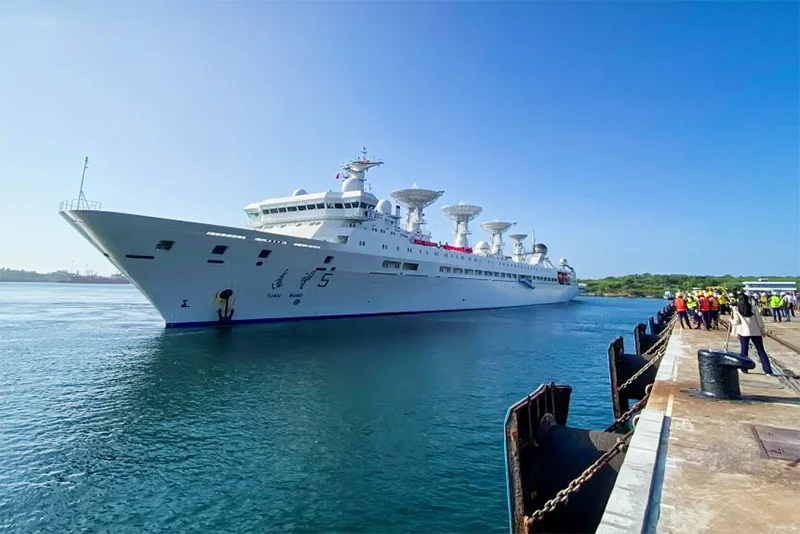
Chinese scientific research vessel Yuan Wang 5 at the Hambantota International Port (HIP) in August 2022. The visit took place just weeks after the overthrowing of President Gotabaya Rajapaksa. The second Chinese research vessel Shi Yan 6 arrived at the Colombo port in October, 2023. In the wake of the Chinese ship visits, the US and India forced Sri Lanka to impose a moratorium on such visits on January 1, 2024. Although the government announced it would be for one year, the moratorium remains.
By Shamindra Ferdinando
Dual-use naval facilities are commercial ports, shipyards, or maritime hubs operationally designed and equipped to support military operations when required though they operate primarily for civilian trade in peacetime.
The issue at hand is whether the Hambantota International Port (HIP) operated as a public-private partnership between Sri Lanka and China is one such dual-use naval facility, as propagated by the US?
Sri Lanka handed over the Port to China on December 09, 2017, after the finalisation of the hotly disputed 99-year old lease for the strategic port on July 29, 2017. Having opposed Chinese projects in Sri Lanka in the run-up to the 2015 presidential election, the then Prime Minister Ranil Wickremesinghe attended the handing over ceremony. China paid USD 1.2 bn for the Port.
In spite of repeated denials by successive governments over the years, the US still identifies HIP as a dual-use naval facility. India, too, subscribes to that view. There is no doubt that the Quad, a strategic partnership among the US. India, Japan and Australia considers HIP as such and its policy, vis-a-vis Sri Lanka, geared to meet that challenge. But, is HIP really a dual-use naval facility as alleged and Sri Lanka part of the overall Chinese strategy. The other issue is whether Sri Lanka is a willing partner of the Chinese strategy or caught up in that due to circumstances beyond its control.
The Indo-Pacific Defence Forum, published quarterly by the US Indo-Pacific Command, has regularly dealt with HIP. Its first issue this year went all out to emphasise HIP’s status as a dual-use naval facility. Sarosh Bana, Executive Editor of Business India magazine, in an article, titled ‘Indian Ocean Primacy,’ published in the first issue of the Indo-Pacific Defence Forum, referred to HIP as a dual-service naval facility.
In the article that dealt with the Indian move to establish a strategic naval base this year, in Andhra Pradesh, to neutralise China’s Longpo naval base on Hainan island, Bana categorised Bangladesh Navy base BNS Pekua and Kyaukphyu deep seaport being developed in Myanmar. Bana declared all above mentioned facilities as part of China’s One Belt, One Road (OBOR) infrastructure scheme. Since 2013, China has invested as much as USD 700 bn for OBOR projects covering over 150 countries across Africa, Europe, Latin America and the Indo-Pacific.
Specialist in political economy Dr. Alfred Oehlers, in an article, titled ‘Peace Through Economic Strength,’ also carried in the same edition of the Indo-Pacific Defence Forum, discussed the Hambantota Port, while another specialist in Chinese affairs Dr. Jinghao Zhou dealt with overall Chinese strategy at global level. Zhou’s article was titled ‘Countering OBOR’ and primarily argued how ports in Chinese hands could be used for military purposes.
Obviously the US and its partners are deeply concerned over the growing Chinese, influence both at regional and global level. Sri Lanka remains one of their key focus as HIP, located just 10 nm from major east – west shipping routes, continues to grow, quite rapidly and received significant international attention during the war between Israel-US against Iran (February-June, 2026).
US sub strike
HIP received global attention in the wake of a US torpedo attack on non-belligerent Iranian frigate IRIS Dena off Sri Lanka’s southern coast. The attack took place off Galle Port, within the country’s exclusive economic zone, in the first week of March, just days after the eruption of hostilities in West Asia. Sinking of IRIS Dena was the only attack that took place outside the war zone before Pakistan-Qatar mediated talks that brought about a fragile ceasefire that enabled the re-opening of Strait of Hormuz, albeit amidst many a violation.
In the immediate aftermath of the unprovoked attack on unnamed IRIS Dena returning home after participating in International Fleet Review (IFR) and Exercise Milan 2026 at Visakhapatnam (15-25 June), Indian Foreign Minister S. Jaishankar declared Hambantota as a Chinese military facility. This happened in the presence of Sri Lanka Foreign Minister Vijitha Herath at Raisina Dialogue 2026 (March 5 to 7) in New Delhi. Dr. Jaishankar said so as he responded to a pointed query regarding India’s much-touted position as the region’s net security provider. India was given a shocking jolt without even a warning, when the US struck in Delhi’s backyard, ignoring its status as the purported regional policeman.
Without mentioning that India, too, participated in US-led military exercises off Diego Garcia, Dr. Jaishankar referred to joint US-British base at Diego Garcia, Chinese military base at Djibouti in east Africa and Hambantota.
The US submarine strike also underscored that regardless of the climax of US-India relations during Narendra Modi’s third consecutive term as the Prime Minister, beginning in June 2024, the overall US strategy may disregard domestic and regional issues. India that backed the Israeli-US offensive against Iran by conveniently remaining silent on the assassination of Iranian Supreme Leader Ayatollah Ali Khamenei on 28 February, 2026, after Modi visited Israel on the eve of the daring surprise attack on Iran, however had to protest US military action during the last phase of Pakistan-Qatar mediated talks to arrange a ceasefire. India bitterly complained when US targeted ships crewed by Indians in the Hormuz Strait.
In the second week of June, 2026, the US attacked three ships, namely The Marivex, a Palau-flagged oil tanker, merchant tanker Jalveer and merchant tanker Settebello in the Gulf of Oman. The attack on Settebello claimed the lives of three Indians. The US justified attacks on the basis that all three ships violated blockade imposed on Iranian ports. Can such unilateral actions be justified under any circumstances?
Indian and foreign news agencies quoted India’s Centre of Indian Trade Unions as having said in a statement: “When a foreign military kills Indian workers in international waters, the government of India must speak – loudly and firmly.” That statement even received the attention of CNN.
The US launched the blockade on 13 April, 2026, after failing to achieve its primary objectives though Iran endured significant damage. The US forces disabled eight vessels and redirected 134 others.
India insisted that “targeting of commercial shipping and civilian infrastructure in the region must end. But, India never condemned the sinking of an unarmed Iranian frigate returning home from Visakhapatnam.
The US allowed Sri Lanka and India to accommodate two other ships that were accompanying IRIS Dena at the time of its sinking off Galle-Hambantota stretch. The US had the opportunity to hit all three ships but refrained from doing so.
Expanded US role
While claiming Sri Lanka a part of OBOR strategy on the basis of HIP being a dual-use naval facility, the US and India stepped up military assistance to Sri Lanka. Since the transferring of a US Coast Guard vessel in 2004/2005 to Sri Lanka, the US provided a range of assistance with direct intelligence support during the 2006-2009 period leading to destruction of four LTTE floating warehouses in the high seas.
But with the US-India backed regime change operation achieving the desired result in 2022, the superpower and the regional power appeared to have advanced their strategy to a new level. The removal of President Gotabaya Rajapaksa had been of pivotal importance to their game plan but emergence of Ranil Wickremesinghe as Gotabaya’s successor undermined their strategy.
On behalf of the conspirators, the then Indian High Commissioner Gopal Baglay (2020 to 2023) went to the extent of urging Speaker Mahinda Yapa Abeywardena to take over the presidency as an interim measure to thwart Wickremesinghe’s ascent to power for obvious reasons.
The US quietly dropped accountability issues that dominated bilateral issues since the successful conclusion of war in 2009 from its agenda while it stepped-up military assistance to cash-strapped Sri Lanka.
US Assistant Secretary of State for South and Central Asian Affairs Paul Kapur, on 22 June, declared in Colombo the delivery of U.S. satellite communications technology to the Sri Lanka Navy, their self-proclaimed Indo-Pacific partner. The US Embassy, in a statement issued following the official announcement made on aboard SLNS Gajabahu at the Port of Colombo, quoted Kapur as having said: “This secure, real-time connection —representing a transformational upgrade for the Sri Lanka Navy— will be available aboard their entire fleet of offshore patrol vessels and ensures no communication gap at sea. It will allow our Sri Lanka partners to respond quickly to emergencies, protect the cargo ships that fuel our economy, and disrupt illegal activity across the Indian Ocean before it reaches our shores.”
On the following day, the US officially handed over 10 US-built TH-57 Sea Ranger (Bell 206) single engined helicopters to the Sri Lanka Air Force. The event, held at the Ratmalana air base, was attended by President Anura Kumara Dissanayake, US Assistant Secretary of State for South and Central Asian Affairs Kapur and US Pacific Air Forces Commander General Kevin Schneide.
It would be pertinent to mention that the SLNS Gajabahu is one of the four former US Coast Guard vessels transferred since 2004/2005. But, the US refrained from transferring ships to Sri Lanka during the war and the second ex-Coast Guard vessel was made available in 2017, a decade after the end of the conflict. Of the four US Coast Guard vessels, Sri Lanka took delivery of the last one a couple of months ago and it arrived here in May.
The US-Sri Lanka relations had never been so strong though the Acquisition and Cross-Servicing Agreement (ACSA) was signed in March 2007 during Mahinda Rajapaksa’s first term. The US and India seemed to be overtly happy with the ruling National People’s Power (NPP) approach.
The US-India accusations that HIP is a dual-use naval facility while simultaneously providing military assistance seems contradictory.
A forgotten move
Soon after the 2019 presidential election, Gotabaya Rajapaksa deeply antagonised China when he declared that the 99-year lease of the Hambantota Port was a mistake. President Rajapaksa revealed his decision to renegotiate the agreement.
In an hour-long exclusive interview, his first since becoming the President, aired on Nitin A Gokhle’s Strategic News International (SNI) web platform and on the defence website Barthshakthi, the newly elected President said: “We were never to give control of the Port [Hambantota] to China; that was a mistake.” Rajapaksa pointed out that the decision was made by the previous administration.
“The previous Government gave it on a 99-year lease, and even though China is a good friend of ours and we need their assistance for development, I am not afraid to say that was a mistake.”
But, the President retracted his statement soon after China warned that re-negotiations wouldn’t be possible under any circumstances. The President had no option but to call a special meeting with the Colombo-based journalists working for international news agencies to retract his statement to the Strategic News International (SNI) web platform and the defence website Barthshakthi. Who influenced President Rajapaksa to declare his intention to renegotiate the Hambantota Port deal? Did President Rajapaksa at least consult his elder brother Prime Minister Mahinda Rajapaksa or the Cabinet of Ministers? Or did Gokhle, in some way, influenced the President.
The President couldn’t have been unaware of the possible angry Chinese reaction as Sri Lanka suffered due to the foolish Yahapalana decision to suspend the Colombo Port City project. In keeping with UNP leader Ranil Wickremeinghe’s promise to halt the Colombo Port City project, in the run-up to the presidential election, in January 2015, at his behest the Cabinet of Ministers suspended the project. Sri Lanka made the announcement on 5 March, 2015.
The utterly irresponsible Yahapalana leadership justified their idiotic decision on the failure on the part of China and Sri Lanka to follow proper procedures in launching the project. The Indian and US hand in the Colombo Port City work stoppage was transparent. But, at the end, China forced the Yahapalana government to lift the suspension to pave the way for the resumption of work.
The NPP hadn’t been formed at that time. The JVP formed the NPP ahead of the 2019 presidential poll and opposed both the Colombo Port City and the Hambantota Port, primarily over sovereignty concerns. But since winning the presidential and parliamentary polls in 2024, the JVP-led NPP seemed to be continuing with Chinese projects while creating extra space for the US and India. It wouldn’t be wrong to say that Sri Lanka is tilted towards the US-India combine. Regardless of the often repeated pledge to what some called strict commitment to non-alignment, Sri Lanka is now in that US-led camp. US Assistant Secretary of State for South and Central Asian Affairs Kapur’s declaration onboard SLNS Gajabahu proved that.
Indo-Lanka relations
The signing of the Memorandum of Understanding on Defence, on 5 April, 2025, in Colombo, immediately followed by India securing controlling shares of the security-related Colombo Dockyard Ltd., previously owned by Quad member Japan, marked an increasing loss of sovereignty to an overwhelming neighbour. Altogether, India and Sri Lanka signed seven MoUs. The presence of the Indian Premier at the signing ceremony underscored the importance of the occasion.
Both governments are of the view that all MoUs cannot be fully disclosed. They believe that there is no need or responsibility on the part of India and Sri Lanka to do so. However, none of the political parties represented in the current Parliament are not publicly opposed to the Indian approach. Over the years, India, China and the US have enhanced relations with political parties here as well as others, they are confident of pursuing their agendas.
While the local and global focus is on Hambantota Port, within 24 hours after Premier Modi concluded his visit to Colombo in the first week of April 2025, the Colombo West International Terminal (CWIT), Lanka’s first fully automated container terminal with an $800 million investment, officially began operations.
The project, developed under a 35-year Build, Operate, and Transfer (BOT) agreement, is managed by a consortium of India’s Adani Ports and Special Economic Zone Ltd (APSEZ), Sri Lankan conglomerate John Keells Holdings PLC, and the Sri Lanka Ports Authority (SLPA).
There are five container terminals at the Colombo port. They are Jaya Container Terminal (JCT), the oldest built during JRJ tenure; South Asia Gateway Terminals (SAGT), Colombo International Container Terminals (CICT), Unity Container Terminal (UCT), and the Colombo West International Terminal (CWIT). China spearheads the CICT operation. China (China Merchants Port Holdings Company Limited [CMPort]) owns 85% stake and the rest belongs to Sri Lanka (Sri Lanka Ports Authority).
Regardless of US and Indian interventions, China has sustained its operations here primarily focusing on Beijing’s major investments. China suffered a setback in 2024, when the US-India combine forced President Ranil Wickremesinghe to announce a one-year ban on foreign research ships visiting Sri Lanka. It was supposed to end on December 31, 2024. But, the NPP, in spite of publicly promising to state its stand on the ban that obviously targeted China, is yet to disclose its position. In fact, the writer raised this issue with Foreign Minister Vijitha Herath in January this year and he assured an announcement within two months.
Sri Lanka is in a deepening dilemma as the US and India relentlessly pressure the country on multiple issues. New Delhi is keen to upgrade the Free Trade Agreement (FTA) and also connect the two countries through a land bridge in line with the overall enhancement of bilateral relations at every level. The seven MoUs finalised on 5 April, 2025, were meant to take the relations to the next level. The following are the MoUs (1) HVDC Interconnection (high-voltage direct current power link) for Import/Export of Power (2) Sharing Successful Digital Solutions Implemented at Population Scale for Digital Transformation (3) Development of Trincomalee as an Energy Hub (4) defence cooperation (5) grant assistance for the Eastern Province (6) cooperation in the fields of health and medicine and (7) Pharmacopoeial cooperation between the Indian Pharmacopoeia Commission.
With Sri Lanka in total political turmoil, foreign powers may find it easier to advance their agendas at different levels, simultaneously.
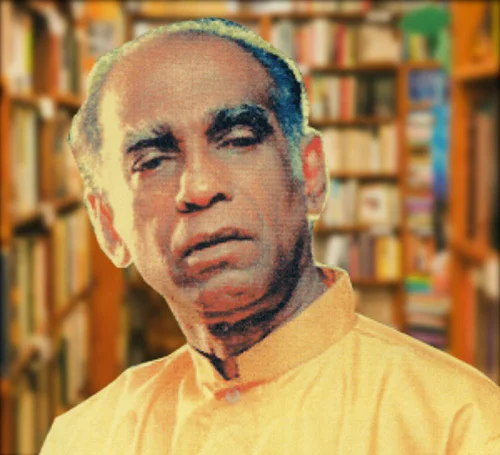
The mellow, sacred strains of W.D. Amaradewa,
The master singer who plumbed the depths,
Of the ordinary people’s hearts and minds,
Wafting from the Dansala across the street,
Where devotees clad in immaculate white,
Gave themselves a much needed repast,
Helped give the venerated day just past,
Its special spiritual meaning and identity,
Putting the cardinal point beyond doubt,
Of content and medium being one in great art.
By Lynn Ockersz

The Commission to Investigate Allegations of Bribery or Corruption (CIABOC) on 12 June questioned former President Mahinda Rajapaksa regarding the USD 2 Mn bribe allegation directed at the late SriLankan CEO Kapila Chandrasena, whose body was found on 8 May in a close relative’s home in Kollupitiya. Chandrasena’s alleged suicide sent shock waves through political circles and interested parties questioned the circumstances leading to him being granted bail on 6 May on cash bail of Rs. 500,000 with three sureties of Rs. 10 million each. The Colombo Magistrate court also imposed a travel ban. The issue at hand is as to how Mohamed Riswan and Mohamed Irshan stood as sureties for Chandrasekera. Of all the investigations undertaken by the CIABOC, the USD 2 Mn bribe case is the most politically charged probe.
Of the Rajapaksas, former State Minister Shasheendra Rajapaksa is so far the last to be indicted. CIABOC on 19 June filed indictments before the Colombo High Court against him and two others Sepalika Saman Kumari and Keerthi Bandara Kotagama. According to the charges, the accused are alleged to have committed the offence of corruption and aided and abetted the commission of the offence by using official influence to pressure certain government officials, attached to the Office for Reparations, to obtain compensation amounting to Rs. 8.85 million for a property built on a state land by Shasheendra and destroyed by marauding Aragalaya mobs.

By Shamindra Ferdinando
The ruling National People’s Power (NPP) government last week emphasised, in no uncertain terms, that it wouldn’t tolerate the growing Opposition challenge.
Amidst the growing controversy over the continuing detention of retired Maj. Gen. Suresh Sallay. in terms of the draconian Prevention of Terrorism Act (PTA), under humiliating conditions, in connection with the ongoing investigations into the 2019 Easter Sunday carnage, police arrested Sugeeshwara Bandara, leader of the New People’s Front (NPF). The Central Crime Investigation Bureau (CCIB) apprehended him on 18 June and the Fort Magistrate’s Court remended him till 1 July..
The CCIB also apprehended Binoy Hettiarachchi who was accompanying Bandara. Hettiarachchi served as a media coordinator at the former President Ranil Wickremesinghe’s Flower Road Office. Police intercepted their vehicle at Kollupitiya where the arrests were made like in an action-packed movie. Hettiarachchi was freed four hours later.
But, it would be better to identify Bandara as the former private secretary to President Gotabaya Rajapaksa as well as the Director General of Special Projects at the Presidential Secretariat in the wake of Ranil Wickremesinghe taking over the presidency.
Accused of receiving two salaries simultaneously, under the President’s Expenditure Head, Bandara who managed the media for Gotabaya Rajapaksa, in the run-up to the 2019 presidential election, is under investigation for abuse of government vehicles and employing government workers for political work.
Having launched his political career as the Colombo District organiser of the alliance New People’s Front, a breakaway faction of the UPFA, in February, 2024, Bandara contested the November, 2024, parliamentary polls on the New Democratic Front (NDF) ticket. But, of late, Bandara, as the leader of NPF, became one of the most active opposition activists, aligned with the political grouping, dubbed People’s United Opposition, operating from Ranil Wickremesinghe’s Flower Road Office.
Bandara drew the wrath of the government when he launched a noisy protest outside Finance Secretary Dr. Harshana Suriyapperuma’s residence at Akuregoda, Pelawatta, on 26 April, where he and his protesting supporters were given a shower of excreta. The group, led by Bandara, demanded the Finance Secretary’s resignation over the theft of USD 2.5 mn from the Treasury. No less a person than President Anura Kumara Dissanayake reacted angrily to Bandara’s actions.
Acknowledging the right for legitimate protests, the President warned against protests directed at residences of officials. On 18 April, Bandara led a protest outside Agriculture Minister K.D. Lal Kantha’s recently built luxury residence at Weliwita, Kaduwela, where he questioned how the JVPer managed to build such a home as he was on record as having repeatedly said that he lived a difficult life.
The police apprehended Bandara as he was returning from a meeting between senior representatives of the People’s United Opposition and the IMF Colombo at the Tiki Bar, Shangri-La. In spite of negligible parliamentary presence, with those elected on the NDF ticket at the last parliamentary election not really speaking in one voice, the Flower Road project has become a headache for the government.
In fact, the Flower Road operation has been causing continuous harassment to the NPP, while the Samagi Jana Balawegaya (SJB) struggled to play its anticipated role as the main Opposition. Instead of conducting a cohesive campaign against the cocky NPP government, members of the SJB seem to be pulling in different directions at the expense of the common opposition front.
Regardless of the Wickremesinghe-led grouping vowing to press ahead with its campaign, the arrest of Bandara is obviously meant to have a detrimental impact on the activities of the Opposition.
It would be pertinent to mention that Bandara had been among those who stayed with President Gotabaya Rajapaksa at the President’s House, in Colombo, as a massive protest erupted on 9 July, 2022. Bandara was among the last to flee the President’s House as the military withdrew, amidst mounting pressure on their positions.
The police arrested Bandara as former President Gotabaya Rajapaksa moved the Court of Appeal in terms of Article 140 of the Constitution to prevent him being arrested under the PTA. The wartime Defence Secretary sought the court intervention in the wake of police probing the 2019 Easter Sunday carnage and obtaining a travel ban against him.
The court heard Romesh de Silva PC’s submissions on behalf of the ex-President on 18 June. The court deferred the hearing to 24 June. The crux of the matter is that the ex-President fears that the CID is about to arrest him on the basis of a statement made by fugitive Azad Moulana, in Paris, linking Sallay directly with the Easter Sunday carnage.
NPP intensifies pressure
The NPP seems confident of its current course of action meant to pin down the Opposition. In spite of unbridled corruption being the major issue on the post-war election platform, no political party succeeded in going flat-out against the political opposition.
However, the NPP allowed the judicial process to continue. The first major sentencing was announced on 2 April, 2025, just six months after the parliamentary polls, handsomely won by the NPP. The Commission to Investigate Allegations of Bribery or Corruption (CIABOC) moved the Colombo High Court successfully against the former Chief Minister of the North Central Province S.M. Ranjith Samarakoon.
Colombo High Court No. 01 Judge Adithya Patabendige sentenced him in terms of Section 70 of the Bribery Act. The HC declared the former CM perpetrated malpractices by ordering fuel to his personal secretary’s vehicle. The personal secretary happened to be Shanthi Chandrasena, wife of his brother S.M. Chandrasena, a former Cabinet Minister and one of the most powerful Ministers to represent the North Central province.
The ex- Chief Minister and the second accused, his personal secretary, were convicted guilty of two charges. Both were sentenced to 16 years rigorous imprisonment and were also ordered to pay a fine of Rs. 200,000/- with an additional two-year prison term in case of default.
Deputy Director General Asitha Anthoney appeared on behalf of the Commission to Investigate Allegations of Bribery or Corruption.
There had never been any really coordinated CIABOC campaign against corruption. No political party, or a particular family, felt threatened by CIABOC. Both those in and outside Parliament acted with impunity. They feared no one. There was no need to be because the powerful and the influential operated above the law.
Just a couple of weeks after sentencing of S.M. Ranjith Samarakoon and Shanthini Chandrasena, the CIABOC arrested the latter’s husband, one-time Deputy Economic Development Minister and Special Projects Minister, S.M. Chandrasena. The CIABOC took him into custody on 4 July, 2025.
The CIABOC accused the former Minister of causing loss to the government by distributing seed corn, imported at a cost of Rs 25 mn, in 2024, among the farmer community in the Anuradhapura district, at a subsidised price. The distribution had taken place ahead of the 2015 presidential election contested by Mahinda Rajapaksa and estranged former SLFP General Secretary Maithripala Sirisena. The CIABOC alleged that Chandrasena exerted undue influence on the Director (Planning) and other officers of the District Secretariat and distributed seeds through his political allies to gain an advantage in the 2015 presidential election and incurred a loss to the government.
Chandrasena was granted bail on 1 August, 2025. He was indicted on 12 June before the Colombo High Court.
Before further discussing the ongoing anti-corruption campaign, let me introduce the top leadership of CIABOC. The Commission consists of Justice W.M.N.P. Iddawela (Chairman), K.B. Rajapakse and Chethiya Goonesekera P.C, with High Court judge R.S.A. Dissanayake as its Director General.
The sentencing of the S. M. Ranjith Samarakoon didn’t really bother his side. The arrest of his brother S.M. Chandrasena, too, didn’t really upset those facing charges. But, sentencing of former Minister Mahindananda Aluthgamage and former Sathosa Chairman and former Trade Minister Nalin Fernando on 29 May, 2025, sent shock waves through the Opposition.
The Colombo High Court Trial-at-Bar sentenced Aluthgamage and Fernando for committing the offence of corruption by purchasing 14,000 carrom boards and 11,000 checkers boards through Sathosa, allegedly to distribute to schools and sports clubs selected by the Sports Ministry, and distributing them to party offices of the government, during the 2015 presidential election campaign thereby, causing a loss of over 53 million rupees to the government, stunned the Opposition.
Aluthgamage was sentenced to 20 years of rigorous imprisonment, Fernando received a sentence of 25 years of rigorous imprisonment. Additionally, a fine of Rs. 100,000 (hundred thousand) was imposed for each count.
The CIABOC’s Assistant Director General Mrs. Anuththara Jayasinghe and Assistant Director General Mrs. Thushari Dayaratne conducted the prosecution.
During the Yahapalana government Aluthgamage spearheaded a high profile anti-corruption campaign, dubbed ‘Yahapalana Top 10 kamba horu’. The then Joint Opposition (JO) group, led in Parliament by Dinesh Gunawardena, published a 750-page book, targeting the Yahapalana ministers. Mahindananda, who spearheaded that campaign, is now serving a long sentence.
The JO group consists of UPFA lawmakers who declined to throw their weight behind the then President Sirisena aligned with the UNP.
Let me mention the names of those against whom the accusations were made by the JO.
Yahapalana corruption
The JO dealt with 10 major cases. (1) The Treasury bond scams perpetrated in 2015 and 2016. Accusations were directed at Ranil Wickremesinghe, Ravi Karunanayake and Governor Central Bank Arjuna Mahendran. The losses were estimated at Rs 26 bn. (2) causing losses amounting to Rs 10 bn through the fraudulent import of vehicles. Ravi Karunanayake was named the chief culprit (3) Misappropriation of Mahapola funds to the tune of Rs. 1 bn. Allegations were directed at Malik Samarawickrema (4) Stealing from an insurance scheme implemented for the benefit of those going for employment in West Asia. The JO accused Thalatha Atukarale of misappropriating funds amounting Rs 1.5 bn (5) Receiving Rs 1.5 bn through the leasing of Hambantota port to China on a 99-year lease. Ranil Wickremesinghe, Malik Samarawickrema and R. Paskaralingam were named the offenders (6) Kabir Hashim was accused of causing a loss of Rs 54 bn by cancelling aircraft ordered from Airbus Industries for the national carrier (7) fraudulent activities pertaining to the release of paddy stocks held by the government. The JO estimated the losses caused to the government at Rs 10 bn. (8) Scam in vehicle parts. Ravil Karunanayake was accused of causing losses amounting to Rs. 6.5 bn, (9 A) Dr. Rajitha Senaratne was accused of leasing of the Modera fisheries harbor and procurement of eight vessels to catch fish, fraudulently, and thereby causing losses up to Rs 1 bn, (9B) The JO also found fault with Dr. Senaratne for perpetrating Rs 1.5 bn fraud in the procurement of medicine and lastly (10) Ranil Wickremesinghe, Malik Samarawickrema, R. Paskaralingam and Charitha Ratwatte were blamed for a massive fraud in the procurement of coal for the Norochcholai coal-fired power plant. That particular fraud was estimated at Rs 5 bn.
Although the JO transformed itself to Sri Lanka Podujana Peramuna (SLPP) later, to successfully contested the 2019 presidential election, none of the above-mentioned cases were investigated. As far as we know, none of those cases had been dealt with during the SLPP rule, from November, 2019, to July, 2022. Faced with an externally backed regime change operation, the SLPP invited Wickremesinghe, who had been named by them in three major corruption cases, to accept the premiership in May, 2022, and presidency in July same year.
So far, there is no indication whether the mentioned JO allegations had received the attention of the CIABOC or the Attorney General of the government. As far as we know of all the politicians and officials, Wickremesinghe is the only one facing imminent threat due to the ongoing case pertaining to him visiting the UK in September, 2023, to join his wife Prof. Maithree at the University of Wolverhampton at her graduation ceremony.
Wickremesinghe has been accused of squandering nearly 17 mn rupees at a time the country was in deep economic turmoil. The Fort Magistrate’s court is scheduled to take up the case on 8 July.
SLPP parliamentary group leader Namal Rajapaksa is also facing a major legal challenge. The former Minister has been indicted on charges of criminal misappropriation of Rs. 70 mn in connection with the controversial Krrish project. The indictments have been forwarded to the Colombo High Court by the Attorney General, alleging that Namal Rajapaksa misappropriated funds by receiving Rs. 70 million from the Indian real estate company for the development of rugby in Sri Lanka.
Yoshitha Rajapaksa, too, has been dealt with by the CIABOC. The Rajapaksas have been accused of lowering qualifications required to join the executive branch of the Navy and then sending him to the Royal Naval Academy in the United Kingdom at taxpayers’ expense. Produced before the Colombo Additional Magistrate, Yoshitha was released on three personal bail bonds of Rs. 5 million each.
Producing Yoshitha before court on 17 June, Deputy Director General of the Bribery Commission, Ruvini Wickramasinghe declared: “”Your Honour, the complaint regarding this incident was received on June 25, 2016. Accordingly, the Commission initiated investigations. The complaint states that the suspect had participated in naval training programmes held in England and Ukraine by misusing government funds, while depriving qualified applicants of such opportunities. At that time, this individual, who is a civilian in the dock today, was also a civilian in 2006 when he was deemed eligible for the Royal Navy Young Officer training at the Royal Naval Academy in the United Kingdom. The opportunities to receive this training are extremely limited. Your Honour, selection to this prestigious course is usually based on being the most outstanding cadet officer during a two-year training period or based on performance during training. However, this suspect, although a civilian in 2006, was proposed and included in the list and was sent for the course in haste.”
The Deputy Director General also stated that Yoshitha Rajapaksa had undergone medical examinations required for overseas training even before being officially recruited into the Navy.
The court was also told that though Sri Lanka previously received scholarships from the UK the Rajapaksa government funded Yoshitha to the tune of Rs 6.2 mn.
Opp. attacks CIABOC
The Opposition has repeatedly attacked the CIABOC with its Director General Ranga Dissanayake being the primary target. Accusing Dissanayake of being a JVPer, the Opposition has repeatedly questioned the conduct of the High Court judge demanding that the CIABOC inquired into the top official’s conduct, especially with regard to the alleged suicide of former Sri Lankan CEO Kapila Chandrasena who had been under investigation pertaining to the receiving of USD 2 mn bribe to facilitate procurement aircraft from Airbus Industrie during Mahinda Rajapaksa’s second term.
Former Foreign Minister Prof. G. L. Peiris, a regular speaker at Flower Road media briefings, alleged that the CIABOC was a political tool in the NPP’s hands.
A section of the Opposition to question the circumstances one-time JVP heavyweight Nandana Gunatilleke died in January this year at the Ragama Teaching Hospital after accusing Dissanayake of pursuing an agenda beneficial to the JVP, a charge denied by the High Court judge. When the writer raised the allegations with Dissanayake, he emphatically denied any wrongdoing on his part https://island.lk/ciaboc-dg-denies-jvp-link/.
The CIABOC has simply ignored accusations directed at its DG who proved through his actions that he really meant high profile public pronouncements against corruption.
Former Deputy Minister and ex-MP Sarana Gunawardena was sentenced to a total of 16 years rigorous imprisonment by the Colombo High Court on June 8, 2026.
During the Yahapalana administration many cases, filed by the CIABOC as well as the Attorney General, were either dismissed or dropped due to lapses on their part. The accused in such cases were ex-MP Sajin Vass Gunawardena, ex-EP Chief Minister Sivanesathurei Chandrakanthan alias Pilleyan, ex-Ministers Johnston Fernando, Rohitha Abeygunawardena, Basil Rajapaksha, Mahindananda Aluthgamage and Janaka Bandara Tennakoon and former AG and CJ Mohan Peiris.
Regardless of Opposition protests, the public appreciate tangible action against corruption. However, the NPP has not been free from serious allegations against it since the last general elections. The release of suspicious 323 containers, plus two containers filled with ice, in January, 2025, followed by the massive coal scam perpetrated in September 2025, loss of over USD 2.5 mn from the Treasury and controversial Aswesuma payments, as well as wealth, accumulated by NPP Ministers as revealed by declarations made to CIABOC, shocked the electorate.
The NPP has failed to counter allegations. The circumstances under which Energy Minister Kumara Jayakody resigned, along with Energy Secretary Udayanga Hemapala, on 17 April, just a week after the NPP defeated the no-confidence motion moved by the Opposition against the Energy Minister. dealt a devastating blow to the NPP’s much touted integrity. The NPP couldn’t explain as to why a person under investigation by the CIABOC for an alleged fraud perpetrated during the Yahapalana government was accommodated in President Dissanayake’s first Cabinet. Indicted before the Colombo High Court, Jayakody’s case commenced last week.
Asset declarations of some NPP Ministers have shocked the country. The SJB has called for CIABOC to investigate them without delay and prove that CIABOC was not only going after the Opposition. Ministers Lal Kantha and Wasantha Samarasinghe are two of the top JVPers who have attracted attention as the Opposition hits back at the government.
SJB MP Mujibur Rahuman said that the JVP/NPP owed an explanation as to how their members amassed so much wealth since 2024 as they repeatedly claimed their inability to meet even their basic needs. But, their asset declarations exposed their blatant lies.

Brutal heat cancels Fourth of July events, from DC to Philadelphia

Arias sends Colombia into World Cup last-16 with 1-0 win over Ghana

Messi scores again but Argentina given World Cup upset fright by Cape Verde

Anguished families left to identify Venezuela quake victims at makeshift morgue

Ukrainian suspect hunted by police after Monaco bomb attack was ‘disguised as a man’

Showers in the Western, Sabaragamuwa and North-western provinces and in Galle, Matara, Kandy, Nuwara-Eliya, Anuradhapura and Mannar districts.

‘Dates have the highest sugar content to fight Coronavirus’

Sunday Island 27 December – Headlines

#SundayIsland 17th December – Headlines

Sunday Island – 28th March

Sunday Island Headlines – 21 March

Sunday Island – 21st February – Headlines
-
 News5 days ago
LAWASIA warns against ad hoc initiative to increase judges’ retirement ages
-
 Features4 days ago
Climate action to bring South Asia together
-
 News4 days ago
Chamuditha to seek removal of injunction on Youtube programme
-
 News7 days ago
Another 1,132 Sri Lankan Personnel to be deployed for United Nations Peacekeeping Missions
-
 Features6 days ago
People’s Bank expands digital banking network with 125th cheque deposit kiosk
-
 News1 day ago
SLAF conducts successful rescue mission under UN command in Central African Republic
-
 News1 day ago
CIABOC to question Harak Kata on Rs. 200 mn bribery allegation
-
 News4 days ago
CPRP alleges another death in custody, seeks protection for witness