
Opinion
Dr. Ajith C.S. Perera, a fighter to the last

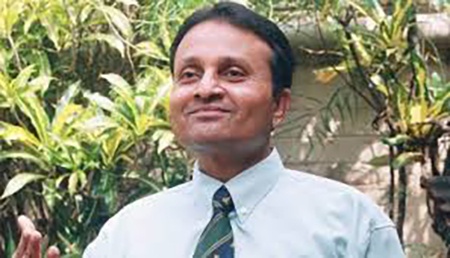
Disability activist, accessibility consultant, accomplished author, writer and speaker
This is no eulogy. I leave the appreciation of Ajith’s work to others who knew him and his work better than I. I belong to another generation, that of his father. So what I say here is personal, not quite what a reader would expect, but it is honest and heartfelt and, above all, something to think about.
Ajith was a tragic and heroic player in a script not of his choosing. This is the role in which he was cast in this life. As a Buddhist I know that whatever befell him was the result of some cause or other – what, we do not know – and I know that the good generated by him in this life will generate good fortune to someone else down the karmic stream. Somewhere, today, a baby lies cocooned in a mother’s womb: a baby who will reap his legacy. That will be his gift to that child: but that child will not know from where it all came. As Ajith, himself, must have spent many hours wondering why things happened to him, himself.
I call him a tragic figure because so many things went wrong. I remember him as a little boy with a cricket bat in hand, waiting for someone who would bowl for him. Sometimes, that was me, and Ajith remembered those days. How was I to know that I was bowling to a future International Test Umpire? He did become that, and an authority on cricket. I lost sight of him after that till I met him in the office of the late Dr. N.R de Silva, my contemporary and colleague, who introduced “this bright young man with an enviable future.”
The road ahead was strewn with flowers: but then, the skies turned dark. One “dark and stormy night” snuffed out that promise. Two promising international careers in cricket and Chemistry, was cut short when a tree fell on his moving car, leaving Ajith paraplegic for life. Thus tethered at so young an age, he took upon four tasks: Keeping his father’s memory evergreen, caring for his widowed mother, giving back from his knowledge to Cricket and taking the lead in moves to make life easier for those who were as disabled, or rather differently-abled as him, or worse.
I do remember taking him to address a gathering of disabled soldiers. Ajith would not go on stage but spoke from his wheelchair on the floor of the Auditorium. He deftly wheeled his way down the aisles, stopping to speak to the soldiers on the same level as he, himself. His dexterity in handling the wheelchair, his ability to speak to one man at a time with full attention, and his self-confidence impressed the soldiers and they left the Hall with shoulders squared and heads held high again.
By reason of personal adversity he turned a voluntary disability activist, accessibility consultant on ‘Enabling Environments’, and accomplished author, writer and speaker. He is also the founder and Hony. Secretary-General of IDIRIYA, a not-for-profit humanitarian service organisation born from his passion and commitment for creating environments that are ‘enabling for all’. He didn’t appreciate pity on behalf of the disabled, nor dependency on part of the disabled, pointing out that able-bodied people often tended to see the ‘disability’ of disabled persons instead of their numerous ‘abilities’. He argued that if everyone adopted a charitable attitude to differently-abled people they would become unwanted dependents of society.
He believed that Sri Lanka needed social empowerment rather than social welfare. He discarded the medical model that labelled people like him ‘disabled’ in favour of the social model, which taught him that human abilities vary widely and is subject to continuous change leading to often debilitating conditions. It was Ajith’s a voluntary efforts that lead to the Supreme Court order to provide differently-abled persons with unhindered access to new public buildings. He hoped that, with the proper implementation of the law, all government and private sector buildings will soon be enabling for all. His tireless efforts made accessibility a legal obligation, rather than just a social responsibility.
He will be remembered for ensuring that his father’s name was remembered in the Navy and, when an oration in his name was delivered on the Golden Jubilee of the Naval Academy, that was Ajith’s day.
On top of it all, his father’s eyesight began to fail. A teacher by nature, Commander M.G.S Perera, had retired from the Navy to be a Staff Captain training Ceylon Shipping Corporation officer cadets. The man who taught celestial navigation to generations of trainees suddenly lost his sight: “the most unkindest cut of all.” Not being able to see “the sun in the morning and the stars at night.” Death would have come as a welcome relief.
With his mother getting older and weaker, he had to run house for her and, unlike most of us, he had no pension, having been disabled so young. It must have been a tough time for him. How can we understand what he was going through? He badgered people to do things, but what else could he do? He managed, though, not wonderfully well, but well enough. That is why I think of him as a tragic figure raging against Fate. He was hard and demanding at times – what else could he do, with no tools in his hand but his voice and his computer? We all found him hard, at times, and even resented it, but we knew that he was tethered to a wheel, and to others who looked to him.
With the death of his mother last year life became very hard for him because there was no purpose in running house. But what else could he do but run it? There were others there and there was no place for him to go. And where was the money? Illness finally claimed him and, perhaps, the will to live, a purpose to live for, deserted him. When had he last been happy I wonder? But he had been mere flotsam in a karmic stream he had no control over. All he could do was leave a legacy to an unborn child. And that, I believe, he did.
This is no eulogy. It is but an honest appraisal of a player cast in a tragic role “’midst the slings and arrows of outrageous Fortune.” Ajith will be remembered for what he tried to do, rather than what he could have achieved “had he (had) but world enough and Time.”
– Anon


Sri Lanka stands at a defining juncture where the pursuit of accountability for the 2019 Easter Sunday bombings intersects with fragile economic recovery, communal sensitivities, and renewed demands for political devolution. The arrest of former State Intelligence Service chief Retired Major General Suresh Sallay in February 2026, and subsequent high-level statements linking him to directing aspects of the attacks that killed 279 people, mark a significant escalation in the investigation. Actions such as the impounding of passports of key figures, including former President Gotabaya Rajapaksa and Defence Ministry Intelligence officers, signal seriousness. Yet the process risks being derailed by partisan politics, social media manipulation, and selective narratives. True national security demands that this remains a forensic, evidence-based exercise rather than a political spectacle.
The visible participation of Muslim communities in demanding justice for the victims while articulating long-suppressed grievances represents one of the most important developments. Many within the community are increasingly recognising that they were subjected to a calculated, gradual anti-Muslim agenda in the aftermath of the attacks, one that collectively stigmatised an entire faith group, portrayed them as inherent extremists, and created fertile ground for the radicalisation of vulnerable youth. This manufactured climate of suspicion and marginalisation did not enhance security; it damaged social cohesion and inadvertently aided the very extremist narratives it claimed to counter.
The current government’s handling of the Easter investigations appears to be fostering cautious but noticeable confidence among sections of the Muslim community. When investigations target individuals based on evidence rather than community affiliation, and when senior figures from previous regimes face scrutiny without fear or favour, it sends a powerful message that the state is capable of impartial justice.
This emerging trust is a vital asset in the broader battle against radicalisation. It must be nurtured through consistent, transparent action rather than undermined by political grandstanding or social media campaigns that seek to reignite old fault lines. The Catholic Church’s measured support for the process while insisting on its integrity offers a constructive template that political actors and online platforms would do well to follow.
Parallel to these developments, another significant demand has resurfaced with renewed vigour: calls from the Tamil community, the diaspora, and sections of the international community for the holding of long-overdue provincial council elections. This is not a peripheral governance issue; it is intrinsically linked to national security, reconciliation, and the prevention of future instability in the North and East. Prolonged delays in devolution fuel perceptions of centralised neglect, provide ammunition for external actors seeking to internationalise domestic matters, and risk allowing legitimate grievances to be exploited by fringe elements.
Conducting credible provincial elections would demonstrate the government’s commitment to democratic decentralisation, strengthen local legitimacy, and reduce the space for both domestic radicalisation and foreign interference. Conversely, further postponement risks turning a constitutional requirement into another source of communal tension and international pressure.
The government must therefore treat these calls with strategic seriousness rather than tactical delay. Provincial council elections, conducted fairly and on schedule, can serve as a confidence-building measure that complements the pursuit of justice in the Easter case. Both processes, accountability for past security failures and meaningful devolution, are essential components of a holistic approach to preventing the recurrence of violence, whether from Islamist extremism, ethno-nationalist mobilisation, or hybrid threats amplified through social media.
Economic constraints continue to form the underlying substrate of national vulnerability. While the current administration has maintained a degree of macroeconomic stabilisation under the IMF programme, poverty levels remain elevated, youth unemployment is a persistent concern, and investor sentiment is sensitive to political noise. High-profile investigations that are perceived as selective or politically motivated will deter the very Foreign Direct Investment the country needs to generate sustainable growth and employment. Security and economic resilience are mutually reinforcing; prolonged political turbulence or loss of institutional credibility directly undermines the ability to attract capital and create opportunities that reduce the appeal of extremist ideologies.
On the geopolitical front, the recent visit of General Kevin Schneider, Commander of the United States Pacific Air Forces, for the Indo-Pacific Safety Air Forces Exchange, and US Assistant Secretary of State for South and Central Asian Affairs S. Paul Kapur, who arrived in the island on an official visit, met with the President. Newsfirst.lk highlights both opportunity and the need for careful navigation. Discussions on maritime domain awareness, cybersecurity, and disaster response offer tangible avenues for capacity enhancement. At the same time, Sri Lanka must maintain a balanced engagement with India and China while monitoring broader regional dynamics, including Pakistan’s active mediation role in the US-Iran talks underway in Switzerland. These developments underscore the interconnected nature of Indian Ocean security and the importance of professional intelligence assessments that transcend partisan domestic agendas.
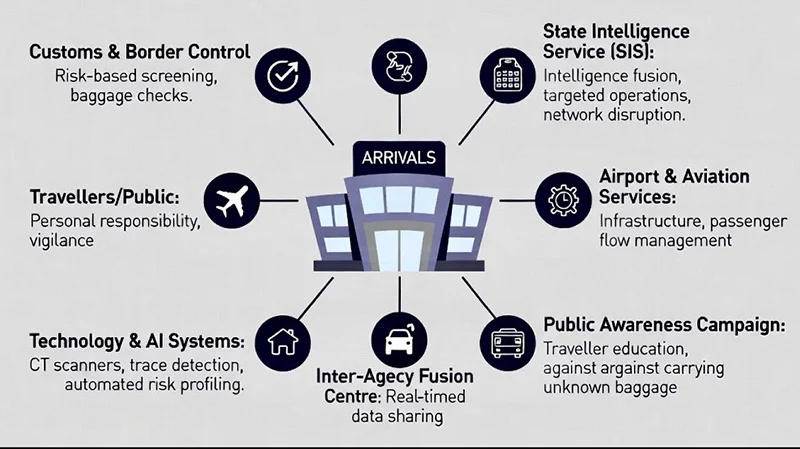
Drug trafficking remains a persistent and serious national security threat. Despite consistent detections at arrival points, particularly at Bandaranaike International Airport (BIA), and within the country, attempts to smuggle narcotics continue unabated. These detections clearly demonstrate that the menace is far from over: demand persists and supply networks remain active. The State Intelligence Service has played a pivotal role in several major detections through its strategic networks and effective fusion of intelligence, enabling more qualitative and targeted operations. However, the operational environment at BIA arrival terminals becomes highly complicated when multiple aircraft land simultaneously.
Many passengers proceed through the “nothing to declare” channel, while customs officers conduct random checks that often create complications for both travellers and enforcement personnel. It would be prudent for authorities to undertake a comparative study of the number of random checks conducted against the number of successful detections achieved, in order to objectively evaluate the effectiveness of this approach. The optimal strategy lies in combining modern technology with intelligence-led operations. In parallel, a sustained public awareness campaign should be launched among travellers, strongly discouraging them from carrying baggage belonging to others, whether known or unknown persons.
Perhaps, the most under-appreciated dimension of contemporary national security is the rise of non-traditional threats. The recurring effects of El Niño and broader climate variability, erratic monsoons, agricultural stress, water scarcity, and potential displacement, carry direct implications for social stability and resource competition. The persistent challenge of Dengue outbreaks further strains state capacity and public health resilience. These are not peripheral issues for intelligence agencies; they are core components of a modern threat landscape that includes hybrid warfare, disinformation campaigns, and climate-induced instability.
National intelligence agencies must expand their analytical frameworks beyond traditional kinetic threats to integrate climate intelligence, health security indicators, and the monitoring of disinformation campaigns that exploit economic hardship or communal grievances. The Easter Sunday tragedy was itself a catastrophic failure of intelligence coordination and threat assessment. Repeating such blind spots in an era of hybrid and non-traditional risks would be inexcusable.
The professional intelligence community has a clear duty at this moment. Its role is to provide objective, evidence-based assessments to the state, insulated from political pressure and focused on protecting the nation rather than serving transient interests. This requires rigorous focus on the actual threat picture: monitoring attempts to exploit the Easter investigations for divisive ends, tracking foreign influence operations, assessing the intersection of economic distress with radicalisation pathways, and integrating climate and health stressors into strategic warning. Inter-agency coordination, professional training, and institutional autonomy are not optional luxuries; they are prerequisites for credible national security.
Sri Lanka cannot afford another cycle in which legitimate demands for justice and devolution are hijacked by partisan actors or amplified into communal polarisation by social media. The emerging recognition within the Muslim community that past anti-Muslim campaigns contributed to radicalisation, coupled with tentative confidence in the current government’s approach, represents a narrow but valuable window. Similarly, addressing the long-standing call for provincial council elections offers a pathway to strengthen democratic legitimacy and reduce external leverage points. Both require the government to demonstrate consistency, transparency, and strategic vision.
Conclusion
Sri Lanka’s national security will not be secured by half-measures or political expediency. The time has come for decisive, professional, and coordinated action across all fronts. The pursuit of justice in the Easter Sunday investigations must remain evidence-driven and impartial, not a tool for partisan score-settling. Meaningful devolution through timely provincial council elections and the full implementation of the 13th Amendment within the unitary framework must be delivered without further delay, as unresolved grievances remain fertile ground for division and external interference.
Drug trafficking and other hybrid threats demand the immediate fusion of modern technology with superior intelligence-led operations, supported by robust public awareness campaigns. Non-traditional threats such as climate-induced instability and public health risks must be elevated to the core of national security planning.
True national security is built on institutional integrity, social cohesion, economic resilience, and strategic foresight. Sri Lanka has paid an unbearably high price in the past for allowing political calculations and institutional failures to override professional security management. The current moment offers a rare opportunity to break that destructive cycle. The government, intelligence community, political parties, religious and community leaders, and all stakeholders must rise above narrow interests. They must choose evidence over expediency, unity over division, and long-term national interest over short-term political gain. Anything less would be a betrayal of the sacrifices made and the future that belongs to the next generation. The choice is clear, and the time to act with courage and clarity is now.
Mahil Dole, SSP (Retired), is fthe former Head of the Counter-Terrorism Division of the State Intelligence Service of Sri Lanka, and has served as Head of the Sri Lankan Delegation at three BIMSTEC Security Conferences. With over 40 years of experience in policing and intelligence, he writes on regional security, interfaith relations, and geopolitical strategy.
This opinion draws on public records and professional experience. The views expressed are personal
By Mahil Dole
Senior Superintendent of Police (Retd.)
Former Head of Counter Terrorism,
State Intelligence Service.

Had former Sri Lankan President Ranasinghe Premadasa lived to celebrate his 102nd birthday, it would have fallen on June 23, 2026. Premadasa, a politically self-made leader from humble beginnings, served as the second Executive President of Sri Lanka from 1989 until his assassination in 1993. He was the first non-aristocratic “commoner” to rise to the nation’s highest office, breaking the long-standing dominance of the landed elite, high-caste aristocracy, and wealthy political families. Emerging from modest social origins, Premadasa represented a rare example of social mobility in Sri Lankan politics. He often marked his birthdays in remote villages through the “Gam Udawa” (Village Reawakening) programme.
It is fitting to begin this column with an anecdote connected to Gam Udawa. Following the Gam Udawa ceremony in Buttala, Premadasa took a helicopter ride with several officials and identified a site in Mahiyangana for the next programme. He instructed the Director of Town and Country Planning to prepare a sketch plan for the location.
When the Director later returned to Colombo and met the President, Premadasa asked, “Where is the sketch plan?” Instead of producing a plan, the Director handed over a small piece of paper and said, “Sir, when I stepped out of the vehicle, a youth handed me this note.”
Premadasa brought the note to a meeting at Sethsiripaya attended by nearly one hundred officials and read it aloud. The message stated: “If you visit again, you will not leave alive.”
Holding up the note before the gathering, Premadasa asked sharply: “If a mere threat is enough to stop an officer from carrying out his duty, what use are such officers to the country?”
Ascendency to the Presidency
Premadasa assumed office during one of the most turbulent periods in the country’s post-independence history. Sri Lanka was engulfed in twin civil conflicts while still grappling with the consequences of the sweeping economic and constitutional changes introduced through the open economy reforms and the 1978 Constitution. Poverty had deepened, export growth had slowed, balance-of-payments pressures persisted, and external debt continued to mount. The nation stood politically divided, economically strained, and socially unsettled.
At a public meeting, Premadasa once remarked that the Presidency was not “a crown placed upon my head, but a melting pot.” He believed governance should not remain the preserve of a privileged few. Ordinary people, in his view, had to participate in every aspect of governance — from policymaking to implementation. Citizens should share both the responsibility and the benefits of development.
Premadasa often argued that the root cause of unrest was the reduction of people into “mere voting machines operating once in five years.” It was within this philosophy that he introduced the concept of poverty alleviation into Sri Lanka’s national development agenda. He frequently observed that while institutions existed for every crop, few truly existed for the people themselves.
Janasaviya (People’s Strength) Programme
Out of this thinking emerged the people-centred programme Janasaviya, which combined welfare with production-oriented development. Its objective was not merely to help the poor survive, but to enable them to rebuild their lives with dignity and self-reliance. Purpose was alleviating poverty and empowering low-income households. Initially, Janasaviya beneficiaries received baskets of essential goods, many of which consisted of inexpensive imported utensils and crockery purchased through cooperative channels. Premadasa quickly recognised the contradiction and directed that the baskets instead contain locally produced items such as brooms, pottery, serviettes, and other village products. In this way, he envisioned the village not only as a marketplace, but also as a centre of production and economic self-sufficiency. Approach was to combine welfare assistance with credit, livelihood support, and production-oriented activities aimed at self-reliance.
Landmark 200 Garment Factory Programme
Thereafter, he launched the 200 Garment Factory Programme with the purpose of decentralising industrialisation and create rural employment. Approach was to Utilize U.S. garment quotas while offering incentives and infrastructure support for investors willing to establish factories outside major urban centres. Transformed apparel into a major foreign exchange earner while creating employment opportunities, particularly for rural women. At the time, many mocked the idea, questioning whether the country could survive by “selling underwear to Western markets.” Premadasa, however, remained undeterred. Within a few years, garment factories emerged across rural Sri Lanka, bringing investment, employment, and economic activity to regions long neglected. For the first time, investors moved decisively beyond Colombo into the country’s remote periphery.
Those who attended his weekly review meetings at the BMICH would remember the relentless follow-up that characterized his leadership. Secretaries and heads of institutions responsible for urban development, housing, electricity, telecommunications, water supply, and roads rushed from office to office to ensure they could report back to the President with a simple answer: “Yes, Sir, it is done.”
One incident became emblematic of his problem-solving style. A Ceylon Electricity Board official informed an investor that electricity could not be supplied because there were no poles available in the area. Premadasa summoned the official and asked a single question: “Are there coconut trees in the area?” When the answer was yes, he immediately ordered that the lines be drawn using the coconut trees until proper poles could be installed. The issue was resolved within minutes.
Premadasa personally inspected garment factory construction sites and monitored even the smallest details. During one visit, he noticed that several roofs in the adjoining village remained uncovered. Turning to the factory manager, he instructed that by the time he returned to declare the factory open, every roof must be properly covered.
Other Key Programmes
Gam Udawa (Village Reawakening) Movement
Purpose: To provide housing for the poor and improve rural living conditions.
Focus: Development of model villages with housing, roads, schools, water supply, and health facilities. The programme was Sri Lanka’s most ambitious rural housing initiative that drew international recognition leading to the United Nations’ declaration of International Year of Shelter for the Homeless.
Presidential Mobile Service
Purpose: To reduce bureaucratic delays and bring government services directly to the people.
Method: Ministers, secretaries, and senior officials travelled to the provinces to resolve public grievances on the spot creating direct engagement between the state and rural communities.
Industrial, Educational, and Cultural Initiatives
Established the Koggala Free Trade Zone and transformed the Greater Colombo Economic Commission into the Board of Investment of Sri Lanka (BOI), helping attract export-oriented investment.
Introduced free school uniforms to ease the burden on low-income families.
Established the Tower Hall Foundation to support theatre and music and introduced pension schemes for elderly artists.
Job Bank
On a concept introduced by President Premadasa, the Government established a “Job Bank” with the objective of eliminating arbitrary recruitment practices and political patronage in public sector appointments. Unemployed youth were invited to register with the Job Bank, and President Premadasa directed that vacancies in the public sector be filled from among those registered candidates through competitive written examinations and interviews rather than through ministerial recommendations or political influence.
Resource Profile
On the instructions of President Premadasa, a Resource Profile for every Divisional Secretary’s Division (DSD) was also prepared. These profiles contained detailed information on the resources, development potential, issues, and opportunities within each DS Division. The system became an important planning and development tool and continues to be updated and maintained in DSDs across the country.
Independent Verification of Information
He was also known for independently verifying information rather than relying on a single source. Soon after assuming office, a tragic accident occurred at an unprotected railway crossing in Ahangama, where a train collided with a school bus, killing and injuring students. Deeply disturbed, Premadasa ordered the General Manager of Railways (GMR) to ensure that within two weeks no unprotected railway crossing remained in the country.
When the GMR later submitted a report confirming completion, Premadasa sought independent verification from police stations around the country. One station confirmed that a crossing still remained unprotected. The GMR then faced his day of reckoning.
On another occasion, Premadasa invited opposition political parties for discussions on proposals relating to District Development and Coordination. Arriving early for the meeting, I quietly peeped into the room and saw a man rearranging furniture and shifting chairs. As he turned, smiling, he said, “Ah, you have come.” It was President Premadasa himself.
Impatience with Negativity
His impatience with bureaucratic negativity was legendary. During a discussion on land alienation and ownership, officials repeatedly explained why his proposals could not be implemented. Finally, in visible frustration, he remarked: “I have asked you to do 101 things. Is there not even one thing that all of you can do?” The officials understood the message immediately.
On another occasion, he promised every local authority a set of maintenance machinery before the Sinhala and Tamil New Year. Procurement was entrusted to a senior minister, who failed to secure the equipment in time. Yet once the President fixed the date for the handing-over ceremony, “No” was not considered an acceptable answer.
At the time, I had imported several maintenance machines for distribution among Divisional Secretariats. The minister contacted me urgently and requested that I lend him the machinery for one week. Trusting his assurance, I agreed. The following day itself, the machines appeared at Galle Face Green, where an elaborate ceremony was held with local authority chairmen from across the country. President Premadasa commended the minister for the “prompt completion” of the task and ceremonially handed over the equipment. The following day, the relieved minister telephoned me and said gratefully: “Mr. Maliyadde, you saved my neck.”
Visionary Driven by Action
Premadasa was a visionary driven by action. Under his leadership, garments emerged as Sri Lanka’s first major industrial export, transforming an export economy that for more than a century had depended overwhelmingly on tea, rubber, and coconut. Even decades later, apparel remains the country’s principal industrial export sector.
Though not formally trained as an economist, Premadasa instinctively understood concepts that economists often confined to seminars — growth nodes, export diversification, value addition and forward and backward linkages. He transformed these concepts into practice.
He believed the economy could not depend solely on garment assembly. Garment factories, in his view, had to become centres of wider economic activity that stimulated industrial and social development. He encouraged textile production for local supply to garment factories, while also seeking to integrate Janasaviya beneficiaries into these expanding economic networks. For Premadasa, the garment factory programme was not merely an export initiative; it was a bridge linking the village poor, local entrepreneurs, and international markets within a single chain of opportunity.
Right Man for the Right Job
He also possessed a remarkable ability to identify the right man (not the right-hand man) for the right job. Political loyalty, caste, or creed mattered less to him than competence and commitment. That was why he appointed Susil Siriwardane, a prominent JVP activist who was involved in 1971 insurrection, for which he was detained and convicted by the courts, as the first Commissioner of Janasaviya. Many individuals chosen to lead his programmes came not from his own party, but from outside it.
President Premadasa held office for only four years. Yet within that brief period, he launched programmes with the scale and impact of decades of development.
Leadership Style
Premadasa’s leadership style was defined by relentless follow-up, strict monitoring, and an uncompromising belief that obstacles existed to be overcome. Officials knew they had to be prepared for action at any hour of the day. He cultivated a reputation as a leader who refused to accept the words “cannot” or “impossible.”
His vision sought to combine social welfare with a regulated market economy, pursuing what many viewed as a distinctly Sri Lankan “third path” of development. He remains remembered as a determined and action-oriented leader whose policies left a lasting imprint on Sri Lanka’s social and economic landscape.
(Chandrasena Maliyadde is a former Secretary, Ministry of Plan Implementation. He can be reached at chandra.maliyadde@gmail.com)
by Chandrasena Maliyadde

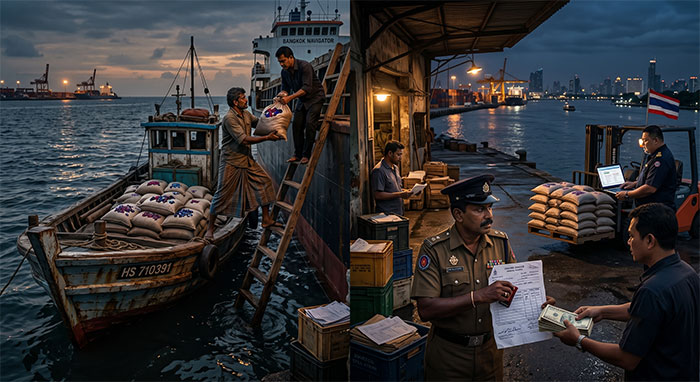
A Case Study on Sri Lanka-Thailand Trade
In March 2026, a Washington-based think tank, Global Financial Integrity (GFI), released its report on “Trade-Related Illicit Financial Flows in Developing Asia” for the 2013–2022 period. The report calculates the possible misappropriation of 20.51% of Sri Lanka’s total trade value through trade misinvoicing.
A calculation of Sri Lanka’s exports to Thailand in 2024, using the same GFI methodology, shows a possible misappropriation of 207% of the export value by Sri Lankan exporters and Thai importers
The phrase “plunder of Sri Lanka” normally refers to resource extraction through violent foreign invasions with swords and guns. This article is not about them. This article focuses on a more discreet and genteel version of plunder through illicit financial flows and the stashing of foreign exchange earnings offshore through trade misinvoicing.
What is Trade Misinvoicing?
Trade misinvoicing is the fraudulent recording of key invoice information for the purpose of facilitating illicit cross-border financial flows. One of the easiest ways to identify possible misinvoicing is the study of “mirror trade” data, that is, the comparative analysis of partner-country trade data with Sri Lankan trade data. If this flags discrepancies (value gaps), those are indicators of misinvoicing. These gaps could be due to overinvoicing imports, underinvoicing exports, or phantom imports.
Overinvoicing imports occurs when Sri Lankan importers and their foreign counterparts artificially inflate invoice prices for goods. The importer remits foreign currency abroad to settle the bogus invoice amount in full, and the surplus cash is subsequently split or retained in offshore accounts.
Similarly, underinvoicing exports happens when exporters ship high-value goods (for example, gems) out of Sri Lanka but state a considerably lower price on the customs invoice and the importer pays the low price through official channels. Then the actual market balance is paid directly into foreign bank accounts.
Phantom imports occur when bogus companies are set up to execute telegraphic transfers to foreign suppliers under the pretext of importing goods, which never physically enter Sri Lanka. The recently uncovered large-scale foreign exchange fraud totalling around US$85 million linked to fictitious imports revealed by the Public Security Minister Ananda Wijepala is an example of phantom imports. However, what he revealed was just the tip of the iceberg. The annual loss from overinvoicing imports and underinvoicing exports is much larger and may be as high as US$ billion or higher.
So, whenever value gaps occur in mirror data, they should be treated as risk indicators. If the gaps are significantly large, then the authorities should immediately investigate the relevant invoices with the partner countries to find out the reasons for the disparities.
Misinvoicing in Sri Lanka
In 2017, the Washington, D.C.-based think tank Global Financial Integrity (GFI) released a landmark investigative report exposing massive gaps in Sri Lanka’s trade data due to trade misinvoicing during the period 2005–2014. The estimated amount that may have been misappropriated during the period is US$36.83 billion. This report received wide publicity in Sri Lanka. It is not clear if the authorities had initiated any investigations into this foreign exchange hemorrhage. In March 2026 the GFI released its report on “Trade-Related Illicit Financial Flows in Developing Asia” for the 2013–2022 period. The report calculates Sri Lanka’s trade value gap at 20.51% of total trade.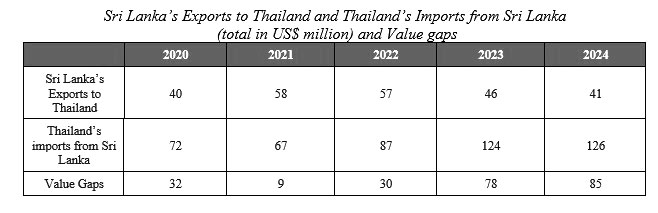
Underinvoicing in Sri Lanka – Thailand Trade
Why a case study on Sri Lanka – Thailand Trade?
Thailand is a relatively small export market for Sri Lanka and ranks 47th as an export destination. As per Sri Lankan customs data, in 2024 Sri Lanka’s total exports to Thailand were valued at US$ 41 million. However, according to Thai customs data, in 2024 Thailand’s imports from Sri Lanka were valued at US$ 126 million. This is a value gap of US$ 85 million. That is a massive 207% value gap… ten times larger than the global average for Sri Lanka. As the table below illustrates, these large value gaps have been growing over the years. (See Table)
A closer look at the data would reveal that the largest value gaps are under gemstones (HS 710391). It is common knowledge that the Sri Lanka–Thailand gem trade suffers from prevalent underinvoicing, resulting in millions of dollars in lost export revenue. Yet, it appears that Sri Lanka Customs and the National Gem and Jewellery Authority (NGJA) have not intervened to curtail this practice. One may argue that the trade ministry, the NGJA, or the customs do not routinely analyse mirror data. However, as Thailand is the third-largest market for Sri Lankan gems, the NGJA should have a very good knowledge of that market, including Thai customs statistics. In-depth analysis of Thai customs data is also a main responsibility of the Sri Lanka embassy in Bangkok.
Sri Lanka-Thailand Free Trade Agreement (SLTFTA)
In addition to that, Sri Lanka commenced negotiations for the Sri Lanka-Thailand Free Trade Agreement (SLTFTA) in 2018. After multiple rounds of negotiations covering trade in goods, services, investments, and customs cooperation, both nations officially signed the SLTFTA in February 2024. While preparing for these multiple rounds of negotiations, Sri Lankan trade negotiators and the embassy in Bangkok should have extensively analysed the Thai customs data. They should have also known Sri Lanka’s export data like the back of their hands. Then, didn’t they discover these massive discrepancies in data sets? If they did, did they address them during the negotiations?
Whatever happens, the gaps keep growing.
So, now it is time for the appropriate agencies to start investigating these enormous value gaps … after all, a massive US$ 85 million, 207% value gap is simply not loose cash.
(The writer can be reached at enadhiragomi@gmail.com) )
By Gomi Senadhira

Munoz sends Colombia into World Cup knockouts with 1-0 win over DR Congo

Animal Welfare Draft Bill to be Gazetted
Legal provisions on marking voters using indelible ink during elections removed

Showers will occur in the Western, Sabaragamuwa and North-western provinces and in Galle, Matara, Kandy and Nuwara-Eliya districts

Court vacancy row throws Parliament into turmoil; sittings disrupted

Climate, pollution, forest loss now hitting economy: BASL chief

‘Dates have the highest sugar content to fight Coronavirus’

Sunday Island 27 December – Headlines

#SundayIsland 17th December – Headlines

Sunday Island – 28th March

Sunday Island Headlines – 21 March

Sunday Island – 21st February – Headlines
-

 News6 days ago
Creditor receives USD 2.5 mn as Lankan public bears loss from theft of Treasury funds
-

 News5 days ago
Creditor not yet paid
-
 News5 days ago
Consumers bearing 22% tax burden despite 18% VAT claim: Dr. Harsha de Silva
-

 Opinion7 days ago
Beyond diagnosis: A strategic design for 7% growth by 2029 (Part I)
-

 Features4 days ago
Nanda Pethiyagoda Wanasundara as three generations of family saw her
-

 Features3 days ago
Sri Lanka developing independent hydrographic capabilities
-

 Opinion6 days ago
SriLankan Airbus struck by lightning
-

 Latest News3 days ago
Sooryavanshi thumps fastest List A fifty as India A win tri-series