
Latest News
Saud Shakeel, Agha Salman lead Pakistan’s recovery


A terrific century partnership between Saud Shakeel and Agha Salman helped Pakistan stage a commendable comeback in the opening Test against Sri Lanka. By stumps on day two, the visitors were trailing by 91 runs with the two set batters still at the crease.
Pakistan had made a very poor start in their reply. While Abdullah Shafique had a lucky reprieve in the very first over, Imam-ul-Haq sliced one straight to point in the second over of the innings to give the hosts a big lift very early. Quite interestingly, Shan Masood went on a boundary hitting spree right from the outset to put Sri Lanka on the backfoot momentarily. Pakistan’s No.3 raced to 22 off 13 at one stage and the hosts had to introduce spin early in the innings.
The ploy worked as Prabath Jaysuriya proved to be a menace to play against for Pakistan. Shafique edged one to first slip and Masood’s counterattacking innings came to an end immediately after he had smashed Ramesh Mendis for a six as the bowler trapped him leg-before-wicket. Skipper Babar Azam didn’t last long either as he inside-edged one onto the pad that was gobbled up by the wicketkeeper as Pakistan were reduced to 74/4. That quickly became 101/5 as Sarfaraz Ahmed fell after failing to connect a sweep shot against Jayasuriya.
That’s when Shakeel and Salman joined forces to resurrect the innings. Their partnership mirrored the one Sri Lanka had on the opening day between Angelo Matthews and Dhananjaya de Silva when they were reeling at one stage. Salman flicked just the second ball he faced for a boundary and used his feet to good effect again against Jayasuriya to signal his intentions.
The pair guided Pakistan to 132/5 by Tea but were tasked with a huge responsibility to see the day through in the final session. After a slightly delayed start following rain, the two batters continued from where they had left. Shakeel smashed Jayasuriya for successive fours and fetched another one over cover off Mendis before bringing up his sixth Test fifty. Salman, who had been using his feet to very good effect against Jayasuriya, went for a slog and managed to clear the ropes and eventually brought up a fifty off just 67 balls. The two batters were in complete control and stitched over 100 runs before rain arrived again to bring an early end to the day’s proceedings.
In the morning session, Dhananjaya de Silva endured a few nervy moments before bringing up his 10th Test ton as Sri Lanka went past 250 without further damage. Ramesh Mendis’ resistance didn’t last long though as he attempted a slog and edged one to slip having batted 39 balls for just five runs up until that point. Jayasuriya tried to hang in as long as possible like Mendis but a short ball from Naseem Shah ended his stay. Naseem’s next over produced the big wicket as Dhananjaya finally departed having scored 122 before Vishwa Fernando’s mighty hits dragged Sri Lanka past the 300-run mark.
Brief scores:
Pakistan 221/5 (Saud Shakeel 69*, Agha Salman 61*; Prabath Jayasuriya 3/83) trail Sri Lanka 312 (Dhananjaya de Silva 122, Angelo Matthews 64; Abrar Ahmed 3/68) by 91 runs










The centre-right Bangladesh Nationalist Party (BNP) has secured a landslide majority in parliament, 18 months after mass protests ousted the country’s longest-serving prime minister Sheikh Hasina.
The party took more than two-thirds of seats in the historic general election, with Jamaat, the country’s main Islamist party, coming second. Hasina’s Awami League was banned from taking part.
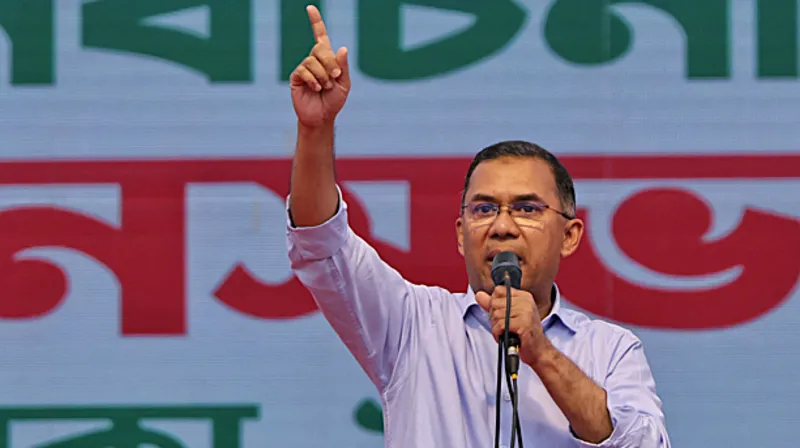
BNP leader Tarique Rahman is set to be the next prime minister and faces huge challenges in getting the economy back on its feet and restoring democracy after 15 years of authoritarian rule under Hasina.
Voters also backed sweeping democratic reforms in a referendum held alongside the election.
“I am grateful for the love you have shown me,” Raman told well-wishers in Dhaka as he attended Friday prayers.
His party said there would be no victory procession and he urged supporters to attend prayers instead of street celebrations in memory of his late mother, former PM Khaleda Zia, who died in December.
His formal election as the country’s new leader will happen after new MPs are sworn in, which is expected to take place on Saturday.
Rahman’s family background – his late father was also a leader of Bangladesh – is a reminder that while the BNP have promised change, Rahman, like Hasina, hails from a political dynasty.
The absence of both Sheikh Hasina and Khaleda Zia, who alternated in power over four decades, was one of a number of firsts in this election.
Another was that, with the Awami League banned, Jamaat for the first time ran as one of the main parties vying for power. The alliance it leads took 77 seats, six of which went to the student-led National Citizen Party (NCP) born out of the 2024 protests.
The Awami League has questioned the legitimacy of the election given that it was unable to participate, while Jamaat has questioned the way the vote was conducted. Both it and the BNP have accused the other of voting irregularities.
For Rahman, it is a huge change of fortunes. He spent 17 years in self-imposed exile in London before returning to the country five days before his mother’s death and is seen by many as largely untested.
As well as being on track to become the country’s next leader, is also his first time as an MP. He was elected as member for the Dhaka-17 and Bogra-6 constituencies, and is one of 212 successful BNP candidates, according to the Election Commission, which put voter turnout at 59.44%.
During his campaign, Rahman promised that Bangladesh’s democracy would be restored.
Reviving the country’s economy, bringing rising food prices under control and creating jobs for its huge young population are the big challenges facing the new government.
Repairing strained ties with giant neighbour India is also high on the list of priorities.
Within hours of his win, Rahman had received a call from India’s Prime Minister Narendra Modi who congratulated him on a “remarkable victory”.
“As two close neighbours with deep-rooted historical and cultural ties, I reaffirmed India’s continued commitment to the peace, progress, and prosperity of both our peoples,” Modi wrote on X.
Although the BNP are promising to lead change in the country, the party was criticised for corruption and accused of human rights violations when it was last in government in the early 2000s.
Rahman himself was subject to various criminal investigations while Sheikh Hasina was in power but was later cleared of all charges.
Thursday’s democratic exercise is a moment of huge potential – and risk – for the country, with one of its two main parties winning such a big victory.
Among the constitutional reforms envisaged are prime ministerial term limits, a directly elected upper parliamentary house, stronger presidential powers and increased judicial independence.
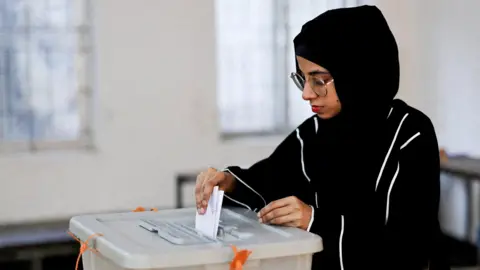
Greater representation of women in parliament is also in the charter but only a tiny number of female candidates were successful in the election, showing there is a long way to go.
Of the main parties, the BNP fielded 10 female candidates, the student-led National Citizen Party (NCP) just two and the Islamist Jamaat-e-Islami none.
Both the BNP and Jamaat have denied sidelining women, instead claiming the number of those standing was a result of Bangladesh’s “social structure”.
One voter, Shima Akhter, was among many women who took part in the student-led protests leading to Hasina’s downfall – paving the way for the election – and dismissed this as “just a patriarchal excuse”.
Rahman will be under great scrutiny to deliver for Akhter and other young people like her who are hungry for change as Bangladesh has one of the youngest demographics in the world.
While there may be mixed feelings among some about the election result and concerns over whether the BNP can deliver, Rashna Mahzabin is among those who are happy they got to “raise their voices” after years of authoritarian rule.
“That’s a huge win,” she told the BBC.
[BBC]

Prosecutors in Paris have opened investigations into five baby formula manufacturers after several issued mass recalls over concerns their product contained a toxin.
Nestle, Lactalis, Danone, Babybio and La Marque en moins will be probed over whether there was any criminal wrongdoing in distributing baby formula that may have been contaminated with cereulide.
French authorities have received complaints from eight individuals who reported their child vomited after consuming baby formula.
Last week, Nestle and Danone issued recalls in more than 60 countries, including the UK, over potentially contaminated batches.
At least 36 infants in the UK have suffered from suspected food poisoning after consuming baby formula, officials have said.
Cereulide is a toxin which is unlikely to be destroyed through cooking or when making baby milk. If consumed, it can cause nausea, vomiting and abdominal cramps.
The toxin in baby formula was linked to an ingredient called arachidonic acid (ARA) oil, which gives it some of the same growth properties as breast milk.
The UK Food Standards Agency (FSA) earlier said a third-party supplier of ARA was the source of the contamination and was no longer being used.
That supplier is now widely thought to be a Chinese firm, which Agence France-Presse identified as Wuhan-based Cabio Biotech. The BBC has approached the company for comment.
On Thursday, China’s national market regulator told domestic baby formula manufacturers to test for cereulide, without mentioning specific companies.
Prosecutors in Paris will seek to establish whether the baby formula producers are liable for distributing a tainted product.
It will be co-ordinated with local probes into whether there was a causal link between the contaminated formula and the deaths of three babies in France. Nestle and France’s health ministry have stressed there was as-yet no evidence to indicate such a link.
So far 28 batches of baby formula produced by Nestle, which makes SMA, and Danone, which makes Aptamil and Cow & Gate, have been recalled.
Danone and Nestle have given assurances to the FSA that recalled batches were produced some time ago and were unlikely still to be on UK shop shelves.
However, they may be in cupboards at home, which is why parents and caregivers are being asked to check their supplies.
Nestle said on Friday that it intended to run five factories around the clock to increase baby formula production after the global recall. Those factories are in France, Spain, Germany, Switzerland and the Netherlands.
“We are focused on increasing the availability of infant formula to meet demand, providing parents and families with high quality products they can trust,” the Swiss firm said.
[BBC]
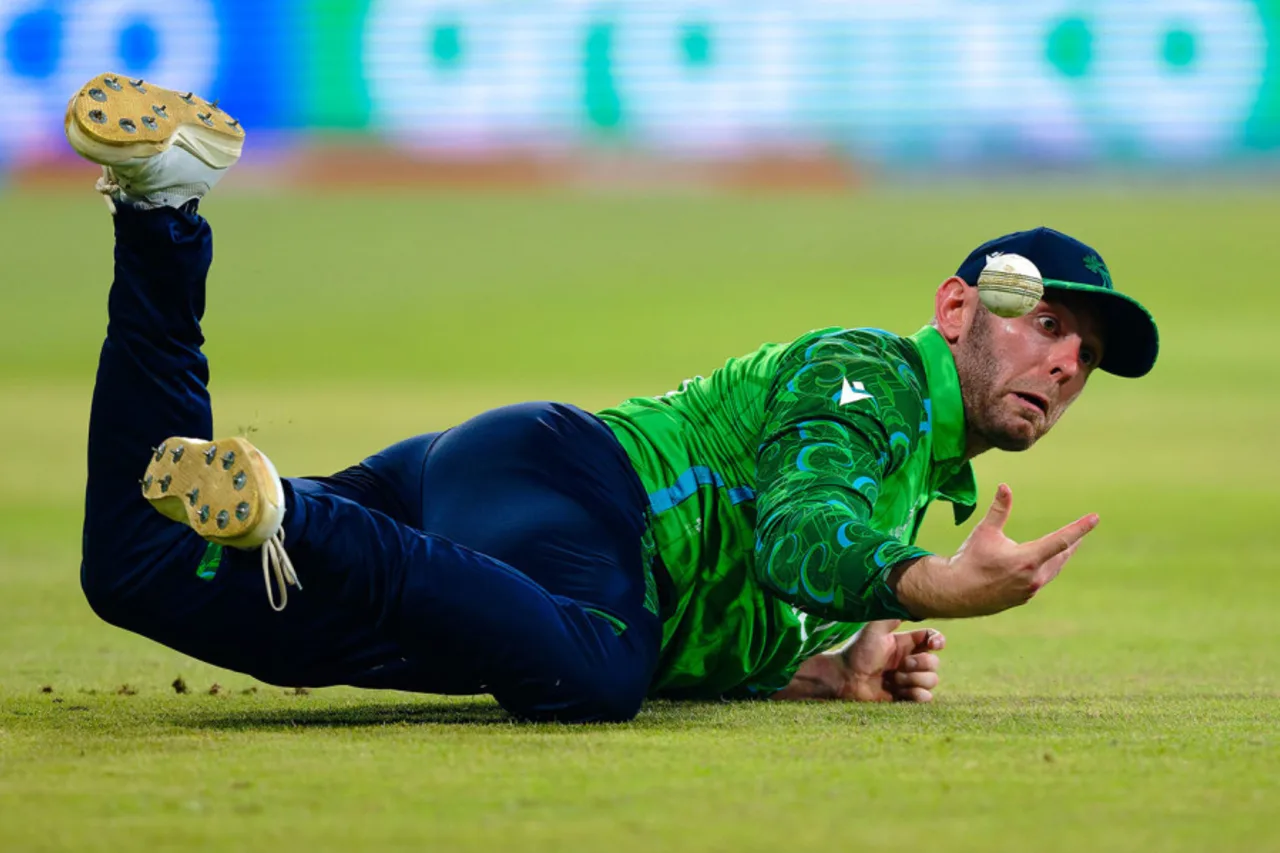
Two games, two defeats, virtually out of the tournament. A blanket sentence that covers both Ireland’s and Oman’s fortunes at this 2026 T20 World Cup, as their ambitions of Super Eight qualification give way to insistence that they have been better than their results.
“We should have won at least one match, because as I said, we are not as bad a team as we played,” Mohammad Nadeem said after Oman’s 105-run loss to Sri Lanka.
“The other day was so disappointing because actually for 65-70% of that game I thought we were the better side,” was Gary Wilson’s assessment of Ireland’s opening-game defeat to the same opponents.
Whatever the reason, neither Oman nor Ireland have put their best foot forward so far in this tournament. Their net run rates (NRR) tell the tale, with Ireland’s at -2.175, and Oman’s even worse at -4.306.
So, as they say, it’s mainly pride at stake at the SSC on today [Saturday]. Recent form skews in favour of the Irish, who boast a 4-2 win – loss record over Oman in T20Is, and have won each of their last three encounters. But Oman won the last World Cup meeting between the two sides in 2016.
Both teams come with severe problems to address. Oman’s bowlers have been ragged, particularly against Sri Lanka who scored 225 against them, and their batters have managed totals of 103 all out and 120 for 9.
Ireland have shown more promise in both departments but have been badly let down in the field, dropping nine catches across their two games. They will also be without their captain Paul Stirling, who has been ruled out of the rest of the tournament with a knee injury.
But while problems abound, Saturday will give these sides the chance to chase a significant target: points on the board.
Harry Tector is widely regarded as the cornerstone of Ireland’s middle order and a potential future captain. Against Oman, his importance will lie in his ability to navigate the conditions in Colombo – particularly against Oman’s spate of spin options. With Stirling out, even more will depend on Tector. He began the tournament promisingly with a 40 against Sri Lanka, and he will want to get back among the runs after falling for a duck against Australia.
Forty-three-year-old Mohammad Nadeem became the oldest half-centurion at a World Cup with his unbeaten 53 against Sri Lanka, which will no doubt have cemented his place in Oman’s middle order after missing out on their first game. With Oman’s top order showing fragility across their opening two games, his ability to anchor an innings could prove vital.
Sam Topping has been approved as Stirling’s replacement in Ireland’s squad, and could be in line for an international debut, though Tim Tector is also in consideration. Josh Little could potentially come back into the XI as well, in light of Oman’s struggles against pace.
Ireland (probable): Tim Tector, Ross Adair, Harry Tector, Lorcan Tucker (capt & wk), Curtis Campher, Ben Calitz, George Dockrell, Gareth Delany, Mark Adair, Barry McCarthy/Josh Little, Matthew Humphreys.
Offspinner Jay Odedra didn’t bowl against Zimbabwe, then bowled the second over against Sri Lanka, went for 14, and didn’t bowl again. Oman, though, don’t have an in-form bowler to pick in his place: left-arm spinner Shakeel Ahmed, who was left out against Sri Lanka, went for 27 in his two overs against Zimbabwe.
Oman (probable): Jatinder Singh (capt), Aamir Kaleem, Hammad Mirza, Wasim Ali, Mohammad Nadeem, Jiten Ramanandi, Vinayak Shukla (wk), Sufyan Mehmood, Nadeem Khan, Shah Faisal, Jay Odedra/Shakeel Ahmed.
[Cricinfo]

When Prez has to do others’ work

Vehicle permit revival threatens governance credibility – Advocata

Beware of risk of misuse of lost or stolen mobile phones if they fall into wrong hands

High Court puts off case against ex-Minister Johnston and two others

CBSL warns against domestic transactions in foreign currency

Sri Lanka gears up for global cycling adventure

‘Dates have the highest sugar content to fight Coronavirus’

Sunday Island 27 December – Headlines

#SundayIsland 17th December – Headlines

Sunday Island – 28th March

Sunday Island Headlines – 21 March

Sunday Island – 21st February – Headlines
-
 Features6 days ago
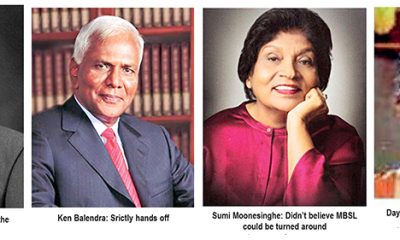
My experience in turning around the Merchant Bank of Sri Lanka (MBSL) – Episode 3
-

 Business6 days ago
Remotely conducted Business Forum in Paris attracts reputed French companies
-

 Business6 days ago
Four runs, a thousand dreams: How a small-town school bowled its way into the record books
-
 Business6 days ago
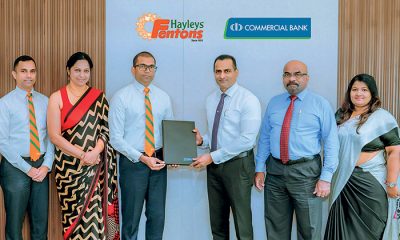
ComBank and Hayleys Mobility redefine sustainable mobility with flexible leasing solutions
-

 Business3 days ago
Autodoc 360 relocates to reinforce commitment to premium auto care
-

 Midweek Review3 days ago
A question of national pride
-

 Business7 days ago
GREAT 2025–2030: Sri Lanka’s Green ambition meets a grid reality check
-
 Opinion2 days ago
Will computers ever be intelligent?