
Business
Govt still lukewarm in allowing vehicle imports wary of balance of trade


By Sanath Nanayakkare
The government has decided to allow the importation of all goods except for motor vehicles from the first week of September, and it is going to consider how it would gradually ease the ban on vehicle imports according to a ‘strategic plan’. It is said that as a start, the government’s focus is on removing the import ban on electric vehicles before allowing the importation of conventional gasoline cars.
The new policy on importation will come into effect in the first week of September, allowing a broader range of goods to enter the country. The government reached this decision during a discussion held last week between Sagala Ratnayake, Chief of Presidential Staff, and Presidential Adviser on National Security, officials of the Ministry of Finance and officials of the International Monetary Fund.
However, certain categories of vehicles such as tractors are permitted to be imported depending on the farmers’ requirements.
It has also been decided to conduct a weekly review regarding the proposals of the International Monetary Fund.
Import restrictions have been lifted on 286 goods, allowing their importation into the country. However, the import ban on another 930 goods, including vehicles, will remain in effect, maintaining the previous restrictions on these items.
Steps have been taken to remove the import ban on 250 of the 500 items including essential food items that were in the prohibited import category.
Accordingly, it has been decided in this discussion to gradually remove the import restrictions of the banned items. The process will be conducted in two stages and is due to be completed by the first week of September.
Importation of vehicles is still receiving a lukewarm response from the government obviously because of the fact that a widened balance of trade would influence currency exchange rate through its effect on foreign exchange supply and demand, analysts said.
Sri Lanka banned imports of most automobiles including three wheelers and motorcycles which give large revenues to the state as money printing ratcheted up from February 2021 creating foreign exchange shortages.
However, 2,384 SUVs in 2021 and 176 in January 2022 had been registered in the Vehicle Registry of Sri Lanka, according to a Colombo-based equities brokerage firm.






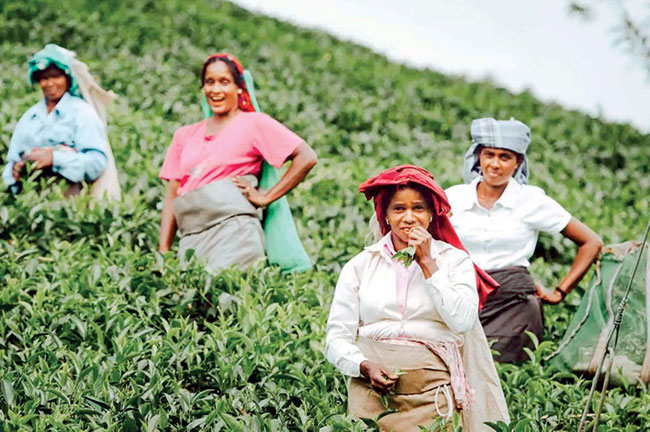
The weekly Colombo Tea Auction concluded with offerings increasing to 6.5 million kilogrammes, a marginal rise from the previous week’s 6.4 million kilogrammes. However, the market witnessed a significant pullback from key international buyers, leading to a subdued trading atmosphere and declining prices across several categories.
Industry sources reported a noticeable lack of interest from shippers to the traditional markets of the United Kingdom and the European continent. While shippers to the Commonwealth of Independent States (CIS) and the Middle East maintained a presence, their participation was described as selective and at lower price levels. Buyers from Japan and China also operated at reduced levels, with South African shippers showing minimal engagement.
This cautious stance from the shipping community cast a shadow over the Ex-Estate sector, which offered 1.0 million kilogrammes. The overall quality of teas in this category was described as relatively uninteresting, leading to a weakening of prices. In the Western High Grown category, prices for the best available BOP/BOPF grades declined by Rs. 20 to 40 per kilogramme, while the plainer varieties saw a drop of about Rs. 20 per kilogramme. A fair quantity of these teas remained unsold due to a lack of suitable bids.
Nuwara Eliya teas attracted little to no interest, with the majority of offerings remaining unsold. Uda Pussellawa BOPs weakened further by up to Rs. 50 per kilogramme, while the corresponding BOPFs struggled to maintain their previous price levels. In the Uva region, BOPs saw prices fall by Rs. 50 per kilogramme, though the BOPF varieties were relatively more stable. The High and Medium Grown CTC teas continued to be a weak feature, with many lots unsold and those that were sold recording a price drop of Rs. 20 to 40 per kilogramme. Off-grades and dust grades also experienced a sluggish market, with fair volumes remaining unsold.
In contrast to the gloom in the High Growns, the Low Grown sector, which totalled approximately 2.7 million kilogrammes, met with more encouraging demand. The Leafy and Semi-Leafy categories saw fair demand, while the Tippy and Premium categories were met with good interest. While some well-made varieties in the Leafy catalogues remained firm, many other grades experienced easier prices. However, the Tippy catalogue saw high-priced FBOPs holding firm and the FF1s generally becoming dearer. The Premium catalogue, featuring tippy teas, also met with good demand and saw prices appreciate overall.
Based on Forbes & Walker Tea Brokers comments
By Sanath Nanayakkare

The Asian Development Bank (ADB) has formally entered into its first partnership with the International Committee of the Red Cross (ICRC), marking a significant step towards integrating humanitarian action with long-term development efforts in fragile and conflict-affected regions across Asia and the Pacific.
A Letter of Intent establishing the collaboration was signed on June 10 by ADB Vice-President for Sectors and Themes Fatima Yasmin and ICRC Director-General Pierre Krähenbühl. The agreement provides a framework for coordinating programmes, exchanging knowledge on emerging humanitarian challenges, promoting innovation and sharing best practices through joint events and publications.
The partnership brings together ADB’s development expertise and financing capabilities with the ICRC’s operational experience and access to communities affected by conflict and violence.
Highlighting the significance of the initiative, ADB President Masato Kanda wrote on X on June 17 that the partnership would help strengthen resilience in fragile and conflict-affected areas.
“By bringing together ADB’s longer-term development perspective with ICRC’s humanitarian field presence and operational experience, we can better support people affected by conflict and violence,” Kanda said.
Speaking at the signing ceremony, Yasmin said today’s interconnected challenges require development institutions to move beyond traditional approaches.
“The ICRC brings trusted access to affected communities and credibility in environments that ADB alone cannot easily reach,” she said.
Krähenbühl described the agreement as an important step towards bridging humanitarian assistance and long-term development, adding that it could create opportunities for joint responses in fragile settings across the region.
A Sri Lankan socio-economist told The Island Financial Review that the partnership reflects a growing recognition among development institutions that conflict, fragility and climate-related shocks are becoming major constraints on economic progress.
“Traditionally, development banks focused on long-term infrastructure and economic projects while humanitarian agencies addressed immediate crises. This partnership seeks to connect those two worlds by reducing vulnerability before crises deepen,” he said.

Prime Residencies, the real leader in the modern real estate, and a subsidiary of Prime Group, officially marked the commencement of construction on its latest ultra-luxury residential development, THE GOLF, with its groundbreaking ceremony held at the project site on Lake Drive, Colombo 8. The event brought together key stakeholders and project partners to mark the ceremonial breaking of the ground, signalling that a vision long in the making is currently under construction.

Cricket journalist and broadcast legend Qamar Ahmed dies aged 88

Stafanie Taylor, spinners help West Indies overcome Scotland threat

Showers will occur at times in the Western, Sabaragamuwa and North-western provinces and in Galle, Matara, Kandy and Nuwara-Eliya districts

Thirty-five killed as gunmen attack Niger’s biggest airport

Creditor receives USD 2.5 mn as Lankan public bears loss from theft of Treasury funds

Former Minister Nalin raises defence of double jeopardy

‘Dates have the highest sugar content to fight Coronavirus’

Sunday Island 27 December – Headlines

#SundayIsland 17th December – Headlines

Sunday Island – 28th March

Sunday Island Headlines – 21 March

Sunday Island – 21st February – Headlines
-

 News4 days ago
Release of 2025 O/L results likely to be delayed
-

 Sports4 days ago
Tharanga set for high-profile javelin clash in Ostrava
-

 Features5 days ago
Politics of protected species
-

 News3 days ago
Beijing Capital Airlines to resume flights to Colombo signalling boost to tourism
-

 News4 days ago
Theft of USD 2.5 mn from Treasury: CoPF accused of complicity in NPP cover-up
-

 News6 days ago
Commonwealth lawyers urge Lanka to uphold rule of law
-

 Opinion4 days ago
Decoding Trump’s 12.5% “Forced Labor Tariff” on Sri Lanka
-

 Opinion4 days ago
Palm leaf manuscripts of Sri Lanka – Part V