
Opinion
Labour Reforms in Time of Great Crisis

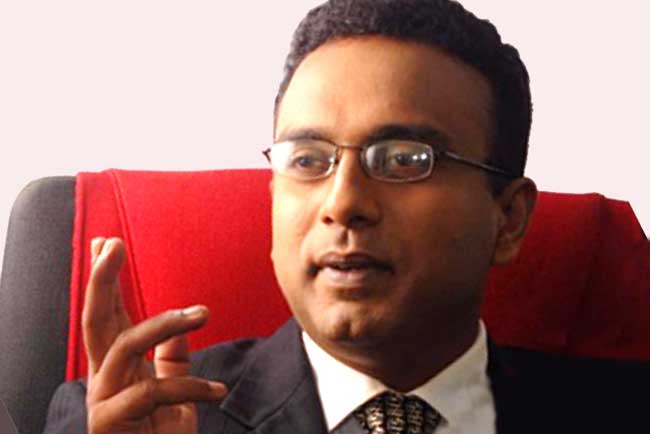
Sri Lanka is in the middle of a dire economic crisis. We are a witness to the new depths of misery that the people have been plunged into. Working people are the hardest hit, who have had to grapple with precarious wages, job insecurity and the devastation of an economic depression. Despite this perilous situation, the government is proposing labour reforms that threaten to render the situation of the working classes even more precarious. In his Budget 2023 speech in November 2022, the President called for reforms “for an export-oriented economy”. Soon thereafter, Secretary to the Ministry of Labour and Foreign Employment Shan Yahampath elaborated on the impending proposals, pointing to the introduction of “a unified labour code which will seek to move away from the current employee-friendly labour law system to a system that strikes a balance between the rights of the employee and the employer.” At the May Day rally of the UNP, Ministry of Labour and Foreign Employment Manusha Nanayakkara presented a 11-point reform agenda, outlining the principles of the reforms, which proposes to tilt the balance of power further in favour of employers. Nanayakkara’s proposals, the most elaborate so far, is at best sketchy, and at worst is a calculated move to weaken the collective strength of the working population in the formal sector. The message is loud and clear, when
Nanayakkara prefaces his presentation with, “We still have archaic labour laws, a labour law which turns away investors.”
On June 14th, at a consultative meeting, Nanayakkara, reiterated the need for reforms, necessary, in his view, in some 20-odd areas of existing labour-law. While saying that reforms are needed in the plantation sector and in the provisions of EPF and ETF, he stresses the importance of casual labour and the need to turn much of formal labour into casual labour. Herein lie the dangers of the current reforms.
The proposals are in part framed in the language of social protection, advancing the rights of the worker in the informal sector. Protection from violence in the workplace for women and incorporating people with disabilities in the labour force mean little when the overall climate is steeped in job insecurity and economic precarity. Further, the mantra of increasing women’s participation in the labour force is designed to be extractive of the labour of women in the face of diminishing worker-protection.
Sri Lanka’s labour laws, though nothing to marvel at, have historically afforded the worker some protection from the blatant disregard of their rights. Yet, through fragmentation of the labour force, outsourcing and casualizing of formal contractual labour, and other disempowering measures, industrial management has been able to get around these laws. The bulk of our work force in the formal sector is composed of women. Vulnerable at the best of times to the vicissitudes of management practices, they had been one of the first casualties of economic crises. During the COVID pandemic we saw how vulnerable our workers were to shifting trends of the economy, locally and internationally. Labour laws were flouted; workers were both left stranded and deemed outcast. At the same time, they were compelled through coercive consent, to work under trying conditions. This scenario will be formalized through the proposed reforms. The threat is imminent.
Weakening the contractual bonds between worker and management leads to casualisation, greater job insecurity and greater exploitation of the worker. Laws surrounding hiring and termination need to be clear and protect the worker from precarity. At the moment, we have termination laws that do protect the worker. Relaxing them would pose a dire threat to the worker’s well-being. There is also talk of flexible working hours. This is most detrimental to the worker, who under pressure, will be trapped in a complex cycle of coercive and extractive labour within the casualization of their work; there will be little protection from working hours. Legal provisions for sick leave, maternity leave and stipulated periods of rest and leisure that the worker is entitled to will be eroded into. We know that while more than 10 days’ night work for women is not allowed at garment factories, in practice women are engaged in long hours of night work, with few safety measures in place.
The proposed reforms are designed to formalise the progressive weakening of labour laws and further disempower the worker through taking away whatever protection that is in place now. It is telling that when a meeting of the National Labour Advisory Council, which is composed of representatives of the state, the employers and trade union representatives of the workers, was called last month, four unions representing workers in the private sector and not affiliated to any political parties were left out of the composition. This is a clear indication of how the government is setting the stage for weakening the representative bodies of the workers, and thereby render them totally powerless, when reforms are initiated.
The economy of the plantations is on the cusp of change and the Malaiyaha worker is staring into a future of fragmentation of community, job insecurity, and lack of land. They have been long fighting for a living wage, and basic citizenship, namely, decent living conditions, safety at work, the right to land, decent housing and accessible schooling. Nanayakkaras 11-point proposals say that the government proposes to create “a plantation worker fit for the modern world of work,” ignoring the current state of gross injustice meted out to the worker in the plantation sector.
By undermining labour-laws the government hopes to attract investment and boost the economy. It is a road show put on for the sake of potential investors. But the regime is sadly out of touch with economic realities. There is a global economic recession. Our economy shrunk by 12.4% and by 11.5%, in the last quarter of 2022 and first quarter of 2023 respectively. As they stand, labour laws are not the cause of the economic crisis, and reforming them is not the solution. Rather, the economy is in a state of continued collapse, because of austerity, lack of job creation policies, and inadequate social protection and relief to the working people. In the end, we will be left with an irrevocable undermining of the worker’s Rights.
As academics, we are obliged to adopt an informed position on something as fundamental as labour relations. It affects us all. An informed, worker-oriented and people-oriented labour policy, a policy that provides security to all, and a policy that ensures stability and democratic practice in production and in the workplace is the need of the hour. Else, we would be looking to a future of suffering and instability. The already authoritarian government can only become more authoritarian in the face of imminent social unrest. We must join the forces of democracy to build a better future for all.
SIGNED BY
1. A.M. Navaratna Bandara, formerly Univ. of Peradeniya
2. Ahilan Kadirgamar, Univ. of Jaffna
3. A.M.J.H. Amandakoon, Univ. of Peradeniya
4. Amalka Wijesuriya, Univ. of Ruhuna
5. Anuruddha Karunarathna, Univ. of Peradeniya
6. Anushka Kahandagama, formerly Univ. of Colombo
7. Arjuna Aluwihare, formerly Univ. of Peradeniya
8. Arjuna Parakrama, Univ. of Peradeniya
9. Aruni Samarakoon, Univ. of Ruhuna
10. Athulasiri Samarkoon, The Open University of Sri Lanka
11. Avanka Fernando, Univ. of Colombo
12. B.P.B.W. Rathnayake, Univ. of Peradeniya
13. Barana Jayawardana, Univ. of Peradeniya
14. Bahirathy J.R, Univ. of Jaffna
15. Buddhima Padmasiri, The Open University of Sri Lanka
16. Camena Guneratne, The Open University of Sri Lanka
17. Chirath Jeewantha, Univ. of Ruhuna
18. Chulani Kodikara formely Univ. of Colombo
19. Crystal Baines, Univ. of Peradeniya
20. Dayapala Thiranagma, formerly Univ. of Kelaniya
21. Dhammika Gamage, Univ. of Peradeniya
22. Dhammika Herath, Univ. of Peradeniya
23. Dhammika Jayawardena Univ. of Sri Jayawardenepura
24. Dhanuka Bandara formerly Univ. Of Peradeniya
25. Dilini Hemachandra, Univ. of Peradeniya
26. Dinesha Samararatne Univ. of Colombo
27. Erandika de Silva, Univ. of Jaffna
28. Farzana Haniffa, Univ. of Colombo
29. Fazeeha Azmi, Univ of Peradeniya
30. Ganganee Chamdima Samaraweera, Univ. of Ruhuna
31. H.H.M.T.V.K. Jayasooriya, Univ. of Peradeniya
32. Harshana Rambukwella, formerly The Open University of Sri Lanka
33. Hasini Lecamwasam, Univ. of Peradeniya
34. Hasitha Pathirana Univ. of Kelaniya
35. Hettigamage Sriyananda, The Open University of Sri Lanka (Professor Emeritus)
36. Hiniduma Sunil Senevi, Univ. of Sabaragamuwa
37. Imani Bakmeedeniya, Univ. of Peradeniya
38. Jayadeva Uyangoda, Univ. of Colombo (Professor Emeritus)
39. Janith Wickramasinghe, Univ. of Colombo
40. Jennifer Edama, Univ. of Peradeniya
41. Jithmi Athukorale, Univ. of Peradeniya
42. K.M.Vihangi Semini, Univ. of Peradeniya
43. Kamani Sylva, Univ. of Peradeniya
44. Kanchuka Dharmasiri, Univ. of Peradeniya
45. Kasun Gajasinghe, Univ. of Peradeniya
46. Kaushalya Perera, Univ. of Colombo
47. Kethakie Nagahawatte Univ. of Colombo
48. Krishan Siriwadhana, Univ. of Colombo
49. Krishantha Fedricks, Uni. of Colombo
50. Krishmi Apsara, Univ. of Peradeniya
51. Kumudu Kusum Kumara, formerly Univ. of Colombo
52. L.A.M.Jayasinghe,Univ. Of Peradeniya
53. Liyanage Amarakeerthi, Univ. Of Peradeniya
54. Madhara Karunarathna, Univ. of Peradeniya
55. Maduranga Kalugampitiya, Univ. of Peradeniya
56. Mahendran Thiruvarangan, Univ. of Jaffna
57. Malika Perera, Univ. of Peradeniya
58. M. A. Nuhman. Formerly Univ. of Peradeniya
59. Muditha Dharmasiri: Univ. of Peradeniya
60. Nadeesh de Silva, The Open University of Sri Lanka
61. Nalika Ranathunge, Univ. of Ruhuna
62. Neavis Morais, The Open University of Sri Lanka
63. Nicola Perera, Univ. of Colombo
64. Nilantha Liyanage, Univ. of Ruhuna
65. Nirmal Ranjith Dewasiri, Univ. of Colombo
66. N.Sivakaran, Univ. of Jaffna
67. N. W. Prins, Univ. of Ruhuna
68. Paba Suraweera, Univ. of Peradeniya
69. Pavithra Jayawardena, Univ. of Colombo
70. P. M. Jayaweera Univ. of Peradeniya
71. Prabha Manuratne, Univ. of Kelaniya
72. Prabhath Jayasinghe, University of Colombo
73. Pradeepa Korale Gedara, Univ. of Peradeniya
74. Pradeep Peiris, Univ. of Colombo
75. Priyantha Fonseka Univ. of Peradeniya
76. R.T.Gamalath, Univ. of Peradeniya
77. Ramesh Ramasamy, Univ. of Peradeniya
78. Ramila Usoof, Univ. of Peradeniya
79. Ramindu Perera, The Open University of Sri Lanka
80. Ramya Kumar, Univ. of Jaffna
81. Ranjini Obeyesekere; formerly , Univ. of Peradeniya
82. Ranjit Wijekoon, formerly Univ. of Peradeniya
83. Rupika Rajakaruna, Univ. of Peradeniya
84. Ruth Surenthiraraj, Univ. of Colombo
85. Sabreena Niles, Univ. of Kelaniya
86. Sachithra Edirisinghe, formerly Univ. of Peradeniya
87. Sahan Wanniarachchi,Univ. of Peradeniya
88. Sahani Situbandara, Univ. of Peradeniya
89. Saman Pushpakumara, Univ. of Peradeniya
90. Sasanka Perera, Formerly Univ. of Colombo
91. Sasinindu Patabendige, Univ. of Jaffna
92. Savitri Goonesekere, Univ. of Colombo (Professor Emeritus)
93. Selvaraj Vishvika, Univ. of Peradeniya
94. Shalini Wijerathna,Univ. of Peradeniya
95. Shamala Kumar, Univ. of Peradeniya
96. Sitralega Maunaguru formerly Eastern Univ. Sri Lanka
97. Sivamohan Sumathy, Univ. of Peradeniya
98. Sudesh Mantillake, Univ. of Peradeniya
99. Sumith Chaaminda, Univ. of Colombo
100. Supoorna Kulatunga, Univ. of Peradeniya
101. Suranjith Gunasekara, Univ. of Ruhuna
102. Susantha Rasnayake, Univ. of Peradeniya
103. Susith Siriwardhana, Rajarata Univ. of Sri Lanka
104. Shyamani Hettiarachchi, Univ. of Kelaniya
105. Thiru Kandiah, formerly Univ. of Peradeniya
106. Thushara Kamalrathne, Univ of Peradeniya
107. Udara Rajapaksha, Univ. of Peradeniya
108. Udari Abeysinghe, Univ. of Peradeniya
109. Unnathi Samaraweera,Univ. of Colombo
110. Upul Abeyrathne, Univ. of Peradeniya
111. Varangana Ratwatta, Univ. of Peradeniya
112. Vijaya Kumar, Univ. of Peradeniya (Professor Emeritus)
113. Visakesa Chandrasekaram, Univ. of Colombo
114. Vivimarie Vanderpoorten Medawattegedera, The Open University of Sri Lanka
115. W.M. Rohan Laksiri, Univ. of Ruhuna
116. Yasas Kulasekara, Univ. of Peradeniya






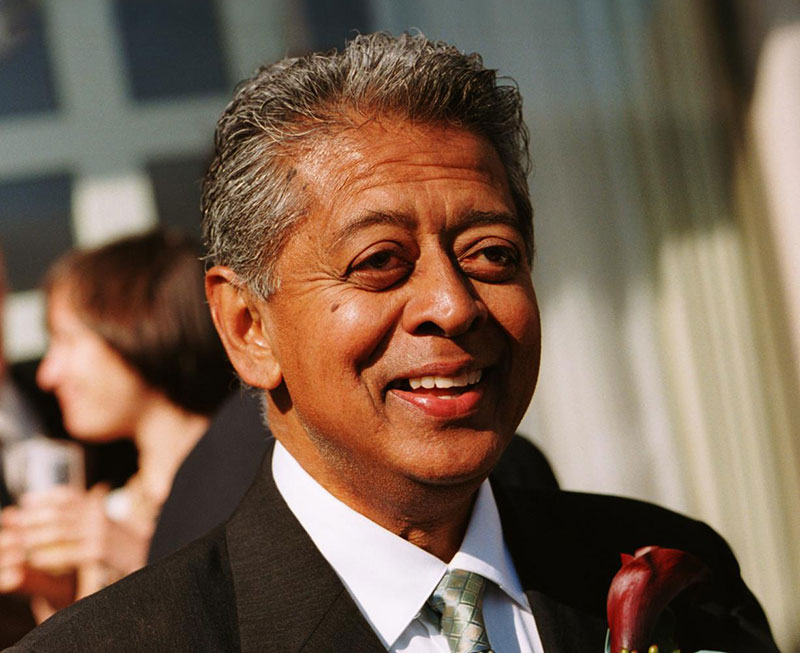
Vijaya Chandrasoma, a frequent and valued contributor to this newspaper I edit passed away at 85+ in Colombo a few days ago, far from his family domiciled in the United States; but his children with whom he was in close touch were able to make it for the funeral on Sunday. Vijaya or Vicky as he was best known to friends and family had a visceral hatred of President Donald Trump, no doubt shared by a majority of mankind. This he was not slow in expounding in the widely read columns he wrote for us.
In the covering letters accompanying his articles, he always included a cryptic note: “Yours to do as you please” demonstrating the generosity of his nature leaving open the exercise of any editorial judgment with no hard feelings whatever. That was the quintessential Vicky who sometimes wondered whether he was indulging in an overkill of Trump whom he detested as much as he loved Obama.
He loved Obama as much as he loved the USA which he felt had given him and his family a second chance which his family seized but he, as he freely admitted, allowed to slip by. He had the honesty to publish a self-deprecating book titled All Show And No Substance sub-headed A Cautionary Tale he meant mainly for his grandchildren “in the hope that they may learn something of the life and times of their grandfather and the world in which he lived.”
Vijaya Chandrasoma was second of the four sons of M. (Tissa) and Gertie Chandrasoma, his father being a member of the prestigious Ceylon Civil Service (CCS) reputed for his efficiency. While Vicky had classified his family as “upper middle class” a better description might have been “well to do.” As schoolboys we used to walk home for lunch together from Royal College along Fifth Lane, him to turn off at the barrel drain behind Ladies College now called 27th Lane and I onward to Charles Way further down the lane.
Vicky being a couple of years senior, my memories of him in school are dim but I do remember his telling me how his father, a reputed university athlete, cheered him with a “come on Vicky” at an inter-house athletics meet and how he and a partner defeated a champion combination in a game of tennis doubles. We had a distant kinship too through my mother’s paternal roots in Galle and he was very close to my cousin, best known by his nickname Koiman, who teamed up with him as fellow students in London.
The Chandrasomas went off to London after Tissa, a favourite of then Prime Minister, Sir. John Kotelawela, resigned after a disagreement with SWRD Bandaranaike, Sir John’s successor. He got a plum private sector job, number two at the foreign-managed Shell Company which dominated the petroleum import and distribution market in then Ceylon. Vicky makes no secret of what he called his “dissolute” life in London as a teenager concentrating on booze, horses and greyhounds.
Nevertheless he was accepted by St. Andrew’s University in Scotland, Cambridge and Oxford he eventually joined only to be “rusticated” after a year. His life in Colombo on his return from the UK was predictably fast with a stint in an accountancy firm his father got him into as an articled clerk, managing a hotel in the Maldives whose tourism industry was just taking off, running a tourism business in Colombo, an attempt at immigrating to Australia and finally ending up in Los Angeles.
He eventually relocated, alone to Colombo with his family remaining in LA. To his immense pride his children did very well in Ivy League Universities and thereafter “no thanks to me.” I bumped into him at the HSBC branch then at Dharmapala Mawatha and was able to introduce him to the bank to open an account. We reconnected and hence his many columns to these pages all written free gratis and for nothing.
He, like his father before him wrote very well and his copy was not all Trump bashing. There were so many readable pieces of his time at Oxford, his days with his friend Gamini Disssnayake to whom he was a trusted aide and speechwriter, and a memorable interview he did in Canada with Singapore Prime Minister Lee Kwan Yew. “This was sprung on me and I was absolutely unprepared. My heart was in the pit of my stomach. But PM Lee helped me through.”
A colourful life has ended, one where he blamed nobody but himself for anything that went wrong. Rest in peace my friend. Pity our long-promised meeting never happened.
Manik de Silva
by Sena Thoradeniya
I Refer to the article published under the above title in The Island of 14 Sept. It was written by Dr. Uswatte-aratchi, whose insights into art, literature, and culture have long resonated with mine. In those domains, we have shared similar views; yet in matters of political theory, political leadership, and governance, our perspectives have not converged.
I do not intend to discuss the entire article by Dr. Uswatte, for he is entitled to his views on our politicians, even to the point of publicly attacking them when opportunity arises. I am neither an apologist nor an agent of any among those he has named. My concern here is solely to highlight Uswatte’s curious attribution of his knowledge of mathematics and physics to a person who, in his public addresses, has revealed no trace of intellectual capacity.
Dr. Uswatte says: “Unlike the earlier rulers Dissanayake (referring to the President) attended government schools in Tambuttegama and Kelaniya University. He studied science and mathematics. He can differentiate an equation for you and speak intelligently about Paul Dirac and Higgs Boson with the same felicity as accusations against former politicians”.
We are waiting for a theoretical or scientific publication by the current President that might justify such a claim. To ascribe scholarly depth to one whose record is not noticeable is absurd. It is a gesture that compliments without foundation and confers laurels where none have been earned.
This is what Dr. Uswatte says about the Prime Minister: “There is a Prime Minister who can talk to you impromptu about Auguste Comte and Claude LéviStrauss”.
A person who is said to have studied sociology should be knowledgeable about Comte, regarded as the father of sociology and the founder of positivism, and Claude Lévi-Strauss, a leading figure in structural anthropology; yet we remain uncertain whether she speaks of them with genuine familiarity and scholarly understanding, or is merely name-dropping them in an impromptu fashion. What on earth is she saying about these men on public platforms?
Since I possess no knowledge of either physics or mathematics, it was sheer curiosity that led me to consult AI only to discover what a marvelous President we have!
Paul Dirac was a pioneering English physicist, who helped establish quantum mechanics, co-founder of quantum electrodynamics and contributed to quantum field theory. In 1933, he shared the Nobel Prize in Physics. The Higgs boson is a fundamental particle discovered in 2012 that explains how particles acquire mass, solving a central mystery in physics. Peter Higgs, a British theoretical physicist won the Nobel prize for physics in 2013, decades after Anura Kumara obtained his degree.
Trying to rediscover theoretical physicists among ordinary science graduates who left university decades ago is indeed a futile exercise, like looking for a needle in a haystack. Theoretical physics thrives on continuity, requiring sustained engagement with evolving mathematics, new theories and experimental findings, and is a discipline that demands lifelong intellectual engagement.
Dr. Uswatte should listen to speeches made by his new found friends at public meetings and see the reaction of social media activists. As Chairman Mao observed, theory divorced from reality is useless. “No investigation, no right to speak (“Preface and Postscript to Rural Surveys” -1941).
For the time being, I refrain from commenting on some of the President’s promises, such as ‘producing graphite from graphene’ (which ought, of course, to be the reverse), producing sulphuric acid using seawater, fortifying the stem of the banana through advanced research, devising lifesaving remedies for cancer, or unveiling the world’s first app for locating shoals of fish. The list is too long to reproduce here. An exaggerated parade of claims and the sheer implausibility of such boasts are not the stuff of theoretical physics.
by Jehan Perera
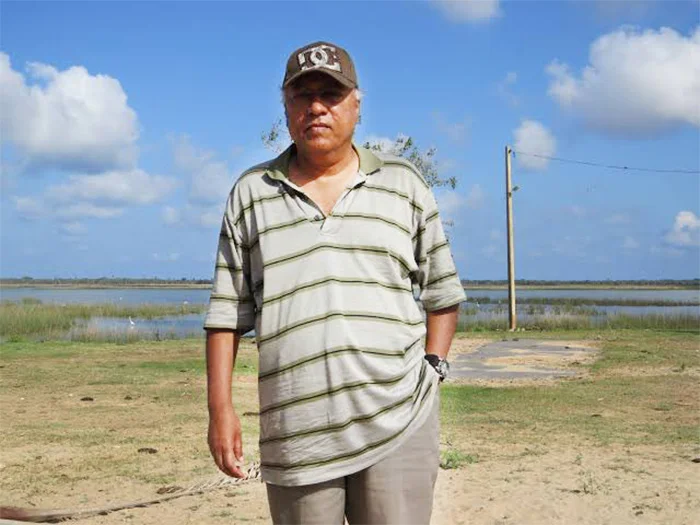
There are some journalists whose work we read and then move on. And there are others whose writing makes us stop, think and look at the country differently. D. B. S. Jeyaraj who passed away on 17 May 2026 was one of them. Whenever I saw an article by DBS, as he was widely known, appear in a newspaper, it was the first I read. He was primarily a columnist and political analyst, with a deep knowledge of the history of Sri Lanka’s ethnic conflict. But his columns were not simply analysis or opinion. They were rooted in what was happening in Sri Lanka and in what people involved in those developments were saying. We could see this in his frequent references to first-hand comments from people he had spoken to. He did this both when he lived in Sri Lanka and later, when he was living in Canada. That was no easy task.
In a 2013 interview, after returning to Sri Lanka for the first time in 25 years, DBS described how he had continued to report on Sri Lanka from Canada by maintaining contacts at home. He said that he broke his rest daily to communicate with contacts in Sri Lanka and that this dual existence of living physically in Canada and mentally in Sri Lanka took a heavy toll on his health and finances. But that commitment mattered and allowed him to write about Sri Lanka from afar without losing touch with what was happening on the ground. His writings gave readers a sense of what was happening in the north and east, as well as of politics more generally in Sri Lanka.
Speaking at the commemoration and book launch organised by the Tamil Media Alliance last week, Vijitha Yapa, the founding editor of The Island and Sunday Times, under whom DBS worked, captured an important quality of his journalism when he said, “DBS had no venom. That was his greatness.” He also recalled how DBS stood up to pressure and threats and continued writing about the Tamil community while insisting on fair play irrespective of race or religion. M. A. Sumanthiran, General Secretary of the ITAK, put another aspect of DBS’s contribution even more directly: “Truth is the first casualty of war. DBS fought to keep the truth alive.” He recalled that DBS always cross-checked his news and noted that even those who hated him read his columns to find the truth.
These observations capture two qualities that made DBS special. The first was his commitment to truth and, second, was his ability to write about a deeply divisive subject without venom. DBS was a Tamil writing about the north and east and the Tamil national question in a deeply polarised environment. Yet he wrote for the mainstream English-language press and was widely read not only by Tamils but also by people from other communities. His writing helped make the concerns, political aspirations and historical experiences of the Tamil community accessible to readers beyond it. His importance was not limited to his being a Tamil journalist. His writing mattered because it addressed the country as a whole. Issues and perspectives that might otherwise have remained within particular communities could become part of a wider national debate.
Another noteworthy feature of DBS was his ability to be realistic in his assessments. With his wide knowledge of history, he understood that each side in the national conflict had its own history, fears and perceptions of threat. He recognised that the conflict could not be properly understood through the narrative of one side alone. He understood that there could be no unilateral solution imposed by one side or the other. That realism is particularly important in a country where political positions have often been presented as if the concerns of one community could be resolved without addressing those of another. A journalist who understands this complexity needs to do more than simply take sides. He or she can help readers understand why the conflict has endured, why trust has been so difficult to establish, and why lasting peace requires more than one dominant story.
There was also something revealing about DBS’s return to Sri Lanka in 2013. In the interview he gave during that visit, he said he deliberately avoided politics. He wanted to experience the country from the perspective of an ordinary person rather than through the views of politicians or political associates. He observed a disconnect between the needs of the people and those of the political class. In retrospect, that observation was remarkably prescient. The disconnect he identified in 2013 would become dramatically visible in the Aragalaya of 2022.
In the same interview, he offered an observation that deserves to be remembered. A journalist may not be able to write all that he or she wants because of external constraints, he said. But no journalist should write what he or she does not want to write because of external pressure. His commitment to independent journalism came at a considerable personal cost. He was arrested and detained by the Sri Lankan Police in 1987 after his reporting on the war in Jaffna, and in 1993, while living in Canada, he was brutally assaulted by LTTE supporters who fractured both his legs.
For all these reasons, I consider DBS to have been a mentor of mine. I never said so to him. Mentors are not always people who formally teach us or with whom we have a close personal relationship. Sometimes they are people whose work we follow, whose judgement we respect and whose example helps shape our own understanding of what we should strive to do. DBS was such a person for me. His passing has left a gap. His journalism was informed by history but connected to the present, rooted in facts but open to interpretation, and concerned with the realities of all communities.
The collection of his writings launched in his memory by the Tamil Media Alliance is therefore more than a record of an important period in Sri Lanka’s history. It is also a reminder of what journalism can be at its best. DBS showed that a journalist could understand one community without becoming confined to it, analyse conflict without being partisan, and take a position without losing sight of complexity. Above all, he showed the value of journalism that seeks to keep the truth alive. For those who read him regularly, the greatest reminder of his absence is the absence of his next column.

Flood warning issued to the Divisional Secretariat Divisions of Ganga Ihala Korale, Udapalatha, Doluwa, Udunuwara, Yatinuwara, Gangawata Korale, Harispattuwa, and Pathadumbara

Landslide Red Alerts issued to the districts of Kandy, Kegalle and Nuwara Eliya

Shafali dazzles with 49-ball unbeaten 100 and India march into Asian Games final

Development projects can deliver results to the people more quickly when the political authority and the public service work together towards a common goal – PM

Landslide Early Warnings issued to the Districts of Colombo, Galle, Kalutara, Kandy, Kegalle, Matara, Nuwara Eliya and Ratnapura

Chamari Athapaththu’s unbeaten 83 leads Sri Lanka into final

‘Dates have the highest sugar content to fight Coronavirus’

Sunday Island 27 December – Headlines

#SundayIsland 17th December – Headlines

Sunday Island – 28th March

Sunday Island Headlines – 21 March

Sunday Island – 21st February – Headlines
-

 Opinion7 days ago
From Galkissa (Mount Lavinia) to Tambuttegama
-

 News4 days ago
US embassy won’t comment on IGP’s probe into joint drug raid
-

 Features6 days ago
The emptying university: why are academics leaving?
-

 Features7 days ago
Sri Lanka’s university crisis: Brain drain and union action demand urgent reform
-

 News3 days ago
Bid for Basil’s extradition nears final stage: Police
-

 Business4 days ago
All-new Bolero MaXX unveiled in Sri Lanka
-

 Opinion7 days ago
Ashraff: From the SLMC towards the National Unity Alliance
-

 Editorial7 days ago
Muscle flexing, astroturfing and dog-and-pony shows