
Editorial
Exercise in futility


Friday 7th July, 2023
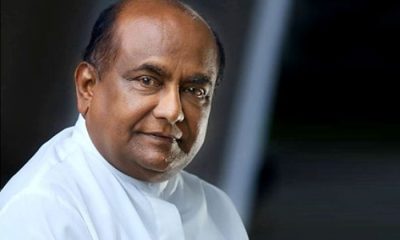
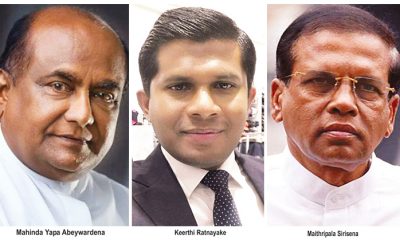
A Parliamentary Select Committee (PSC) has been set up to probe how the country became bankrupt. SLPP General Secretary and MP Sagara Kariyawasam, of all people, has been appointed its chairman! The Opposition yesterday let out a howl of protests, in Parliament, against Kariyawasam’s appointment, claiming that his party was responsible for bankrupting the economy, and therefore the PSC would not act impartially under his chairmanship, but Speaker Mahinda Yapa Abeywardena stood his ground, and his decision was final.
There has been a severe erosion of public faith in parliamentary probes, which are far from impartial, and the MPs tasked with conducting them are always divided along petty party lines and fight among themselves instead of making a concerted effort to get at the truth and ensure accountability. The PSC which probed Chief Justice Dr. Shirani Bandaranayake and caused her to be impeached was a kangaroo court of sorts; the government members of that PSC turned hostile and abusive towards her, compelling her to walk out. The Opposition members, too, voted with their feet, claiming that the probe was a political witch-hunt. But the Mahinda Rajapaksa government abused its two-thirds majority in Parliament and removed CJ Bandaranayake from office in 2013.
The Opposition’s argument that a PSC under MP Kariyawasam’s chairmanship will not be impartial is tenable, but the same cannot be said about its claim that if an Opposition MP is appointed as its chairman, it will conduct a proper probe and live up to the expectations of the public. One may recall that the COPE (Committee on Public Enterprises), which investigated the Treasury bond scams under the Yahapalana government was headed by an Opposition MP—Sunil Handunnetti.
But its probe was far from impartial or satisfactory, and the government MPs among its members unashamedly diluted its report by inserting a slew of footnotes thereinto. Some of the present-day Opposition MPs who have taken the moral high ground and are calling for an impartial probe into the country’s bankruptcy were members of what came to be dubbed the ‘footnote gang’! The COPE obviously safeguarded the interests of the then Prime Minister Ranil Wickremesinghe.
Public confidence could have been restored in parliamentary probes if the report previously issued by the COPE under the chairmanship of D. E. W. Gunasekara on the first Treasury bond scam had been taken up for debate in Parliament. The then President Maithripala Sirisena, who protected the interests of the UNP, which had helped him realise his presidential dream, dissolved Parliament, thus effectively foreclosing the tabling of that COPE report, which would perhaps have ruined the UNP’s chances of winning the 2015 general election.
It is against this backdrop that the PSC to probe the country’s bankruptcy should be viewed. MP Kariyawasam is a loyalist of Basil Rajapaksa, who, as the Finance Minister, ruined the national economy. So, there is nothing stupider than to expect Kariyawasam to allow the PSC to conduct a proper probe into how Basil, the other Rajapaksas, and their allies ruined the economy and enriched themselves.
There is no way the holier-than-thou Opposition MPs can absolve themselves of the blame for the country’s bankruptcy, which was the culmination of a process Gotabaya Rajapaksa government exacerbated and accelerated by slashing taxes, mismanaging foreign currency reserves, throwing around public money by way of pandemic relief for political reasons, and ruining the agricultural sector with an ill-conceived blanket ban on agrochemicals.
Foreign Minister Ali Sabry told Parliament yesterday that the Yahapalana government, of which the SJB leaders were members as UNF MPs from 2015 to 2019, had borrowed more than USD 14 billion, worsening the country’s debt burden. What have the SJB MPs got to say to this? Ironically, Sabry is now backing President Wickremesinghe, who was the Prime Minister in the Yahapalana administration!
Economic crimes that have led to the country’s bankruptcy and inflicted untold suffering on the public must not go uninvestigated. But appointing a PSC packed with the loyalists of the culprits is certainly not the way to set about it.










Saturday 29th August, 2026
The JVP-NPP government has responded to UN Special Rapporteur on the independence of judges and lawyers, Margaret Satterthwaite’s statement on its move to increase the retirement ages of judges, according to media reports. It has reportedly sought to justify its controversial move by repeating the same old arguments in defence of the 22nd Amendment to the Constitution (22A). Satterthwaite in her statement has warned Sri Lanka that its proposed constitutional amendment to extend superior court retirement ages could undermine judicial independence. One could not agree with her more.
Government politicians and their apologists claim that the Bar Association of Sri Lanka (BASL) and the Opposition have misled the UN, the International Association of Judges, the Commonwealth Lawyers Association, LAWASIA, etc., over 22A. What they should realise is that before issuing statements, these organisations conduct in-depth studies of issues and draw their own conclusions. The fact that they have endorsed the position of the BASL does not mean that they have been misled.
Going by media reports, the government in its response to the UN has muddied the water. It has said the retirement ages of all judges will be extended as part of a broad strategy to expedite the disposal of cases and clear a massive case backlog. But it is obvious that it first sought to increase the retirement age of the SC judges, and when it drew heavy criticism, it sought to mask its real intention by undertaking to extend the retirement age of the CA of judges as well. When its move ran into still more resistance, it proposed to increase the retirement ages of all judges.
What has drawn heavy criticism is not the move to raise the retirement ages of judges as such but the fact that the government has sought to extend the retirement ages of the serving judges of the SC and the CA. Hence so many petitions against 22A. The Judicature (Amendment) Bill, aiming to increase the retirement ages of the High Court judges, District Court judges and Magistrates, has not run into resistance, for they are not specified in the Constitution, much less listed under ‘the Independence of the Judiciary’ unlike those of the SC and CA judges.
The SC has twice articulated or reaffirmed the principle that a constitutional amendment altering the retirement age or period of office of incumbent Supreme Court or Court of Appeal judges would affect judicial independence and engage Article 3, thereby requiring a referendum. The principle was expressly stated in the 2022 Inland Revenue (Amendment) Bill determination and reaffirmed in a subsequent SC judgement. This has been the position of independent legal professionals as well. They have warned that 22A will lead to a conflict of interest on the part of the incumbent judges who are to hear the petitions challenging it. They have rightly argued that 22A has to be placed before the people at a referendum.
The government is doing everything in its power to shift the battle over 22A to the political front, but the issue has now been internationalised, and the hearing of the petitions against 22A will be under intense international scrutiny.
The government may be able to fool some people in this country with its absurd arguments and rhetoric, but there is no way it can dupe the discerning public and the international community into believing its claim that 22A is not tailored to benefit some serving judges and it is aimed at expediting the administration of justice.
Friday 28th August, 2026
Sri Lanka boasts a hydraulic heritage dating back more than two millennia and has a long history of harnessing water for agriculture and human settlement, but its urban water bodies are struggling with pollution. It has tamed rivers and built huge reservoirs since Independence, but lakes and canals in its urban centres have become watery versions of the Augean Stables, demanding a Herculean effort to restore them. No government has proved equal to the task. Among these polluted water bodies are two lakes; one is located close to the western seafront, and the other nestles in the hills.
Lake Gregory, a watery jewel adorning green-clad Nuwara Eliya, is as much a paradox as pleasure turning to poison in Keats’ Ode on Melancholy, which speaks of “beauty that must die” and “joy … bidding adieu”. Beneath its placid surface lurks a danger invisible to visitors drawn to its scenic beauty.
The Central Environmental Authority (CEA) has said Gregory Lake is highly polluted, and its water could pose serious health risks, according to Nuwara Eliya District Coordination Committee Chairman Manjula Suraweera Arachchi, MP. He has told the media that the CEA presented its findings about lake pollution at a recent committee meeting. That Lake Gregory is facing a serious deterioration in water quality, with agricultural and urban pollution contributing to its degradation, is public knowledge, but nobody seems to care.
The pollution of Lake Gregory is mainly due to fertilisers, pesticides and other agrochemicals washed from agricultural land and urban wastewater and runoff. Studies conducted by universities have identified sewage, domestic waste and organic matter as significant sources of pollution. But no action has been taken to block these sources of pollution.
Lake Gregory is a vital wetland ecosystem as well as a major tourist attraction. Tourists, both local and foreign, do not consider a trip to Nuwara Eliya complete without a boat ride in this scenic lake. They risk exposure to splashes of polluted water. It has been reported that the Ministry of Environment, the Urban Development Authority and the Irrigation Department are working on measures to address the problem. This is good news, but when they will clean up the lake is anybody’s guess. It is hoped that they will not go on talking indefinitely as pollution worsens. Thousands of people will continue to enjoy water sports and recreational activities, ranging from relaxed paddle boats to high-speed jet skis in the lake, unaware of health risks. Shouldn’t at least an official warning of severe water pollution be issued?
There are many countries from which Sri Lanka can learn how to keep its urban lakes clean. Malaren in Sweden and Lake Geneva, Switzerland, serve as the best examples. Singapore’s Marina Reservoir also provides a striking example of managing an urban water body in a densely built-up city. Some developing countries, too, have successfully restored polluted urban lakes, but only a few can match Stockholm’s example of maintaining a major urban lake as a high-quality source of drinking water. What Sri Lanka needs most to maintain its urban water bodies properly is a political will to do so.
Beira Lake is perhaps worse than Lake Gregory. Its pollution is mostly due to untreated or partially treated sewage, illegal sewer connections, urban runoff, solid waste and industrial discharges. Recent research has revealed excessive levels of organic pollutants, nutrients and, in some areas, heavy metals in the lake, which also promotes algal growth responsible for its green appearance.
The success of projects to clean up Beira and Lake Gregory hinges on the elimination of the sources of pollution. Experts have stressed the need to identify and block illegal sewage and wastewater connections entering the lakes and their storm-water network besides intercepting polluted stormwater and diverting it for appropriate treatment.
One can only hope that urgent action will be taken to put an end to the toxic legacy of the two vital lakes.

Thursday 27th August, 2026
The world is bracing itself for a historic El Niño event, which is very likely to be the strongest ever measured, “breaking records by a considerable and dangerous margin”, experts have warned. The World Health Organization, World Meteorological Organization (WMO) and World Food Programme are urging nations to be prepared for extreme weather conditions and their impact on health, food and energy systems.
Sri Lanka apparently believes in disaster response rather than disaster preparedness. It usually does not heed warnings or expert opinion. Unlike in the past, today, the world is lucky that El Niño is no longer unpredictable. About three months ago, WMO issued the first warning of the unfolding El Niño event. Sri Lanka should have sprung into action immediately afterwards.
The Ministry of Trade, Commerce, Food Security and Cooperative Development has reportedly launched a programme to ensure an uninterrupted supply of essential food items and stable prices amidst the possible global impact of the current El Niño phenomenon. It held a meeting, chaired by Minister Wasantha Samarasinghe, on Tuesday, to discuss ways and means of handling issues affecting food availability. According to media reports, the officials present at the meeting were of the view that the impact of El Niño on Sri Lanka could be minimal, but action had to be taken to face the food issues that might arise from possible disruptions to agricultural production in other countries and the resultant price escalations.
It has been reported that Tuesday’s meeting was attended by Ministry Secretary K. A. Wimalenthirarajah, Consumer Affairs Authority Chairman Hemantha Samarakoon, Cooperative Wholesale Establishment Chairman Kosala Wilbhava and Lanka Sathosa Chairman Ravindra Fernando, along with other officials and representatives of food importers. The government should involve all stakeholders in discussions on working out a strategy to accomplish the difficult task of ensuring food security, especially during disasters. A multi-sectoral approach is required, with the participation of officials and experts drawn from various fields such as trade, agricultural and irrigation and meteorology, and farmers’ organisations.
No room must be left for optimism in planning for disaster mitigation, and the country must always be ready for the worst-case scenario. In fact, the dry zone is already facing a severe water crisis, and the prevailing drought has caused widespread crop losses there. Reservoirs are drying up fast in those parts of the country while precipitation is high in some areas, especially in the central hills. El Niño is known to drive such extreme and erratic weather conditions.
The success of any strategy to mitigate the impact of El Niño or any other adverse weather or climate event hinges on timely anticipatory action, which alone can prepare a country for the impact of droughts, floods or heat waves on its public health and agriculture.
Experts have pointed out the steps Sri Lanka needs to take urgently in view of El Niño events. They include strengthening early-warning systems, adjusting planting dates and crop choice, promoting drought- and heat-tolerant crop varieties, improving irrigation efficiency, harvesting and storing more water, diversification of agriculture and rural incomes, and strengthening food storage and distribution systems. Why rainwater harvesting is not promoted in all parts of the country as a national priority is the question. It can help mitigate water issues to a considerable extent.
Meanwhile, a national strategy needs to be formulated to address the key factors that affect Sri Lanka’s agriculture sector and food security. They have been identified as adverse weather and climate shocks, low agricultural productivity, economic and forex constraints, high cost of production, disaster-related damage to food infrastructure, post-harvest losses and wildlife depredation. Sri Lanka is believed to lose roughly 20% to 30% of its fruits and vegetables after harvest, while wildlife is estimated to account for about 40% of annual crop damage.
Drought has already taken a heavy toll on food crops in the dry zone, with paddy bearing the brunt. Hence the government’s focus must be on maintaining buffer stocks of paddy. The current El Niño event is expected to continue into early 2027, but its effects will be felt even afterwards.
It defies comprehension why the government has allowed paddy/rice to be used for manufacturing animal feed and beer. Farmers’ demand for higher prices for their produce and a shortage of maize may have led the government to do so, but it should have heeded the warnings of a possible food shortage. Paddy production is bound to drop during the prevailing drought in the main rice producing areas affected by the prevailing drought, as it is highly water intensive, and therefore its diversion to animal feed or beer production must be stopped.

Thirty-six naval personnel pass out on successful completion of Marine training

Ex-White House teleprompter operator ordered to pay $172,000 for Trump speech bets

Rescuers on high alert for signs of secondary landslides

More than 600 killed in Nepal flood as search for survivors enters fourth day

Norway mourns King Harald as Haakon VIII ascends throne

Trump announces ‘biggest oil deal in world history’ with Venezuela

‘Dates have the highest sugar content to fight Coronavirus’

Sunday Island 27 December – Headlines

#SundayIsland 17th December – Headlines

Sunday Island – 28th March

Sunday Island Headlines – 21 March

Sunday Island – 21st February – Headlines
-
 Features7 days ago
My secondary schooling after Royal Primary
-

 Features7 days ago
From the First to the 22nd: A short history of Amendment Politics and Reform Frustrations
-

 News5 days ago
Missing doctor’s body found in Mahiyanganaya
-

 Features7 days ago
How Shelton Kodikara became first Professor of International Relations
-
 Features7 days ago
How St. John’s College Shaped Panadura for 150 Years
-

 News5 days ago
Australia declines to release Finance Secy Suriyapperuma’s citizenship details
-
 News7 days ago
Ex- Atamasthanadhipathi uses Magistrate’s gate to enter court
-

 News5 days ago
22A: BASL suggests CJ recuse himself from hearing petitions