
Sports
All you need to know about the World Cup Qualifier

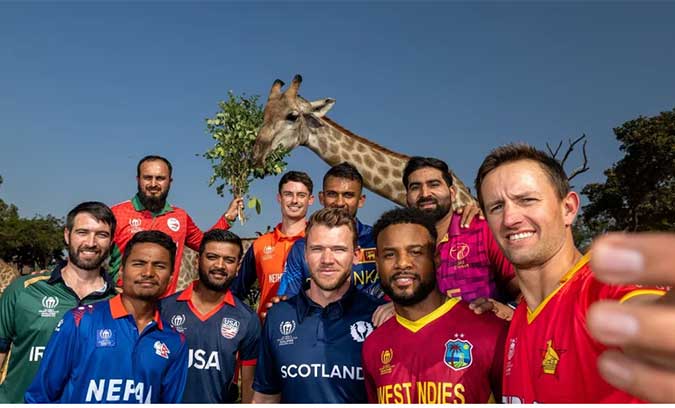
ODI World Cup Qualifier… What’s that?
As the packaging suggests, this is a qualifying event where ten teams will fight it out for the last two available spots at the 2023 ODI World Cup in India in October-November. The Qualifier is the finishing point of a four-year process that began with 32 teams in contention for the World Cup, where only ten will finally take part.
Interesting. So will we see teams such as India and Australia in the Qualifier?
Nope, they are already in the main draw. India, who are the hosts and the other teams that finished in the top eight of the 13-team ODI Super League have automatically qualified for the showpiece event. The bottom five teams from the Super League and five others will feature in the Qualifier.
Going way too fast, mate… now what’s the ODI Super League?
The ODI Super League was introduced by the ICC in 2020 to help decide the teams that would feature in the World Cup. It ran from July 30, 2020, to May 14, 2023. The 13 teams included the 12 Full Members and Netherlands, who were winners of the preceding World Cricket League Championship.
At the end of the Super League, India, New Zealand, England, Bangladesh, Pakistan, Australia, Afghanistan and South Africa sealed their World Cup spots. The bottom five teams – West Indies, Sri Lanka, Ireland, Zimbabwe and Netherlands, along with five Associate nations – will get another crack at making the main event through the Qualifier. Two of these ten sides will eventually make the journey to India.Having said that, the Super League will be scrapped after the 2023 World Cup, with the ICC going back to relying on rankings as the basis for qualification to the men’s 50-over World Cup.
Gotcha. Who are these five Associate teams?
Oman, Scotland, UAE, Nepal and USA.
And how did they make it to the final World Cup Qualifier?
Scotland, Oman and Nepal were the top three teams in the World Cup League 2, a seven-team tournament of 140 matches that was played from August 2019 to March 2023. Scotland and Oman finished first and second, and Nepal sealed third place in exhilarating manner by winning 11 of their last 12 matches to pip Namibia by a solitary point.
UAE and USA clinched the final two qualifying spots after finishing as the top two teams at the World Cup Qualifier play-offs in March-April this year.
Awesome. So how does the upcoming Qualifier work?
All matches will have ODI status, and will come thick and fast. The ten teams have been split into two groups of five. Group A includes Nepal, Netherlands, USA, West Indies and Zimbabwe, while Group B consists of Ireland, Oman, Scotland, Sri Lanka and UAE. Each side will play four group matches, facing the others in their group once in a round-robin format. The winner of each game will be awarded two points, while ties and no-results will fetch one point each.
After the 20 group-stage matches are done, the top three sides from each group will progress to the Super Six, carrying over the points they acrue against the other two teams that reach this stage. Each team in the Super Six will face the three qualifying teams from the opposite first-round group. Thereafter, the top two teams on the Super Six table will qualify for the 2023 World Cup.
Wait, so no final?
There will be a match between the top-two Super Six sides, with the winner taking home a shiny trophy. But the final will be a win-win game for both sides, since they’ve both already booked their World Cup berths.
Sweet. Oh, before I forget: where’s this happening and when?
In Zimbabwe, as was the case last time around in 2018. Four venues, two each in Harare and Bulawayo, will host the matches.
The tournament commences on June 18, with the group-stage games finishing on June 27. The Super Six will run from June 29 to July 7, while the final will take place on July 9 at Harare Sports Club. Playoffs to decide seventh to tenth places will take place from June 30 to July 6. Here’s the full list of fixtures, and all the squads.
Anything new this time around?
The DRS. After first announcing the presence of third umpires to monitor only run-outs, the ICC confirmed that DRS will be in use from the Super Six stage for the first time in a World Cup Qualifier.
Surely West Indies and Sri Lanka go in as favourites?
Going by the rankings, you would say so. Both teams narrowly missed out on automatic qualification for the World Cup, and will fancy their chances. West Indies have shown excellent recent form in ODIs: coming into the Qualifier, they swept UAE 3-0 in an ODI series in Sharjah, and had earlier drawn 1-1 against South Africa. Sri Lanka, meanwhile, are coming off a 2-1 ODI series win over Afghanistan.However, don’t rule out Zimbabwe, who will be playing in their home conditions, and will have the backing of the local crowd.
And the underdogs… ?
Ireland have reasonable recent game time under their belt, and plenty of in-form players. They could prove to be a handful. Talking of underdogs, don’t forget Nepal, who have never featured in an ODI World Cup, but have a team for the conditions, are on a roll, and can cause a few upsets.
The last World Cup Qualifier…what happened there?
Heartbreak for Zimbabwe and Scotland, and World Cup qualification for Afghanistan and West Indies. Afghanistan’s qualification was nothing short of miraculous. They entered the Super Six staring down the barrel, but successive wins and favourable results from other games ensured they booked a place at the 2019 World Cup. A win over West Indies in the final was the cherry on top of a comeback for the ages. (cricinfo)










Jhon Arias scored the only goal as Colombia beat Ghana 1-0 in sweltering conditions in Kansas City on Friday to reach the World Cup round of 16, continuing a quietly impressive campaign that has established them as dangerous outsiders.
Arias struck in the 14th minute, guiding home a cross from substitute Luis Suarez, and Colombia’s disciplined defence did the rest as Nestor Lorenzo’s side extended their unbeaten run and booked a meeting with Switzerland in the next round.
Colombia had largely flown under the radar at the tournament, despite going undefeated against Portugal, Uzbekistan and DR Congo to top Group K.

Their breakthrough on Friday came from two players who had not been expected to combine, as Suarez, thrust into action after Jhon Cordoba was forced off with an apparent groin injury in the eighth minute, delivered a pinpoint cross to the back post where Arias had somehow drifted unmarked.
With time and space to pick his spot, Arias calmly guided the ball into the bottom corner to hand his side a deserved lead.
The stadium felt more like Barranquilla than Kansas City as tens of thousands of Colombia supporters turned the clash with Ghana – a team ranked 60 places behind them – into a de facto home game, giving the South Americans a level of support rarely seen so far from home.

The stands were a writhing, dancing sea of yellow jerseys, twirling scarves and black-and-white sombrero vueltiao hats, that many used to fan their faces in the oppressive 30-degree Celsius (86-degree Fahrenheit) heat.
They bounced in unison, roared their team forward with every attack, and regularly broke into chants of “Vamos Colombia! Esta noche tenemos que ganar!” (Spanish for ‘Let’s go Colombia, tonight we have to win!’).
They need not have worried. Colombia were the better team by some distance.
Luis Diaz had numerous scoring chances. He fired into the side netting in the first half, then celebrated what he thought was the game’s second goal early in the second half when he slotted home Arias’s cross, but it was disallowed for offside.
Lorenzo’s men continued to push for a second goal, and Ghana goalkeeper Lawrence Ati-Zigi, who was excellent all night, made one terrific save after another in the dying minutes as Colombia’s fans cheered every one of their team’s touches of the ball.

Antoine Semenyo was Ghana’s biggest attacking threat, yet Colombia’s disciplined defence denied him a clear sight of goal.
Colombia became the fourth South American team to reach the last 16, joining surprise package Paraguay, who stunned Germany, along with Brazil and Argentina, both of whom survived scares of their own.
Colombia – whose best finish was reaching the quarterfinals in 2014 – play the Swiss on Tuesday in Vancouver.
[Aljazeera]
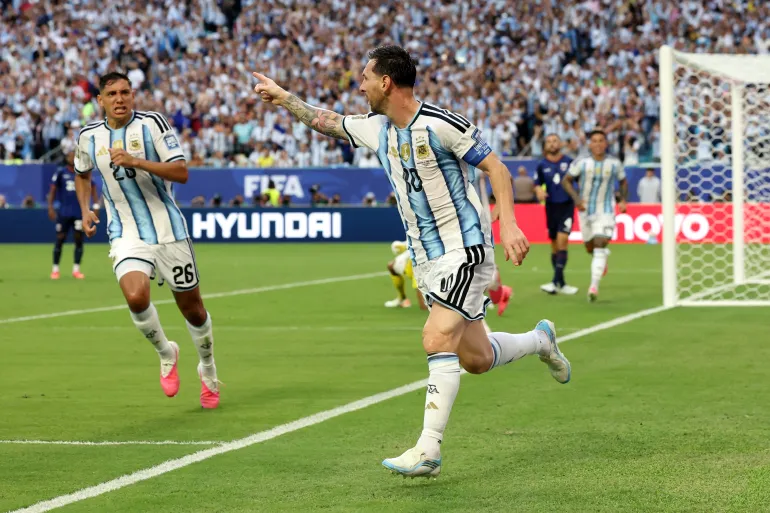
Reigning champions Argentina needed an extra-time own goal to overcome a Cape Verde side with incredible levels of resilience 3-2 in a thrilling contest and secure their spot in the last 16 of the World Cup.
The Africans, playing in their first World Cup, had twice come from a goal down on Friday to silence the vast majority of the crowd of 64,478 packed into a hot and humid Miami Stadium.
Six minutes into the second period of extra time, Lionel Messi swung a corner into the box, and Cristian Romero rose to head home off the arm of Cape Verde centre-back Diney Borges and finally set up a date with Egypt in Atlanta next Tuesday.
Messi had, almost inevitably, given Argentina the lead in the 29th minute with his seventh goal of the tournament, but Deroy Duarte equalised just before the hour mark.
The Blue Sharks held on to send the match into an additional half hour before Lisandro Martinez lashed a sumptuous shot into the roof of the net in the second minute of the first period of extra time to put Argentina ahead again.
Cape Verde were not done yet, however, and left back Sidny Lopes Cabral curled a beautiful shot into the top corner of the net in the 103rd minute of the contest to put the scores back on level terms at 2-2.
Lopes Cabral could have equalised again after Romero’s goal, but his finely struck free kick was saved by Argentina goalkeeper Emiliano Martinez, who had to be at his best to deny Cape Verde in the dying minutes.
Cape Verde were beaten but far from outclassed by the three-times world champions as they put in a fourth magnificent display of teamwork and grit at their first World Cup.
The only one of the four World Cup debutants to make it to the last 32 and ranked 67th in the world coming into the tournament, Cape Verde had hoped to frustrate Argentina as they did Spain, Uruguay and Saudi Arabia in group-stage draws.
They succeeded, while showing no shortage of quality of their own, for much of the game with a never-say-die desperation and a neat pass-and-move game.

Messi aside, Argentina were largely bereft of ideas against an obdurate defence and Cape Verde libero Kevin Pina was the most impressive player on the park for long periods of the contest.
It was Argentina who made the breakthrough in the 29th minute, however, when Lisandro Martinez lofted a long ball over the top of the defence to the feet of Messi.
The 39-year-old maestro took a touch with the outside of his left boot and buried it in the roof of Vozinha’s net for his 20th goal over six editions of football’s global showpiece.
Cape Verde knew they would need to score to keep their World Cup campaign alive and Duarte fired a shot at goal soon after half-time that drew a diving save out of Martinez.
Just before the hour mark, captain Ryan Mendes was freed down the right, and his pass into the box found the Dutch-born midfielder, who controlled the ball with his left foot before drilling it past Martinez with his right.
Messi had a chance to put Argentina back in front four minutes later when he was played through on goal, but Vozinha stood up well to keep his shot out of the net.
One of Messi’s trademark free kicks was tipped away by Vozinha in the 72nd minute, and Cape Verde defender Pico Lopes had to intervene to prevent Enzo Fernandez from scoring 10 minutes later.
Cape Verde held on to force the dramatic period of extra time, and they will now return home heroes having put their tiny island-nation firmly on the footballing map.
(Aljazeera)
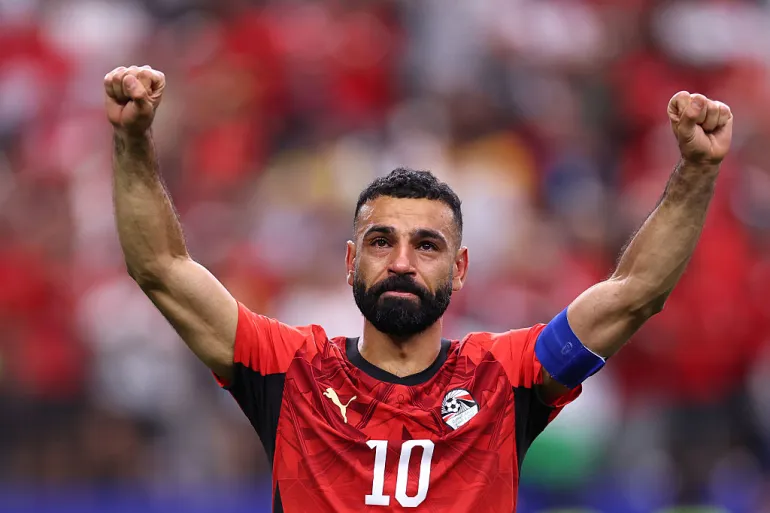
Hossam Abdelmaguid scored the winning penalty as Egypt made history by beating a dogged Australia 4-2 on penalties to reach the World Cup last 16.
A tense affair on Friday in which Egypt and their off-colour captain Mohamed Salah wasted the better chances had ended 1-1 after 120 minutes in Texas.
Lionel Messi’s Argentina loom next for Egypt, as long as the reigning champions avoid a massive upset against tournament debutants Cape Verde in their last-32 encounter.
The Pharaohs will celebrate anyway, having reached this stage of a World Cup for the first time ever.
Australia coach Tony Popovic threw on experienced goalkeeper Mathew Ryan for the penalty shootout in a last-gasp gamble.
Shooting towards the Egypt fans and whistles raining down, defender Harry Souttar blazed the first penalty over to put the Socceroos on the immediate back foot.
The next five players all scored, including Salah with the coolest of penalties, before 18-year-old Australia defender Lucas Herrington hit the bar.
Abdelmaguid kept his nerve to send Egypt through to leave Salah in tears of joy and break Australia hearts
Emam Ashour had given seven-time African champions Egypt the lead from a header after 13 minutes at the air-conditioned home of the Dallas Cowboys.
The early goal put the onus on a shot-shy Australia, who scored only twice in the group phase, to attack in front of a crowd of 70,000.
With Salah mostly ineffective following injury in Egypt’s last game, the Socceroos equalised 10 minutes after half-time when Mohamed Hany headed into his own net.
Both sides sensed history, neither having won a knockout game before at a men’s World Cup, and they went to extra time after some late Egypt pressure.
With nothing to divide them, they went to penalties.
Popovic’s side had nearly taken the lead with less than five minutes gone as Cristian Volpato – who switched to Australia from Italy on the eve of the World Cup – rattled the top of the crossbar.
Egypt, who won a World Cup match for the first time in the group phase when they beat New Zealand 3-1, looked nervy at the back.
Slightly against the run of play, Hossam Hassan’s men took the lead.
Australia forward Nestory Irankunda failed to pick up Ashour, who headed home at the back post from a cross by Karim Hafez for his second goal of the tournament.
The Socceroos had their first shot on target 10 minutes before the break when full-back Aziz Behich fired tamely at goalkeeper Mostafa Shobeir.
His father, Ahmed, played in goal for Egypt at the 1990 World Cup.
The 34-year-old talisman Salah, who came into the match after a hamstring strain, made little impact in an attritional first 45 minutes.
The half ended with Jordan Bos, one of the fastest players at the tournament, in a heap after a robust flying challenge from Rabia.
The wing-back had to be helped from the pitch and was replaced at half-time by Kai Trewin in a blow to Australian hopes.
Seconds after the restart it should have been 2-0 when Egypt’s Manchester City attacker Omar Marmoush slid the ball off-target from close range.
Egypt’s coach had said he was wary of Australia’s physical approach, and so it proved as Hany headed under pressure into his own net from an in-swinging Socceroos free-kick.
It was Hany’s second own goal of the tournament.
Former Liverpool superstar Salah remained a peripheral figure but was involved in the buildup as Australian stopper Patrick Beach saved athletically deep in added time to keep out Ramy and force another 30 minutes.
Egypt finished normal time the stronger and Salah fired well over early in extra time on his weaker right foot, with penalties looking increasingly inevitable.
Salah, though, was to prove more reliable in the shootout as Egypt triumphed.
Egypt will face the winner of the last-32 match between Argentina and Cape Verde in Atlanta in the next round on Tuesday.
(Aljazeera)

Brutal heat cancels Fourth of July events, from DC to Philadelphia

Arias sends Colombia into World Cup last-16 with 1-0 win over Ghana

Messi scores again but Argentina given World Cup upset fright by Cape Verde

Anguished families left to identify Venezuela quake victims at makeshift morgue

Ukrainian suspect hunted by police after Monaco bomb attack was ‘disguised as a man’

Showers in the Western, Sabaragamuwa and North-western provinces and in Galle, Matara, Kandy, Nuwara-Eliya, Anuradhapura and Mannar districts.

‘Dates have the highest sugar content to fight Coronavirus’

Sunday Island 27 December – Headlines

#SundayIsland 17th December – Headlines

Sunday Island – 28th March

Sunday Island Headlines – 21 March

Sunday Island – 21st February – Headlines
-

 News5 days ago
LAWASIA warns against ad hoc initiative to increase judges’ retirement ages
-
 Features4 days ago
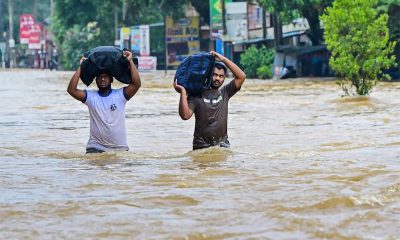
Climate action to bring South Asia together
-

 News4 days ago
Chamuditha to seek removal of injunction on Youtube programme
-

 Features6 days ago
People’s Bank expands digital banking network with 125th cheque deposit kiosk
-
 News1 day ago
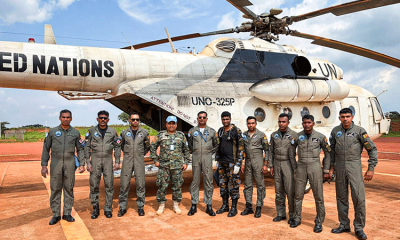
SLAF conducts successful rescue mission under UN command in Central African Republic
-

 News1 day ago
CIABOC to question Harak Kata on Rs. 200 mn bribery allegation
-

 News4 days ago
CPRP alleges another death in custody, seeks protection for witness
-

 Midweek Review3 days ago
H’tota port’s strategic status remains focal point of geopolitical scrutiny