
Editorial
Heritage, archaeology and politics


Wednesday 14th June, 2023
Director General of Archaeology Dr. Anura Manatunga has tendered his resignation letter over a disagreement with the government as regards the acquisition of land for the Kurundimale archaeological site in Mullaitivu. He reportedly got under President Ranil Wickremesinghe’s skin by standing his ground at a recent meeting, where the Kurundimale land issue was taken up for discussion. Some MPs representing the Tamil political parties were also present. According to media reports, Dr. Manatunga had refrained from carrying out a presidential directive in respect of the land issue because he did not consider it consistent with the Archaeological Ordinance.
Public officials are required to act within the confines of laws, rules, regulations, ethics, etc., and be independent. After all, it was to ensure their independence that the 21 Amendment to the Constitution was introduced by the current Parliament. There is a widely-held misconception that public officials have to implement the decisions of the Cabinet and the President, no questions asked. There have been instances where these politicians’ decisions were found to be unlawful. It may be recalled that the Cabinet of Ministers decided to grant President Chandrika Bandaranaike Kumaratunga a plot of land near Parliament, as part of her retirement package, but the Supreme Court ruled that its decision was contrary to the law and of no force or avail in law. A Cabinet decision to allow former President Maithripala Sirisena to continue to reside in a state-owned house, which he occupied while in office, has led to a legal battle, and he has had to move out pending the case. In 2018, the Supreme Court ruled that President Sirisena’s decision to sack Parliament was unconstitutional, and the status quo ante had to be restored. Hence public officials are right in refusing to carry out presidential and ministerial orders which they consider ultra vires.
It has been reported that at last week’s meeting, President Wickremesinghe challenged Dr. Manatunga’s decision to acquire land and treated him to a brief lecture on history and archaeological sites. Perhaps, an eminent scholar, Dr. Manatunga was so appalled at having to learn history and archaeology from a politician that he decided to quit his job! Now, the President can appoint to the vacant top post someone who is willing to learn history and archaeology from him. He, however, cannot be faulted for having taken up the grievances of the people of Kurundimale. Their interests, too, need to be looked after. But that should be done properly, and the deplorable practice of politicians ridiculing public officials and trying to railroad them into toeing their line has to be abandoned.
The hullabaloo over the Kurundimale monument is due to the politicisation of what is essentially an archaeological matter. TNA politicians and others have taken exception to the project. The writ of the state, we believe, must run in all parts of the country, and national heritage sites must be traced and conserved or restored wherever they are located. This task should be left to heritage management experts, who alone are capable of handling such sensitive issues carefully.
The restoration or conservation of archaeological monuments should be done in such a way that the interests of the people living around them are not jeopardised, for their cooperation is vital for ensuring the wellbeing of the precious sites. Predominantly Hindu India and Islamic Pakistan look after ancient Buddhist monuments as part of their national heritage. They have benefited tremendously from these sites, which have become huge tourist attractions. Why this approach cannot be adopted in handling the Kurundimale issue is the question.
Archaeological needs and priorities of the nation must not be subjugated to the political agendas of individuals or parties.
The Kurundimale heritage site has given rise to a huge controversy for political and religious reasons, and only a scientific approach to the problem can help find a workable solution. Let an expert committee consisting of senior archaeologists drawn from the national universities and heritage management experts be set up to study the Kurundimale site and determine the extent of land necessary for its restoration or conservation and how that task should be carried out to the satisfaction of all stakeholders.

Thursday 7th May, 2026
A government move to assign some Clean Sri Lanka representatives to Divisional Secretariats countrywide as coordinators has run into stiff resistance. The Sri Lanka Association of Divisional Secretaries and Assistant Divisional Secretaries (SLADA) has written to the Secretary to the President, urging the government to revoke its decision and warning that the proposed move will seriously undermine the independence of the public service.
Opposition Leader Sajith Premadasa, too, has taken exception to the government plan to assign some JVP cadres to Divisional Secretariats as Clean Sri Lanka coordinators. He told the media yesterday the JVP was trying to infiltrate the state service, and the Opposition would oppose that move tooth and nail.
The SLADA has argued that Sri Lanka already has a long-established administrative framework to ensure effective public service delivery, spanning ministries, departments, provincial councils, district and divisional secretariats down to Grama Niladhari divisions. This system is supported by internal audit units, the National Audit Office, and coordination committees at divisional, district and national levels, which oversee and review programme implementation. While acknowledging some isolated instances of politically influenced conduct of a small number of officials, the SLADA has stressed that the overall administrative structure has functioned as an independent, professional system and its independence must not be compromised.
The government decision to appoint Clean Sri Lanka representatives to Divisional Secretariats should also be viewed against the backdrop of the JVP’s overall strategy to create conditions for establishing what is described in some quarters as a parallel state. JVP stalwart, K. D. Lalkantha, created quite a stir in 2024 by claiming that under a JVP-NPP government legislative and judicial powers would be devolved to villages.
The JVP/NPP is working according to a plan to expand its powerbase through the Constituency Councils or Kottasha Sabha, which remind us of the Citizen Committees or Janatha Committees (JCs) set up by the SLFP-led United Front government (1970-77) purportedly to bring administration closer to the people. The JCs were established in government departments, public corporations, and local administrative units to monitor state administration, advise public officers, help eliminate corruption, delays and waste, encourage public participation in governance and facilitate the implementation of development initiatives. But, in reality, they became highly politicised, with their members undermining the authority of state officials. They clashed with administrators, trade unions and ended up as mere appendages of the government. They were also responsible for the downfall of the UF government. The JVP/NPP is apparently repeating that disastrous experiment.
Old habits are said to die hard. The JVP is accused of using the Clean Sri Lanka programme to infiltrate vital state institutions in a bid to arrogate to itself the powers of the state instead of exercising them through the NPP government for five years. This is something it failed to achieve through extra-parliamentary means for about six decades. Speaking at a recent May Day rally, JVP General Secretary Tilvin Silva stated that the JVP-led government would remain in power indefinitely. Some other JVP bigwigs have said they would not let go of power. Given the JVP’s violent past, such utterances cannot be dismissed as mere rhetoric.
It is possible that in a bid to perpetuate its hold on power, the JVP is trying to emulate the Soviet model and set up its cells in state institutions like those established by the Communist party in the USSR to function as its “eyes and ears”. The Soviet system functioned on the principle that the party was the “leading and guiding force” of society. It has been reported that by the late Soviet period, there were hundreds of thousands of such primary organisations, covering nearly every sphere of public life. Those cells did not survive the collapse of the USSR.
Ordinary people are not well disposed towards the state service, characterised by inordinate delays, malpractices and arrogance, and it needs a radical shake-up. What needs to be done is to depoliticise and revitalise the public service, and therefore the ongoing efforts to politicise it further must be defeated. One cannot but endorse the SLADA’s demand that the government revoke its decision to infiltrate the Divisional Secretariats, allowing the existing administrative mechanisms to handle programme implementation lest such precedent should have long-term adverse implications for the independence of the public service.
Wednesday 6th May, 2026
The tragic death of Assistant Director of the External Resources Department of the Ministry of Finance, Ranga Rajapaksha, 50, has given rise to doubts, suspicions and various conspiracy theories. It has become an issue reminiscent of the complex plot twists and tropes found in classic whodunits such as Agatha Christie’s Murder on the Orient Express and modern murder mysteries like Knives Out. Not even a postmortem examination has helped put the matter to rest. Two schools of thought have emerged about Rajapaksha’s death. One asserts that he committed suicide after being suspended over the diversion of USD 2.5 million from the Treasury to a rogue account, and the other insists that foul play cannot be ruled out.
No sooner had Rajapaksha been found dead, on 30 April, than a four-member panel of forensic experts was appointed to conduct a postmortem examination, and its report was submitted fast. The experts reportedly concluded that the victim had committed suicide. But their conclusion has been challenged in some quarters.
Prominent Opposition politicians and legal experts are among those who argue that Rajapaksha’s death was not properly probed, and the postmortem report is therefore not acceptable. They have gone to the extent of alleging that Rajapaksha’s death was part of a grand cover-up, the implication being that they suspect murder. Some of them have claimed that Rajapaksha, who was reportedly the first to complain of the fund diversion at issue, faced the same fate as Dan Priyasad, who made a formal complaint of the questionable release of red-flagged freight containers without mandatory Customs inspection from the Colombo Port. Priyasad was shot dead in 2025.
As for Rajapaksha’s death, there is no evidence to prove the allegation of foul play, but doubts and suspicions being expressed about it could have a corrosive effect on the integrity of the legal and judicial processes, and should therefore be cleared forthwith. After all, anything is possible in this country, where governments have earned notoriety for subverting the legal and judicial processes to protect their political interests.
There have been allegations that narcotics samples sent to the Government Analyst’s Department for testing were replaced with kurakkan flour. The JVP/NPP politicians are among those who have questioned the validity of a DNA test that revealed that Sarah Jasmine, the widow of Muhammadu Hastun, who carried out the Katuwapitiya Church massacre, in 2019, had been among the National Thowheed Jamaath members killed in a suicide bomb blast in Sainthamarathu a few days after the Easter Sunday terror attacks. So, the government cannot fault those who have refused to accept the official version of Rajapaksha’s death.
In an article published on the opposite page today, Prof. Susirith Mendis has mentioned several instances where JMO reports were found to have been erroneous or even falsified. Arguing that postmortem examinations are prone to error, negligence and falsification, Prof. Mendis mentions a fourth possibility, a legitimate academically defensible difference of opinion and points out that neither medicine nor forensics is an exact science. He says that whether the four-member expert panel looked into all aspects of the death of Rajapaksha is a moot point.
Some legal experts have called for a psychological autopsy to find out Rajapaksha’s mental state at the time of his death. They are right in having asked for an investigation into the victim’s life, behaviour and mindset in the period leading up to his death, as it is alleged that he may have been driven to suicide. Psychological autopsies are common in other countries, where they are conducted by forensic experts, clinicians and legal authorities. They may not provide absolute proof but can help courts, investigators and victim families understand what may have happened.
Given the serious doubts and suspicions expressed by experts, politicians and others about Rajapaksha’s death, the need for a fresh postmortem examination cannot be overstated.
Tuesday 5th May, 2026
The JVP-NPP government turned its recent May Day rallies into a propaganda counteroffensive against the Opposition, which has effectively targeted its good governance credentials. The ruling party leaders, including President Anura Kumara Dissanayake, went ballistic, condemning their rivals as utterly corrupt politicians. Claiming that 2026 would be remembered as the year when the corrupt and thieves were sent to jail, President Dissanayake said 15 high-profile cases would come up in the current month itself.
The Executive President can have himself briefed on cases to be filed and the progress therein, but it is unbecoming of him or her to leverage privileged access to such information for political expediency. Lashing out at President Dissanayake for having told his supporters, at a public rally, that they will be able to hail a judgement to be delivered in a corruption case later this month, the Joint Opposition yesterday said at a media briefing that by saying so, the President had undermined the integrity of the judiciary. Former Minister of Justice and Constitutional Affairs Prof. G. L. Peiris told the media yesterday that by claiming to have prior knowledge of the judgement to be delivered on 25 May, the President had assailed the very foundation of the Constitution. One cannot but agree with Prof. Peiris that in the civilised world, judicial decisions are not meant to entertain a third party, and the President’s statement at issue is tantamount to exerting political pressure on the judiciary. Prof. Peiris said the Opposition would make representations to the Chief Justice on the matter. The Bar Association of Sri Lanka must also take it up.
The political undertone of the aforementioned presidential declaration is disturbing, for it betrays a vested interest in the cases the President has referred to, and it is therefore only natural that he is seen to be ramping up pressure on the judiciary to be mindful of the government’s desire to have its political opponents incarcerated for corruption somehow or other. When he insists that the government politicians are not corrupt, and corruption cases would come up against their Opposition counterparts, the subtext of his statement is that he believes that the Opposition members concerned deserve punishment and expects them to be jailed. This can be considered a thinly veiled message intended to influence the judiciary.
The JVP/NPP came to power partly resorting to a false dichotomy. It divided politicians into two broad categories––clean individuals who supported it and others it portrayed as deserving imprisonment for corruption. One may argue that the government’s vested interest in prosecuting its political opponents, and its public declarations that they must be jailed, hang over the judiciary like the sword of Damocles.
The presidential declarations with the potential to erode public trust in the judiciary should be viewed against the backdrop of a controversial claim made by a Minister that the JVP-NPP government would devolve judicial powers to some committees to be set up at the village level. Is the JVP/NPP working according to a plan to undermine the judiciary and reduce it to a mere appendage of the government?
The JVP was critical of the Executive Presidency, while out of power, and even launched aggressive campaigns, seeking its abolition. The JVP/NPP promised to introduce a new Constitution, inter alia, “abolishing the executive presidency and appointing a president without executive powers by the Parliament” (A Thriving Nation: A Beautiful Life, NPP Election Manifesto, p. 109). Today, the JVP/NPP is silent on this solemn pledge which enabled it to garner favour with the public to win elections, and President Dissanayake is accused of undermining the cherished constitutional doctrine of the separation of powers. Worse, JVP General Secretary Tilvin Silva has declared that the incumbent government will be in power indefinitely. Senior public administrators have protested against a government move to plant JVP cadres in the District and Divisional Secretariats on the pretext of implementing the Clean Sri Lanka programme. One can only hope that the unfolding events are not ominous signs of an Orwellian nightmare.

Joint programme between President’s Fund and Janashakthi Foundation to expand healthcare facilities for children

Maldivian President concludes state visit to Sri Lanka

India to host Zimbabwe for maiden women’s bilateral series

Showers above 75 mm are likely at some places in the Sabaragamuwa, Central, Uva, Southern and North-central provinces

Govt. draws flak over Rs. 500 mn excess Aswesuma payments

NDB fraud: Ravi asks govt. to appoint independent forensic auditor

‘Dates have the highest sugar content to fight Coronavirus’

Sunday Island 27 December – Headlines

#SundayIsland 17th December – Headlines

Sunday Island – 28th March

Sunday Island Headlines – 21 March

Sunday Island – 21st February – Headlines
-
 News2 days ago
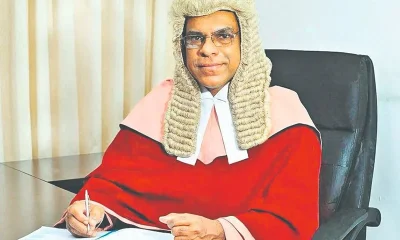
CJ urged to inquire into AKD’s remarks on May 25 court verdict
-
 News6 days ago
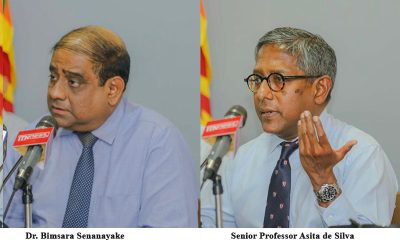
“Three-in-one blood pressure pill can significantly reduce risk of recurrent strokes”
-

 News3 days ago
USD 3.7 bn H’tota refinery: China won’t launch project without bigger local market share
-

 News6 days ago
Alarm raised over plan to share Lanka’s biometric data with blacklisted Indian firm
-
 News4 days ago
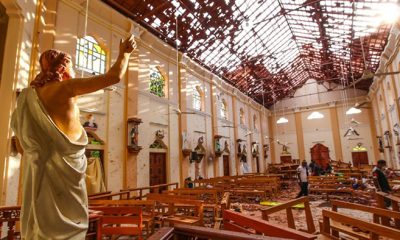
Easter Sunday Case: Ex-SIS Chief concealed intel, former Defence Secy tells court
-
 News5 days ago
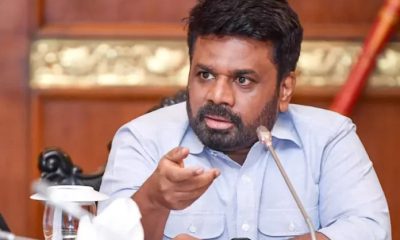
Ten corruption cases set for court in May, verdict ordered in one case – President
-

 News6 days ago
USD 2.5 mn fraud probe: Interdicted MoF official found dead at home
-

 Editorial3 days ago
Deliver or perish