
News
HRCSL recommends guidelines on regularising quarantine processes


…acknowledges need to restrict movements et al
Acknowledging the need to restrict freedom of movement and liberty of people in the interests of public health and public order during an extraordinary health emergency such as that facing the country at present, the Human Rights Commission of Sri Lanka (HRCSL) has in a letter addressed to Health Minister Pavitra Wanniarachchi and Army Commander Lt. Gen. Shavendra Silva, head of the National Operations Centre for Prevention of COVID 19 Outbreak, made a series of recommendations to address public concerns.
HRCSL Commissioner Ramani Muttettuwegama said that the Commission appreciated the efforts that were being made to curb the rapid spread of COVID-19 in the country. The Commissioner said: “The Commission continues to recognise the need to restrict freedom of movement and liberty of people in the interests of public health and public order during an extraordinary health emergency such as that facing the country at present. The Commission has observed that a large number of persons have been subject to quarantine processes in view of the resurgence of the fear of spread of COVID-19 pandemic and has received a variety of complaints and expressions of concerns relating to the process.”
The Commissioner said: “The Commission has observed that a large number of persons have been subject to quarantine processes in view of the resurgence of the fear of spread of COVID-19 pandemic and has received a variety of complaints and expressions of concerns relating to the process. In this regard, the Commission welcomes confirmation that first contacts of the COVID-19 infected patients who were earlier sent to quarantine centres, will now be home quarantined. We are in agreement that quarantining persons to their home will be the best option.
Since it is incumbent on the Commission under Act No. 21 of 1996 to examine whether restrictions on liberty are compatible with our Constitution and international human rights obligations, having given due consideration to the concerns expressed by the general public, the Commission presents the following guidelines:”
The Commission is of the view that the quarantine process can be regularized under the law by:
(i) Transparency in delegation of powers by the “Proper Authority”;
(ii) Vest powers of testing on designated qualified personnel;
(iii) List the places designated as quarantine centres and the designating authority.
(iv) Clarify the period of required quarantining.
(v) Create a receipt system for quarantined persons including the reason for quarantine, the place they are being taken to and the length of isolation;
(vi) External scrutiny of quarantine centres, especially by the “proper authority”;
(vii) Prohibit those handling quarantine from informing the media of the proposed quarantining efforts, exposing those being quarantined to public gaze as though they were offenders rather than unfortunate victims of a virulent virus.
The Commission is also of the view the hardships imposed by the quarantining process can be ameliorated by:
(i) Ensuring quarantined period is considered paid/ duty leave;
(ii) Ensuring financial or any other assistance to families of those in quarantine;
(iii) The Grama Niladhari be immediately informed when a person is quarantined;
(iv) In the circumstances where the vulnerable dependents in the families are left behind due to quarantine process, the Grama Niladhari to ensure provision of all necessary support to vulnerable persons including alerting the proper authorities.
The Commission wishes to emphasize that nothing in these recommendations should be construed by any member of the public to act contrary to health guidelines issued by the public health authorities in regard to the COVID 19 pandemic or act in a manner that would be harmful to public health in general. The Commission also reiterates that placing the persons of first contact with COVID 19 patients under home quarantine will remove most of the concerns listed above but is issuing these recommendations in the event the government wishes to establish quarantine processes again in the future.

‘Bar Association must reveal its stand’
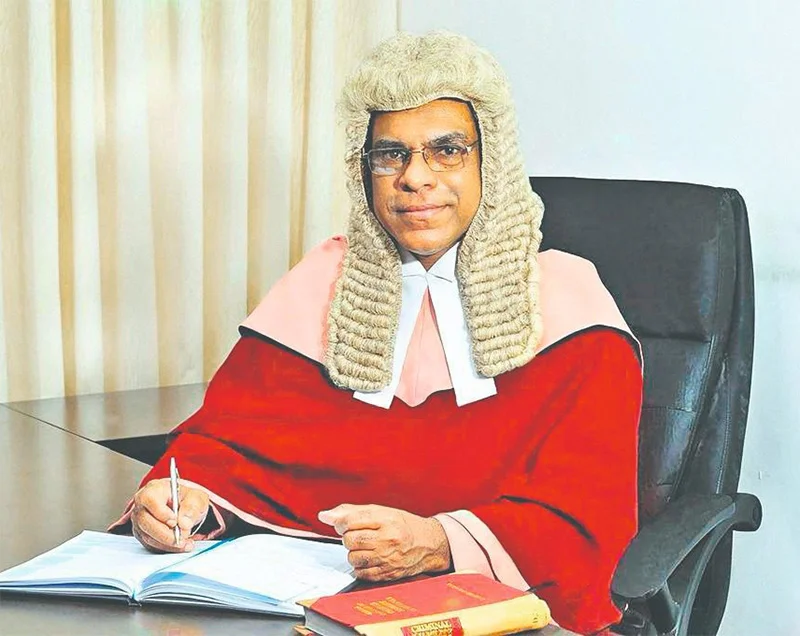
Civil society group ‘Free Lawyers’ has requested Chief Justice Preethi Padman Surasena to probe whether political pressure was brought on a Magistrate, or a High Court Judge, in respect of an ongoing high profile case.
Speaking to The Island on behalf of ‘Free Lawyers,’ Rajith Keerthi Tennakoon said that they felt the urgent need to seek the CJ’s intervention, following the May Day declaration by President Anura Kumara Dissanayake that the verdict of a case that was heard on 30 April would be given on 25 May. Tennakoon said that addressing the NPP’s main May Day rally at Maharagama, the President asked the people to be ready to celebrate that verdict. The President couldn’t have said so if he hadn’t been aware of the impending verdict, Tennakoon said, while emphasising the responsibility on the part of the Bar Association to state its position on the issue.
‘Free Lawyers’ recently captured pubic attention following its exposure of the theft of USD 2.5 mn from the Treasury.
Responding to a query, Tennakoon said that on behalf of ‘Free Lawyers,’ Maithri Gunaratne, PC, on Monday, 4 April, wrote to both CJ Surasena and President of the Bar Association Rajeev Amarasuriya.
 Alleging that President Dissanayake’s declaration caused immense harm to the independence of the judiciary and raised controversy over the judgement that would be given on 25 May, ‘Free Lawyers’ organisation also asked the CJ to inquire into whether the entire judicial process was under political pressure.
Tennakoon said that they expect the Bar Association to reveal its position on President Dissanayake’s statement. Tennakoon pointed out that during the May Day address, President Dissanayake made reference to 15 cases that were to be taken up during this month, whereas Transport, Highways and Urban Development Minister, as well as Leader of the House Bimal Rathnayake, mentioned nearly 10 names of politicians, both sitting and former lawmakers, to be summoned beginning, May.
Tennakoon said that the NPP appeared to have used May Day to counter growing accusations over the Colombo port container controversy, coal scam, Rs 13.2 bn NDB fraud and theft of USD 2.5 mn from the Treasury and USD 625,000 from the Sri Lanka Postal Service.
By Shamindra Ferdinando

The Canadian High Commissioner to Sri Lanka and the Maldives, Isabelle Martin over the last weekend met representatives of the Ilankai Tamil Arasu Kachchi (ITAK) in the East. Tamil Guardian reported that talks focused on the challenges facing the Tamil people.
The meeting was held at the office of ITAK Member of Parliament Kaveendiran Kodeeswaran and brought together parliamentarians representing the Batticaloa and Ampara districts, alongside local government officials including divisional council chairpersons.
Discussions centred on a range of pressing issues, including livelihoods, access to education, employment opportunities and ongoing human rights concerns, as well as the broader state of democratic governance in the region.
High Commissioner Martin sought updates on prevailing socio-economic conditions, particularly the challenges confronting local communities in the East. She noted the concerns raised and indicated that she would follow up on the matters discussed.
Among those present were ITAK MPs Kaveendiran Kodeeswaran, Gnanamuthu Sirinesan and Dr Elayathamby Srinath, along with several local council representatives.

A section of residents of Keppapilavu, in Mullaitivu, on May Day protested. demanding the release of lands still occupied by the military, 17 years after the end of the armed conflict.
They reiterated their longstanding demand for the return of lands seized by the military, in 2009, to establish a camp, sources in the North said. For over 17 years, Keppapilavu residents have sustained a continuous campaign of protests, petitions and advocacy efforts, calling for the right to resettle on their original lands, they said.
Despite limited releases under successive governments, protesters stressed that substantial areas remain under military control. They highlighted that 171 acres were yet to be returned, including 59.5 acres of residential land and 111 acres of agricultural land. The residential areas once supported over 55 families and included homes, schools, places of worship and shared community spaces.
Holding placards and chanting slogans, demonstrators said that their struggle extends beyond land ownership, framing it as a fight for dignity, livelihood and the restoration of a community life disrupted since 2009.
Residents declared that since the current government assumed office, multiple appeals have been made through formal channels, including submissions to the Presidential Secretariat and the Mullaitivu District Secretariat. However, they stated that these efforts have yielded no meaningful progress toward the release of the remaining lands.
Protesters called on Sri Lankan and the local authorities to take immediate and concrete steps to return the entirety of the occupied land, enabling displaced families to resettle and rebuild their lives without further delay.

CJ urged to inquire into AKD’s remarks on May 25 court verdict

ITAK MPs representing East take their woes to Canadian HC

People demand release of Keppapilavu land

Sajith calls VAT hike extortion, demands relief for the public

Cricket and the National Interest

Prof. Peiris alleges Prez has violated Constitution

‘Dates have the highest sugar content to fight Coronavirus’

Sunday Island 27 December – Headlines

#SundayIsland 17th December – Headlines

Sunday Island – 28th March

Sunday Island Headlines – 21 March

Sunday Island – 21st February – Headlines
-
 News6 days ago
Treasury chief’s citizenship details sought from Australia
-

 News5 days ago
Rooftop Solar at Crossroads as Sri Lanka Shifts to Distributed Energy Future
-
 News4 days ago
“Three-in-one blood pressure pill can significantly reduce risk of recurrent strokes”
-

 News6 days ago
Central Province one before last in AL results
-

 Sports6 days ago
Well done AKD!
-

 News4 days ago
Alarm raised over plan to share Lanka’s biometric data with blacklisted Indian firm
-
 News2 days ago
Easter Sunday Case: Ex-SIS Chief concealed intel, former Defence Secy tells court
-

 News4 days ago
USD 2.5 mn fraud probe: Interdicted MoF official found dead at home