
Business
What are leading names in Sri Lankan industries doing to decarbonize?


World Environment Day should drive focus on decarbonisation of Sri Lankan industries
By Jagathdeva Vidanagama PhD
Sri Lanka’s Energy Savers are industry leaders and energy practitioners who are determined to help the country slash energy waste and greenhouse gas emissions. They explain what they are doing to decarbonize Sri Lankan industries and why the time to act is now.
Mendaka Hettithanthri, Engineering Manager at Teejay Lanka, one of Southeast Asia’s largest fabric manufacturers, says the changing climate is a sure sign that industry must do more to lower its carbon emissions.
“You can already see how global warming is affecting Sri Lankans. We are an agricultural country … and the farmers used to know exactly when to harvest the crops and when to replant. Now the weather patterns are completely messed up.”
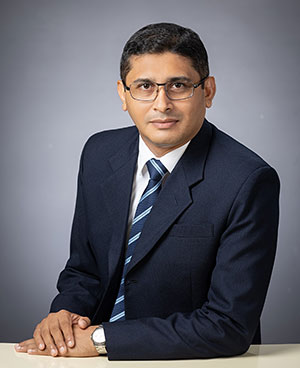
Nisal Liyanage, Manager of Group Compliance at leading Sri Lankan engineering company Hayleys Fentons Group, says there are also many business benefits to decarbonization, such as production cost savings: “We would see reduced greenhouse gas emissions and the potential for greater energy independence for us as a country.”
“We are further incentivized by our foreign customers,” adds Mohomad Arshad, Environment, Health and Safety Manager at fabric manufacturer Hayleys Fabric. “Compliance with international controls and requirements related to green practices are essential for remaining competitive in the global market.”
Sharing knowledge
More knowledge is needed to help companies fully realize the potential of energy efficiency, says Nadeera Ramanayake, Assistant Director of Planning at Industrial Development Board of Ceylon.
She welcomes a new 12-month initiative spearheaded by United Nations Industrial Development Organization and the National Cleaner Production Centre Sri Lanka with support from the European Union. They are guiding a first group of 70 Energy Savers through an internationally recognized course on Energy Management Systems.
“Amidst the current energy crisis in the country, I thought that joining a project like this and getting knowledge is vital,” says Nadeera.
Changing behaviour
Damitha Sandanayaka, Energy Management Officer at Colombo Dockyard, says cutting energy waste requires new ways of acting at all levels of a business.
“I strongly believe that changing human behaviour is the key to improving energy efficiency, which is why training and awareness have become fundamental to our organization. We conduct regular training … [and] we also initiated Energy Management Week… This promotes awareness on the importance of energy management and encourages teams to work together to achieve energy efficiency goals.”
Making the switch to clean energy
Cutting energy waste often helps manufacturing companies better understand their energy use, creating a solid foundation upon which to build effective renewable energy solutions.
Asanka Manoj, Senior Manager of Production and Facility Maintenance at Flintec Transducers, describes how installing rooftop solar panels on the company’s plants cut daytime energy use by 65 to 70 per cent. This, coupled with energy efficiency measures, has helped Flintec significantly reduce energy costs and emissions.
But a number of Energy Savers caution against looking for a “magic bullet” to decarbonization. Rather, multiple solutions that use a variety of energy optimization and clean energy technologies are needed.
“[We need to take] a holistic approach,” says K. H. Thanushka at Watawala Plantations. “[That’s how] to unlock this potential and create a more sustainable and prosperous future for all.”
The writer is a specialist in climate change mitigation in industry and is Chief Technical Specialist for the Accelerating Industries Climate Response project in Sri Lanka implemented by UNIDO.






Fund says discussions will continue on policies and parameters needed to complete the Seventh Review
By Sanath Nanayakkare
Sri Lanka’s latest talks with the International Monetary Fund (IMF) have concluded without a staff-level agreement on the policies and parameters required to complete the Seventh Review of its Extended Fund Facility (EFF), leaving further discussions ahead as the government prepares its next Budget.
An IMF team led by Mission Chief Evan Papageorgiou visited Sri Lanka from September 10 to 23 for discussions on the Seventh Review and the 2026 Article IV Consultation.
The Fund said the discussions with Sri Lankan authorities had been productive, but would continue in the near term towards reaching agreement on the parameters and policies needed to complete the Seventh Review.
The outcome therefore represents a delay in reaching the formal staff-level milestone rather than a breakdown in negotiations.
The latest mission comes as Sri Lanka moves from economic stabilisation towards longer-term structural transformation, while continuing to face external shocks and domestic fiscal pressures.
The IMF said economic activity expanded by 4.2 percent in the second quarter of 2026, marking the 11th consecutive quarter of growth. At the same time, the Fund cautioned that downside risks remained, particularly amid an uncertain external environment.
Gross official reserves had risen to US$6.9 billion by the end of August, while the banking sector remained well capitalised and profitable, providing some buffers against external pressures.
A major focus of the IMF’s latest assessment was Sri Lanka’s revenue position.
The Fund said developing and implementing a strong medium-term revenue strategy would be critical to sustaining revenue mobilisation and strengthening fiscal resilience.
It stressed the need to broaden the tax base, rationalise tax exemptions and incentives, and strengthen revenue administration and compliance.
The IMF also emphasised the importance of maintaining cost-recovery energy pricing and improving the efficiency and fairness of the tax system in order to reduce fiscal vulnerabilities.
These issues assume particular significance as the government prepares its next Budget, with the authorities seeking to balance revenue mobilisation and fiscal consolidation against the need to sustain economic recovery.
The Fund’s latest position does not indicate that negotiations have broken down. Rather, the IMF has said that discussions will continue towards reaching agreement on the remaining policies and parameters required to conclude the Seventh Review.
The latest talks follow the combined Fifth and Sixth Reviews, for which IMF staff and Sri Lankan authorities reached a staff-level agreement in April, subject to completion of the remaining requirements before consideration by the IMF Executive Board.
For Sri Lanka, the immediate challenge is therefore to preserve the gains made in macroeconomic stabilisation while addressing the remaining issues under the IMF programme and preparing a Budget capable of supporting longer-term fiscal and economic resilience.
With further discussions expected in the near term, the Seventh Review remains a work in progress as Sri Lanka enters another critical stage of its economic reform programme.
Notably, the IMF has yet to publicly specify the outstanding issues that remain to be resolved.
Business
UK digital expertise and Sri Lankan business leaders unite to explore growth through technology
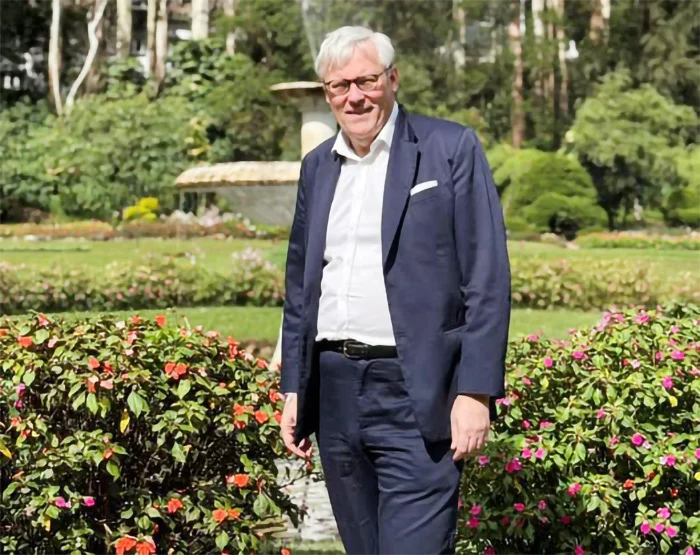
British High Commissioner Andrew Patrick hosted UK digital product consultancy Apadmi at Westminster House, his official residence in Colombo, for an invite-only forum bringing together senior business leaders from across Sri Lanka’s retail, banking, telecommunications, hospitality and public sectors.
The event, “Turning Digital Assets into Growth Engines”, marked Apadmi’s first official event in Sri Lanka since establishing its Colombo office in 2025, and was delivered in partnership with the British High Commission as part of ongoing efforts to strengthen UK and Sri Lanka commercial and technology ties.
Guests were welcomed by High Commissioner Andrew Patrick, followed by a keynote from Niresh Muthuratnanandan, Head of Omni Commerce, Digital & Loyalty at Keells Supermarkets, who spoke about the launch of the Keells Nexus app and the modernisation of a loyalty programme serving 2.9 million members.
A panel discussion followed, hosted by Mark Collin, Chief Growth Officer at Apadmi, and featuring Malik Induruwana, Chief Information Officer at HSBC Sri Lanka & Maldives; Jiffry Zulfer, Founder and CEO of PickMe; Uthpala Pinnaduwahewa of Hatton National Bank; and Marcus Hadfield, Chief Strategy Officer at Apadmi.
The discussion centred on the commercial opportunity created by Sri Lanka’s rapid mobile adoption. According to [source], mobile data usage in the country reached 1.03 million terabytes in Q2 2026, a 31% increase year on year, against 29.4 million mobile subscriptions. With 71% of devices now smartphones or tablets, speakers discussed how Sri Lankan businesses could convert growing digital engagement into customer loyalty, new revenue and operational efficiency.
British High Commissioner Andrew Patrick said:
“It was a pleasure to welcome Apadmi and such a strong group of business leaders to Westminster House for this event. The UK and Sri Lanka have a longstanding partnership, and digital innovation is an increasingly important part of that relationship. Apadmi’s decision to establish a base in Colombo reflects the confidence that UK companies have in Sri Lanka’s digital economy, and I look forward to seeing this partnership continue to grow to the benefit of both our countries.”
Mark Collin, Chief Growth Officer at Apadmi, said:
“Being hosted by the British High Commission was a real privilege, and a fitting way to mark the next stage of our commitment to Sri Lanka. To bring leaders from Keells, HSBC, PickMe and Hatton National Bank into the same room says a great deal about the ambition here. We opened our Colombo office because we believe Sri Lanka is at a genuine turning point; the talent is exceptional, and we are proud to be building here for the long term.”
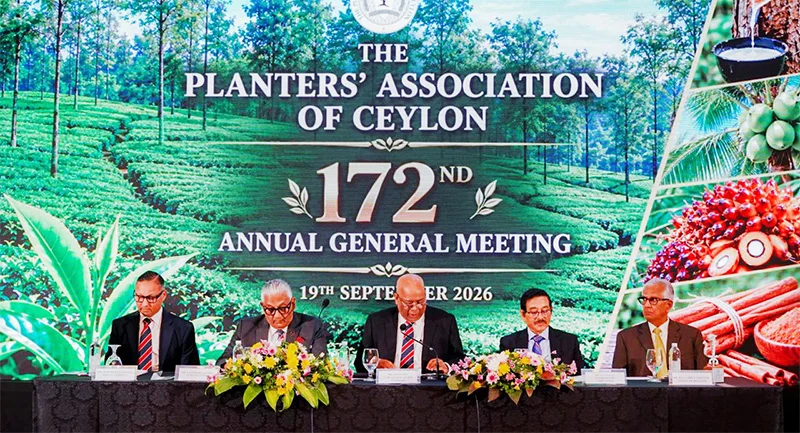
Malwatte Valley Plantations PLC Director / CEO, Shanaka Samaradiwakara was appointed as Chairman of the Planters’ Association of Ceylon (PAC), while Kahawatte Plantations PLC Director / CEO Binesh Pananwala, was appointed as Deputy Chairman at the Association’s 172nd Annual General Meeting (AGM) on 19 September at the Cinnamon Grand.
The event was graced by Central Bank of Sri Lanka Governor, Dr. Nandalal Weerasinghe and Sri Lanka Tea Board Chairman, Raj Obeyesekere as Chief Guest and Guest of Honour respectively.
In his inaugural address, Samaradiwakara outlined a five-point vision for the plantation sector, focusing on value addition, research and development, land-use and productivity, irrigation and long-term security of tenure. He emphasised that the future of commercial agriculture in Sri Lanka would hinge on how effectively all industry stakeholders could work together, while maintaining clear understanding of the ground realities faced by producers.
Value-added tea accounted for more than 50% of total tea export volumes in 2025. Samaradiwakara noted Regional Plantation Companies (RPCs) have accounted for the majority of that volume through continuous investments, including most recently in matcha, green tea and artisanal teas.
In that context, he sought the support of the Sri Lanka Tea Board and the export sector to protect this emerging high value segment, given that significant quantities of green tea and other high-value teas remain unsold at auction while similar products continue to enter the country. “We respectfully request the authorities to review this matter and introduce appropriate measures to support domestic production and value addition,” he stated.
On research and development, he observed that commercially viable alternatives to several essential crop protection products remain limited. Accordingly, he called on the Tea, Rubber and Coconut Research Institutes to lead the development of practical, scientifically proven alternatives, while stressing that disease threatening the rubber industry requires immediate attention. “We cannot afford to repeat the experience of the coffee industry, where coffee blight devastated the sector,” he added.
Turning to issues around land-use policies and productivity, he noted that RPCs have diversified for over two decades in response to changing rainfall patterns, introducing crops such as oil palm, pepper and avocado. He warned that these investments are increasingly threatened by unsupportive policy, agricultural theft and crop damage by wild animals, costing companies millions of rupees each month in security. “It is imperative that these investments are protected through strong enforcement, appropriate regulatory reforms, and effective measures to address both agricultural theft and crop damage,” he noted. On irrigation, he appealed to the Government to relax archaic restrictions on groundwater use and simplify approvals for drilling tube wells in order to enhance climate resilience.
Addressing security of tenure, he highlighted that replanting often takes more than a decade to generate meaningful revenue, and that uncertainty over lease extensions is making it harder for RPCs to attract foreign direct investment and long-term financing. “If we are to attract fresh capital, accelerate replanting, modernise our plantations and improve productivity, security and certainty of tenure are mandatory,” he added.

Showerss above 100 mm are likely at some places in the Western, Sabaragamuwa, Central and North-western provinces and in Galle and Matara Districts

Mirabai Chanu wins Asian Games silver as Ri breaks weightlifting record

Trump greets China’s Xi Jinping on arrival for three-day US

BASL calls for conscience vote on 22nd Amendment

IMF: Sri Lanka on course for 2027 market return

President appoints three new judges to High Court

‘Dates have the highest sugar content to fight Coronavirus’

Sunday Island 27 December – Headlines

#SundayIsland 17th December – Headlines

Sunday Island – 28th March

Sunday Island Headlines – 21 March

Sunday Island – 21st February – Headlines
-

 News5 days ago
Shanakiyan urges urgent action over reported death sentence for Lankan in Saudi Arabia
-

 News6 days ago
Bid for Basil’s extradition nears final stage: Police
-

 News4 days ago
Namal Rajapaksa Buddhist gambit fails, bail denied
-

 Features4 days ago
Why the spelling Sri Lankan names in English vary
-

 Features4 days ago
Three bands, a new identity: Sri Lankan wolf snake recognised as distinct species
-

 Business4 days ago
SLIIT holds largest-ever convocation
-

 News4 days ago
Govt monitors reported Saudi death sentence – Foreign Ministry
-

 Business4 days ago
All-new Bolero MaXX Pik-Up unveiled in Lanka