
News
The woman behind return from Lanka of ailing elephant

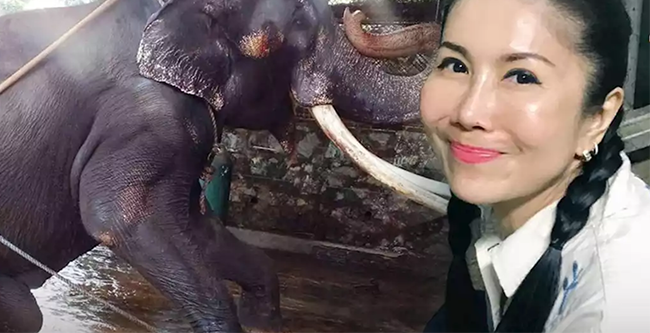
Former Suphan Buri MP Kanchana Silpa-archa is one of the people who played a key role in securing the return to Thailand from Sri Lanka of an ailing male elephant, Saksurin, which is tentatively scheduled to be flown back home on July 1st.
In an exclusive interview with Thai PBS, Kanchana, the older sister of the Minister of Natural Resources and Environment Varawut, recalled that, in August last year, she received a call from Sittidet Mahasawangkul, a veterinarian at the Forest Industry Organisation, asking for help to bring Saksurin back to Thailand for medical treatment, as the elephant had a badly infected wound, its living conditions at a temple in Sri Lanka were bad and it was not being given proper care.
She said that she was saddened when she saw a picture of the elephant, which was sent to her by Sittidet, and consulted her brother, Varawut, who is overseeing the Department of National Parks, Wildlife and Plant Conservation.
She also said that the Thai ambassador in Sri Lanka was very helpful and arranged for a team of Thai vets to visit Sri Lanka to take care of Saksurin which, she added, marked the start of the process to bring the animal back home for proper treatment.
Thanks to the kindness of the abbot of the temple in Sri Lanka, Saksurin was relocated to a zoo, to be taken care of by a Thai mahout, Thongsuk Mali-ngam, who was flown from Thailand, initially for a period of one month, which was extended to almost six months, said Kanchana.
Thai vets were sent to Sri Lanka twice to treat the nasty wound on the elephant’s hip, once in August last year and again in November.Kanchana said that all the vets and others involved agreed that the best way to treat the elephant would be to bring it back to Thailand, initially, in January this year, but it was delayed because the elephant was in musth.
Ambassador Pote in Sri Lanka was instrumental in arranging the considerable amount of paper work for the elephant to be flown back, required because it is a species listed in the Convention on International Trade in Endangered Species of Fauna and Flora (CITES).Meanwhile, in Thailand, an air transport cage was built.
Kanchana admitted that, while the task of repatriating the elephant may not appear to be difficult, without the cooperation of several governmental agencies, including state funding of a 24.7 million baht special budget, the Thai embassy in Sri Lanka, the Forest Industry Organisation, Minister Varawut, the mahout and the Sri Lankan’s who are assisting, this could not have happened.
She said that Saksurin is luckier than the many other elephants which have been sent overseas and have not had a chance to return home.
A team of officials from the Forest Industry Organisation, the Zoological Park Organisation of Thailand and the Department of National Parks, Wildlife and Plant Conservation will be flown to Sri Lanka ahead of time to prepare for the elephant’s flight back to Thailand.Upon arrival in Thailand, Saksurin will be sent to the elephant hospital in Lampang for treatment and a peaceful retirement.( Thai PBS)









Latest News
Sun directly overhead Anamaduwa, Moragollagama, Dambulla, Manampitiya and Valaichchenai, at about 12.10 noon today (02)


The sun is going to be directly over the latitudes of Sri Lanka from 28th of August to 07th of September due to its apparent southward relative motion.
The nearest places of Sri Lanka over which the sun is overhead today (02) are Anamaduwa, Moragollagama, Dambulla, Manampitiya and Valaichchenai, at about 12.10 noon.

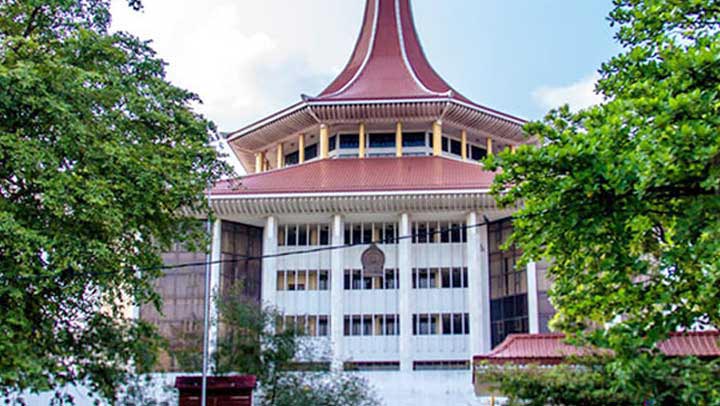
The Supreme Court yesterday rejected a request that the petitions challenging the 22nd Amendment to the Constitution be heard by a full bench of the Supreme Court.
Rejecting the request, Chief Justice Preethi Padman Surasena said the consideration of the petitions would proceed before the five-judge bench.
Appearing on behalf of one of the petitioners, President’s Counsel M. A. Sumanthiran made the request when the petitions were called for hearing yesterday before a five-judge bench of the Supreme Court, headed by Chief Justice Surasena.
President’s Counsel Saliya Pieris, Ali Sabry, Geoffrey Alagaratnam, Eraj de Silva, Srinath Perera, Anura Meddegoda, and Maithri Gunaratne, along with other counsel appearing for several other petitioners, also made the same request.
Solicitor General Viraj Dayaratne, appearing on behalf of the Attorney General, pointed out that the authority to determine the composition of a judicial bench rested with the Chief Justice. Refering to Article 132(3) of the Constitution, the Solicitor General argued that the discretion to determine the number of judges on a bench lay with the Chief Justice and that no other party had the authority to interfere in the matter.
Counsel including President’s Counsel Nigel Hatch, appearing for an intervening petitioner, also made submissions pointing out that the discretion to determine the composition of a bench rested with the Chief Justice.

The Colombo High Court yesterday sentenced former Civil Aviation Minister Piyankara Jayaratne to seven years’ rigorous imprisonment after finding him guilty of a corruption charge involving a Rs. 320,000 payment made by state-owned SriLankan Catering Ltd.
Colombo High Court Judge Mohamed Mihail delivered the verdict following a lengthy trial into the transaction, which dates back to the 2014 May Day rally of the United People’s Freedom Alliance (UPFA).
The Commission to Investigate Allegations of Bribery or Corruption (CIABOC) had indicted Jayaratne, alleging that he abused his position as Civil Aviation Minister by influencing an executive officer of SriLankan Catering to release the funds.
According to the indictment, the money was paid from SriLankan Catering’s accounts to a private catering service in Marawila to provide lunch for Jayaratne’s political supporters who attended the May Day rally.
CIABOC has alleged that the payment caused a loss to the state and constituted an offence of corruption.
Jayaratne was serving as Civil Aviation Minister at the time.

Sun directly overhead Anamaduwa, Moragollagama, Dambulla, Manampitiya and Valaichchenai, at about 12.10 noon today (02)

SC rejects petitioners’ request for full bench

Seven years RI for former Civil Aviation Minister Piyankara Jayaratne

40 professional organisations and TU oppose proposed 22A

Ai-CHA expands Lankan footprint with new Negombo outlet

TISL challenges Anti-Corruption Bill

‘Dates have the highest sugar content to fight Coronavirus’

Sunday Island 27 December – Headlines

#SundayIsland 17th December – Headlines

Sunday Island – 28th March

Sunday Island Headlines – 21 March

Sunday Island – 21st February – Headlines
-

 News5 days ago
Eight politicians in drug kingpin probe
-

 Features3 days ago
“Wrap Me Up in My Blazer”— A Gentlemanly Bradby Reminiscence
-

 Business5 days ago
Sri Lanka opens up: A new season of direct connectivity
-

 Features5 days ago
Redefining ageing in Sri Lanka
-
 Latest News6 days ago
Nepal-Tibet floods: What happened, what caused them and who is missing?
-

 Editorial6 days ago
Unfolding El Niño and burning issues
-
 Foreign News7 days ago
At least eight killed, hundreds missing after Nepal flash flood
-
 Latest News7 days ago
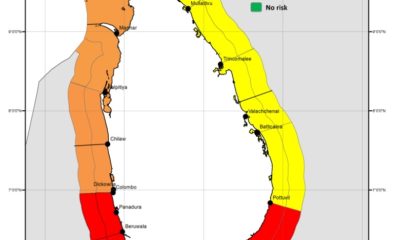
Advisory for High Waves for the sea areas extending from Colombo to Pottuvil via Galle, Matara and Hambantota