
News
UNDP helps govt converting 500,000 Tuk-Tuks to EVs

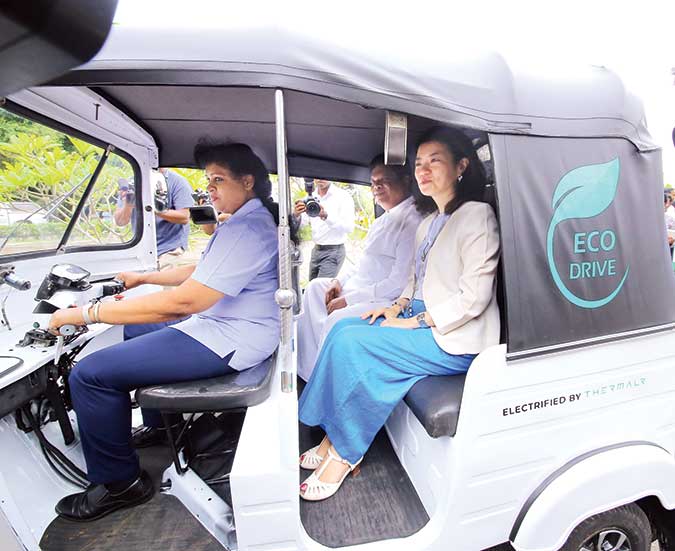
The United Nations Development Programme (UNDP) and the government on Thursday launched a project to convert 500,000 Tuk-Tuks to electric vehicles (EVs) or e-Tuk-Tuks over a five-year period.
The project aims to support the conversion of petrol three-wheelers to electric three-wheelers as a means for enhancing mobility as a driver of low-carbon, inclusive, equitable development pathways within Sri Lanka. The proposed three-phased project consists of an incubation phase, a demonstration phase and an acceleration phase. The incubation phase will test the conversion process, the demonstration phase will support conversions and the acceleration phase will use market forces for conversion through concessional financing and infrastructure development.
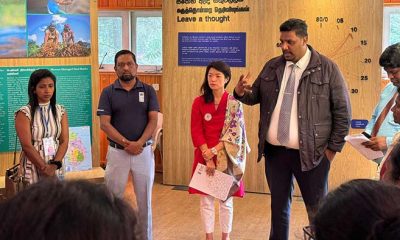
Highlighting UNDPs role in the pilot project, Azusa Kubota, Resident Representative, UNDP in Sri Lanka stated, “This pilot project is a part of UNDP’s Green Development Portfolio which is currently being developed. This portfolio aims to build solutions and support Sri Lanka’s development in catalyzing low-carbon, green, and inclusive development within which sustainable transportation and e-mobility play a key role. Through this pilot project UNDP will support the Government to establish a viable system which can be scaled up and will prioritize marginalised groups, including women and persons with disabilities while keeping equality and equity at the core of our work.”
The incubation phase will support the conversion of 200 petrol three-wheelers to electric three-wheelers. The following criteria will be applicable in selecting qualifying vehicles and owners for the incubation phase: age of Tuk-Tuk should not be greater than 10 years from date of manufacture, only petrol 4-stroke three wheelers are eligible, parties from Makumbura and Pettah will be eligible,priority will be given to applicants whose livelihood is dependent on a single three-wheeler, and preferential selections are given to women owners/ operators and persons with disabilities.
Nishantha Anurudda Weerasinghe, Commissioner General of Motor Traffic noted the importance of the project and the role of DMT in promoting e- Mobility in Sri Lanka, stating ‘’DMT has established a system for the registration of electric three wheelers in Sri Lanka. We have also developed specifications for electric three wheelers with the support of UNDP. We believe that this intervention will encourage petrol three-wheel owners to come forward and convert their three wheelers to electric three wheelers’’
The strict selection criteria will minimize the risk of failure due to technical issues, the risk of delay in conversions due to limited capacity and will test the performance of different technologies available in the market-opportunity for project stakeholders to test the market for energy efficiency (km/kWh), actual range per charge and functionality of safety features. The findings from the incubation phase will then be used in designing the demonstration phase.
Taking into consideration the above aspects Pettah and Makumbura have been identified as viable locations for the initial conversion pilot in the Western Province. 100 petrol three-wheelers will be converted to electric three-wheelers from each location. During the pilot phase, UNDP will cover the full cost of conversion to electric three-wheeler and through this aims to support the revival of micro level/informal sector economic activities to inject much needed currency into the local economy.







Latest News
Sun directly overhead Moratuwa, Kesbewa, Handapangoda, Idalgashinna, Yudhaganawa, Kotiyagala and Panama about 12.08 noon today (05)


The sun is going to be directly over the latitudes of Sri Lanka from 28th of August to 07th of September due to its apparent southward relative motion.
The nearest places of Sri Lanka over which the sun is
overhead today (05) are Moratuwa, Kesbewa, Handapangoda, Idalgashinna, Yudhaganawa, Kotiyagala and Panama about 12.08 noon
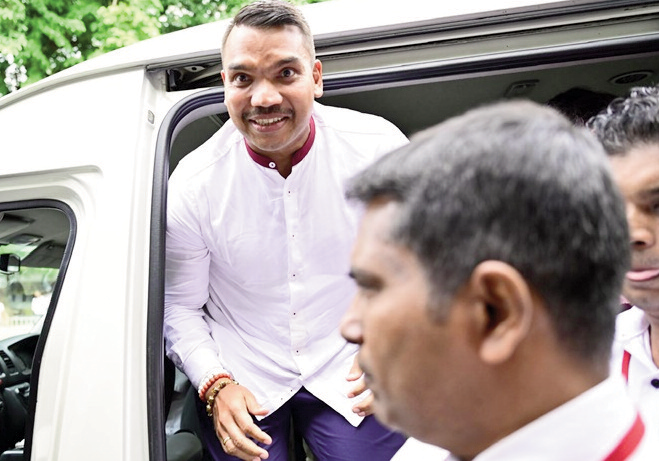
Sri Lanka Podujana Peramuna (SLPP) National Organiser and Parliamentarian Namal Rajapaksa was yesterday remanded until September 18 by the Colombo Chief Magistrate’s Court following his arrest by the Commission to Investigate Allegations of Bribery or Corruption (CIABOC) in connection with an investigation into the controversial SriLankan Airlines Airbus aircraft transaction.
Rajapaksa appeared before the CIABOC at around 9.15 am yesterday to record a statement after being summoned over the transaction. He was taken into custody following several hours of questioning and subsequently produced before the Colombo Chief Magistrate.
The investigation centres on allegations surrounding the acquisition of six Airbus A330 and eight A350 aircraft by SriLankan Airlines in 2013, in connection with an alleged USD 2 million bribe.
Former SriLankan Airlines Chief Executive Officer Kapila Chandrasena and his wife, Priyanka Niyomali Wijenayake, had previously been named in connection with the alleged bribery.
Chandrasena was arrested on March 12 as part of an investigation launched by the CIABOC under the Anti-Corruption Act and was subsequently released on bail. He was later found dead on May 8 while on bail, with police suspecting that his death was a suicide.
Open warrants have been issued for the arrest of Wijenayake, who is named as the second suspect, and Shamindra Rajapaksa, named as the third suspect, in the case pending before the Fort Magistrate’s Court in connection with the Airbus transaction.
The investigation has also received assistance from Airbus, with a delegation from the company’s parent group in France visiting Sri Lanka during the first week of August. The delegation provided statements and other assistance to the CIABOC as part of the ongoing inquiry.
Rajapaksa’s arrest and remand yesterday mark a further development in the widening investigation into the controversial aircraft deal.
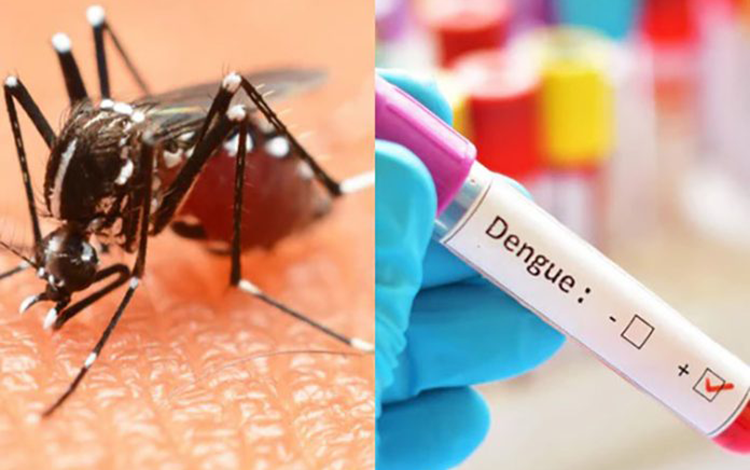
The number of dengue cases reported in Sri Lanka this year has risen to 96,040, with 72 deaths recorded so far, according to the National Dengue Control Unit.
The Unit said 10,155 cases were reported in August alone, highlighting the continuing spread of the disease across several parts of the country.
The Western Province has recorded the highest number of cases at 50,760, followed by the Southern Province with 13,931, the Central Province with 8,788 and the Sabaragamuwa Province with 7,910.
At district level, Gampaha has reported the highest number of cases at 20,444, followed by Colombo with 19,008.
Kandy has recorded 7,043 cases, while Kalutara and Matara have reported 6,181 and 6,154 cases,a respectively.
The National Dengue Control Unit said 50 Medical Officer of Health (MOH) areas across the country have been identified as high-risk areas for dengue.
Health authorities have continued to urge the public to take measures to prevent mosquito breeding, particularly in areas where a high incidence of dengue has been reported.

Sun directly overhead Moratuwa, Kesbewa, Handapangoda, Idalgashinna, Yudhaganawa, Kotiyagala and Panama about 12.08 noon today (05)

Showers above 75 mm are likely at some places in the Uva, Central and Eastern provinces and in Polonnaruwa and Mullaittivu districts after 2.00 p.m

Namal remanded until Sept. 18 over Airbus deal investigation

Dengue cases surpass 96,000 this year

PM Harini, Bhutan King explore closer ties

Johnston granted bail following CIABOC arrest

‘Dates have the highest sugar content to fight Coronavirus’

Sunday Island 27 December – Headlines

#SundayIsland 17th December – Headlines

Sunday Island – 28th March

Sunday Island Headlines – 21 March

Sunday Island – 21st February – Headlines
-

 Features6 days ago
“Wrap Me Up in My Blazer”— A Gentlemanly Bradby Reminiscence
-

 Features5 days ago
When Sri Lankan stories find their own voice
-
 Features6 days ago
JVP/NPP government as seen from outside by Lionel Bopage now domiciled in Australia
-

 News5 days ago
BASL takes exception to Justice Ganepola being denied a place in SC
-
 Features6 days ago
Prof. Savitri Goonesekere: What has she done?
-

 News2 days ago
Denied of promotion to SC despite vacancies, justice Gurusinghe retires
-
 Latest News3 days ago
Grade 5 scholarship exam results released
-

 Features6 days ago
World Trade Politics: Canada rebuffs Trump’s tariff blackmail