
News
Proposed Law Breaks Government Pledge to End Abuse’ – HRW


‘Reject New Counterterrorism Bill’
:The government of Sri Lanka’s proposed Anti-Terrorism Act would empower the authorities to systematically violate fundamental human rights, Human Rights Watch said on Friday. The government should withdraw the bill and ensure through consultations that any counterterrorism legislation upholds international human rights standards, Human Rights Watch said.
The government pledged to adopt an improved law following domestic and international criticism of abuses under existing counterterrorism legislation. But instead of addressing the problems, the bill would expand the definition of terrorism to include crimes such as property damage, theft, or robbery, and restrict the rights to freedom of assembly and speech.
“The proposed counterterrorism law would permit the Sri Lankan government to continue to use draconian measures to silence peaceful critics and target minorities,” said Meenakshi Ganguly, South Asia director at Human Rights Watch. “The government’s crackdown on dissent and misuse of existing counterterrorism laws to arbitrarily detain protesters highlights the obvious risk of abuse.”
The Anti-Terrorism Bill, which was published on March 22, 2023, is intended to replace the notorious Prevention of Terrorism Act (PTA), which led to widespread torture and arbitrary detentions since its introduction in 1979. While the new bill contains some improvements, it includes provisions that will facilitate abuse. The bill appears designed to give the president, police, and military broad powers to detain people without evidence, to make vaguely defined forms of speech a criminal offense, and to arbitrarily ban gatherings and organizations without meaningful judicial oversight.
In response to criticism from Sri Lankan activists and lawyers, the United Nations Human Rights Council, foreign governments, and the European Union, successive Sri Lankan governments have repeatedly promised to repeal and replace the PTA with rights-respecting legislation.
The Anti-Terrorism Bill is largely based on proposals presented in 2018, when Sri Lanka’s current president, Ranil Wickremesinghe, was prime minister. The 2018 bill was criticized over human rights concerns and was not enacted. Justice Minister Wijeyadasa Rajapakshe recently expressed satisfaction with the new draft and told journalists that “we won’t make any major change to the current version.”
In 2021, the UN independent expert on human rights and counterterrorism set out five “necessary perquisites” to ensure that Sri Lanka’s counterterrorism law complies with international rights standards. They include providing an appropriate definition of terrorism, ensuring precision and legal certainty, provisions to prevent arbitrary detention, measures that adhere to the absolute prohibition on torture, and due process and fair trial guarantees including judicial oversight. The Anti-Terrorism Bill does not fully meet any of these standards, Human Rights Watch said.
Its definition of terrorism is vague and overbroad and can include peaceful protest or acts that, while criminal, do not rise to the level of any reasonable definition of terrorism. Offenses include participation in certain “unlawful” assemblies if the aim is to “intimidate” the public or “wrongfully” compel the government to act in a certain way, as well as “theft” or “robbery” of government or private property, even if these acts are not intended to cause death or serious harm. The government is currently facing strikes, including by public sector workers. In 2022, the authorities used counterterrorism powers to arbitrarily detain three student leaders after widespread protests over corruption and misgovernance forced both the president and prime minister to resign.
While under the PTA, the authorities can detain a suspect for up to a year on orders signed by the defense minister, the proposed bill gives the authority to issue detention orders to deputy inspector generals of police, increasing risk of abuse. The police could take a detainee from pretrial detention back into police custody, and the defense secretary could transfer a detainee to the custody of “any authority.” This puts suspects at greater risk of torture and other ill-treatment, as abuses under the current law demonstrate.
The proposed bill grants police and military sweeping powers to stop, question, search, and arrest anyone, or seize any document or object without a warrant, if they believe they have “reasonable grounds.” The military, which is not trained in law enforcement, would have 24 hours to transfer a detainee to police custody, placing detainees at greater risk of abuse.
It also provides the president power to issue regulations for “rehabilitation” programs if the attorney general has decided to defer or suspend prosecution. The attorney general could then “impose” “voluntary” rehabilitation on a person who has not been convicted of any crime. In 2021, the Supreme Court stayed similar regulations. The authorities have long committed human rights violations against people accused of terrorism or of drug use, who are incarcerated without trial in government “rehabilitation” programs.
The president, on the advice of the police or military, would be authorized to declare any location a “prohibited place,” with up to three years in prison for violations. This appears to be an attempt to prevent a repetition of the largely peaceful 2022 protests in the capital, Colombo. The government had declared “high security zones” under the Official Secrets Act, which were withdrawn following widespread condemnation.
The bill expands broad powers to criminalize speech that is “likely to be understood” as encouragement or inducement to commit or prepare for terrorism, with the burden of proof on the defendant to show that was not their intention. These offenses also apply to those who publish, distribute, sell, or transmit “terrorist publications,” which could have a further chilling effect. In the past, the government has used the PTA to detain people who commemorated Tamil victims of Sri Lanka’s civil war on social media on the grounds that they were “glorifying” terrorism, which is also an offense under these proposals.
The president would be authorized to ban an organization if authorities have “reasonable grounds” to believe it is acting in a manner “prejudicial to the national security of Sri Lanka, or any other country.” In the past, the government has proscribed Tamil diaspora organizations advocating for human rights and accountability as “terrorist organizations,” and human rights organizations have faced government interference in their banking and finances on the pretext of countering “terrorist financing.”
The bill provides for the death penalty for the terrorism offense of murder, although Sri Lanka has observed a moratorium on executions since 1976. Sri Lanka should abolish the death penalty, which Human Rights Watch opposes in all circumstances because of its inherent cruelty and finality.
The bill includes some new due process protections, including that confessions to the police will not be admitted as evidence, and that female suspects should be searched by women officers. There are new procedures for reporting and notifying the reason for an arrest, providing access to translations of documents in a language a detainee understands, and presenting a detained person before a magistrate every 14 days. It also clarifies the procedures that a magistrate should follow if a detainee appears to have been tortured.
However, the two ostensibly independent entities proposed under the bill, the Board of Review to hear appeals against detention orders, and the Independent Review Panel to advise on rights-respecting implementation of the law, would not be independent by law.
Until new counterterrorism legislation that upholds human rights is drafted, the government should impose a full moratorium on the use of the PTA and take steps to repeal it, Human Rights Watch said.
Successive Sri Lankan governments have offered repeated assurances to the EU that they would uphold rights commitments, including by repealing the PTA, in exchange for tariff-free trade access under the Generalised Scheme of Preferences Plus (GSP+). The trade access is conditioned to the ratification and effective implementation of key human rights treaties. In its latest monitoring report, the European Commission said that Sri Lanka “still has to deliver on a number of important reforms.”
Sri Lanka’s international partners, including the United States, EU, Japan, India, and others should press for genuine reforms to ensure this bill meets Sri Lanka’s international human rights obligations, Human Rights Watch said. The EU should make it clear that replacing the present counterterrorism law with similarly abusive legislation does not address its concerns and could affect Sri Lanka’s GSP+ status.
“The Anti-Terrorism Bill needs to be seen both in light of Sri Lanka’s abusive history of counterterrorism powers and the current government’s repression of peaceful dissent,” Ganguly said. “Sri Lanka’s international partners should make it absolutely clear that they will not reward this abuse with trade preferences and other support.”

News
Showers about 100 mm are likely at some places in the Western, Sabaragamuwa, Central, Uva, Southern, North-western, Northern and North-central provinces and in Trincomalee district.


WEATHER FORECAST FOR 11 MAY 2026
Issued at 05.30 a.m. on 11 May 2026 by the Department of Meteorology
The low-level atmospheric disturbance in the vicinity of Sri Lanka is likely to develop into a low-pressure area around the next 36 hours. Therefore, the prevailing showery conditions over the island are expected to continue during the next few days.
Showers or thundershowers will occur at times in most parts of the island and Cloudy skies are expected, under the influence of the aforementioned system. Heavy showers about 100 mm are likely at some places in the Western, Sabaragamuwa, Central, Uva, Southern, North-western, Northern and North-central provinces and in Trincomalee district.
The general public is kindly requested to take adequate precautions to minimize damage caused by temporary localized strong winds and lightning during thundershowers.
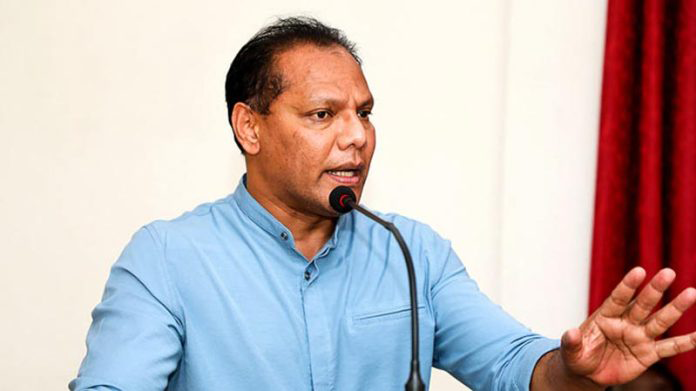
SJB MP Dayasiri Jayasekera has sought the intervention of the Inter-Parliamentary Union (IPU) to pressure the JVP-NPP government to respect the rights of the Opposition.
MP Jayasekera told The Island that they wouldn’t allow the NPP to suppress the truth regarding the theft of Treasury funds amounting to USD 2.5 million. He accused Speaker Dr. Jagath Wickremaratne of depriving the Opposition of its legitimate rights, at the behest of the government.
Jayasekera said that the Speaker’s conduct regarding the action taken against Deputy Secretary General of Parliament Chaminda Kularatne, too, had been brought to the notice of IPU and other international associations.
The text of MP Jayasekera’s letter to the Secretary general of IPU: “I respectfully submit this petition seeking the attention and intervention of the Inter-Parliamentary Union concerning a matter affecting parliamentary accountability, the rights of elected representatives, and the proper functioning of constitutional oversight within the Parliament of Sri Lanka.
On 06 May 2026, I Dayasiri Jayasekara MP submitted a formal request to the Hon. Speaker of Parliament seeking permission, under the Parliament (Powers and Privileges) Act No. 21 of 1953 and Standing Order 29(1), to raise a question of privilege regarding alleged constitutional and parliamentary violations by Mr. Harshana Suriyapperuma, Secretary to the Treasury of Sri Lanka.
The proposed privilege motion raised matters including:
1. Alleged violations of Articles 148, 149, and 150 of the Constitution of Sri Lanka concerning parliamentary control over public finance;
2. Alleged failure to report to Parliament concerning a controversial and unlawful transfer of approximately USD 2.5 million from the Treasury;
3. Alleged non-compliance with parliamentary committee procedures under the Standing Orders of Parliament;
4. Questions relating to constitutional eligibility under Article 91(1)(d)(xiii) of the Constitution concerning dual citizenship and qualification to sit and vote in Parliament;
5. A request that the matter be referred to the Parliamentary Ethics and Privileges Committee established under Standing Order 118.
Despite the seriousness of the constitutional and parliamentary issues raised, the Hon. Speaker declined permission for the privilege issue to be raised in Parliament.
It is respectfully submitted that this refusal has the effect of:
• Preventing an elected Member of Parliament from exercising his parliamentary oversight function;
• Restricting parliamentary scrutiny over matters involving public finance and constitutional accountability;
• Undermining the privileges of Members of Parliament to raise matters of urgent public importance;
• Limiting institutional transparency concerning allegations involving senior state officials.
The right of parliamentarians to raise questions of privilege and matters relating to constitutional governance is an essential component of parliamentary democracy and legislative independence. The refusal to permit even the presentation or preliminary consideration of such a matter raises serious concerns regarding parliamentary accountability mechanisms in Sri Lanka.
Accordingly, I respectfully request that the Inter-Parliamentary Union:
1.Take cognizance of this matter as one affecting the rights and functions of Members of Parliament;
2.Seek clarification from the relevant parliamentary authorities in Sri Lanka regarding the grounds upon which the privilege motion was disallowed;
3.Consider whether the refusal is compatible with internationally recognised principles of parliamentary democracy, accountability, and freedom of parliamentary speech;
4. Encourage the Parliament of Sri Lanka to ensure fair and transparent procedures governing parliamentary privilege motions and constitutional oversight.
I further request that this communication be placed before the appropriate committee or mechanism within the IPU dealing with the rights and duties of parliamentarians.”
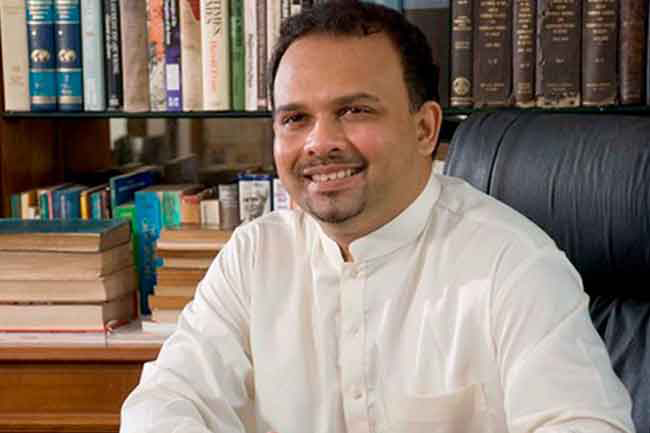
UNP Vice President and Kandy District Leader, Navin Dissanayake, on Saturday, stressed that any proposed merger between the UNP and the SJB must be carried out formally rather than in an ad hoc manner.
Addressing a media briefing in Kandy, Dissanayake said a structured framework was essential to ensure the successful reunification of the two parties ahead of future elections.
“A formal mechanism must be established for the unification of the UNP and the SJB. This process cannot be confined to personal verbal assurances given to suit individual interests. We must build a strong framework to contest future elections as a united force,” he said.
He added that the UNP could only regain political strength by reuniting with factions that had broken away from the party.
Dissanayake also claimed that the Government would be compelled to hold Provincial Council elections amid mounting international and domestic pressure.
“India is exerting pressure to conduct these elections, while the people in the North are also demanding governance under the Provincial Council system. They are awaiting the polls,” he said.
Announcing his own political intentions, Dissanayake said he hoped to contest as the Chief Ministerial candidate for the Central Province at the next Provincial Council election.
“I intend to contest as the Chief Ministerial candidate for the Central Province. Having served as a Governor, I understand the extent of service that can be delivered to the people through a Provincial Council,” he said.
Recalling the history of constitutional devolution, Dissanayake said his late father, Gamini Dissanayake, had played a significant role in the introduction of the 13th Amendment to the Constitution of Sri Lanka.
by SK Samaranayake

Car bomb attack and ambush in northwest Pakistan kill at least 21 police

Overton, Urvil power Chennai Super Kings to fifth spot with third straight win

Showers about 100 mm are likely at some places in the Western, Sabaragamuwa, Central, Uva, Southern, North-western, Northern and North-central provinces and in Trincomalee district.

Treasury theft: Speaker’s conduct brought to IPU’s attention: SJB

Navin calls for formal alliance between UNP and SJB

Diversion of USD 2.5 million: COPF accused of shielding culprits

‘Dates have the highest sugar content to fight Coronavirus’

Sunday Island 27 December – Headlines

#SundayIsland 17th December – Headlines

Sunday Island – 28th March

Sunday Island Headlines – 21 March

Sunday Island – 21st February – Headlines
-

 News4 days ago
MIT expert warns of catastrophic consequences of USD 2.5 mn Treasury heist
-
 News6 days ago
CJ urged to inquire into AKD’s remarks on May 25 court verdict
-

 News1 day ago
Lanka Port City officials to meet investors in Dubai
-

 Editorial4 days ago
Clean Sri Lanka and dirty politics
-
 Opinion6 days ago
Security, perception, and trust: Sri Lanka’s delicate balancing act
-

 Editorial3 days ago
The Vijay factor
-
 News2 days ago
SLPP expresses concern over death of former SriLankan CEO
-

 News5 days ago
Development Officer bids Rs. 48 mn for CPC’s V8 at auction