
News
Sri Lanka: IMF Loan Risks Eroding Rights

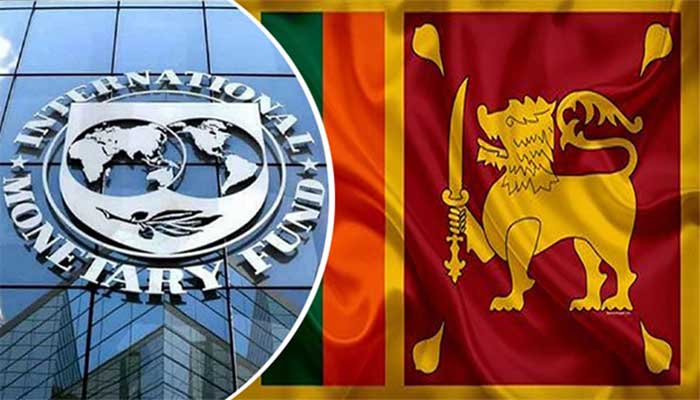
(Washington, DC) – The government of Sri Lanka should ensure that policies to enhance revenues do not further erode economic and social rights and that anti-corruption reforms provide accountability, Human Rights Watch said on Thursady. On March 20, 2023, the International Monetary Fund (IMF) approved a US$3 billion loan to Sri Lanka to help resolve the spiraling economic crisis that began after Sri Lanka defaulted on its debt in April 2022.
The loan was approved seven months after IMF staff and government officials reached an initial agreement and following financing assurances from the country’s major bilateral creditors. Although it focuses on growing revenues and emphasizes tackling corruption and improving social protection, the program as structured risks further undermining people’s economic and social rights. The government has announced policies that effectively reduce salaries in public service agencies, eliminate subsidies, and increase regressive taxes – steps that could degrade public services and further raise prices at a time when a large segment of the population is already struggling due to high inflation.
“Official corruption and tax rules that benefitted the wealthiest were key drivers of Sri Lanka’s economic crisis, for which Sri Lankans struggling to make ends meet should not have to carry the burden,” said Meenakshi Ganguly, South Asia director at Human Rights Watch. “The government should recognize that the public deserves real accountability, whether it’s for past war crimes or ongoing misgovernance and repression of critics.”
IMF approval of the loan paves the way for multilateral institutions such as the World Bank and Asian Development Bank to offer Sri Lanka new financing, which the government has said it expects to reach $7 billion over the next four years. Financial institutions and donors should insist on transparent, rights-respecting governance.
The IMF loan is intended to provide the country with a lifeline while addressing deep-seated problems that contributed to the crisis. Under international law, governments and financial institutions have an obligation to respond to economic crises in a way that advances rather than further jeopardizes human rights, and should avoid pursuing policies that reduce low-income people’s access to essential goods and services.
Sri Lanka’s economic crisis triggered soaring inflation, as well as shortages of essential goods such as fuel and medicine, causing severe and ongoing economic hardship. In January, the World Food Programme reported that one in three families in Sri Lanka were experiencing food insecurity and half were purchasing food on credit.
Waves of protests have made ending corruption a central demand, and led to the ouster of President Gotabaya Rajapaksa in July 2022. Currently, the IMF program’s anti-corruption measures are centered on the government passing legislation in line with the United Nations Convention Against Corruption and the IMF carrying out a governance diagnostic that assesses Sri Lanka’s strengths and weaknesses in six areas, including the rule of law and fiscal governance. The conclusions could be used to set conditions later in the loan program.
For the analysis to be effective, civil society should play a prominent role, Human Rights Watch said. Subsequent anti-corruption reforms should ensure that the government enforces its rules and holds corrupt officials and private businesspeople to account, including for past malfeasance. These efforts should include recovering stolen assets, imposing back pay and penalties for tax evasion, and stemming illicit financial flows out of the country.
The program’s focus on increasing government revenues, rather than reducing public spending as a percentage of Gross Domestic Product (GDP), will better protect rights, Human Rights Watch said. When the crisis began, Sri Lanka had among the world’s lowest tax-to-GDP ratios in the world at 7.3 percent. That ratio is expected to nearly double to 14 percent of GDP. However, while some of the new measures are designed to increase taxes on the wealthy and eliminate tax exemptions that benefit them, the heavy reliance on value-added taxes can worsen the cost-of-living crisis.
The government has already increased corporate tax rates and removed all sector-specific tax exemptions, according to the IMF staff report. But most new tax revenue will come from value-added taxes (VAT), which were raised from 8 to 12 percent in May 2022 and again to 15 percent in September. Basic food items remain exempt from VAT, but the government committed to VAT reform by 2024 that would remove “almost all” product-specific exemptions.
While the wealthy pay more VAT in absolute terms because they spend more, the expense makes up a much greater share of income for low-income people. In 2019, the amount of revenue that came from VAT and income taxes were on par, but by the end of the program, VAT is expected to make up 32 percent of all taxes, whereas income taxes would make up 21 percent.
The program reduces the threshold for taxing annual income to 1.2 million rupees ($3,694), a change that some have protested as burdening families who are already struggling to realize their rights. The government should publish data on the percentage of the population that is subject to income taxes under this change, Human Rights Watch said. It should also consider advancing the introduction of taxes on property, gifts, and inheritance, which the program mandates by 2025.
The program includes other measures that could harm low-income people. Public services are central to delivering rights and are an important source of employment. The program calls for keeping any increase in public wages to less than inflation, effectively reducing real salaries, and reducing total spending on wages from 5 to 3.6 percent of GDP. It also eliminates subsidies for both fuel and electricity and imposes an excise tax on fuel, but does not ensure that these critical measures are carried out in a way that fulfills rather than erodes rights. To protect rights when removing subsidies and introducing taxes for fossil fuels, the government should adequately invest in social protection, the use of renewable energy sources, and other measures to move toward a rights-aligned economy, Human Rights Watch said.
The program includes a so-called “social spending floor” that would “gradually raise” spending on four cash transfer programs “to help cushion the potential impact of macroeconomic adjustment on the poor and vulnerable groups.” Recognizing the pervasive flaws in the country’s targeted cash transfer programs, it also mandates overhauling eligibility criteria in partnership with the World Bank to make them “based on objective and verifiable characteristics of households,” and notes the government is working with the World Bank on a new electronic registry for selecting beneficiaries.
While the floor brings up total spending on these programs to 0.6 percent of GDP, it is set at far less than developing countries’ average spending on safety nets, which is 1.6 percent. Furthermore, the insistence on targeting benefits based on eligibility criteria also risks continuing to exclude people who are unable to access goods and services essential for an adequate standard of living. The details of the new eligibility criteria and electronic registry have not been made public, but research has shown pervasive problems with targeting benefits, including high error and exclusion rates.
For example, a proposal to use electricity consumption as a proxy measure – to overcome the lack of data on household income as well as the risk of corruption in selecting beneficiaries – would leave out about 35 percent of the bottom half of the population. Because current beneficiaries who are ineligible under the new criteria would be removed by January 2024, this could mean people losing benefits they are currently receiving.
Contrary to this approach, the IMF’s technical note on social safety nets advises that in countries with “low administrative capacity” efforts should focus on enhancing tax capacity to “claw back” benefits from high-income households, rather than lowering benefits or excluding low-income beneficiaries.
“When half of Sri Lankan families are buying food on credit, it’s not the time to experiment with fixing chronic and pervasive problems with targeted cash transfer programs,” Ganguly said. “Instead of investing precious funds in new registries, the government’s focus should be on building a tax system that makes sure the wealthy pay their fair share.”

Latest News
Sun directly overhead Neriyakulam, Punewa, Kebithigollewa, Pankulam and Sinhapura at about 12.10 noon today (31)


The sun is going to be directly over the latitudes of Sri Lanka from 28th of August to 07th of September due to its apparent southward relative motion.
The nearest places of Sri Lanka over which the sun is overhead today (31) are Neriyakulam, Punewa, Kebithigollewa, Pankulam and Sinhapura about 12.10 noon.

… highlights injustice caused to Justice R. Gurusinghe
The Bar Association of Sri Lanka (BASL) has alleged that due to the failure on the part of President Anura Kumara Dissanayake to fill the existing vacancies in the Supreme Court, a Senior Justice of the Court of Appeal, Justice Dhammika Ganepola, retired at the age of 63 without being considered for, or granted, a promotion to the Supreme Court, to which he was well entitled. The BASL pointed out at the time of Ganepola’s retirement there were four vacancies in the Supreme Court.
In a letter dated 17 August, 2026, addressed to President Dissanayake, the BASL declared that the failure to promote and recognise Ganepola’s distinguished judicial service, resulting in his retirement at the age of 63, is indeed a loss to the Judiciary.
A top BASL spokesman told The Island yesterday (30) that the Bar Council, over the weekend, had decided to release the hitherto confidential letter.
The official said that they also wanted to remind the President of his assurance given to BASL, on 12 August, 2026, that vacancies in the Supreme Court and Court of Appeal would be filled as soon as possible, within a month.
The following is the text of the BASL letter, signed by Rajeev Amarasuriya, President, BASL, and its Secretary Nalin De Silva: “We write further to our letters dated 29th December 2025 and 30th June 2026 in relation to the above, to which we have not received any response.
We also refer to our meeting with Your Excellency on 12th August. As discussed during the meeting, there have been vacancies in the Supreme Court since May 2025, and the number of vacancies has now increased to four (04). There are also four (04) vacancies in the Court of Appeal. These are all matters we have already written to Your Excellency about.
Your Excellency informed the BASL Delegation when we met that you would be taking steps to make recommendations to fill these vacancies as soon as possible, within a month.
We write to reiterate the importance of giving due consideration to the criteria set out in our aforesaid letter dated 29th December 2025. We also wish to emphasise that, in making judicial appointments and promotions, seniority should be given due priority, in keeping with longstanding practice, until such time there are objective and defensible guidelines governing the assessment of merit.
The only justifiable departure to this criterion would be where there exists a specific and recognized demerit in respect of the particular Judge concerned or such other known compelling circumstances that are objectively identifiable such as where a Judge has previously been overlooked for promotion unfairly or conversely, where a Judge has been unfairly previously granted promotions above others.
This approach will safeguard both the integrity of the Judiciary and the trust reposed in it by the public.
Further, while there has been considerable discussion and representation by the Government regarding the importance of retaining experienced judges, as reminded to Your Excellency at our said meeting that, only a few months ago on 8th May 2026, a Senior Justice of the Court of Appeal, Justice Dhammika Ganepola, retired at the age of 63 without being considered for, or granted, a promotion to the Supreme Court, to which he was well entitled, and in which there were four vacancies at the time.
The failure to promote and recognise his distinguished judicial service, resulting in his retirement at the age of 63, is indeed a loss to the Judiciary.
We also drew Your Excellency’s attention at the said meeting to the fact that the Senior-most Justice of the Court of Appeal, Justice R. Gurusinghe, who joined the Judicial Service in 1996, who also Acted in the Office of President of the Court of Appeal (appointed by Your Excellency) on 11th May 2026, is due to retire at the end of this month. In fact, we learnt through the Media that Her Ladyship then Chief Justice Justice Murdu Fernando, PC, had previously in July 2025 recommended to Your Excellency the promotion of Justice R. Gurusinghe to the Supreme Court, but the same is pending from that time.
He too is well deserving of promotion to the Supreme Court and has already been recommended by the former Chief Justice, and his case must also receive due and urgent consideration before his impending retirement.
We hope that Your Excellency will take due note of and give due regard to the concerns of the Bar, as well as to the established principles, practices and conventions governing judicial appointments, when taking steps to fill these vacancies.
On this, Your Excellency is already open to the accusation that these vacancies have been kept open, to fill with favourites of the Government which is yet another serious indictment on the independence of the judiciary which accusation would be confirmed if recommendations are made outside established practice.
Moreover, the BASL expresses grave concern that withholding promotions of Judicial Officers for extended periods of time places undue pressure on Judicial Officers in the discharge of their duties and constitutes both directly and indirectly, interference with the independence of the Judiciary, in addition to the strain obviously caused to the dispensation of justice in other Courts and the stifling and delay of career progression of Judges legitimately entitled to promotions.
We do hope that Your Excellency would take due note and cognizance of the foregoing when effecting these judicial promotions which have been long overdue and which have already adversely impacted the efficiency and effectiveness of the administration of justice.”
The BASL has copied the letter to Prime Minister Dr. Harini Amarasuriya, Speaker Dr. Jagath Wickremaratne, Opposition Leader Sajith Premadasa and all members of the Constitutional Council.

Opposition Leader Sajith Premadasa on Saturday (29) challenged the government to hold the long-delayed Provincial Council elections, saying the polls would provide an opportunity to gauge the level of public support enjoyed by the administration.
Addressing a farmers’ meeting in Tissamaharama, Hambantota, Premadasa also criticised the latest Rs. 17 per kilogram increase in wheat flour prices, warning that it would push up the prices of bread, bakery products and other flour-based food items and place further pressure on households already struggling with the rising cost of living.
He said Sri Lanka ranked 120th among 130 countries in an international comparison of minimum wages, arguing that wages remained inadequate to meet the escalating cost of living.
Premadasa also questioned official assessments of living standards, asking whether a person could survive for an entire month on Rs. 17,315, a figure he attributed to the Department of Census and Statistics.
He claimed that between 30 and 40 percent of the population was living in poverty and called for a clear programme to help affected families improve their economic conditions.
Turning to the proposed 22nd Amendment to the Constitution, which seeks to increase the retirement age of superior court judges, the Opposition Leader accused the government of attempting to undermine judicial independence and interfere with democratic institutions.
He also criticised the government’s handling of poverty, employment, agriculture, healthcare and investment, saying more effective measures were needed to provide relief to people facing economic hardships.Premadasa called for stronger policies to attract foreign direct investment and urged the government to formulate a national strategy for developing the tourism industry.

Iran attacks US bases in Jordan after US strikes Larak Island

Showers will occur in the Western, North-western and Sabaragamuwa provinces and in Galle, Matara, Kandy and Nuwara-Eliya districts.

Sun directly overhead Neriyakulam, Punewa, Kebithigollewa, Pankulam and Sinhapura at about 12.10 noon today (31)

BASL takes exception to Justice Ganepola being denied a place in SC

Sajith challenges govt. to hold PC polls

Mahendran denies name change allegation

‘Dates have the highest sugar content to fight Coronavirus’

Sunday Island 27 December – Headlines

#SundayIsland 17th December – Headlines

Sunday Island – 28th March

Sunday Island Headlines – 21 March

Sunday Island – 21st February – Headlines
-

 News6 days ago
Missing doctor’s body found in Mahiyanganaya
-
 News6 days ago
Australia declines to release Finance Secy Suriyapperuma’s citizenship details
-
 News6 days ago
22A: BASL suggests CJ recuse himself from hearing petitions
-

 News3 days ago
Eight politicians in drug kingpin probe
-

 Features1 day ago
“Wrap Me Up in My Blazer”— A Gentlemanly Bradby Reminiscence
-

 Business3 days ago
Sri Lanka opens up: A new season of direct connectivity
-

 Features3 days ago
Redefining ageing in Sri Lanka
-
 Features5 days ago
Insights from Chieftains of Uva: Genealogy of two Kandyan Families – Part II